Membership
 Network
 Regional Sites & Affiliates


 Events
 Participate
 Resources

 Training
 Credentials
 Government


 Content Channels
 Tools
Tools


 Business Overview





10 Myths About In-building Connectivity
What FMs can do about them
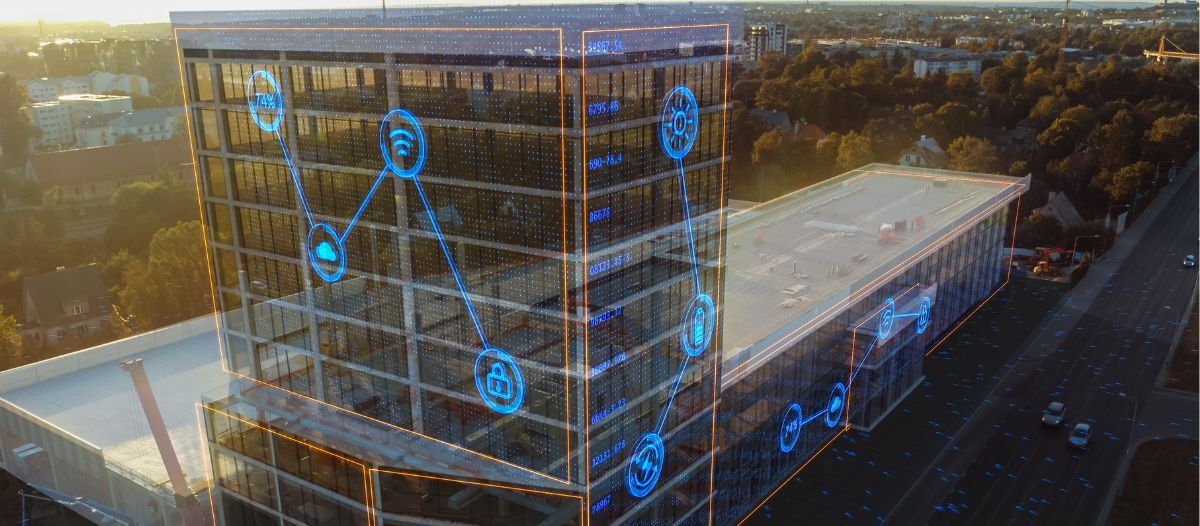
Connectivity has quietly emerged as one of the most consequential variables in building operations. Tenants treat reliable mobile service the way they treat running water and electricity, yet across commercial portfolios worldwide, in-building wireless remains one of the most misunderstood systems in the built environment. Facility managers inherit assumptions from ownership, tenants, information technology (IT) teams and sometimes carriers that do not match how wireless signals actually behave in modern buildings.
The cost of those misunderstandings is not abstract. Research consistently estimates that roughly 80 percent of mobile data traffic is generated indoors, and the Ericsson Mobility Report projects global mobile data traffic to more than double by 2031. At the same time, thermally efficient construction materials block radio frequency (RF) signals dramatically more than traditional materials, by some measurements 50 times more at lower public safety and cellular bands, and hundreds of times more at millimeter-wave frequencies.
 Here are 10 of the most common myths shaping facility-level connectivity decisions, and for each, a practical step facility teams can take, with or without ownership buy-in, to help close the gaps in understanding.
 Reality. This is the most persistent and damaging assumption in the market. Higher-frequency 5G spectrum, especially the mid-band and millimeter-wave ranges that deliver the headline speeds, penetrates modern building materials poorly. Low-emissivity (low-E) glass, reinforced concrete, metal-stud partitions and insulated facades all attenuate signal, and in thermally efficient buildings, that penalty is orders of magnitude worse than in older construction. The same design choices that reduce energy consumption also turn buildings into radio dead zones.
Practical step: Commission an independent in-building radio frequency survey. Any qualified in-building wireless integrator can perform one, and the resulting heat map is the single most useful document a facility team can put in front of ownership when requesting investment.
 Reality. Signal bars are a measurement of received signal strength. They say nothing about network capacity, congestion, interference or usable throughput. A device can display four or five bars and still drop calls, fail to connect to video conferencing platforms or deliver data speeds that make cloud applications unusable. This is especially common in dense buildings where hundreds of devices share the same cell sector during business hours.
Practical step: When tenants report connectivity complaints, ask for specific use cases that failed, such as a dropped video call at a specific time, or a file upload that stalled, rather than general signal impressions. Document location, time and carrier. Those data points are what an integrator needs to diagnose capacity problems versus coverage problems.
 Reality. Wi-Fi and cellular both solve connectivity problems, but the use cases tend to be different. Wi-Fi provides local-area data access. Cellular delivers mobility continuity, carrier-grade voice, short message service (SMS) and seamless handoffs as users move between floors, buildings and the outside world. Wi-Fi calling and Passpoint can layer on some of that experience, but they require device support, carrier agreements and network configuration that most properties are not prepared to maintain. For mission-critical tenant use cases and for emergency calls, cellular is not optional.
Practical step: Audit tenant expectations against what the building delivers. If tenants assume they can walk from a leased suite to a lobby, elevator or parking structure on an uninterrupted mobile call, the building needs dedicated cellular infrastructure, not more Wi-Fi access points.
 Reality. Globally, carrier-funded in-building deployments have declined sharply over the past decade. Mobile network operators now fund only the most commercially attractive venues, typically large stadiums, airports and urban flagship properties. For most commercial real estate, including mid-tier office, multifamily, industrial and health care, the responsibility for in-building coverage has shifted to property owners and operators.
 Practical step: Reach out to each major carrier serving the property and formally request a coverage assessment in writing. A written declination, or simply a lack of response, is useful documentation when building the business case internally for owner-funded infrastructure.
 Reality. They are not. Public safety communication systems, sometimes called emergency responder communication enhancement systems (ERCES) or emergency responder radio communication systems (ERRCS), are legally mandated, single-purpose networks that allow firefighters, police and emergency medical services to communicate inside a structure. They run on dedicated public safety frequencies, require their own amplifiers, antennas and backup power, and are subject to annual inspection under codes such as the International Fire Code (IFC) Section 510 and National Fire Protection Association (NFPA) 1225 in the United States, with broadly analogous regulatory frameworks in other jurisdictions. A public safety system does not provide commercial cellular service, and a commercial cellular system does not satisfy life-safety code.
Practical step: Keep public safety and commercial cellular projects on separate tracks, with separate stakeholders, separate budgets and separate inspection regimes. Treating them as interchangeable leads to failed inspections on one side and unmet tenant expectations on the other.
 Reality. Tenant expectations for high-performance mobile coverage have normalized across every asset class. Multifamily residents treat cellular as a utility when choosing where to lease. Industrial tenants depend on mobile connectivity for logistics, safety and increasingly for Internet of Things (IoT) deployments on the shop floor. Mid-tier office tenants walk away from otherwise acceptable spaces because of poor coverage. The asset class does not determine whether connectivity matters. It determines only how the investment is structured.
Practical step: Include a short connectivity line item in every tenant satisfaction survey, regardless of property type. The data collected, even in smaller buildings, usually surprises ownership and builds the case for investment far better than anecdotal complaints.
 Reality. Wireless demand roughly doubles every few years. Carriers refarm spectrum, introduce new frequency bands and retire legacy technologies on their own timetables. A system designed and installed over a decade can be functionally obsolete in the next, even if every component still works physically.
Practical step: Establish a five-year review cycle for any in-building wireless deployment. The review should cover carrier band support, system capacity relative to current usage, fault and alarm history, and vendor roadmap alignment. A short-written review, shared with ownership, makes future investment decisions far less contentious.
 Reality. Distributed antenna systems (DAS) remain an excellent fit for large, complex buildings, but they are one option among several. Small cells, hybrid active or passive architectures, private cellular networks using shared spectrum such as citizens broadband radio service (CBRS), and neutral-host models all serve different building profiles and different financial strategies. The right solution is a function of building size, tenant mix, carrier requirements and capital structure, not of what was fashionable five years ago.
Practical step: When evaluating proposals, require at least two distinct architectural options from prospective integrators, with a written explanation of why each was recommended. Comparing alternatives side by side almost always produces a better outcome than evaluating a single design in isolation.
 Reality. Connectivity now directly affects leasing velocity, tenant retention, asset valuation and day-to-day operational efficiency. A building with poor connectivity loses tenants to buildings that have solved it. Industry research has found that a significant share of real estate professionals believe dedicated indoor wireless can measurably increase property value. Treating connectivity as a back-office IT concern keeps the decision at the wrong table and typically produces underinvestment.
Practical step: Move in-building wireless governance out of the IT reporting line for property-level decisions, and into the same asset strategy conversations that cover building systems, tenant amenities and capital planning. The FM team, property management and ownership should all have seats at that table.
 Reality. Traditional capital expenditure (CapEx) models are no longer the only path. Network-as-a-Service (NaaS) arrangements, buyout models for aging systems, and shared-infrastructure partnerships shift spending from a single upfront investment to operating expense (OpEx) structures that can reduce long-term financial risk and improve balance sheet treatment. These models are now widely offered across North America, Europe and the Asia Pacific, and are particularly useful for portfolios that want to avoid concentration of capital in noncore infrastructure.
Practical step: When soliciting proposals, explicitly request a CapEx option, a NaaS option and, for buildings with legacy infrastructure, a buyout option. Comparing the three on a total-cost-of-ownership basis over seven to ten years generally reframes the conversation.
Moving from belief to practice
The pattern across all 10 myths is the same. Each one is intuitive, each one was once true, or at least partly true, and each one has been overtaken by how buildings, tenants and networks have actually evolved. Connectivity is no longer a specialty concern managed quietly in a telecom closet. It is a core feature of the tenant experience, a driver of asset value and, through the public safety lens, a matter of life safety.
FMs are the best-positioned role to see these issues first. Tenant complaints land on the FM team before they reach ownership. Carrier coverage gaps become service tickets before they become strategic concerns. And the facility team is usually the first to understand that a building's construction, retrofits and adjacent developments are changing its signal environment over time. That visibility is an asset. Put to work, it can drive better decisions across the portfolio.
The practical path forward is not dramatic. Survey the building. Document the problems. Ask the carriers. Separate public safety from commercial considerations. Evaluate options, not single proposals. Revisit the system on a defined cycle. Move the decision out of the IT silo. Compare CapEx against OpEx models on a full life-cycle basis.
None of these steps requires an extraordinary budget or authority. They do require treating connectivity as infrastructure rather than as an IT accessory. Buildings that make that shift are already pulling ahead in tenant satisfaction, leasing performance and operational reliability. Buildings that continue to operate under the 10 myths above are quietly falling behind, one complaint and one lost lease at a time. FMs are the ones who can head off this scenario and make a positive impact.

Craig Gillespie is the CEO of Airtower Networks. He has been active in the real estate and facilities management markets for more than 20 years, specializing in technology and services. Before joining Airtower, he served as managing director of MRI Software's Occupier division. Previously, Gillespie was the CEO of Manhattan Software.
References
Top image via Getty Images.
Read more on Facility Operations and Facility Technology & Data Management or related topics Facility Technology , Operational Technology and Operations and Maintenance Planning
Explore All FMJ Topics