
 Membership
 Network
 Regional Sites & Affiliates


 Events
 Participate
 Resources

 Training
 Credentials
 Government


 Content Channels
 Tools
Tools


 Business Overview





A Better Routine
Integrating sustainable waste management into operations
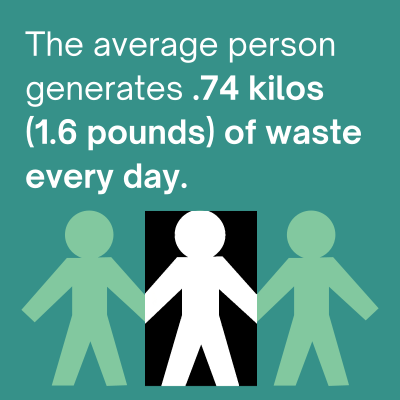
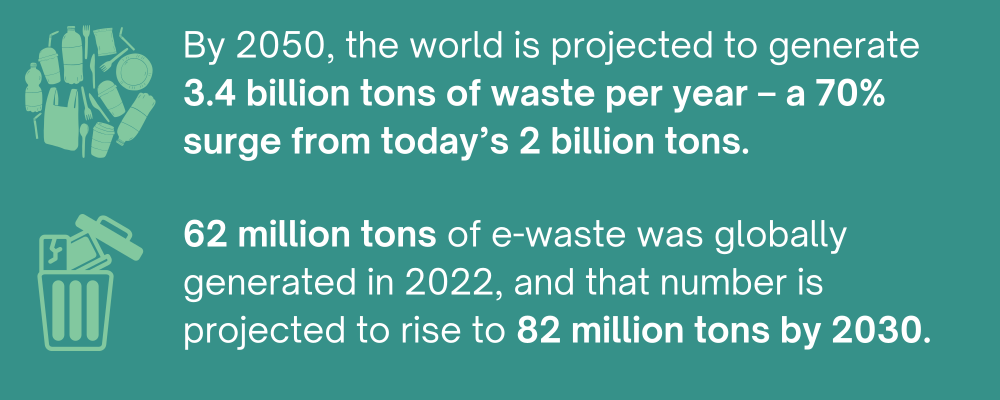
Imagine a future where 3.4 billion tons of waste are generated every single year. This is not a dystopian fantasy. It is the projected reality by 2050, a 70 percent surge from today's already staggering 2 billion tons. As urbanization spreads and consumption grows, so does the individual footprint, with the average person now generating 0.74 kilos (1.6 pounds) of waste daily.
Meanwhile, buildings account for a staggering 40 percent of global energy use and one-third of all emissions. These converging trends are more than statistics; they are a clear signal that the linear "take-make-waste" model is broken. The consequence is a dual crisis escalating ecological damage and crippling financial costs, demanding a radical rethink in how people design, build and consume.
FM lies at the heart of this challenge. Because buildings fall under their purview, the FM sector is both a major contributor to waste generation and a critical lever for sustainability solutions. Daily operations create a complex mix of waste streams, each carrying distinct environmental, health and regulatory risks. Food waste from cafeterias and catering services, for instance, can decompose anaerobically in landfills to release methane, a greenhouse gas (GHG) more than 25 times more potent than CO2 over a century. Globally, food waste contributes approximately 8-10 percent of total greenhouse gas emissions, and facilities represent a significant share of this burden. Implementing proper composting or anaerobic digestion within buildings can not only prevent harmful emissions but also convert waste into valuable energy or soil amendments, turning a major environmental liability into an opportunity for resource recovery.
By linking global waste trends and energy consumption directly to FM operations, it becomes clear that FMs are central to both the problem and the solution.
 Waste is piling up
Paper and packaging waste continues to be a substantial component of office-generated waste, accounting for nearly 25 percent of municipal solid waste worldwide. This includes single-use packaging, shipping materials and printing waste. With office paper consumption alone estimated at 35-50 million tons annually in large economies, FMs have a major opportunity to implement paperless workflows, encourage digital communication and establish robust recycling programs.
E-waste is one of the world’s fastest-growing categories. With 62 million tons generated in 2022 and projections rising to 82 million tons by 2030, facilities are directly responsible for a portion of this, primarily from IT equipment, servers, computers and peripherals. E-waste is particularly concerning because it contains hazardous substances such as lead, mercury, cadmium and brominated flame retardants, which require specialized handling and recycling processes. Improper disposal can lead to soil, water and air contamination, posing health risks to both workers and communities.
Plastic waste from consumables, such as single-use bottles, packaging and disposable utensils, adds to long-term landfill burdens and contributes to microplastic pollution, which has emerged as a critical global environmental threat. Similarly, construction, renovation and HVAC maintenance generate debris, scrap metals, chemical residues and other mixed wastes, which are often bulky and resource-intensive to process.
Hazardous waste is another key area under FM responsibility. Many cleaning agents, paints, fluorescent lamps, batteries, refrigerants, and medical or laboratory waste contain toxic substances that must be managed in accordance with strict environmental regulations. Improper handling can result in fines, regulatory violations, contamination and environmental damage.
Collectively, commercial and institutional facilities are estimated to generate 30-40 percent of urban solid waste, making FM a critical leverage point for sustainability initiatives. By implementing comprehensive waste segregation, recycling, composting and hazardous waste management programs, FMs can significantly reduce environmental impact, support circular economy initiatives, and improve compliance with local and international regulations. This diversity and volume of waste streams highlight that FM is not just a passive service function but a central actor in environmental stewardship. Effective management of these streams can turn a significant environmental liability into a strategic advantage, reducing costs, lowering carbon footprints and enhancing corporate sustainability profiles.
A comprehensive global waste characterization study by Great Forest Inc., which analyzed more than 100 commercial buildings, revealed that 62 percent of what goes into a building’s trash stream is not actually trash but material that can be diverted. This includes 36 percent organic waste such as food scraps, 14 percent glass, metal or plastic, 10 percent paper, 1 percent cardboard and a smaller fraction of e-waste. These findings highlight that FM operations are directly responsible for significant amounts of waste that could be recycled, composted or otherwise recovered. Commercial and institutional buildings are estimated to generate around 30-40 percent of total urban solid waste, showing the substantial role of FM in overall waste generation.
Studies by the U.S. General Services Administration indicate that up to 70 percent of municipal solid waste generated in office buildings, primarily made up of paper and food waste, could be recycled or composted. FM activities also generate hazardous and electronic waste, particularly from IT equipment, lighting, batteries, refrigerants and renovation projects, which add another layer of environmental responsibility. While global figures isolating FM’s exact tonnage are limited, it is clear that the sector is responsible for a significant portion of urban waste, and most importantly, a large share of it has the potential to be diverted from landfills if managed sustainably.
An FM-led clean-up effort
Yet FM also plays a decisive role in determining how these waste streams are managed, whether they end up in landfills, polluting air and water, or are reduced, recycled, composted, and in some cases, transformed into energy. Effective segregation programs, e-waste recycling partnerships and hazardous waste treatment protocols can drastically reduce environmental impacts. Studies show that recycling and composting initiatives in large facilities can cut landfill contributions by up to 60 percent, while smart waste monitoring systems improve collection efficiency and resource recovery.
This dual reality makes FM both a significant contributor to global waste and a powerful driver of solutions. By overseeing nearly half of global energy use, a third of emissions, and a substantial portion of operational and hazardous waste, FMs hold one of the most critical positions in shaping global sustainability outcomes. For FM companies, this is no longer just an environmental issue; it represents an operational and financial turning point. Rising utility costs, stricter waste disposal regulations, growing expectations for environmental, social and governance compliance, and stakeholder pressure are converging to demand immediate transformation. Organizations that invest in integrated, sustainable FM today can future-proof operations, reduce costs and enhance brand image, while those that delay face mounting expenses, compliance risks and reputational harm in a world where accountability is no longer optional.
The traditional FM model — reactive, resource-heavy and linear — has become unsustainable in an era defined by climate change and resource scarcity. The question is no longer whether to adopt sustainable practices, but how to embed them effectively while safeguarding performance and profitability.
Sustainability must shift from being treated as an optional add-on to becoming the foundation of FM operations. The transition to green practices is both a challenge and a strategic opportunity: reducing environmental impact, cutting operating costs and creating healthier, more resilient spaces for occupants. By adopting energy-efficient technologies, optimizing waste management, conserving water and embracing smart building solutions, FMs can lower expenses while strengthening long-term resilience. Sustainable operations also deliver secondary benefits, such as lower maintenance costs, extended asset life cycle and improved employee well-being factors that directly support productivity and business success.
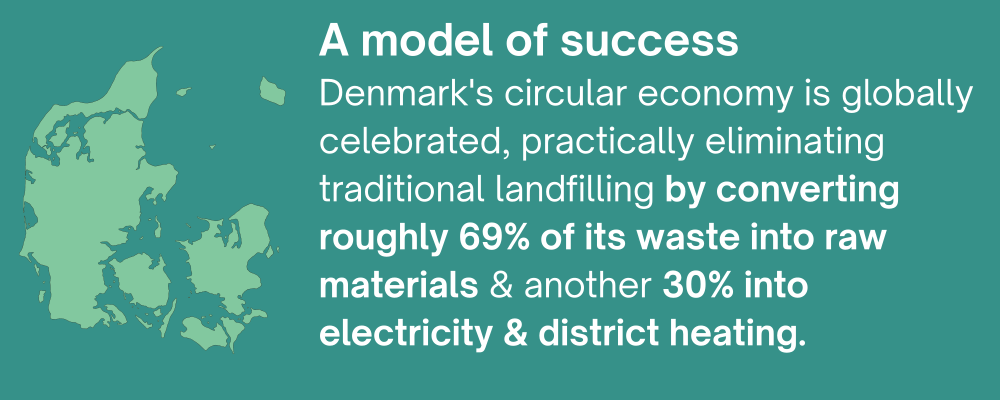
Waste reduction remains one of the most powerful levers for sustainable FM. Effective segregation of recyclables, compostables and e-waste minimizes landfill contributions, while partnerships with waste-to-energy plants transform nonrecyclable waste into valuable energy. Digital transformation — such as moving to paperless operations — further reduces unnecessary resource consumption. Denmark offers a leading example, recycling 69 percent of its waste and converting another 30 percent into energy. Circular economy approaches, such as sourcing recycled materials for office infrastructure or implementing electronics take-back programs, further strengthen sustainability outcomes and future-proof organizations against resource scarcity.
 The journey toward sustainability requires a strategic approach, starting with a comprehensive audit to identify improvement areas. Training staff on sustainable practices and setting measurable KPIs, such as a 20 percent reduction in energy use by 2026, ensures continuous progress. By embracing these strategies, FM companies can not only reduce their environmental footprint but also unlock cost efficiencies and strengthen their market position. Sustainable facility operations is an ongoing commitment that delivers short- and long-term benefits. From lowering utility bills to enhancing corporate social responsibility, green practices create a win-win scenario for businesses and the planet. The transition may require upfront investment but the long-term return on financial, environmental and reputation make it a necessary evolution for advanced FM.
 Influencing change
To address the diverse waste streams generated by FM, a multipronged approach is necessary, combining operational, technological and behavioral solutions. The first step is understanding the type, volume and source of waste. Conducting detailed waste audits helps FM teams identify key areas for improvement, whether food waste, paper, plastics or e-waste. Digital tracking tools and smart sensors can monitor waste generation in real time, allowing FMs to adjust operations, optimize collection schedules and measure the effectiveness of recycling and reduction initiatives.
Food waste from cafeterias and catering can be significantly reduced through inventory optimization, portion control and staff awareness programs. Surplus food can be donated where regulations allow. Organic waste can be composted on site using small-scale composters or sent to centralized anaerobic digestion facilities. In some cases, food waste can be converted into biogas, which can provide renewable energy for the building. Studies show composting food waste can reduce landfill contributions by up to 60 percent and substantially decrease GHG emissions.
Paper and packaging waste can be reduced by implementing digital workflows, encouraging e-signatures and adopting paperless billing and digital communication. Color-coded bins for paper, cardboard and plastics should be strategically placed throughout facilities with clear labeling to encourage proper segregation. Single-use plastics can be replaced with reusable alternatives, biodegradable and compostable options. Partnerships with recycling companies ensure that recovered materials are effectively processed, reducing landfill dependence.
E-waste, including IT equipment, servers and lighting systems, must be managed through certified recycling channels partners, which ensure the security of data. Organizations can implement electronics take-back programs, lease equipment to extend life cycles and plan for responsible disposal of outdated items. Hazardous waste, such as batteries, fluorescent lamps, refrigerants, cleaning chemicals and paints, should be managed according to local regulations, stored safely and treated through licensed disposal or recycling programs. Staff training on handling hazardous materials is essential to prevent environmental contamination and regulatory non-compliance.
Construction, renovation and maintenance activities generate significant contaminated lubricants, plastics, scrap metals, wood and chemical residues. FMs can implement deconstruction and material recovery plans to reuse metals, wood and concrete. Proper separation of construction waste on site reduces contamination and increases recycling rates. Green building standards like LEED and BREEAM encourage diversion of at least 75 percent of construction waste from landfills.
 Integrating circular economy principles can turn waste into a resource. This includes reusing office furniture, refurbishing electronics, recovering metals from maintenance activities, and collaborating with suppliers who offer take-back programs or follow extended producer responsibility programs. Waste-to-energy partnerships can convert nonrecyclable waste into electricity or heat, providing environmental and financial benefits. Behavioral change is critical. Employees, contractors and occupants should be educated on sustainable waste practices through workshops, signage and incentive programs. Encouraging participation in recycling and composting increases compliance and effectiveness of waste reduction strategies.
Facility managers can leverage building management systems and computer-aided FM to monitor energy and resource use, optimize waste collection, track environmental KPIs, reactive call and planned maintenance. Sensors in waste bins, automated sorting systems and smart waste management software help to identify inefficiencies, reduce unnecessary waste and measure progress toward sustainability targets. Sustainability should be embedded into operational policies and FPIs.
Example goals include reducing overall waste by 20 percent over a three-year period, increasing recycling rates to 70 percent, or cutting food waste by 50 percent. Compliance with local, national and international waste regulations not only avoids penalties but positions the organization as an environmental leader. Partnerships with waste management companies, recyclers, composting facilities and sustainability consultants amplify results. These collaborations provide access to technology, expertise and infrastructure that individual facilities may lack, ensuring that waste is managed efficiently and responsibly.
By adopting these strategies, FM can transform its role from a passive waste generator to an active sustainability driver. Not only does this reduce environmental impact and regulatory risk, but it also delivers operational savings, strengthens reputation, enhances the well-being of employees and life cycle of the building.

Aykean Forde CFM SFP, FMP, MBA, MA, is the facilities director of The International School Port of Spain in Trinidad & Tobago (grades Pre-K-12). Forde serves as a trustee of the IFMA Foundation, is an IFMA Qualified Instructor and a past member of the IFMA Global Board of Directors. An ambassador of FM, she passionately serves and collaborates with others to positively impact workplace experience while leading organizations towards making their vision a reality. She has also spoken at conferences in Trinidad and Tobago, the Bahamas and the U.S.

Izzat Ali Khan, SFP, FMP, is the general manager at EFSiM Facilities Services. A seasoned FM professional, he is passionate about creating a positive impact in business through sustainability. He focuses on integrating sustainability and innovation in businesses to build the FM industry and make the world a better place to live.
References
Top image via Getty Images.
References:
-
Global E-waste Monitor 2024
-
ITU
-
UNITAR
Read more on Leadership & Strategy and Sustainability or related topics Waste , Strategic Planning , External Awareness , Environmental, Social and Governance (ESG) and Sustainable Facility
Explore All FMJ TopicsRelated articles
-

Artificial Intelligence in FM
The stakeholder’s perspectiveBy Dr. Jake Smithwick & Dr. Kenneth Sullivan & Nneka Ubi05.01.2024 -
Mastering Change in Hybrid Environments
Insights from global operational leadersBy Meg Swanson09.02.2024 -

Plugged In
Solving the data disconnect in real estate and FMBy Amanda Muzzarelli & James Waddell07.01.2024
