
 Membership
 Network
 Regional Sites & Affiliates


 Events
 Participate
 Resources

 Training
 Credentials
 Government


 Content Channels
 Tools
Tools


 Business Overview




A Fundamental Right
Occupational health & safety for business sustainability

In the relentless pursuit of progress, productivity and profit, one of the most fundamental pillars of human dignity is often pushed aside: the right to a safe and healthy working environment. This right is universal and essential, whether in the quiet hum of a corporate office, the bustling floor of a factory or the towering heights of a construction site. Strong health and safety measures are not merely administrative checkboxes or compliance tasks; they are the shield protecting the most valuable asset of any organization: its people.
Unfortunately, history has repeatedly shown that importance of this principle is often recognized only after catastrophic tragedies force the world to confront the consequences of neglect.
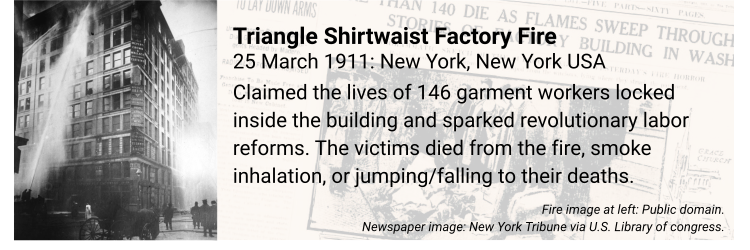
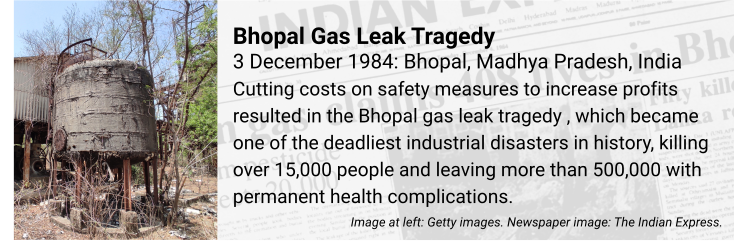
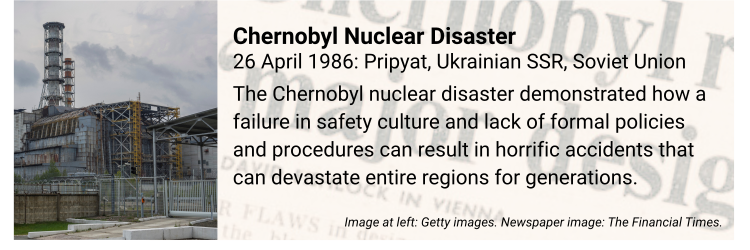
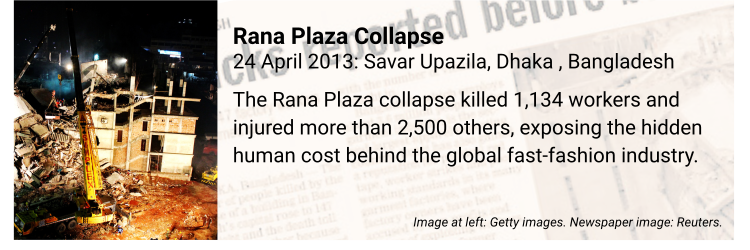
These events are not distant echoes of the past; they are stark reminders of the ongoing global challenges surrounding workplace safety. According to the International Labour Organization (ILO), an estimated 2.78 million workers die annually due to work-related accidents or diseases, while 374 million more suffer nonfatal injuries, many resulting in permanent disabilities. The economic toll is equally staggering, with poor occupational safety and health practices costing the global economy approximately US$3 trillion annually, equivalent to nearly 4 percent of the world’s GDP. Behind these statistics are real human stories: families grieving the loss of loved ones, communities disrupted and futures irreversibly altered. Not just data points, these numbers represent lack of social responsibility in pursuit of ever-growing profits.
Today, risks span across diverse sectors, including health care workers battling pandemics and facing physical and psychological stress; gig economy workers navigating unsafe roads without proper safety nets; miners and construction workers exposed to physically demanding and hazardous environments; and office employees struggling with stress, burnout and ergonomic injuries in seemingly “safe” settings. Addressing these risks requires more than regulatory compliance, it demands a cultural transformation wherein health and safety are deeply embedded in an organization’s core values. This involves investing in safer technologies, empowering employees through training and resources, enforcing strict accountability, and fostering an environment where individuals feel protected, respected and valued.
Each industry faces unique safety risks
Safety in the workplace is a broad concept that covers various areas, each designed to protect workers, equipment and the environment. Every sector faces different hazards and therefore needs to apply different sets of measures. For example, waste collection and processing expose workers to biological hazards, toxic chemicals, sharp objects, heavy machinery and hazardous environments. Common risks include manual handling injuries, traffic accidents involving collection vehicles, chemical exposure from improperly segregated waste, fires or explosions from flammable materials, and infectious diseases from untreated organic or medical waste.
To mitigate these dangers, comprehensive strategies must be implemented, such as proper personal protective equipment (PPE) for workers, rigorous training programs, automation to reduce direct contact with waste, effective waste segregation at the source and real-time monitoring of hazards using smart sensors. Advanced technologies, including IoT-based tracking systems, smart bins and automated composting machines, have transformed waste management by reducing manual labor, improving safety and optimizing operational efficiency.
Road transportation introduces its own set of risks, making safety rules important for protecting drivers, pedestrians and cargo through safe driving practices, vehicle maintenance and safe handling of hazardous materials. Long shifts and time pressures, coupled with dynamic traffic settings, can lead to fatigue increasing the risk of accidents. Ensuring drivers have adequate and frequent breaks and enforcing a strict “no driving under fatigue” policy contributes to safety.
Other means of transport, such as shipping or airlines, bring their own risks. For example, changes in time zones and irregular working hours can lead to disrupted sleep patterns, fatigue and psychological stress for air crew members. Moreover, exposure to vibrations, noise, cosmic radiation and poor cabin air quality can increase risk of chronic illnesses.
For industries that rely heavily on machinery, machine safety ensures that equipment is properly guarded, maintained and used only by trained personnel to prevent severe accidents. In offices and other work environments, ergonomic safety focuses on preventing strain and injury by promoting proper posture, using well-designed equipment and rotating tasks to reduce repetitive motion injuries.
Another growing area of focus is psychological and mental health safety, which involves protecting employees from stress, burnout, harassment and bullying by fostering supportive policies and access to mental health resources.
Finally, biological safety, or biosafety, is critical in health care, laboratories and waste management, emphasizing infection control, safe handling of biological materials and proper disposal of medical waste to prevent disease transmission.
How to ensure occupational health & safety?
The importance of health and safety extends far beyond the obvious realms of hard hats and steel-toed boots. Effective implementation demands a comprehensive, multifaceted approach that transforms rules from mere documentation into meaningful action, fostering a genuine culture of safety.
Role of leadership
This transformation must begin with strong, visible leadership at the very top. Safety should be championed by CEOs, boards and senior executives as a core organizational value, rather than treated as a delegated responsibility or a compliance checkbox. Striving for zero accidents and ensuring the well-being of employees should be a business priority, same as the profit generation.
Risk identification & management
The focus must shift from merely reacting to accidents and incidents to proactively identifying and mitigating risks through continuous monitoring and assessment. This requires cultivating a forward-looking mindset in which potential hazards are identified and addressed before they result in accidents. Periodical assessments of workplace hazards and ad hoc risk reviews in case of changes ensure that risks are recognized, which is a first step toward development of safety measures.
Health & safety measures
All risks should be avoided, and where that is not possible, they should be mitigated as much as possible. Safety measures include investments in high-quality protective equipment for employees and workplace (re)design to align with strict safety standards. Measures also include development of safety protocols, instructions, manuals and signalization to ensure that employees know how to operate equipment and act in case of nonstandard situations.
Equally important is ongoing, engaging training and education. Safety cannot be a one-time seminar or annual event; it must become a continuous, dynamic conversation that evolves with changing conditions and emerging challenges. Safety culture is built through safety campaigns, daily safety meetings and safety checks.
Beyond physical safety, it is employers’ responsibility to ensure mental well-being of employees through reasonable workload and deadlines, good work-life balance, good interpersonal relations and work autonomy. Some measures include free consultations with occupational psychologists, stress management workshops, teambuilding activities and frequent check-ins with employees.
Applying technology
Technology is also revolutionizing safety across industries. IoT sensors can monitor air quality, temperature and hazardous gas levels in real-time. Wearable technology such as smart helmets and vests can detect fatigue and alert supervisors to potential health risks. AI-driven predictive analytics can identify patterns and predict accidents before they occur, enabling preventive interventions. Mobile safety applications streamline reporting processes and ensure employees have instant access to safety procedures.
Employee engagement
Worker involvement is critical, as frontline employees often have the deepest understanding of the risks inherent in their tasks. Establishing safety committees, encouraging open communication and creating channels for anonymous reporting without fear of retaliation are essential steps in empowering employees to speak up and take ownership of safety. Vulnerable and marginalized groups of workers often avoid bringing up their worries as they fear loss of jobs, income and reputation. It is important to ensure that workers’ voices are heard, considered and acted upon.
Reporting & evaluation
Finally, clear accountability and transparent reporting are vital to sustaining this culture. The focus should be on learning and improvement, not punishment. Encouraging the reporting of near-misses and openly sharing lessons learned helps build trust and drive continuous improvement. By fostering an environment where safety is seen as a shared responsibility embraced by leadership, owned by workers, and reinforced through technology and accountability, organizations can move beyond compliance and create workplaces where safety is embedded in every action and decision.
FM’s role
Facility management plays a pivotal role in this transformation, as it encompasses the systems and services that keep buildings and infrastructure functioning while ensuring occupant safety. FM failures can lead to serious health and safety hazards, from structural accidents to fire outbreaks.
Key safety priorities in FM include fire safety through regular inspections and fire drills, electrical safety via routine audits and circuit protection, and maintaining indoor environmental quality by controlling air quality, lighting and temperature. Additionally, contractor and vendor management is critical to ensure that external service providers comply with safety regulations, while comprehensive emergency preparedness plans are essential to respond effectively to crises such as natural disasters, chemical leaks or security threats. IFMA studies show that organizations with strong safety-focused facility management programs report a 32 percent reduction in incidents, and an 18 percent decrease in maintenance costs, proving that safety drives both well-being and operational efficiency.
Benefits of a strong safety culture
It is a moral imperative that every worker has the right to return home unharmed. But it also makes undeniable financial sense, as preventing an accident is far less expensive than dealing with its consequences. A safe workplace is also an efficient one as healthy and safe employees are more focused, motivated and productive.
Safe and healthy workplaces are a precondition to employee satisfaction and trust in their employer. Improving workplace conditions and caring for employee well-being increases retention rates and reduces turnover costs. Additionally, low accident rates contribute to talent attraction, increasing the pool of potential quality candidates.
Furthermore, workplace injuries and illnesses lead to sick days, which result in lower productivity, production delays and costs. For example, providing ergonomic chairs and proper workstation set-ups can reduce lower back and neck issues, which can lead to fewer days missed due to chronic pain and discomfort. In that sense, preventive programs reduce productivity losses caused by unexpected absences.
Finally, reducing work-related stress and improving psychological safety of employees reduces the risk of burnout and ensures that employees remain focused, creative and productive.
Conclusion
Health and safety are a continuous journey and a shared responsibility. It is a contract between governments that set and enforce robust laws, employers who provide a safe system of work, and employees who follow procedures and speak up.
The tragedies of the past must serve as permanent reminders of what is at stake. Weaving safety into an organization’s fabric protects lives and livelihoods. Organizations that successfully build safety culture experience tangible benefits, including lower turnover rates, higher productivity, reduced insurance costs and, most importantly, the preservation of human life and well-being. By investing in organizational health and safety, employers and employees build a more resilient, productive and more humane world for everyone.

Izzat Ali Khan, SFP, FMP, is the general manager at EFSiM Facilities Services. A seasoned FM professional, he is passionate about creating a positive impact in business through sustainability. He focuses on integrating sustainability and innovation in businesses to build the FM industry and make the world a better place to live.

Stella Hrvatin specializes in leading companies through their sustainability transformation - helping them build future-ready ESG strategies, implement effective sustainability management systems, calculate and reduce carbon footprint and publish high-quality sustainability reports aligned with global standards. With a Master’s degree in Leadership for Sustainability, Hrvatin brings deep expertise in turning sustainability ambitions into actionable business strategies. Her experience spans major clients, including from sectors such as aviation, marine transportation, construction, manufacturing, healthcare, and retail, giving her a clear understanding of competitive advantage from green & digital transition. She played a key role in creating the first ESRS-aligned sustainability reports in Croatia and has delivered numerous corporate ESG training sessions. As a certified VSME expert and active member of the EFRAG’s VSME Community, Hrvatin contributes to shaping guidance and support systems for SME sustainability reporting across Europe.
Read more on Risk Management and Leadership & Strategy or related topics Occupant Safety , Occupant Health , Standards and Wellness and Well-being
Explore All FMJ TopicsRelated articles
-
A New Approach
Improving business continuity with alarm managementBy Brad Freeman09.09.2024 -

Beware of Growing Cyberthreats
Why it’s time for stronger facility cybersecurityBy Andrew Harris & Eric Headington10.30.2024 -

Going Up?
Keeping elevators safe & compliantBy Dave Myers & Doug Taylor11.06.2024
