
 Membership
 Network
 Regional Sites & Affiliates


 Events
 Participate
 Resources

 Training
 Credentials
 Government


 Content Channels
 Tools
Tools


 Business Overview





A New Mindset
Turning food waste management into resource recovery
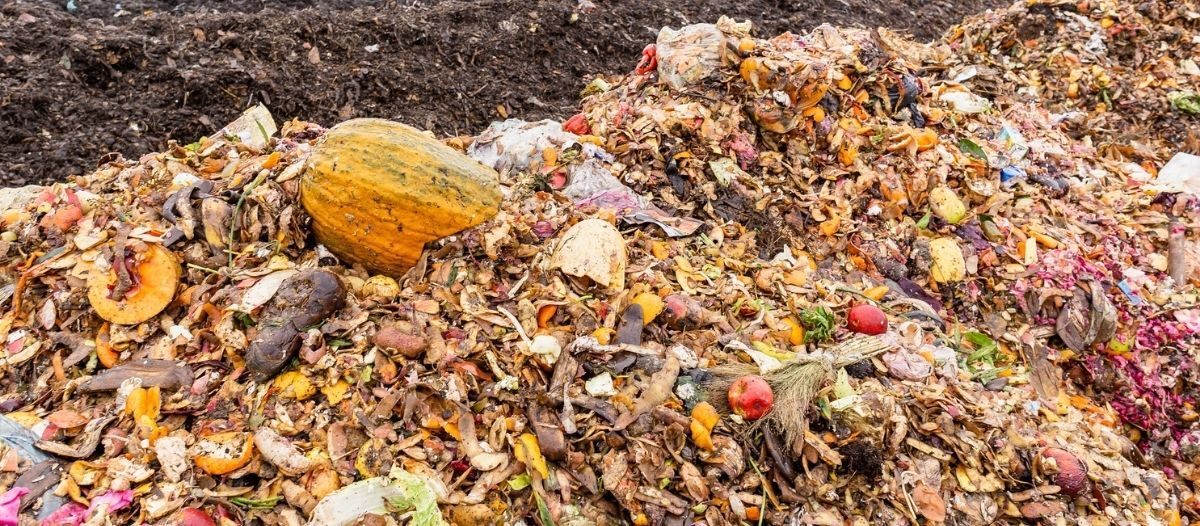
In a world seeking scalable, clean and circular solutions for organic waste, accelerated aerobic composting stands out as a transformative technology. It not only addresses environmental concerns but also supports economic efficiency, community-level engagement and long-term resource recovery. As global waste generation continues to rise, innovations like accelerated aerobic composting technology are becoming essential tools in building resilient, zero-waste, climate-friendly societies.
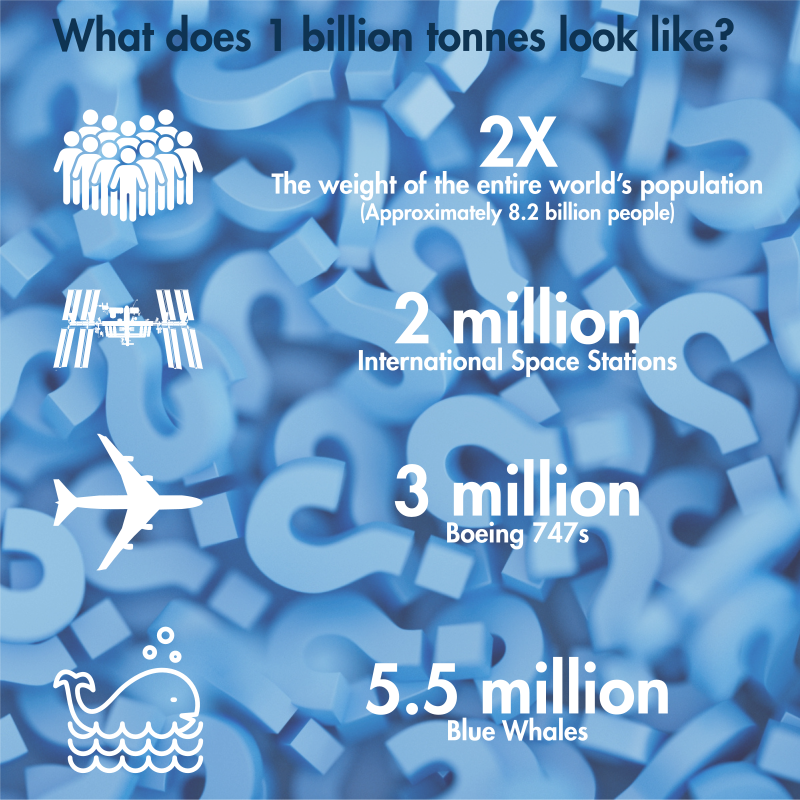
Rapid population growth, urbanization and rising consumption patterns are generating more global waste than ever before. Municipal waste has become one of today’s most pressing environmental challenges, with food waste at the center of this crisis. According to recent data, humanity now generates around 2.3 billion tonnes of municipal solid waste annually, a figure projected to increase by more than 75 percent by 2050 if current trends continue. Every year, approximately 1.05 billion tonnes of food are wasted at the consumer (households, retail, food service) level equivalent to roughly 19 percent of all food available to consumers. This implies that each person, on average, discards about 132 kg of food per year, with about 79 kg of that coming from the home. Every single day this translates to over 1 billion meals wasted worldwide, even as nearly 783 million people live with chronic hunger.
Much of this waste ends up in landfills, where it decomposes anaerobically and releases methane, a greenhouse gas with a global warming potential far greater than carbon dioxide. Food loss and waste combined account for 8-10 percent of global greenhouse gas emissions, rivaling the emissions of entire industries. In addition to its climate impact, wasted food represents a serious misuse of natural resources: producing that food consumes land (about 1.4 billion hectares, or nearly 28 percent of global agricultural land), water (around 250 km³ per year, enough to fill three times the volume of Lake Geneva) and energy all for nothing. Beyond the environmental footprint, food waste carries a staggering economic cost. The United Nations Food and Agriculture Organization (FAO) estimates the global cost of lost and wasted food at more than US$1 trillion annually, not only from the value of the food itself but also from the resources used to produce it.
Landfills that receive this organic waste pose long-term problems as they leach harmful compounds into soil and groundwater, occupy vast tracts of land and require expensive management. In low-income countries, as much as 90 percent of municipal solid waste ends up in unregulated dumps or is burned openly, further amplifying the problem. To confront this crisis, experts are calling for systemic change from reducing waste at the source, improving consumer behavior and redesigning food systems, to scaling up waste diversion solutions. Growing recognition of food waste’s scale and impact underscores the urgent need for more sustainable, circular approaches worldwide.
The global food waste problem extends far beyond environmental impacts. It is a glaring symptom of structural inefficiencies in food systems — inefficiencies embedded in every link of the supply chain, from farm to fork. In many parts of the world, farmers produce more than they can sell due to unpredictable demand and lack of market access, forcing surplus food to be discarded. In the retail sector, overly strict cosmetic standards for produce lead to large volumes of perfectly edible food being rejected, while in households and food service establishments, cultural norms often encourage the preparation of excess meals at weddings, religious celebrations, banquets and family gatherings that end up uneaten.
In regions lacking fertile land, or where food must be imported to meet local demand, wastage takes on even greater urgency. Every kilogram of discarded food represents not only lost calories, but squandered water in irrigated fields, wasted fossil fuels used in production and transport, and labor often underpaid invested by farmers and food workers. For example, agriculture accounts for around 70 percent of global freshwater withdrawals, meaning food that ends up in a landfill represents a waste of a mighty share of the world’s water resources. In countries that import large proportions of their food, the embedded “virtual water” in each meal used in production abroad is lost when food is thrown out.
Beyond the tangible costs, food waste also carries stark socioeconomic consequences. In areas where food insecurity is a daily reality, reducing food waste could improve access to nutrition and buffer price volatility. Economically, reducing waste could also stabilize food prices, improve farmers’ incomes and strengthen the resilience of food systems by reducing dependence on volatile imports. The scale and complexity of food waste challenge people to rethink how food is produced, distributed and consumed. It calls for innovation in logistics and cold-chain infrastructure, smarter food policy that rewards waste reduction, and cultural shifts that realign how food is valued. If the world succeeds, its inhabitants not only reduce emissions and economic loss, but also make food systems more equitable, efficient and resilient for future generations.
In many countries, traditional waste management systems, especially landfills, are struggling to manage rising volumes. Landfills release methane continuously, require extensive management systems to prevent contamination, and consume valuable land that could otherwise support agriculture, housing or natural ecosystems. As urban populations rise, the world urgently needs cleaner, more efficient and more circular solutions to manage organic waste.
One of today’s most promising innovations is accelerated aerobic composting technology, a modern solution designed to transform organic waste into valuable compost within 36 hours – a fraction of the time required by traditional methods that can take several months. Advanced accelerated composting machines convert organic waste into stable, nutrient-rich compost using a precisely engineered combination of biological, mechanical and digital controls.
These systems operate using the principles of thermophilic aerobic decomposition, wherein temperatures rise to between 55 C and 70 C – (131 to 158 F), hot enough to rapidly break down organic material, eliminate pathogens and destroy weed seeds. Unlike anaerobic decomposition, which produces methane, aerobic systems require continuous oxygen supply to maintain microbial efficiency.
The technology works through a carefully balanced process. Organic waste is mixed with carbon-rich materials such as sawdust or shredded cardboard to reach the ideal carbon-to-nitrogen ratio. Biocultures and a small amount of preprocessed compost jump-start microbial activity. The result is a stable, nutrient-rich compost that can be cured briefly and then used for agriculture, landscaping, home gardening and soil restoration.
To achieve this, these machines integrate automated mixers, forced aeration fans and oxygen-regulated chambers, ensuring that microorganisms receive optimal airflow at every stage of the process.
Moisture content is another critical factor. Effective decomposition requires a moisture range of 45-60 percent, and advanced composters continuously monitor this through built-in sensors. When moisture levels fall outside the ideal range, the system adjusts conditions automatically to maintain peak microbial activity. Digital monitoring panels track parameters such as temperature, humidity, oxygen concentration and mixing cycles, offering operators real-time visibility and full control over the process.
To address one of the most common concerns with organic waste treatment odor, these machines are equipped with biofilters, activated carbon scrubbers and deodorization chambers. These units capture volatile organic compounds (VOCs), ammonia and sulfur-based gases, ensuring that the surrounding environment remains odor-free. This makes accelerated composting viable even in high-density urban environments, where space, cleanliness and air quality are major considerations.
The versatility of this technology is one of its greatest strengths. Accelerated composting units come in a wide range of capacities, from compact 25-50 kg/day machines suitable for restaurants and small communities, to large 1-5 ton/day systems used by municipalities, hospitals, universities, shopping centers, industrial kitchens and residential complexes. This flexibility allows both centralized operations such as municipal waste facilities and decentralized solutions such as individual buildings or neighborhoods to adopt the technology without requiring large land areas or complex infrastructure.
Because of their fast processing times and minimal operational requirements, accelerated composters also significantly reduce waste collection frequency, transportation costs and landfill dependency. In settings where landfills are distant or waste logistics are challenging, these machines provide immediate on-site treatment and reduce the burden on municipal waste systems. For organizations pursuing sustainability targets, they offer quantifiable benefits: reduced carbon footprint, lower operational costs, diversion rates of 80-90 percent for organic waste streams, and the production of high-quality compost that can be used for landscaping, gardening, agriculture and soil rehabilitation.
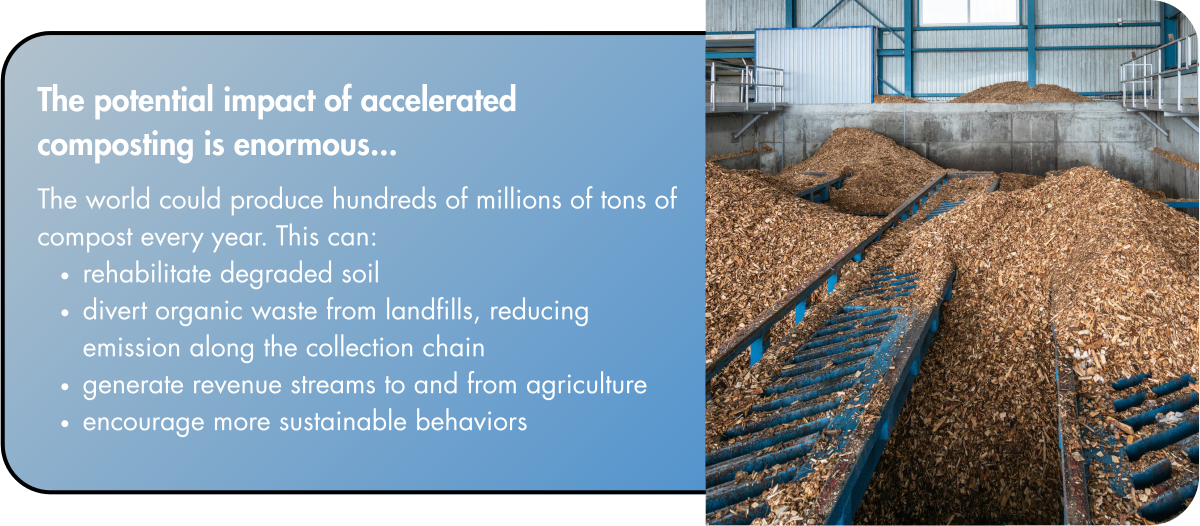
When applied on a global scale, the potential impact is enormous. From more than 1 billion tons of annual food waste, the world could produce hundreds of millions of tons of compost every year. This compost could be used to rehabilitate degraded soils, support tree-planting programs, reduce reliance on chemical fertilizers and improve agricultural productivity. In regions suffering from soil depletion or desertification, compost restores organic matter, increases soil water retention and enhances soil biology, making farming more resilient to climate change.
The environmental benefits are equally significant. Every ton of food waste diverted from landfill reduces methane emissions and the need for new landfill sites and avoids potential groundwater contamination. On average, composting prevents roughly 0.7 tons of CO2-equivalent emissions per ton of organic waste processed. If even half of global food waste were composted, the world could avoid hundreds of millions of tons of greenhouse gas emissions every year. This would make composting one of today’s most impactful and immediate climate mitigation strategies.
The economic case for composting is strong as well. Efficient composting systems reduce the cost of waste transportation, landfill management and waste-related environmental controls. Compost can be sold to farmers, landscapers, nurseries and municipalities, generating new revenue streams. Regions that spend heavily on imported fertilizers can offset those costs by producing nutrient-rich compost locally. Additionally, the global market for sustainable agriculture and soil-restoration products continues to grow, creating opportunities for new green businesses.
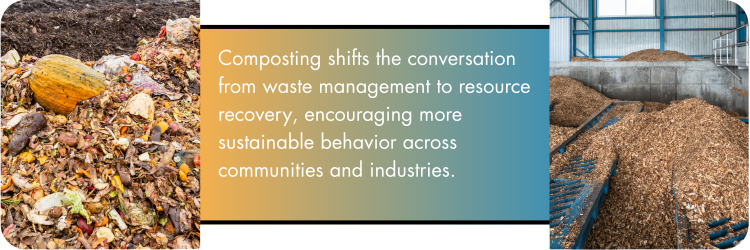
Composting also supports the broader goals of the circular economy by shifting the conversation from “waste management” to “resource recovery,” encouraging more sustainable behavior across communities and industries. More schools, hotels, restaurants, municipalities and residential complexes are demonstrating leadership in sustainability by adopting on-site composting systems to reduce their environmental footprint.
Modern thermophilic composting is not merely an alternative waste treatment option; it is a practical, scalable and environmentally transformative solution to the global food waste crisis.
However, the full potential of this technology can only be realized through supportive policies, infrastructure investment and widespread public awareness. Governments, businesses and communities must work together to integrate composting into mainstream waste management strategies, promote behavioral change and encourage innovation in organic waste processing. Education and community engagement will play a crucial role in shifting cultural attitudes toward waste, fostering a mindset that views organic waste not as a burden but as a resource.
Thermophilic composting embodies the principles of the circular economy: transforming waste into value, closing resource loops and aligning environmental responsibility with economic efficiency. With continued technological advancement and global collaboration, the world has a remarkable opportunity to convert one of its largest environmental challenges into a powerful catalyst for sustainability. If facility managers and organizations embrace accelerated composting at scale, they can steer societies toward a cleaner, more resilient and regenerative future where food waste becomes a driver of environmental restoration rather than environmental harm.


Izzat Ali Khan, SFP, FMP, is the general manager at EFSiM Facilities Services. A seasoned FM professional, he is passionate about creating a positive impact in business through sustainability. He focuses on integrating sustainability and innovation in businesses to build the FM industry and make the world a better place to live.
Read more on Sustainability , Facility Technology & Data Management and Emerging Topics or related topics Sustainable Facility and Operations
Explore All FMJ TopicsRelated articles
-

Smart Building Control Systems
The foundation for a grid-interactive buildingBy Andre Marino09.25.2024 -
Smart Building Innovation
Cutting costs & carbon footprints without compromiseBy Andrew Butterworth09.12.2024 -
Chart the Path
Building sustainable cities & a sustainable futureBy Izzat Ali Khan & Aykean Forde12.16.2024