
 Membership
 Network
 Regional Sites & Affiliates


 Events
 Participate
 Resources

 Training
 Credentials
 Government


 Content Channels
 Tools
Tools


 Business Overview




A Perfect Partnership
How HR & FM shape the modern workplace

Traditional facility management includes a near-universal set of operational responsibilities: maintenance, space planning, vendor management and making sure the building functions. While that is all part of the role, cross-departmental collaboration with human resources (HR) ensures that the people who use that space can work in a productive, positive environment.
HR and FM are so deeply connected that once combined, they create one of the most strategically influential partnerships inside a company. People do not just work for an organization, they work in one. And the physical environment plays a far bigger role in culture, productivity and engagement than most executives initially assume.
This is why the HR-FM partnership is becoming a modern competitive advantage. When these two functions work together, they can influence how employees feel the moment they walk in the door, how teams collaborate, how hybrid work actually functions, and how the C-suite makes decisions about the future workplace. But none of that happens by accident. It happens through data, shared visibility and a proactive understanding of how people and place are intertwined.
 When HR and FM collaborate, they can share powerful data, which elevates FM’s voice at the executive table. Employee experience surveys are one of the strongest tools FM leaders have, and yet they are often overlooked or used only reactively. When used to gather insights into the workplace environment, executives often discover that employees are not asking for large-scale renovations or dramatic design changes.
Instead, they are asking for practical, high-impact improvements that immediately shape their day-to-day experience, removing outdated dividers that block collaboration, adding a privacy booth for calls, adjusting temperature zones, or replacing uncomfortable or outdated furniture. These small frustrations accumulate, and when FM and HR walk into the CEO’s office with clear data showing how these improvements impact productivity and morale, the conversation shifts. It moves away from “Is this update necessary?” to “How fast can we make this change?” Data clarifies priorities and gives FM the credibility it deserves as a function that directly influences employee performance.
But data is only one piece. There is an emotional element to the workplace that is more subtle yet equally powerful. When employees walk into workplaces that feel too warm, too cold, dim, outdated or simply neglected, their reaction is immediate. Before they check email, attend a meeting or start their workday, the environment has already shaped their mindset. While a clean, modern, comfortable space signals that the organization values its employees, a neglected environment sends the opposite message. Preventive maintenance, lighting, consistent temperatures and functioning equipment are emotional cues as much as operational ones. FM leaders who prioritize these details shape morale, whether they realize it or not.
Great FM leaders can read the environment, observe workplace dynamics in real time and anticipate needs before they become friction points. FMs sit at the intersection of people and space. They see how employees use rooms, where they gather, which areas feel productive, which are consistently avoided and how the energy shifts throughout the day. Unlike many leadership roles that operate primarily in meetings, FMs witness the true heartbeat of the organization. They see who avoids certain spaces. They observe when collaboration feels natural versus forced. They notice when employees linger, when they rush out or when the environment itself becomes a barrier to connection.
FMs who translate these observations into proactive solutions are invaluable. Instead of waiting for surveys, complaints or HR escalations, they come to HR leaders and say, “Here’s what I’m seeing, here’s what it means and here’s what we can do about it.” They might notice that a team rarely uses its designated area because the seating is not functional for their workflow. They might observe that newer employees gravitate toward different spaces than long-tenured employees, indicating a cultural shift. They may notice a department consistently working in isolation simply because physical barriers make collaboration inconvenient.
FM leaders with this skill become early detectors of culture. They identify workplace friction before HR ever hears about it. When they bring forward thoughtful, data-supported recommendations, they enable HR to stay ahead of employee sentiment. This type of FM leader is not just maintaining a building; they are shaping a dynamic ecosystem that supports how people work today. They are not only partners to HR, but strategic advisors who provide insights HR simply cannot see from a desk or dashboard.
When HR and FM leaders operate with this level of shared awareness, they can shape the future workplace with intention rather than reaction. This directly leads into one of the most transformative practices: planning workplace experience a full year in advance. Each October, HR and FM should collaborate to build a comprehensive annual experience calendar.
This is not just a list of events; it is a strategic plan that aligns culture, engagement, team connection and business priorities. It includes employee moments, culture activations, cross-functional mixers, all-hands meetings, hybrid engagement strategies and seasonal touchpoints. Presenting this to the CEO as a cohesive plan with the budget attached changes the entire dynamic. Instead of sporadic or reactive culture moments, the FM team delivers a consistent roadmap for connection. And employees feel the difference immediately.
Designing the workplace with intention also requires an understanding of generational needs. A workplace designed in the 1980s or even early 2000s rarely supports the way people collaborate today. Millennials and Gen Z expect environments that blend functionality with inspiration. They want spaces that feel clean, modern, energizing and conducive to creativity, not fluorescent-lit hallways with beige cubicles. Meanwhile, older generations may prefer quiet, designated areas that allow for deep focus.
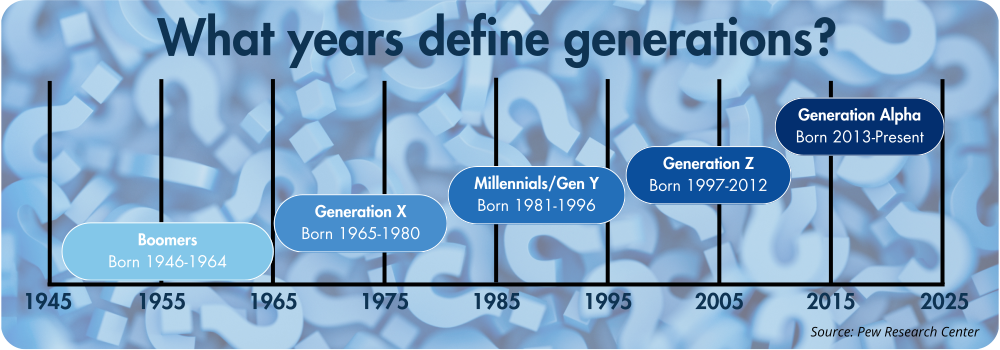 A modern workplace needs both. The FM-HR partnership ensures that the environment is not accidentally optimized for only one group. It incorporates private phone booths, quiet zones, open collaboration areas and refreshed common spaces to create a workplace that serves everyone rather than a select few.
Meetings and gatherings reflect this same principle. Engagement does not come from forcing attendance; it comes from creating meaningful, enjoyable moments. Adding small elements of fun — a quick guessing game, music to start the meeting, a donut or breakfast moment, or asking employees for creative input — transforms routine gatherings into experiences. These small details build connections and help employees feel seen. They also combat the monotony that often plagues hybrid environments. Again, FM plays a major role here. The layout of the room, the comfort of the seating, the acoustics, the lighting all shape how engaging a meeting feels. HR can design the agenda, but FM designs the experience.
One of the most powerful mechanisms that can be implemented is to prevent culture from becoming siloed by launching a cross-functional culture committee. This group unites employees from every generation, department and level to help shape the hybrid and in-office experience. It is incredible to see how many employees want to participate once they realize their ideas will influence the workplace. They can offer perspectives HR and FM could never fully see on their own. They help test new concepts, gather feedback from peers and shape initiatives in ways that resonate across an organization. The committee can also build natural collaboration and community — people are able to meet colleagues they never would have interacted with otherwise. It reminds everyone that shaping culture is not the job of HR or FM alone; it is a shared responsibility.
When HR and FM unite in this way — grounded in data, attuned to emotional cues, proactive in solutions, intentional in planning and inclusive in design — they influence the C-suite differently. They stop approaching executives with one-off asks and begin presenting strategic insights. They can speak confidently about how physical space impacts retention, how comfort influences performance, how design shapes collaboration and how employee expectations evolve by generation. They become not only operators, but architects of the future workplace.
The most compelling part of this partnership is the shift in perception it creates for FM. Instead of seen as a cost center or a behind-the-scenes function, FM becomes a driver of culture, productivity and talent attraction. And HR, instead of focusing only on policy and employee life cycle moments, becomes a holistic steward of the environment in which people work. Together, they form a unified voice that elevates employee experience to a strategic business priority rather than a reactive initiative.
The future workplace is not just about hybrid schedules or modern design. It is about how people feel in the environments where they work and whether those environments support their best performance. The HR-FM partnership is the engine that makes this possible. For companies willing to invest in this collaboration, the benefits extend far beyond employee satisfaction. They create workplaces where people want to be part of environments that inspire belonging and cultures that can withstand change with resilience and connection.

Tara Secue of Flex HR is a strategic and results-driven HR professional with a proven track record in HR transformation and commercial excellence. Overseeing end-to-end talent strategy, she brings a wealth of experience in recruiting, talent development and organizational effectiveness.
Read more on Leadership & Strategy and Communication or related topics Collaboration , External Awareness and Occupant Services
Explore All FMJ TopicsRelated articles
-
Artificial Intelligence in FM
The stakeholder’s perspectiveBy Dr. Jake Smithwick & Dr. Kenneth Sullivan & Nneka Ubi05.01.2024 -
Mastering Change in Hybrid Environments
Insights from global operational leadersBy Meg Swanson09.02.2024 -

Plugged In
Solving the data disconnect in real estate and FMBy Amanda Muzzarelli & James Waddell07.01.2024
