
 Membership
 Network
 Regional Sites & Affiliates


 Events
 Participate
 Resources

 Training
 Credentials
 Government


 Content Channels
 Tools
Tools


 Business Overview





Adaptive Reuse
Repurposing vacancies to revive neighborhoods
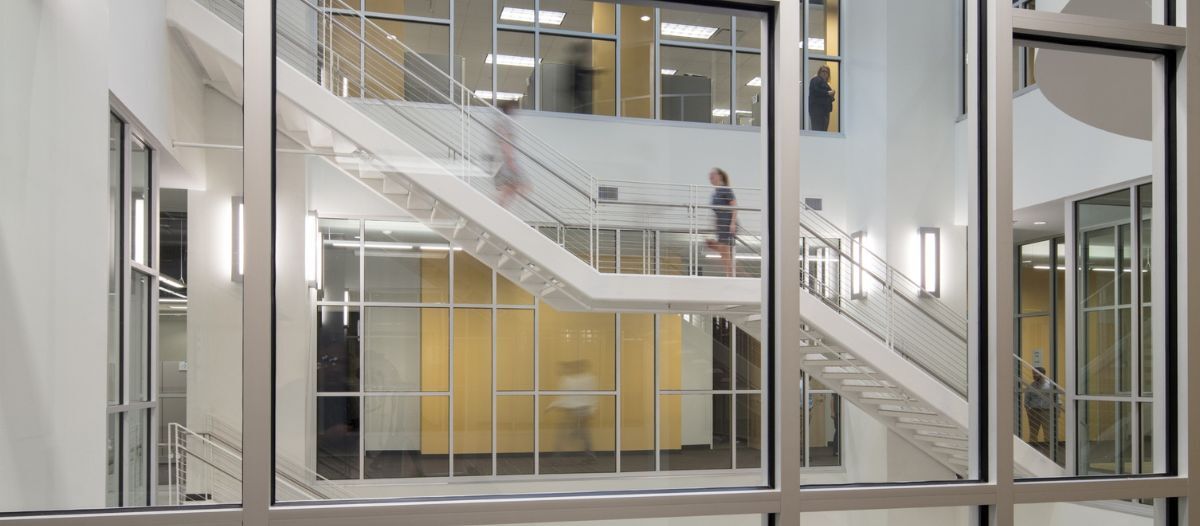
The internet has changed many things and how people shop has perhaps experienced the largest change. Instead of going to brick-and-mortar stores, people can shop from their phones and other devices with the literal click of a button. Retail is not what it used to be and with the changing retail landscape, many buildings and shopping malls have been abandoned or left vacant with no new tenants in need of the space.
Those vacancies can be detrimental to developments and fuel a downhill spiral that can leave once-thriving areas completely desolate. Developers and building owners are thinking differently to put those vacant buildings back into commerce. Enter adaptive reuse. There are many considerations that should be considered when determining if adaptive reuse is right for a specific facility.
How to plan
The first step in planning is to assess the facility and its surrounding area.
-
Does the size of the facility lend itself towards conversion to a workplace?
-
Are there any potential tenants in this area of town who could benefit from occupying this facility?
-
Are sufficient amenities located in close proximity?
-
How might the conversion of this facility help to revitalize the surrounding area?
Once these questions are answered, the physical planning can begin. In ideal cases, a lease would already be in the works for the space, so the planning could be geared around an actual tenant’s space requirements. However, if that is not the case, the planning stage must provide a flexible space that could accommodate a variety of work styles.
In either case, the core and shell renovations are the first to take place, including assessing the current site, roof, building envelope, mechanical and electrical systems, and vertical circulation. Having a contractor on board from the beginning can be a big plus as field verification and discovery takes place. This helps also with cost estimating from an early stage.
Once the core and shell has been designed, the interior of the space becomes the focus. A critical step is gathering programmatic information about how the space will function. This will inform the space planning. The point when the space plan transforms into a schematic design is a good milestone for another round of cost estimating, to keep the project in check. When the design is developed into construction documents, the final round of cost estimating can take place. Because this has been an ongoing process since the project inception, this is more of a check-and-balance step, as the cost typically does not vary tremendously at this point in the project.
Advantages
Adaptive reuse has many advantages and is one of the most sustainable initiatives one can take.
The adage of reduce, reuse, recycle rings true here. Adaptive reuse can put buildings back into commerce, which can help revitalize an area.
When buildings sit vacant, the surrounding businesses lose customers which, in turn, hurts their businesses. When buildings are put back into commerce, the building’s occupants have wants and needs such as food, shopping and entertainment. Businesses that provide those services in close proximity are beneficial to the occupants and are likely to be well utilized. When businesses thrive, entire areas thrive. It’s an undeniable ripple effect.
Adaptive reuse can serve as a catalyst of resurrection for a city. Just as the ripple effect of the area around the building was described above, the same can be applied on a larger scale. When a building is revitalized, the immediate area around it becomes revitalized. When an area becomes revitalized, neighboring areas see the example that has been set, and many times become revitalized themselves. This phenomenon can multiply until an entire town or city experiences a full resurrection. But it must start somewhere. Adaptive reuse can create catalysts for change by creative repurposing of buildings.
Case study
To understand the complexity of the case study project, one must first understand the statistics of the tenant. This tenant was a healthcare provider. This space involved 500 people within 11 departments and 26 sub-departments. The move coordination involved 10 phases over four months, eight vendors, and no downtime for employees. The employees were relocating from four different facilities around the city. The design process and method of coordination required for an adaptive reuse build-out and move of this size complexity were intense. The first step was to recognize the building constraints and opportunities. A former department store might have constraints such as minimal exterior windows, minimal points of entry, inefficient mechanical and electrical systems, old equipment and multiple floor thicknesses (i.e. concrete dap outs for stone adjacent to carpeted floors). Opportunities could include large open spaces, expansive ceiling heights, and various options for new layouts. In the case study building, an atrium enclosure, monumental stair, and clerestory windows were added at the center opening to provide natural light throughout the space. The creative use of glass allowed natural light to infiltrate most areas of the space. A new roof was installed, along with restrooms, elevators and energy-efficient mechanical and electrical systems. The subfloor surfaces were also leveled. The project required coordination between several entities: building owner, real estate company, regulatory agencies, tenant (including design, real estate, and departmental teams), architect, engineers, contractors, furniture and equipment vendors, movers and IT specialists. The process of coordinating with these types of entities on any project thoroughly, yet efficiently, was key. Thorough planning on the front end helped to alleviate issues on the back end. Having a process of meetings, design reviews, approvals, and milestone markers was critical, as were communication and documentation. Making sure everyone was aware of the decisions that had been made, and having that in writing, was key to moving the project forward. Having the key decision makers at the table was also critical to moving a complex project along efficiently. At completion, this case study project proved to be a great success. The former run-down department store turned makeshift medical clinic was transformed into Class A office space. It is a prime example of adaptive reuse at its best. The owner now has a fully occupied building which has been brought back into commerce. The neighboring businesses now have new customers which has helped those businesses to thrive. The tenant now has a large portion of its staff working in the same place which increases efficiency of operations. |
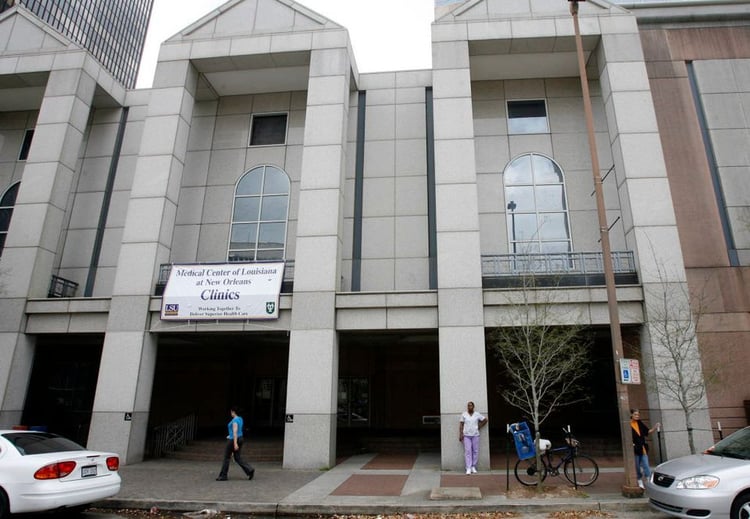 One case study is of a three-story 100,000 square-foot building in the heart of the New Orleans, Louisiana, USA’s central business district. The building is situated in a prime location: on a major city street and adjacent to a professional football stadium. The building originally housed Lord & Taylor department store. With the change in retail, the store closed in 2004. After Hurricane Katrina hit in 2005, the building became a make-shift medical clinic for LSU Medical Center, until 2015. In 2016, the building was renovated and converted to Class A office space. This is a great example of adaptive reuse and the process involved to create a successful product.
Other types of adaptive reuse
Opera company to general store to mixed use development
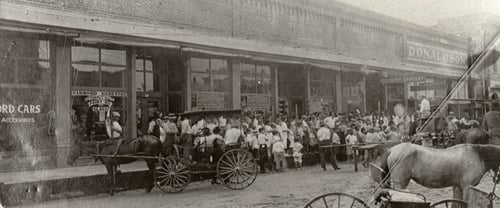 The Baltzell Building in historic downtown Hammond, Louisiana was first built in the late 1800s as a two-story wood framed structure that housed the Hammond Opera Company on the second floor. After a fire destroyed much of the building, the top story was removed and the building was reconstructed as a one-story solid brick masonry structure with 15-foot high ceilings. The fourth bay was later destroyed during another fire, except for the brick masonry, and it was never reconstructed.
With the new renovation to the Baltzell Building, the fourth bay was restored to its original character, which included reconstructing the storefront windows, canopy, and the brick masonry wall above. The original cast iron columns in the fourth bay were salvaged after the fire and were restored and reinstalled as well. Reconstructing the façade of the fourth bay completes the building’s edge along the streetscape.
The Baltzell Building was converted into seven townhomes, two lofts, and one commercial space located in the first two storefront bays. The site plan features a central courtyard connecting the front units with the back units. The courtyard space is open to above, where the original roof structure was removed and salvaged to be reused as screening elements in the tenant spaces. The courtyard was made continuous through the building by creating three 8 by 12-foot openings in the brick masonry walls that divide the four bays. The back units are accessible through the courtyard and from an entrance lobby and corridor located at the fourth bay.
Within the courtyard, there are four large planters to allow for trees and vegetation, which can be viewed from all units. All of the back courtyard units also have a 5-foot wide patio in back where a portion of the original roof structure was removed and salvaged.
The renovation of the Baltzell Building is fostering the expansion of Hammond’s downtown in the southerly direction. It is a very successful example of adaptive reuse.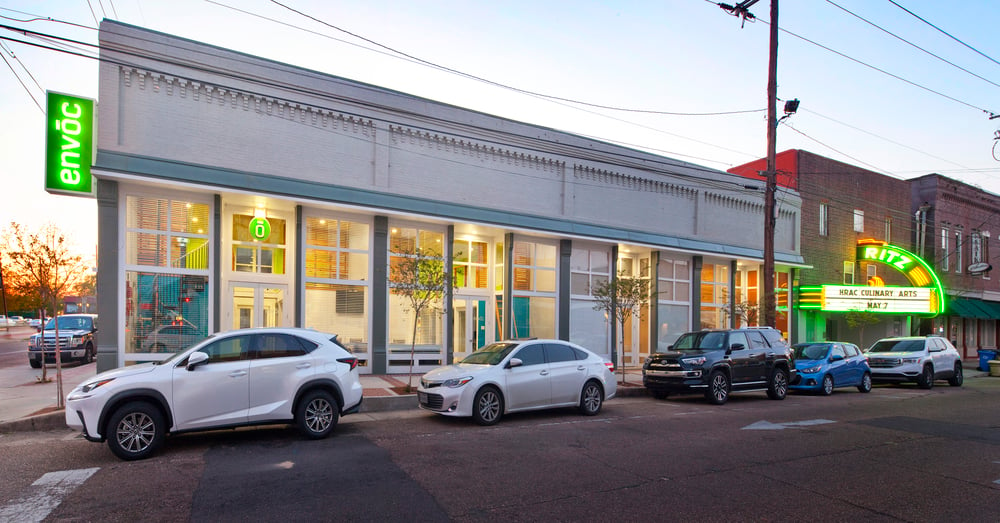
Quonset Hut to boutique hotel
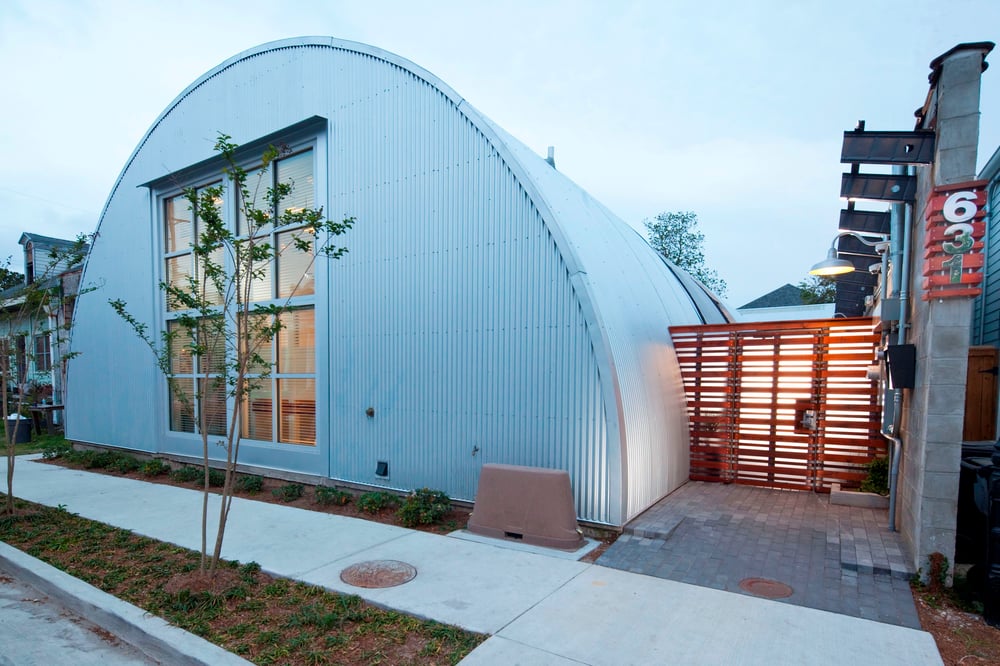
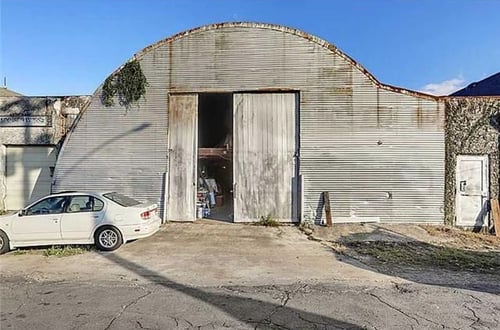 The Moon at 631 Desire Street is the renovation of an historic Quonset Hut structure located in New Orleans, Louisiana. A Quonset Hut is a lightweight prefabricated structure of corrugated galvanized steel having a semicircular cross-section. Many were produced during World War II and military surplus was sold to the public. The development of the prototype is considered one of the first pre-engineered metal buildings.
The building originally was used for storage and support space for a small service-related business. In its state prior to rehabilitation, the building was deteriorated on the exterior, but the main “bones” of the structure were intact and serviceable.
After an initial analysis, the architects realized that the building with a structural spacing of 4 feet on center could be treated like a loaf of bread. By removing certain slices, natural light could be acquired and used to enhance the living environment. This identified a central courtyard in which all en suite bedrooms could be located. The access from the alley was removed and left open to the exterior. This allowed a private gate with digital access lock to be installed. The bedrooms surrounded this courtyard and the front apartment can be rented separately or can become the home base for all or a portion of the bedroom units that are being rented.
The exterior was stripped of its original deteriorated skin and a new wood deck and metal skin were installed. The envelope was insulated, and the interior curved ceilings were sheeted with corrugated metal. The street-facing façade was restored and the windows facing the street were designed to emulate the original doors. The courtyard was covered by a canvas awning to create shade and rain protection for the outdoor living area. The building is in operation and is rented on a short-term basis to individuals and groups who are going to New Orleans to enjoy the city and the experience.
 These examples of adaptive reuse have proven that investing in the transformation of facilities can revitalize not only the facilities, but the communities around them as well. Adaptive reuse is an incredibly positive thing that can be a catalyst for change in communities around the world.

Mary Guiteau has more than 28 years of commercial design experience, working with owners, facility managers, users, developers and real estate companies in all building typologies. She is a member of IFMA Baton Rouge chapter. A graduate of Louisiana State University, Guiteau is associate principal/director of Interior Design at Holly & Smith Architects, APAC.
References
Top image via Getty Images.
Article images courtesy of Holly & Smith Architects.
Read more on Facility Operations , Sustainability and Real Estate or related topics Asset Management and Sustainable Facility
Explore All FMJ Topics