Membership
 Network
 Regional Sites & Affiliates


 Events
 Participate
 Resources

 Training
 Credentials
 Government


 Content Channels
 Tools
Tools


 Business Overview





Alive & Well
Biophilic elements in higher education design
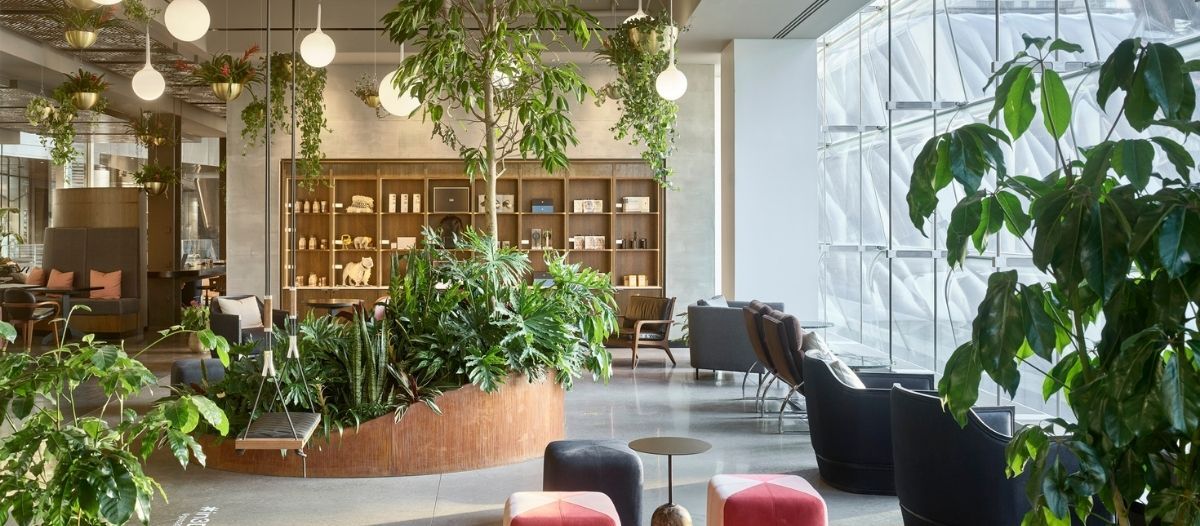

This quote is widely attributed to American architect, writer and educator Frank Lloyd Wright, and the thought is highly visible in his work. Incorporating natural elements and designing around natural landscapes became the inspiration behind many of Wright’s iconic home designs of the early-to-mid 1900s. Today, biophilic design – the practice of reconnecting people and nature within the built environment – is alive and well in higher education spaces, and for good reason.
Wright was right. Nature never fails to inspire. People have a natural instinct to connect with nature. In a modern world where students spend much of their time indoors in manufactured environments, incorporating elements of nature within and around the spaces they frequent can have a positive impact on their overall physical and mental well-being.
Incorporating biophilic (nature-based) elements in higher education design is no longer a fad. Instead, it is regularly integrated into many aspects of today’s residence hall design as a proven technique to reduce student anxiety and stress. Additionally, biophilic design enhances the sustainable aspect of buildings and encourages behaviors that promote community, which in turn makes students feel more at home in their new living environment.
 From green thumbs to green walls
Incorporating vegetation in a design can be one of the easiest ways to bring the natural environment indoors. Some of the more popular forms of “plantscaping” include living plant walls and the use of hanging baskets and decorative planters filled with greenery. Plants have been proven to improve overall physical health and impart a sense of relaxation.
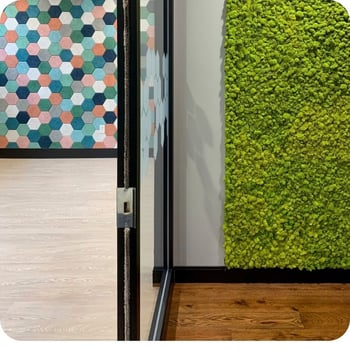 An alternative to using live plants, preserved moss walls are a less costly option to integrate biophilic elements that require little to no maintenance compared to living walls. These moss walls can integrate signage and patterns and are usually created from sheet moss, pole moss or reindeer moss. Reindeer moss can even have atypical color options like blues and purples that tie into the aesthetic of the environment. Living plant and moss walls are more visible and accessible than ever, becoming staples in higher education design.
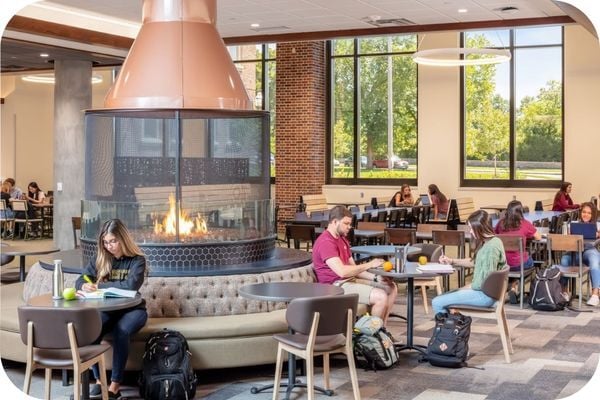
While fire does have limited uses indoors, incorporating fireplaces in dining and lounging areas where students often gather can add an appeasing element of warmth, color and movement to the space and make students feel cozy and secure. When historic Pioneer Hall at the University of Minnesota was renovated in 2019, the updated design retained many of its original fireplaces, with the addition of a new cylindrical, glass-surround fireplace with seating in the dining hall.
Water mist fireplaces offer a safe, code-compliant alternative to actual fireplaces, while still providing the intrinsic feeling of a real crackling fireplace using water mist, lights and fans.
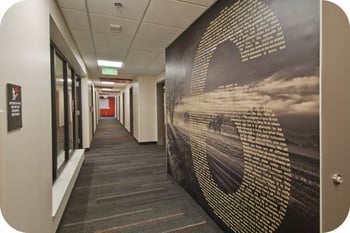 Students may also indirectly experience the benefits of nature within their environments through images depicting natural landscapes, animals/insects and colors such as earth tones, blues and greens; materials such as cork, wood and bamboo; and shapes that evoke the feeling of being outdoors.
At the University of Colorado-Boulder, the Williams Village East residence hall features wayfinding graphics displaying photos of local nature destinations, which are also shown on a full-scale wall map in its first-floor game room.
The patterns of nature incorporated into a space through textures such as stone cladding, wood veneer or even a subtle space plan layout with a biophilic nod can incorporate the living world. The addition of biophilic elements as simple as images or artwork depicting natural elements can also contribute to a healthier environment for occupants and is a precondition for WELL Certification.
Launched by the international WELL Building Institute, WELL Certification applies the science of physical and social environments to benefit the health, well-being and performance of a building’s occupants. The goal is to create environments that enhance the nutritional, mood, sleep patterns and performance of a building’s occupants across 10 categories that include air quality, lighting, thermal comfort, community and mind, among others.
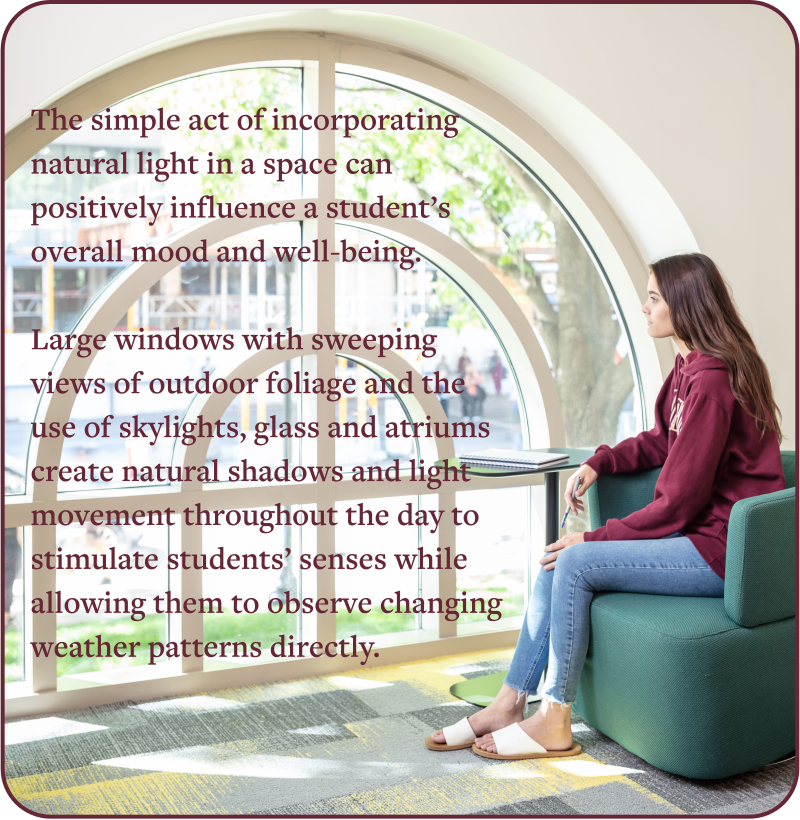 At the University of Colorado-Boulder’s Williams Village East residence hall, students are treated to panoramic views of nearby mountain ranges with floor-to-ceiling windows in the common spaces. The hall also features skylight windows allowing in natural light controlled by electrochromic glazing that automatically adjusts the shading based on the time of day and year.
In spaces where artificial lighting is necessary, incorporating lighting that supports a person’s circadian rhythm and psychological health is a good option. Circadian lighting supports biophilic design as it mimics light cycles that occur in nature and helps to reset students’ internal clocks.

There’s no place like home
The textures, colors and materials used in residence halls can also be integrated into the Universal Design Principles of Perceptible Information by reinforcing pathways to create spaces for studying versus spaces for gathering. The use of wood tones and other warm materials can bring the feeling of home to residence hall spaces to make students feel comfortable, particularly for freshman who may experience stress from being away from home.
Sound properties in spaces can also help to differentiate functioning areas for students with low vision, in addition to alleviating occupant stress. Incorporating the sound of running water using aquariums, fountains and water wall features can be reassuring to students on a subconscious level.
The use of scent systems in student housing can significantly enhance the living experience by creating a fresh, inviting and familiar environment. Research shows that smell is the most powerful memory trigger. Since the Middle Ages, orange and lemon trees have been used in the Middle East as part of the landscapes near buildings or inside quads to invoke the natural sense of smell. Gardens were organized by the sequencing of smells and not necessarily by foliage shape or color.
Fragrances found in nature such as citrus, lavender, herbs, evergreen and water can provide a more balanced sensory experience for students, improving their moods and feelings of well-being. Scents can be introduced to a space by using natural reed diffusers and scented plants such as lavender, rosemary and jasmine. Scents can also be used to identify spaces for people with low or no vision. For example, a rose smell can be associated with a lounge space, while rosemary can identify a study room.
Scents can also be incorporated in the central building systems. Hospitality design has used scent marketing for years to create memorable brand experiences by connecting olfactory memory to an emotional connection with the built environment. Retail spaces that incorporate branded scent environments show longer customer dwell times and improved sales. In the student housing sector, scent experiences can reduce stress, improve mood, boost energy, promote better sleep patterns and improve focus. Similar to color theory and providing the right color stimulus for the space type, scent planning can improve the full sensory experience of any built environment if planned correctly.
Curated scents can also help target any unpleasant odors that a housing environment contains. The only caution with holistic scent experiences is control and adaptability. Because olfactory responses are neurological and unique to each user, some scents that may be calming to one student may elicit a different emotional reaction from another. The strength of a scent can also affect different users, wherein a strong, overpowering aroma could distract students, cause irritation or headaches.
Offering a mix of scented and neutral environments can provide choice and autonomy. Also, the use of more user control aroma options can offer more flexibility to different olfactory palettes.
Cultivating better outcomes
Landscaping can be used as a visual aspect of a residence hall’s exterior biophilic design. On traditional campuses, landscaping is well integrated around the various buildings, with residence hall landscaping in proximity to the campus being an important visual element for students. On urban campuses where space may be limited, green roofs can provide a similar visual effect. Designing large windows in bedrooms and lounges that face green roofs can be visually pleasing to occupants.
Multiple research studies are underway to determine the effects of applying living plant material to a building’s façade. This research examines how plant material reacts to the seasons to create a resilient surface, or skin, which could potentially reduce a building’s carbon footprint while providing a stimulating visual for students.
Incorporating biophilic elements in higher education design, whether subtle or profound, that are pleasing to students’ senses can lead to happier, healthier students, and better outcomes for their time spent on campus. Whether using indoor plants, daylighting or pleasing scents, inviting the elements of nature within the built environment is a goal well worth cultivating.

Javier Esteban, AIA, LEED AP, brings a holistic approach to every problem, from the impact of a design decision on a student’s life to the impact of a building system selection on the maintainability of the building. His passion for high quality service has driven him to visit the stone cutter in the quarry to better understand the best way to detail limestone trim, or to purchase and deliver the latest accessible shower head to a client for mockup testing. Since 1998, Esteban has been active in higher education design. In addition to his work on numerous projects, he has participated in two ACUHO-I 21st Century Project design competitions, where the team won two Peoples’ Choice Awards for the design of SIUE's Evergreen Hall. He has attended Campus Residential Communities seminars at Harvard University, and participated in multiple higher education lectures and presentations at national and regional conferences. Esteban has simultaneously managed numerous new construction and renovation projects across the country, including multiple projects more than US$50 million. His experience on renovation projects has given him a respect for the serviceability and durability needs in new construction.

Paul Wuennenberg, AIA, LEED AP, has 25 years of experience in the design of student spaces and has devoted the majority of his professional life to the creation of high quality student communities. His passion for research and development of new concepts led to recognition as a national expert in the planning and design of higher education facilities. He has published numerous scholarly articles, participated in national webinars, written self-published books and given numerous lectures at national ACUHO-I and SCUP conferences on the topics of student housing and dining. At the 2011 ACUHO-I conference, Wuennenberg was awarded the S. Earl Thompson award in recognition of his contributions to the field of student housing.
References
Photos courtesy of KWK Architects.
Read more on Workplace , Occupancy & Human Factors and Sustainability or related topics Occupant Health , Space design and planning and Wellness and Well-being
Explore All FMJ Topics