
 Membership
 Network
 Regional Sites & Affiliates


 Events
 Participate
 Resources

 Training
 Credentials
 Government


 Content Channels
 Tools
Tools


 Business Overview





An Accessible Solution
How technology could help prevent common workplace injuries

Editor’s note: This article originally appeared in Security Management magazine. Its inclusion in IFMA’s FMJ is part of a strategic partnership between IFMA and ASIS.
U.S. private industry reported 2.6 million nonfatal workplace injuries and illnesses in 2023, according to the most recent figures from the Bureau of Labor Statistics (BLS).
Most of these injuries occurred in the health care and social assistance sector (471,600) followed by the manufacturing sector (326,400). Musculoskeletal disorders (MSDs) were the most commonly reported workplace injury, resulting in employees missing 502,380 days of work and costing businesses nearly US$18 billion in 2003.
The National Safety Council (NSC) created the MSD Solutions Lab in 2021 with funding from Amazon. The lab draws from 50 academic sources to provide practical guidance for preventing MSDs through effective surveillance systems.
In 2025, the NSC lab published a new paper to improve injury surveillance systems in workplaces. Here are some of the top takeaways from The Importance of Musculoskeletal Disorder and Related Injury Surveillance: An Organizational Approach.
What is an MSD?
MSDs, also known as cumulative trauma disorders, are gradual-onset injuries that usually occur when you experience repeated microtrauma to a part of your body. They can take weeks or years to develop and are often ignored at first because the onset of symptoms is slow.
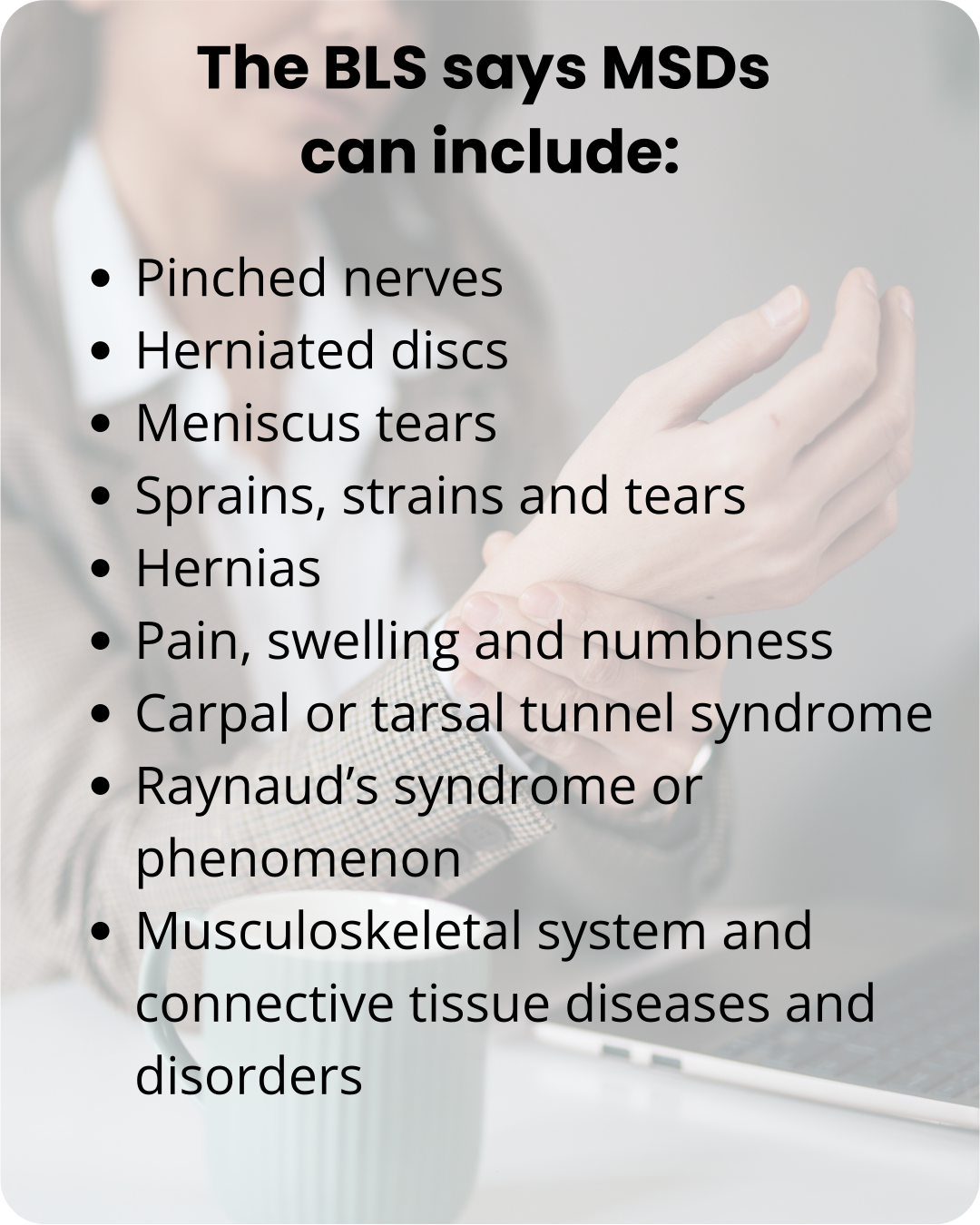 “For work-related MSDs, the work environment and performance of work contribute significantly to the condition; and the condition is made worse or persists longer due to work-related factors,” according to the NSC paper.
What are the risk factors?
Physical and nonphysical factors can cause an MSD. They include:
- Tasks performed — like lifting objects
- Force exerted — like the effort required to lift something
- Posture
- Repetition
- Environment
- Long working hours
- Age
- Obesity
- Sex
- Low job control
How are MSDs tracked?
It is an NSC best practice for employers to have an injury surveillance program — a system to consistently report MSDs at the organizational level.
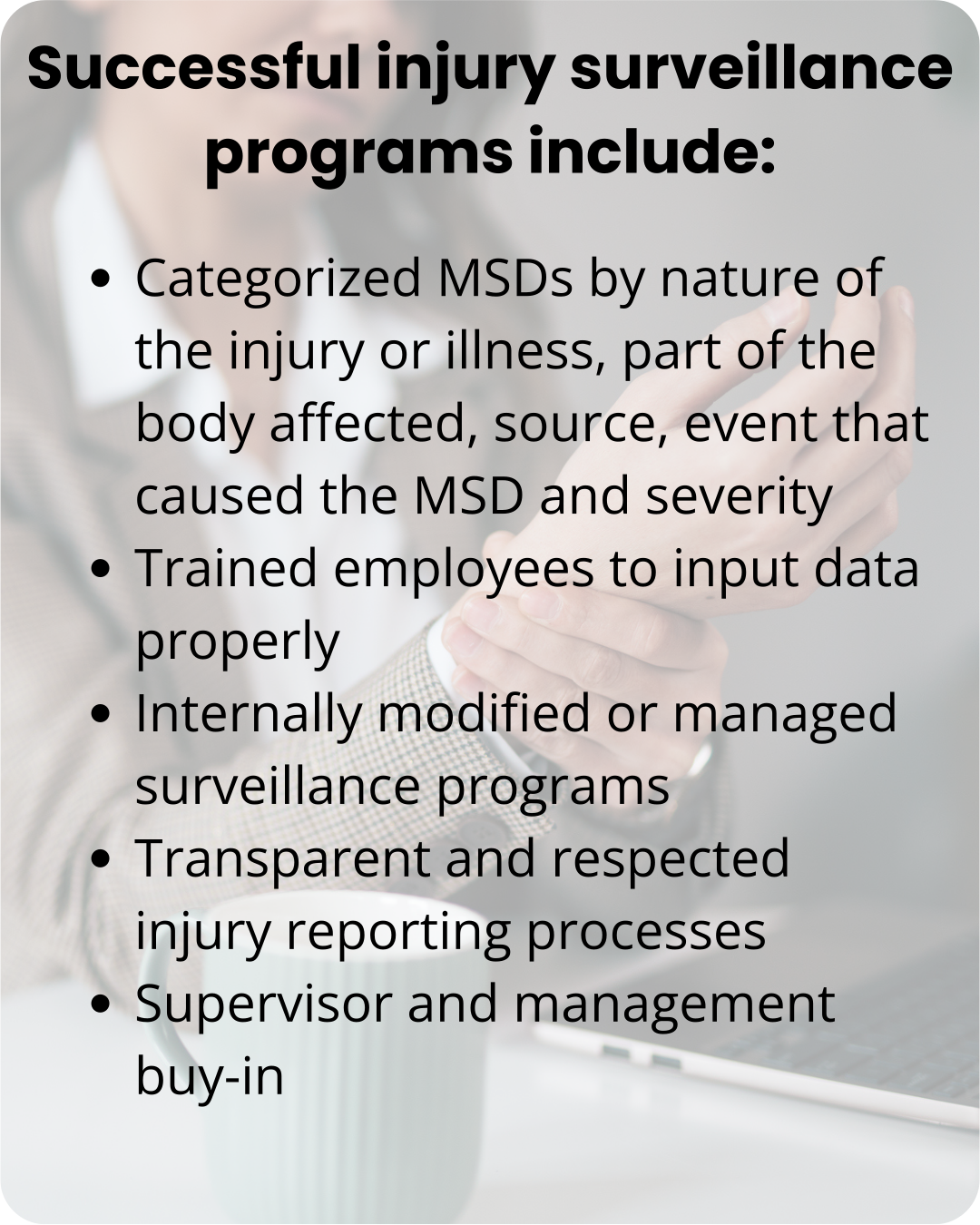
How can technology help?
“Leveraging emerging technologies can significantly reduce incident underreporting by capturing events, including near misses, as they happen,” the NSC paper said.
Internet of Things (IoT) sensors and devices can capture worker data, task data and workplace data that can be used to assess potential ergonomic issues and threats.
Workers could wear an IoT-enabled sensor to capture their biomechanics — joint angles, movements and posture — and physiology — heart rate and blood pressure — to alert themselves and management in real time of an MSD risk factor.
IoT sensors on people and cameras, combined with artificial intelligence (AI), could be leveraged to assist supervisors with:
-
Real-time reports on worker tasks, workplace metrics and MSD risks
-
AI alerts on physical and psychological risk factors
-
AI alerts for high-risk work and workers
-
Insights on ergonomical interventions to mitigate MSD risks
“…if a worker is lifting an unsafe load, the system can automatically alert supervisors and generate an incident report without manual input,” the NSC paper explained.
The costs of a system with this technology could be prohibitive for smaller organizations. But for those that implement these features, they could be empowered to take a more proactive approach to reducing the risk of MSDs, according to the NSC paper.
“In summary, an injury surveillance system that leverages emerging technologies to enhance efficient real-time data collection, analysis and continuous reporting may be of benefit to organizations that are technology ready,” the NSC paper said. “Additionally…using standardized data elements, ensuring data quality, linking sources, and maintaining security and privacy protocols can achieve accurate, precise and complete injury data documentation and management.”

Megan Gates is editor-in-chief of Security Technology.
Read more on Risk Management and Occupancy & Human Factors or related topics Occupant Health
Explore All FMJ TopicsRelated articles
-
A New Approach
Improving business continuity with alarm managementBy Brad Freeman09.09.2024 -

Beware of Growing Cyberthreats
Why it’s time for stronger facility cybersecurityBy Andrew Harris & Eric Headington10.30.2024 -

Going Up?
Keeping elevators safe & compliantBy Dave Myers & Doug Taylor11.06.2024