
 Membership
 Network
 Regional Sites & Affiliates


 Events
 Participate
 Resources
 Training
 Credentials
 Government


 Content Channels
 Tools
Tools


 Business Overview




Ask the Experts
Sustainability: What is it & why does it matter to FMs?

Sustainability continues to be an emphatic theme throughout facility management. FMs are compelled to explore, develop and identify ways and practices to propel the facility operation while delivering value to the various stakeholders in the FM framework.
When considering sustainability in the built environment, it is the stakeholder that has an interest in the success and solvency of the facility and promotes FM’s sustainable success.
The term stakeholders focuses on the building owners and the paying customers (in this case, tenants). Foundationally, a stakeholder is a person or entity that is directly or indirectly affected by the choices, decisions, successes and failures of an organization. This means employees, vendors, contractors, suppliers; supporting organizations and the community are all stakeholders.
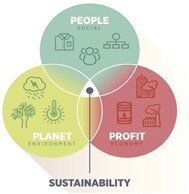
Sustainability must link the stakeholders and focus on three elements: Profits, People, Planet. Without these elements FM organizations and businesses would cease to flourish. This is particularly important while managing COVID-19 realities. The business models that were so reliable pre-pandemic raise questions of their relevance, suitability and reliability. Those business drivers may be less relevant and appropriate in this day. Considering how quickly attitudes and technologies change, the destiny of business is that much more uncertain.
Profit
Obviously, revenue and expenses are primary considerations in business. The revenue streams that historically drove business may not be as robust as expected during this pandemic era. This poses new questions: How do FMs
-
discover and create new revenue streams?
-
create new products and services that allow the built environment to drive new revenue opportunities? evaluate and embrace change in the way customers are using the built environment?
-
manage the reality of tenants engaging more in virtual work?
-
collaborate with tenants to create opportunities of innovation?
These considerations have a bearing on the sustainable financial strength of buildings and organizations.
People
People are critical to the success of any organization – customers, communities and employees. When considering the people factor, it is imperative to consider customers. FMs must ask who the customer is and what characterizes them and what are their needs and attitudes.
 FMs must keep employee and turnover and retention in mind. Many employees leave their organizations because they feel mistreated, disrespected or abused. It is important to identify and understand what makes an organization an employer of choice. Organizations must elevate their brand and reputation so that people will want to work for them because of a great work environment, competitive compensation and great work/life balance. This is critical as the environment is conducive to a multi-generational workforce.
Finally, FMs should consider how they treat contractors and vendors. Are the contracts typically a win-win scenario? Does the FM team have a reputation for being fair and honest? Does the organization pay contractors on time? These are considerations that can identify ways to improve engagement with people. Respect, dignity and civility are defining attributes of sustainability.
Planet
What humans do and how they function on this planet affects today’s quality of life as well as the successive generations. This reality compels more questions: Are FMs
-
integrating and implementing smart, efficient, and economical green solutions and products?
-
educating tenants on smart ways to dispose of trash, waste and recycling?
-
providing tenants with smart building solutions that enable them to customize the delivery of their various building services?
-
implementing smart industrial hygiene?
-
flushing water systems to prevent Legionella?
-
leveraging investment resources to deploy renewable energy and associated technologies?
Connecting profit, people and planet translates to the Triple Bottom Line. FMs can apply and contribute skills, talents and knowledge and have a responsibility to be manage the resources, people, and technologies that will deliver the highest good to stakeholders.
Sustainability – FM Perspective from France
Sustainability can be a disturbing word and means different things to different people. It often refers to two ideas: The first is that buildings were designed to stand for centuries. The second is that sustainability is only about energy efficiency.
Older buildings and technical installations are mostly still functional. Although life cycle analysis was a huge step for the environment, the deconstruction of the building apparently reduces their theorical lifetime. Even if humans can recycle some materials, it’s quite not a sustainable approach of real estate.
Facility consultants are not necessarily in charge of design and construction, but are witness during this phase and are key stakeholders in operations and maintenance.
In France, the pursuit of more efficient sustainability in buildings is strongly framed by laws and regulations. One known as “Décret Tertiaire” imposes an impressive effort within the next few decades on energy consumption of tertiary buildings. This new challenge will need every asset’s stakeholder (landlord, tenant, technical supplier, etc.) to work together to achieve it.
Reducing costs is a high motivating factor in this sense, but not the only one. In the last decade, there has been a rise of certifications (BREEAM, LEED, HQE in France), an increase the regulations and the new generation of facilities consultants are directly concerned by the energy and wastes crisis, changed the way real estate is operated.
Beyond regulations, every FM and consultant, especially the ones with some years of experience, can bear witness to the evolution of how customers perceive sustainability in their day- to-day operations.
Instead of changing equipment that is out of order, try to repair it. When a building is released or destroyed, recover what could be re-used. This includes fixtures and equipment such as pumps, hydraulic or aeraulic items, lights and emergency lights and more. In other areas, FMs can choose equipment that is easily fixable.
FMs and consultants must be a driving force in sustainability through audits, requests for proposal, budgets and day-to-day operations. The market demand sustainability actions, and FMs have the expertise to provide much more value for everyone today and tomorrow.
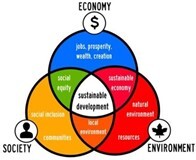
 The challenge is to become more sustainable. The FM industry is pursuing sustainability by creating healthier and more resource efficient models of construction, renovation, operation, maintenance and demolition throughout the building life cycle. This complex pursuit requires a comprehensive approach linking environmental, economic and social actions within many functions making up the building industry. This is the triple bottom line that defines sustainability and is at the core of FMs.
Many building projects target a level of Leadership in Energy and Environmental Design (LEED) using the rating system devised by the United States Green Building Council (USGBC) to evaluate the environmental performance of a completed building. Net Zero emissions is now a frequent building project goal. Owner’s projects are also pursuing the Passive House approach or perhaps the Living Building Challenge. The focus is reducing energy consumption in operations through design and construction elements. Super insulation, tight air/vapor barriers, and/or powering a building’s energy needs through solar or geothermal heating/cooling systems are examples.
Is this working in practice?
Feedback loop: Environmental performance
FM is the feedback loop in the building industry in a changing world. This team operates, maintains and documents the performance of infrastructure elements over their service life. Benchmarks can include energy usage, cost of operations and maintenance, service life of finishes, fixtures and equipment, and space efficiency. Maintaining equipment so that it functions at peak efficiency and reducing replacement saves money as well as being part of sustainable practice.
FMs interact with stakeholders to understand and respond to their space needs as their functions change. In his book “How Buildings Learn – What happens after they are built,” Stewart Brand makes a strong case for designing buildings that last through adaption in use. A large piece of sustainability is to reduce demolitions and renovations.
So, how are buildings performing? Feedback is an important step in improving environmental sustainability efforts.
-
Is the performance in-use matching the designed or predicted performance?
-
Are solar panels producing the energy predicted?
-
Are interior finishes standing up to occupant activity?
-
Are the building controls allowing adjustments for occupant comfort or are parts of the buildings too hot/cold?
-
Are low water use washroom fixtures performing or requiring additional maintenance?
-
Are occupant spaces meeting their functional requirement as they change?
Early forms of data capture were analog – hard copy ‘as-built’ drawings and maintenance manuals, analog thermostats and meters, enhanced by many anecdotal stories emanating from mechanical rooms and FM offices. It was not unusual to come upon an occupant do-it-yourself space modification to accommodate a work process change or added equipment – like occupant server rooms lacking adequate ventilation and power, or multiple punctures through fire walls to run optic fiber to support internet servers for the occupants. Changes impact building performance and capturing data is critical. FM need the data to understand and analyze the performance.
Technology is powering systems used to run building equipment while capturing and monitoring performance. The early days of this technology was proprietary. Over time, technology became more integrated, connecting the many building systems and functioning as a platform to manage all aspects of buildings and portfolios of buildings. Computerized Maintenance Management Systems (CMMS) standardize operations and maintenance routines for building systems and support easier tracking of operation functions, performance and cost. Construction as-built drawings and maintenance manuals are now digital and many are developed as part of a Building Information Modeling (BIM) effort that begins in planning and design.
There is software that contains a solid history of typical service life for all major components of a building or infrastructure, allowing planned maintenance and replacement of components and systems in a timely fashion. Efficient operations and extension of life of the building are sustainable practices.
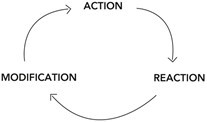 While buildings are in use, new buildings and infrastructure are being planned, designed and built. Establishing an effective feedback loop strongly suggests that FM should be involved in the planning, design and construction phases of new capital projects to properly share their knowledge and experience on what worked and what can be done better next time. Engaging the FM feedback loop in capital projects improves building performance and environmental sustainability.
Service center: Economic sustainability
Facilities are a coherent combination of people, processes, and technology that delivers value to stakeholders. A well-operated and maintained building retains its value over time.
FM is a service. This function focuses on ensuring buildings are operating to occupant requirements – serving their workplace or living needs while retaining property values for the owners. FM teams clean interiors, maintain and replace building equipment to keep buildings functional. They use diagnostic tools to check system conditions before a break-down occurs. They operate building system controls to track temperature and system performance. Understanding the importance of this service mindset has been a hard lesson learned. The maxim of pay a little now or a lot later bore out with the long-held practice of deferring maintenance to save operations budgets – a practice that frequently shortened the life of a building, led to breakdowns and made it less desirable for occupants.
It was not uncommon to need emergency equipment or system repair or replacement, disrupting building occupant business and FM operating budgets. Emergency repair/replacement is always more costly than planned maintenance. It is not a sustainable practice.
When FM is appreciated as an important service center rather than a cost center, there is an opportunity to influence capital and operational budgets, avoiding unplanned costs, achieving energy use targets and serving occupant needs more effectively while retaining asset value for the owner. This mindset is how FM adds value and supports economic sustainability.
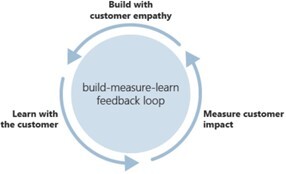 The FM team: Social sustainability
Buildings are usually designed and built to function for many years – certainly more than a couple of career spans. The need an FM team with a vast array of knowledge and skills. A portfolio of buildings can range in age by decades and require past and present knowledge of multiple building systems and occupant requirements. Staying current on building portfolio knowledge can be accomplished to a large degree with technology. Therefore, it is important that the FM team is socially sustainable by embracing continuous learning and training on best practices and technology that support managing many building types.
While the FM team should know and understand occupant requirements, it is also important the occupants understand how buildings work and, how buildings attempt to improve sustainability practices.
FM teams manage recycling programs for occupants. Janitorial cleaning products are now more environmentally friendly in recognition of many chemical sensitivities for both building occupants and the cleaning staff. Heating/cooling needs are set to occupant requirements, while saving energy.
Tenant improvement projects have long been part of occupant changing space needs over time. FM requires adjustment. It is part of the sustainability factor of buildings and supporting occupants. Interacting and communicating with building occupants is important to stay current on their changing functional needs and determining how buildings can be modified to address them. The pandemic has highlighted this need as it has challenged the traditional way of work.
Buildings ‘learn’ because the people who manage and operate them keep learning and pass that learned experience back to the planners and designers to influence new building designs and new capital budgets. It is a sustainable practice of continuous improvement - systems thinking rather than linear thinking. Collaboration rather than a singular viewpoint.
Some of the biggest problems facing the building industry – increasing costs, materials shortages, skills shortages, life safety and changing environmental conditions – are essentially system challenges. They cannot be solved by fixing one building piece in isolation from the others, because even seemingly minor details have enormous influence in undermining the performance of the whole. Sustainability must consider a multitude of issues – it is not linear.
Sustainable FM organizations evolve over time. They do not solely focus on an individual’s technical knowledge but successfully navigate change on the organizational behavioral level allowing the whole team to focus on continuous learning and improvement. Organizational and social sustainability must have a commitment to physical, emotional and mental well-being. FM requires a diversity of skills, experience and points of view. In a global economy and supply chain, diversity keeps FM relevant and helps achieve the value and purpose of FM organizations.
The triple bottom line is an all-encompassing approach. This reality suggests that for the most part, buildings are part of a larger ecosystem – usually a neighborhood that is part of a municipality. Infrastructure systems that serve buildings – like fresh water supply, sewage treatment systems, streets and power supply grids serve other neighborhoods and other buildings. It is important that FM teams interact with municipal officials and other FM teams from other buildings and the infrastructure assets that connect them.
Responding to systemic change requires incorporating learning mechanisms into the social fabric and practice of the FM organization to sustain it and the environment. Become active in organizations like IFMA. Share experiences and learn together. The triple bottom line allows FM organizations to take the lead in meeting legislated and social sustainability targets in the building industry.

Trudy Blight, CFM, FMP, SFP, BID, PIDIM, PMP, IFMA Fellow began her career as an interior design consultant, which included project delivery within a FM organization. She was the Asset Manager, Government of Canada with a large portfolio in Western Canada and the Arctic. She provided facility management and project management consulting services for several years with Stantec Architecture and is currently Manager of Architectural & Engineering Services within Facility Management at the University of Manitoba.
Dr. Daniel Goldsmith, an IFMA member, serves at Strayer University as adjunct faculty and as a facility management program manager in the U.S. government with responsibility for approximately 2 million square feet in Washington, DC.

Kathleen Lausman, MBA, BES is a principal at Shift2Lean Inc. and a building industry professional with a background in architecture and business. Her more than 40 years of experience is that of the public owner and leader of project and facility management teams in various sectors: parks, law enforcement, education, health care, manufacturing, technology and government. She is a former deputy minister for the Nunavut Territorial Government, Canada, and former co-chair and forming member of the Lean Construction Institute - Canada.

Tristan Ragusa has worked as a consultant in technical maintenance and facility management. Now, he continues these activities and is partner in an IWMS company. Soon, he will also be a part of the EMEA YP Initiative.
Read more on Sustainability or related topics Ask the Experts
Explore All FMJ TopicsRelated articles
-
Smart Building Control Systems
The foundation for a grid-interactive buildingBy Andre Marino09.25.2024 -

Smart Building Innovation
Cutting costs & carbon footprints without compromiseBy Andrew Butterworth09.12.2024 -
Chart the Path
Building sustainable cities & a sustainable futureBy Izzat Ali Khan & Aykean Forde12.16.2024