 Membership
 Network
 Regional Sites & Affiliates


 Events
 Participate
 Resources

 Training
 Credentials
 Government


 Content Channels
 Tools
Tools


 Business Overview





Ask the Experts
How will the shopping centers of the future succeed?

Shopping centers were viewed as commercial structures whose success was measured by criteria such as store occupancy rates, visitor numbers and turnover. However, digital transformation, the rise of e-commerce and changing consumer habits have altered this perception. For Generation Z in particular, shopping is no longer merely about purchasing products; it has evolved into a process of socializing, experiencing new things and expressing one’s lifestyle.
With this shift, shopping centers are evolving from spaces with shops into multi-functional lifestyle hubs that unite gastronomy, entertainment, culture and social life. In this process, mix management has also evolved from being merely about tenant selection into a strategic management approach centered on consumer behavior, the experience economy and visitor satisfaction.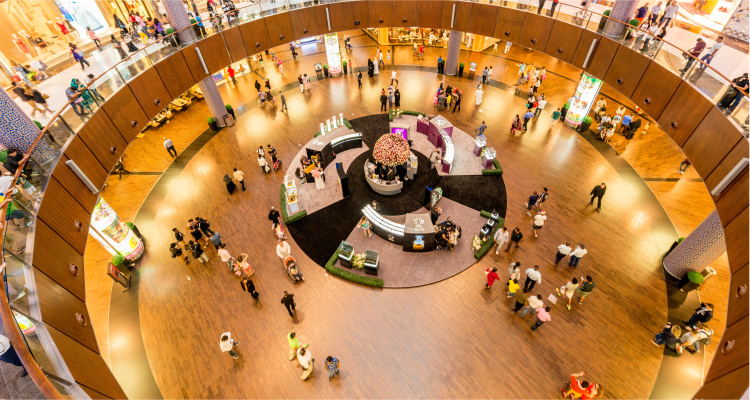
What is brand mix & why has it become more critical today?
Brand mix refers to the planning of shops, restaurants, entertainment venues and service areas within shopping centers in a way that suits the target audience. This concept is no longer about placing shops in empty spaces; it has become a key strategic tool that shapes the shopping center’s identity and the visitor experience. To create a successful brand mix, the region’s socio-economic structure, lifestyle, age groups and consumer habits must be correctly analyzed.
In modern shopping centers, the brand mix encompasses not only retail shops but also cafes, restaurants, entertainment and social experience areas. A well-planned brand mix encourages visitors to spend more time in the center, thereby boosting commercial success.
The transformation of shopping centers & the lifestyle mall approach in the U.S.
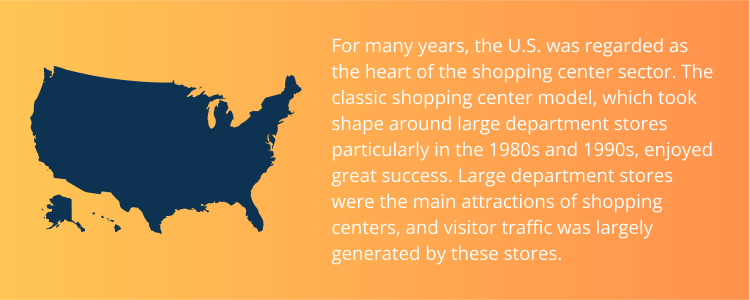 However, with the growth of e-commerce, this model began to be seriously shaken. The rise of digital platforms enabled people to access products much more quickly and easily. As a result, traditional store-focused shopping centers lost visitors and projects focused solely on shopping lost their former appeal.
This process brought about a new transformation, giving rise to the concept of the lifestyle mall. New-generation shopping centers offer a lifestyle experience than simply shopping. Open-air streets, premium restaurants, co-working spaces, art centers, sports facilities and event venues have been placed at the heart of these projects.
The goal is for people to spend time here, meet up with friends, work and enjoy social experiences. In this way, the shopping center creates an experience advantage that physical shops cannot compete with.
The transformation of shopping centers into urban showcases in the GCC region
 Projects such as the Dubai Mall are tourist destinations, hubs of social life and spaces for the urban experience. When creating the brand mix for these projects, tourist behavior, luxury consumption trends, high-income groups and the experience economy are analyzed together.
GCC shopping centers feature Michelin-starred restaurants, luxury fashion brands, digital art spaces, giant aquariums, indoor ski centers and technology-driven entertainment areas. The aim is not merely to sell products. Unforgettable experiences that connect people with the city are being created.
Furthermore, in projects within the GCC region, the hot climate conditions also directly influence the brand mix. People’s desire to spend time in enclosed spaces with controlled climate systems has transformed shopping centers into the heart of social life.
The approach to mixed-use development and urban integration in Europe
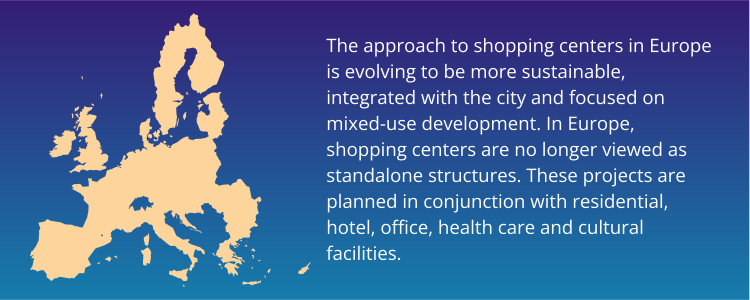 At the heart of this approach lies the sustainable organization of urban life so that people use these spaces not just for shopping, but to live, work, socialize and meet their daily needs.
Consequently, in modern European shopping center projects, public transport integration, environmentally friendly building systems, pedestrian-friendly spaces and sustainable energy solutions are of paramount importance. The brand mix is also designed in line with this lifestyle model.
For example, in an area with a high concentration of office workers during the day, fast-food restaurants and coffee concepts may perform better, whilst in the evening, family-oriented restaurants and social spaces may take center stage. Consequently, brand mix strategies in Europe have evolved into a dynamic structure planned according to different times of the day.
AI & data-driven brand mix management in Asia
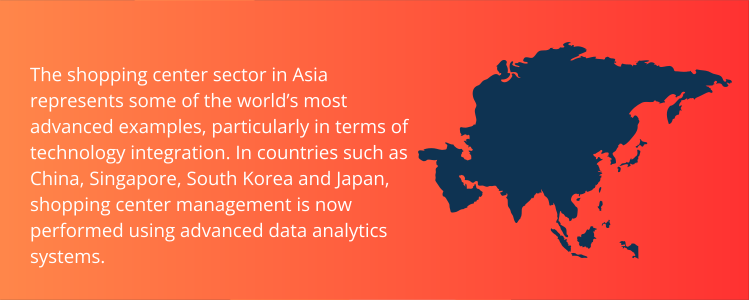 Thanks to AI-powered systems, the amount of time visitors spend in front of shops, which areas experience high footfall, which restaurants are visited more frequently, and which campaigns generate the most engagement is constantly analyzed.
This data is used not only for marketing strategies but also for the continuous optimization of the brand mix. For example, underperforming store categories can be changed, space planning can be updated based on visitor movements and digital screen content can be optimized in real time.
The approach in Asia clearly demonstrates that future shopping center management will involve not only the management of physical spaces but also data management and digital experience management.
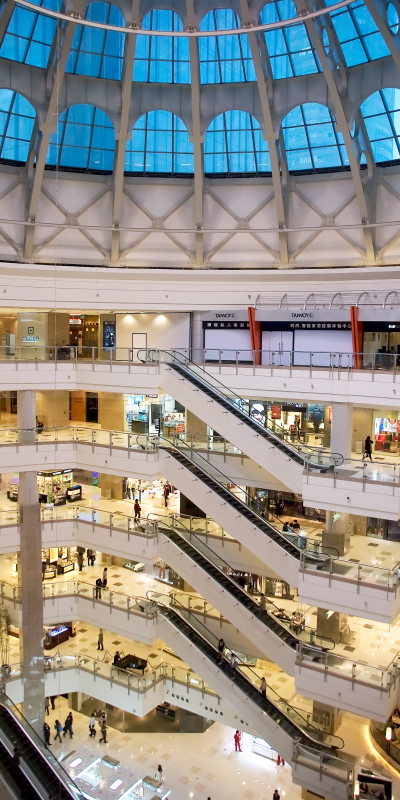 The rise of gastronomy & the experience economy
In modern shopping centers, gastronomy has moved beyond being merely a supporting element and has become one of the main attractions. For younger visitors in particular, restaurants, premium coffee areas and gastronomy concepts focused on social experiences have become one of the key reasons for choosing a shopping center.
Food court areas, which were once planned solely with fast-food consumption in mind, are giving way to spaces offering a stronger experience. People no longer simply want to eat; they want to enjoy the atmosphere, share on social media and spend quality time.
For this reason, gastronomy areas are being placed at the heart of the brand mix in new-generation shopping centers. In particular, open-kitchen concepts, local gastronomic experiences, premium coffee brands and venues with a strong social media presence are significantly increasing visitor footfall.
Similarly, entertainment areas have also become indispensable components of the brand mix. Virtual reality centers, immersive digital experiences, interactive activity zones and children’s entertainment centers are extending the time people spend in shopping centers.
The strategic transformation of FM
Alongside the transformation of shopping centers, the concept of facility management is also undergoing a major shift. In the past, FM was largely assessed in terms of operational services such as technical maintenance, cleaning and security. However, modern shopping center management is evolving into a much more strategic framework.
FM now involves managing the visitor experience, ensuring energy efficiency, achieving sustainability goals, managing digital systems and analyzing operational data.
Particularly in large-scale shopping centers, the level of comfort experienced by visitors is directly linked to the quality of FM. Climate control performance, air quality, cleaning standards, digital wayfinding systems, the security experience and the uninterrupted operation of technical infrastructure all directly influence visitor satisfaction.
Shopping center FM is no longer merely a back-office operation; it is a strategic framework that manages customer experience.
So, what will the shopping centers of the future look like?
The shopping centers of the future will not merely be large commercial buildings. Instead, mixed-use lifestyle centers will emerge where experience, technology, gastronomy, social life and the digital world converge.
Successful projects will be judged not only on the variety of shops they offer, but also on how people feel there, how much time they spend there and the quality of the lifestyle experience they enjoy.
Brand mix management will continue to be one of the most critical strategic areas in the future shopping center sector. A well-planned brand mix does not only generate rental income; it creates urban value, transforms social life, fosters visitor loyalty and ensures the long-term sustainability of the investment.
The shopping centers of the future will be more than places where people shop; they will be new-generation commercial ecosystems where people live, create experiences and forge connections with the city.
Successful shopping centers are places that unite strong brands; they will be living ecosystems that accurately interpret urban dynamics, analyze consumer behavior, manage the experience economy, and ensure the sustainability of this entire structure through a strategic approach to FM.

Dr. Uluğ Hakan İyigün is a strategic, results-driven shopping mall and facility management professional with more than 12 years of experience. He specializes in the holistic management of operational processes for large-scale commercial developments at both national and international levels, including mixed-use projects, major commercial properties, shopping centers and hotel operations. As a member of IFMA and ICSC (International Council of Shopping Centers), he closely follows global industry developments. He is also a Founding Member of TESYÖN and serves as the Vice Chair of the IFMA Advisory Board, actively contributing to the development of sector standards, knowledge sharing and the dissemination of best practices within the industry.
References
Article images via Getty Images.
Read more on Occupancy & Human Factors and Real Estate or related topics Occupant Services and Real Estate Management
Explore All FMJ Topics