
 Membership
 Network
 Regional Sites & Affiliates


 Events
 Participate
 Resources
 Training
 Credentials
 Government


 Content Channels
 Tools
Tools


 Business Overview




Ask the Experts
The funding approval question

Outback Software, a five-year-old technology company located in Sydney, Australia has outgrown their current space and have decided to engage a developer to build and lease back a 23,225 square meter (250,000 square foot) office building to suit Outback’s space needs into the near future in a corporate office park on the outskirts of Sydney. Outback will be the single tenant. The architect has been hired and the design of the building has already proceeded to the design development stage. Just recently, Justin Blake was hired to be Outback’s first facility manager. In the first week of his new job, Justin has reviewed the plans and has noticed that sustainability has not been addressed in its design. He feels it is important to incorporate sustainability in the new Outback building to the extent that it would be equivalent to the Green Building Council of Australia’s Green Star rating (Similar to LEED Certification in the U.S) although actual certification will not be sought. Justin estimates that this will add approximately AU$500,000 (US$343,713, €308,015) to the building’s budget. Justin has mentioned his intentions to senior management and received very little support.
Justin has hired you as a consultant to help him develop a business case to help sell his idea to management. What key recommendations would you make for Justin to prepare a sound, compelling and convincing case to gain funding approval from senior for the sustainability initiative?
From David Reynolds
Justin must demonstrate a suitable business case framed around ROI on an investment of AU$500,00 to be included in a capital plan. Direct returns include energy and water, as expected, and the attractiveness, market value, and liquidity of the property as an asset, in case that changing business circumstances make rental/lease or sale helpful options. He must research those numbers. Indirect returns include the desirability of working in a Green Star certified building, and the impressions of customers, and community impressions, and competitive effects. GBCA shows Green Star certification covering 37 percent of office space occupied by 5 percent of the national workforce daily. Frame these into inducements to include GBCA under the Outback brand, enhancing reputation to stakeholders. The time is right. Staff who are moving to the new building will be pleased to know of the green initiative.
You persuaded your boss to take a risk and have you present to the executive committee. They were impressed and asked for specifics prior to final approval. The CFO expects detail and cash flows - a budget - to make your plans specific for final approval. The COO wants to be sure that complications and delays are not a significant risk. It’s time to get assistance from GBAC about certification goals in the time available to commissioning and after, and to work with construction plans if any alternations are due now, before construction. Possibly, changes in plans now will reduce construction time and costs.
From Mike Liddle
Working for a Software Company is a very fast market place and senior management teams tend to think short term instead of long term because of the way the market works and the rate of change with technology. However good FM and sustainability go together, so you need to press on.
May I suggest that you never talk about cost but start with the short, medium- and long-term benefits. Cost to very busy senior management teams is usually the wrong approach and will immediately trigger negative thoughts before you get an opportunity to explain the reasoning and long-term issues.
Initially, as you have been hired well in advance of construction completion it should be for you to work with the designers and developer, who is the ultimate owner, to introduce sustainability as product selection and specification at this very early stage does not necessarily mean additional cost.
I do not see any reason why you cannot get the benefits you suggest at an initial cost of US$343,713 when you are looking at relatively large building of 2,152,782 square feet over the long term. Do remember that if you have a building designed and built with say a 25-year lease the actual capital cost of construction can be as low as 5 percent with the running and capital replacement costs taking up the other 95 percent over time. There are some very good examples of this style of lease in Australia and the UK.
Suggest that as well as working with the local consultant that you create a good relationship with the developer and try to get inside the head of your senior management team to see what makes them tick and concentrate and harmonize your activity with their goals and objectives. Good luck sound like fun opportunity.
From Dan Goldsmith & Patricia Hensley
As an experienced green building facilities manager, Justin can provide a strong case for the benefits associated with obtaining a recognized green certification. By seeking assistance from a consultant specializing in Leadership in Energy and Environmental Design (LEED) during the early stages for building design, the full potential benefits of a green building can be incorporated into the design. Facilitating the long term economic, social and environmentally responsible use of resources while leveraging the secondary benefits. Justin’s engagement of a consultant team can assist him in preparing an automated dash board reporting system that links efficiencies directly to value added to financial performance, employee satisfaction surveys and timely issue resolution. Secondary benefits include potential health care savings from workout facilities, heathy food options and work-life balance. Even more intangible is the correlation to workforce recruitment and retention.
Please note the key recommendations below to provide an outline for supporting his process to engage management.
-
Analyze, monetize and correlate the benefits of the organizations with the green certification.
-
Link the benefits of the green certification to the corporate mission, goals and marketing strategies.
-
Determine the cost benefit analyst.
-
Access the payback period.
-
Outline the program tracking lessons learned associated with the green savings based on Justin’s previous work in a green building. Including monetizing the monitoring reporting from systems outputs to support the integration of smart system.
From Martin Vaclavik
Developing a business case with a good chance to be accepted by senior management must be supported by real numbers and proved case studies. My first recommendation and collaboration with Justin would be working on solid proofs of sustainable initiatives. Having this in mind, Justin and I would closely focus on regional and industry leading competitors how they address sustainability in their corporate policies regarding their buildings to benchmark Justin’s company.
Once we prepare a necessary background about applicable best practices in sustainability, we must demonstrate synergies among single measures. Many design solutions, if not all, should be compared to the triple bottom line. One of my favorite tools is a simple matrix where measures are assessed using an impact-based scale (positive/neutral/negative) to people, planet, and profit. Cost estimates would be included as the total cost of ownership or using the return on investment predictions. By selecting the right measures is a critical exercise. Only identified synergies may assure good results and fulfill sustainable goals.
My last key recommendation to Justin would be stressing out added values by adopting sustainability for their new office building:
-
healthier indoor environment for occupants resulting in higher productivity and lower absenteeism
-
more effective energy and water management
-
responsible usage of materials and resources
-
positive attitude to climate change which can be likely used for positive public relations.
From Kimberly R. Snow
For Justin to sell his ideas to management, it’s important for him to identify sustainability initiatives that will have a substantial return on investment. The long-term savings far outweighs the up-front costs to implement certain sustainability measures. For example, investing in smart glass windows as part of the initial build can reduce ongoing energy costs by 20 percent. Purchasing LED bulbs and adding daylight harvesting components to light fixtures will have a definite ROI and provide continued savings on utility costs. In preparing the business case, I would also want to understand if there are any government incentives for sustainability programs and take advantage of those. The last area I would highlight as part of the business plan, is the positive impact investing in sustainability has on a company’s reputation. “Doing the right thing” is a big part of our culture today and companies that can show how they are implementing and investing in sustainability practices, attract customers who want to do business with them. Sustainability is important to people and we all want to work for a company that is actively involved in caring for the environment.
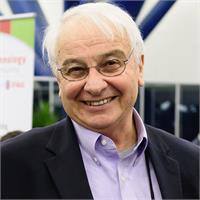
David Reynolds, RCFM, is a partner in Global Facility Management Alliance, GFMA, and a Board member in the Facility Management Consultants Council of IFMA (FMCC) and the Operations and Maintenance, Health and Safety IFMA Community (OMHS).

Mike Liddle runs Business & Facilities, an independent real estate and facility management consultancy operating in EMEA. His experience includes the control and coordination of multi-million pound projects involving all aspects of FM, real estate, design and construction. After managing the merger of Merck Sharpe & Dohme and Schering-Plough in 17 countries he has specialized in large scale outsource programmed on an EMEA basis for companies such as, AstraZeneca, Microsoft, Imation, Telefonica, Oracle, Kings College London and is working and advising on a major leading-edge Free Zone Technology Village in Abuja, Nigeria. Liddle served as President of IFMA UK, President of European IFMA and is a past President of IFMA’s global Facility Management Consultants Council.

Dr. Daniel Goldsmith, an IFMA member, serves at Strayer University as adjunct faculty and as a facility management program manager in the U.S. government with responsibility for approximately 2 million square feet in Washington, DC.
Patricia Hensley, CPA MBA Veteran founded PHdash, Inc. in 2008. As the principal, she has worked with Small Business Administration as a consultant on various financial projects and given presentations. She has previously held financial, operational, and project management positions focusing on the triple bottom line – profit, people & planet. Hensley earned her undergraduate degree in accounting from California Polytechnic University of Pomona, California and a master’s in business administration from Chapman University of Orange, California. As a California Certified Public Accountant, she has broadened her knowledge base by becoming International Organization for Standardization- ISO – certified.
Martin Vaclavik is a civil engineer and works as an FM consultant. His specialization is sustainability which he also respects in his everyday life. Vaclavik mainly focuses on effective building operations & maintenance and healthy workplaces. He graduated from the Czech Technical University in Prague. He also holds credentials of LEED AP, WELL AP. Vaclavik happily shares his knowledge with master’s degree students at the university as a lecturer.
Kimberly R. Snow has more than 10 years in the FM industry working with a number of different companies managing renovation and expansion projects, space and move management, business continuity and general building operations. She acquired her FMP and CFM credentials as well as her ABCP for business continuity.
Read more on Finance & Business and Sustainability or related topics Operational and Capital Budgeting and Sustainable Facility
Explore All FMJ Topics