 Membership
 Network
 Regional Sites & Affiliates


 Events
 Participate
 Resources
 Training
 Credentials
 Government


 Content Channels
 Tools
Tools


 Business Overview





Attractive Amenities
Setting trends across the facilities spectrum
Buildings and facilities across the United States are increasingly showing signs of redevelopment and updates to better fit tomorrow’s challenges. Approaching five to six years of solid recovery from the Great Recession, property owners, developers and facility managers are starting to react to the idea that the winds of good fortune could shift at any moment.
JPMorgan Chase & Co. released a report this year that stated growth is slowing across commercial real estate asset classes. “Rents and valuations have been rising for years, but that’s not likely to continue indefinitely. The U.S. economy has had a good run, and eventually, there will be a correction - for which owners and investors should plan,” writes Alfred R. Brooks, managing director of Chase Commercial Real Estate. Industrial and office vacancy predictions both trend downwards as far ahead as 2020, which means companies are investing money now in the best of design and amenities to attract and retain their quality talent and tenants.
Multi-family residential
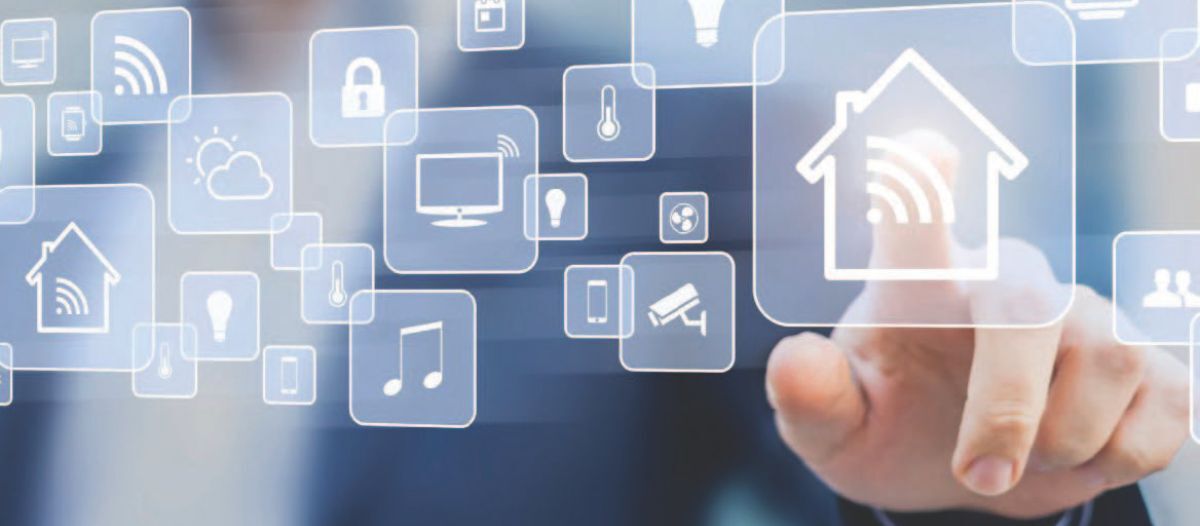
The sector that arguably began the “War of Amenities” is multi-family residential. Many of these types of developments cannot compete on location, so amenities are the next best option. The days of only installing a lonesome bocce ball court seem long gone at this point, as many of today’s amenities are based on flexibility and smart technology. Kristin Vinesett with Cortland Partners explains, “Several of our newest units are tech-driven with Internet of Things (IoT) services such as Nest thermostats, Amazon Alexa and access control through mobile devices. Even something seemingly simple like a USB electrical outlet is noted and appreciated by our clients.” Vinesett points out fitness centers in these environments are shifting toward those with built-in programming like Zumba or yoga, along with equipment fitted with “on-demand programming screens” from which a user simply chooses and joins a class from an online cloud-based service. “Cortland has an exercise program, Elevate, which is guided programming for each community,” she explains.
Trash valet and dog parks are timeless amenities but require attention to details such as timing, access to running water, a leashing pen and ample seating. Amenities that are not as popular are business centers, large tennis courts, and leasing screens or walls that give local suggestions on where to eat or things to do. These screens are underutilized in some markets, often suburban areas, which make them not worth the investment.
Another amenity with cross-sector implications is provision of electric car charging stations. “These have mixed reviews,” admits Vinesett. “A lot of properties see people use them, but we have push back based on location. If a resident with an electric car lives in one building, yet the station is in front of another building, they may not end up using it. The key is placement and walking distance, rather than just supplying a property with the amenity.”
Industrial
Industrial has come a long way in a few short years. The trend in this group is that buildings are shifting away from growing wider, and instead growing taller as the so-called “last-mile” of supply chains grows in importance to logistics and shipping companies. The last mile tends to reside in more urban areas, where there’s a need to stack higher to avoid greater land costs.
The Japanese model of a multi-story warehouse with trucks spiraling up and down around the outside of the building is finding its way into the United States. Within the last year, Prologis opened a similar me-changing facility in Tacoma, Washington. Paired with technology that shows current available space in the storage section of the warehouse, companies can avoid traditional issues of stockpile problems. The potential impact of driverless trucks, forklifts and delivery vehicles to this sector is mind-boggling.
Industrial is also shifting away from its low-cost minimalist roots in favor of interior finishes that look like what is found in coworking or creative office spaces, which has trended toward more residential or hospitality styles in the past few years. As more workers become aware of the fact that they spend more than 8 hours per day at work, the need grows to feel comfortable and content in the workspace. This fosters the desire for soft seating, lounge spaces and higher quality experiences in the workspace of industrial.
Office
Medical centers as an amenity, like what can be found in retail pharmacy locations, are making a comeback in the office space. Qualified providers are onhand to assist building employees. Instead of someone leaving work because they have a sore throat, a medical professional can diagnose seasonal allergies are the cause, provide over-the-counter medication and send the employee back to work.
Technology and flexibility are also key in this market, which is making use of fitness centers with the same on-demand programming available in the multi-family market. “These Peloton-like services are really becoming great ways to provide fun group fitness classes without the hassle of employing area coaches or trainers,” says Tracey Hatcher with KDC Real Estate Development. Wi-Fi is a standard in all office buildings — and it must reach to the peripheries of the property lines because outdoor seating areas are becoming popular with workers. Amphitheatre seating or tiered giant steps are elements used both inside and outside office spaces. These arrangements offer unique opportunities for company announcements, picnics and decompression/relaxation time when paired with availability of food and beverage.
Other interior prevalent and functional amenities include hubs and collaboration spaces such as town hall areas with access to food and beverage located near work surfaces. These break and café spaces must offer the ability to charge devices wirelessly in order to facilitate heads-down or earbuds-in work. Coffee bars and seltzer drinks are becoming popular offerings for workers — even with some built in near the reception area or simply functioning as the reception area itself.
No matter how many in- and out-of-office amenities are offered, parking remains an issue for many employees. As cities discourage car usage within their metro areas, building owners are finding parking less important to provide, while tenants are reacting to the lack of availability of parking. Mobile device-based services are filling these gaps, which have given rise to Uber drop-off stations and the proliferation of e-scooters like Lime, Lyft and Bird. Jillian Japka with The Allen Morris Company explains, “Offices have to embrace, and even offer support for, these services in order to attract the best quality talent. The advancement of driverless cars will only increase this need.”
“Location next to public transportation is also key in many areas. We will not see needed relief in traffic congestion until people take advantage of critical adjacencies of office space and public transport hubs,” says Hatcher. Some companies are hiring transportation concierge services to educate employees of the different transport options available in their area.
As FMs look to the future of parking needs, one solution can lie literally right under their nose. “One of the parking levels located just below the offices is designed to be easily converted into a future workplace if the need for those parking spaces disappears. The ceiling heights are the same as the offices above, and the systems are designed to be easily added there,” explains William Hotch, senior project architect at Warner Summers Architecture and Designs.
Summary
Looking across amenities in these three sectors, several key points begin to emerge.
-
Future-proofing amenities and design means planning ahead. One important trend across all sectors is the fact that cars are becoming discouraged in metro areas. With the rise of driverless cars/trucks and the proliferation of e-scooters and other transportation options, the need for parking decks may lessen in urban areas.
-
Available technology must respond to building amenities and vice versa, whether it is standard Wi-Fi, space logistics, efficient medical treatment or on-demand fitness classes.
-
Flexibility is key to future-proofing. Spaces cannot perform only one function — they must perform multiple functions with ease. Modern solutions include forward thinking such as turning a break area into a staff training room, flipping a parking level into part of the office building or turning new open warehouse space into storage for the latest shipment.
Retaining quality will mean reading these trends and outlooks for the future and responding in kind to them.

Kelly Darby's background in architecture gives a unique perspective to the work she does as marketing and business development manager for Warner Summers, a commercial architecture and interior design firm. She lectures on graphic design and the built environment having given presentations in Lund, Sweden, and The Art Institute of Atlanta. Darby is a graduate of the Georgia Institute of Technology, earning both a bachelor's of science degree and a master's degree in architecture. Darby is involved with CREW Atlanta as Communications Committee Co-chair, the American Institute of Architect’s (AIA) Equity in Architecture Committee, and has served on the Young Professional’s Board of the Museum of Design Atlanta (MODA).
References
Top image via Getty Images.
Read more on Occupancy & Human Factors and Workplace or related topics Planning and Design and Occupant Services
Explore All FMJ Topics