
 Membership
 Network
 Regional Sites & Affiliates


 Events
 Participate
 Resources

 Training
 Credentials
 Government


 Content Channels
 Tools
Tools


 Business Overview




Balancing Modernization & Safety Demands
Key trends shaping physical security
Genetec recently published its 2026 State of Physical Security report based on input from more than 7,000 security industry professionals. As facility managers expand collaboration with security teams to protect their organizations, data from the report gives significant insight into how these teams are conducting security operations and a look at potential future trends.
Here are some of the key findings to get a glimpse of how facility and security teams are maximizing their investments to improve security, efficiency and collaboration.
 Choice & flexibility will define the next phase of cloud adoption
In 2026, the conversation around cloud adoption will continue maturing. Organizations will prioritize solutions that offer deployment flexibility and scalability. Rather than committing to a single deployment model, enterprises will evaluate each workload based on performance, cost and data residency requirements. They will then choose the environment that best supports their operational needs, whether it is on-premises, in the cloud or a hybrid approach.
Open architecture solutions will give end users the freedom to choose the devices and applications that best support their operations. This approach will extend the life of existing infrastructure while allowing teams to adopt cloud services where they add the most value. Vendors that offer full-range deployment options and strong interoperability across environments will be best positioned to meet these expectations. In contrast to proprietary systems that limit choice and create lock-in, open solutions provide a more adaptable path that supports long-term flexibility and control.
Long-term vendor stability is becoming a key selection factor
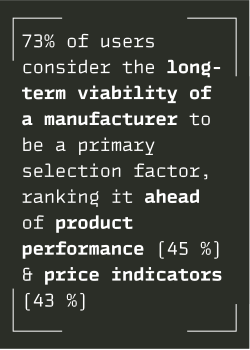
As organizations modernize their systems, long-term vendor stability is emerging as a major part of the decision-making process. The 2026 State of Physical Security report shows that 73 percent of users consider the long-term viability of a manufacturer to be a primary selection factor, ranking it ahead of product performance (45 percent) and price indicators (43 percent).
Buyers want partners who can support multi-year modernization plans, provide continuity as deployments expand and deliver consistent product development as their environments become more complex. Confidence in a vendor’s longevity and ongoing investment is becoming just as important as the technical features of the system.
Connected systems & security data will drive better operational intelligence
The number of connected devices, sensors and building systems will continue growing, creating new opportunities for facility teams to deliver measurable value across their organizations.
Many enterprises want to bring these technologies together within unified security and operational environments. Device activity, system events, and environmental inputs can be turned into intelligence that supports clearer decisions and more efficient responses.
Here are few examples:
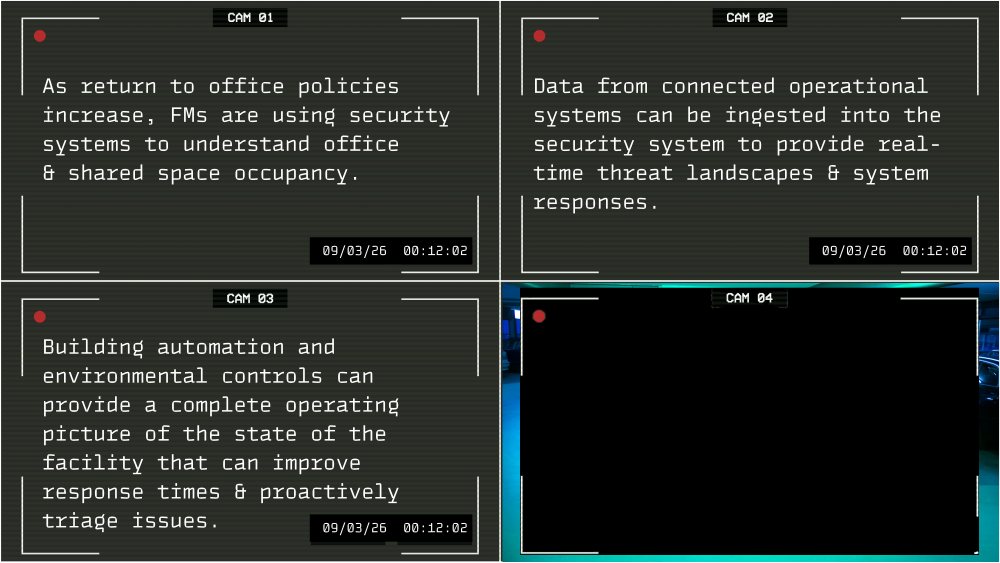 End users will look for platforms that can support a wide range of IoT and smart building technologies, scale across multiple sites and blend cloud-native and on-premises capabilities without compromising performance. They will expect open integration for diverse devices, strong cybersecurity controls and clear data residency protections.
Security data will continue supporting facility decisions
Security systems now support far more than incident response. Facility teams, for example, are increasingly using physical security data to understand employee movement, plan space usage, improve compliance workflows and refine daily processes. Video analytics, access control records and sensor data will increasingly be used to understand buyer habits, manage the flow of people, correlate attendance with operational patterns and more.
Looking ahead, organizations will increasingly evaluate systems not only for how they protect assets but for the business intelligence they can provide. Security and facility departments will continue offering broader value, including insights that support compliance, workforce management and operational optimization.
AI moves from hype to intelligent automation
Artificial intelligence is evolving into a practical tool for intelligent automation. In the latest Genetec State of Physical Security report, AI emerged as one of the top project priorities for 2026, with interest more than doubling compared to last year’s findings.
Facility teams are ready to move beyond the marketing hype and will seek tools that help them work more efficiently, such as intelligent search to accelerate investigations, automated event classification to reduce noise, and analytics that improve monitoring accuracy. These capabilities will help operators focus on decisions that require human judgment rather than being bogged down in routine tasks.
As AI adoption increases, scrutiny will increase, too. FMs will expect transparency in how data is collected, processed, and protected. They will expect thoughtful and responsible implementation rather than technology introduced for its own sake. Clear communication about how AI works and how it supports operator needs will become a core requirement for providers.
Access control modernization will accelerate
Access control will remain a top priority as organizations modernize legacy systems and focus on maximizing ROI. The value of access control is expanding well beyond locking and unlocking doors to deliver measurable business outcomes, such as energy efficiency, occupancy management and operational insights.
Access Control as a Service (ACaaS) adoption will accelerate as organizations prioritize easier maintenance, greater scalability, and predictable operating costs. Enterprises will favor hybrid deployments that combine on-premises and cloud capabilities. Unifying ACaaS and Video Surveillance as a Service (VSaaS) will further enhance visibility and streamline management across sites.
Solutions will be selected based on how they support operator roles
Organizations are placing greater emphasis on operator experience, and facility teams will want to invest in systems that help them be more nimble and efficient. Work management applications will become important components of security and facility operations. These tools centralize dispatch, activity tracking, and event coordination. By improving communication and simplifying complex tasks, they help operators respond more consistently.
Compliance expectations will rise
As cloud adoption and AI use expands, regulatory demands are increasing. In the latest State of Physical Security report, 40 percent of respondents said compliance was a primary reason for replacing legacy systems. Across regions, new guidelines and certifications are emerging, including NIST frameworks, ISO requirements, GDPR rules, and regional cybersecurity and data-protection mandates.
Facility teams will want systems with strong auditing tools and features that help them meet regulatory expectations without extensive manual processes. Vendors that can provide clarity, transparency and continued updates will be better equipped to support end users as standards evolve.
A more flexible, connected & operator-focused year ahead
The trends taking shape point to an industry that is becoming more practical and strategic in how it evaluates technology. Cloud deployments will be guided by the need for flexibility and control. AI will be judged by the results it delivers, not marketing hype. Access control systems will continue to expand their operational value. IoT and connected devices will contribute more meaningful intelligence. Security data will support broader facility operations. Operator needs will guide product selection more directly.
As organizations balance modernization with operational demands, the security industry will continue moving toward systems that help facility teams work with more confidence, clarity and efficiency.

References
Images via Getty Images.
Read more on Risk Management or related topics Physical Security and Occupant Security
Explore All FMJ TopicsRelated articles
-
A New Approach
Improving business continuity with alarm managementBy Brad Freeman09.09.2024 -

Beware of Growing Cyberthreats
Why it’s time for stronger facility cybersecurityBy Andrew Harris & Eric Headington10.30.2024 -

Going Up?
Keeping elevators safe & compliantBy Dave Myers & Doug Taylor11.06.2024