
 Membership
 Network
 Regional Sites & Affiliates


 Events
 Participate
 Resources

 Training
 Credentials
 Government


 Content Channels
 Tools
Tools


 Business Overview





Beyond Automation
Smart & sustainable FM

Facility management is changing faster than ever. In the past, automation meant simple controls such as automatic lighting, scheduled HVAC operations and basic security systems. Now, FM is moving into a smarter and more responsible phase. Organizations expect facilities to be efficient, digital, environmentally responsible and aligned with sustainability and net-zero goals.
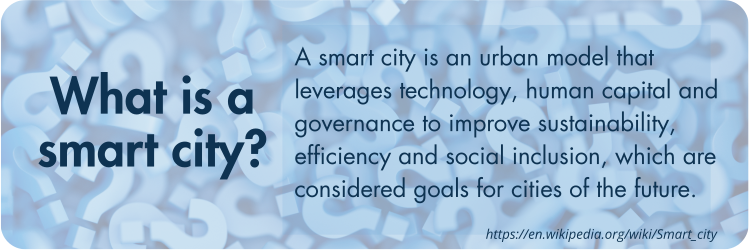
In developing markets like India and advanced markets like Canada, this shift is clearly visible. Smart city initiatives, green building standards and climate policies push FMs to rethink how they operate buildings. Technology is no longer only about convenience. It is now about responsibility, resilience and long-term value creation.
FMs can move beyond basic automation and adopt smart and sustainable practices using data, predictive maintenance and intelligent decision-making, while balancing environmental responsibility and operational efficiency.
 From automation to intelligent facilities
Traditional automation systems were designed to follow instructions. Lights turned on and off at fixed times. HVAC systems performed on preset schedules. Maintenance performed on a calendar basis. While these systems reduced manual work, they did not truly understand building behavior.
Smart facilities work differently. They learn from data. Sensors, smart meters and building systems now collect information about energy use, occupancy, equipment performance and indoor conditions. This data is analyzed to support better decisions.
For example, instead of repairing equipment only after failure, smart systems detect early warning signs such as vibration, heat variation or abnormal energy use. Maintenance teams can act before breakdowns happen. This approach improves reliability and reduces waste.
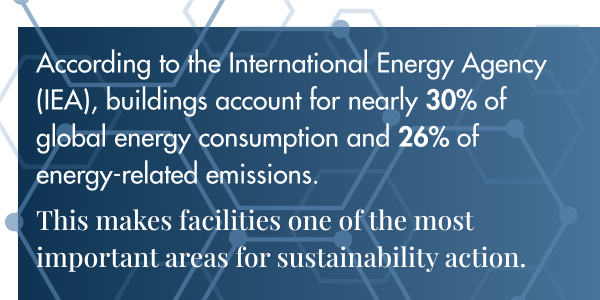
According to the International Energy Agency (IEA), buildings account for nearly 30 percent of global energy consumption and 26 percent of energy-related emissions. This makes facilities one of the most important areas for sustainability action.
In India, smart city programs and green building certifications such as GRIHA and IGBC are promoting energy-efficient buildings. In Canada, national climate policies and carbon reduction targets are pushing organizations to adopt greener facility operations. These trends show that intelligent FM is becoming a global necessity.
 Predictive maintenance: A practical sustainability tool
Predictive maintenance is one of the most powerful tools in smart facility management. It uses data and analytics to predict failures before they occur. This reduces downtime, saves money and improves safety.
But predictive maintenance is not only about cost savings. It also supports sustainability goals. Poorly performing equipment uses more energy, increases emissions and creates unnecessary waste. Early detection improves efficiency and extends asset life.
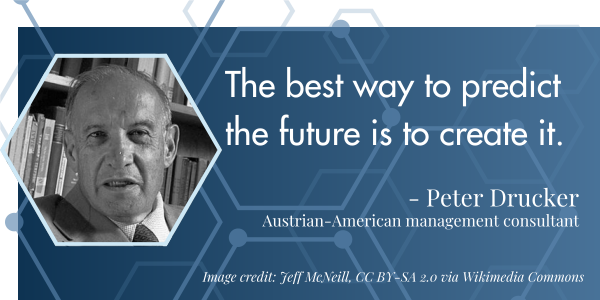 Predictive maintenance follows this idea by allowing facility managers to take control instead of reacting to problems.
In Canadian commercial buildings, predictive maintenance has helped reduce energy consumption by optimizing HVAC systems and reducing emergency repairs. In Indian industrial facilities, it has improved equipment life cycles and reduced material waste. These benefits directly support environmental goals while improving operational stability.
Data analytics & ESG responsibility
Environmental, social and governance (ESG) standards are central to organizational performance. Facilities play a major role in ESG because buildings consume large amounts of energy, water and materials.
Smart facility platforms combine data from multiple systems such as energy meters, maintenance software and building controls. This creates transparency and accountability. FMs can track carbon emissions, monitor energy performance and plan improvements based on real data.
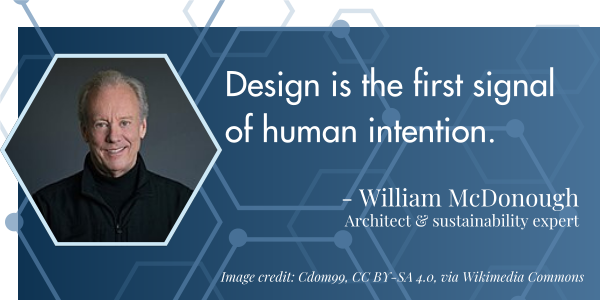 In facility management, data-driven design and operation signal an organization’s commitment to sustainability and responsibility.
In Canada, ESG reporting is linked to corporate governance and investor expectations. In India, sustainability reporting is growing under corporate responsibility frameworks. In both regions, data-driven facility management supports transparency and trust.
Aligning smart technology with net-zero goals
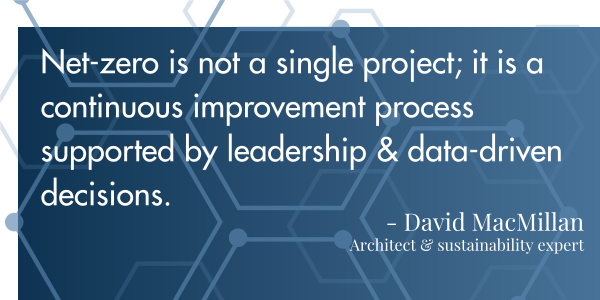
Net-zero goals require more than installing smart devices. Technology must support a clear sustainability strategy. Many organizations invest in smart systems but fail to integrate them into daily operations.
Successful alignment starts with clear priorities:
-
Identifying high-energy-consuming assets
-
Reducing waste and inefficiencies
-
Improving occupant awareness
-
Supporting long-term environmental planning
For example, occupancy sensors can reduce energy use in unused spaces. Energy dashboards can guide behavior change. Automated fault detection can ensure systems operate efficiently.
The human role in smart facilities
Technology cannot replace human leadership. Smart systems support decisions, but people make them.
FMs must guide teams through change, build skills and encourage collaboration. Training is essential. Without proper understanding, technology remains underused.
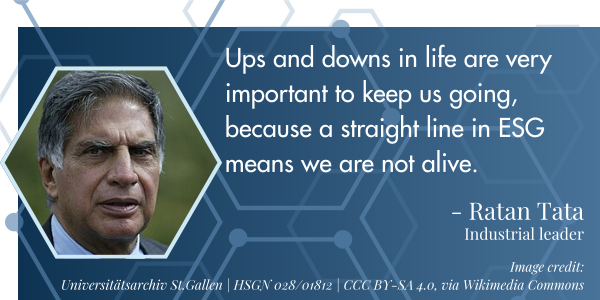 This reflects the need for adaptability and continuous improvement in facility management.
Smart and sustainable FM requires leadership, communication and vision, not only digital tools.
Global trends shaping smart FM
Several trends are influencing FM:
-
Climate regulations and carbon policies
-
Rising energy costs
-
Demand for healthy indoor environments
-
Growth of smart city initiatives
-
Digital transformation of infrastructure
Both India and Canada are investing in sustainable infrastructure, making FMs key contributors to national climate goals.
Practical Steps for FMs
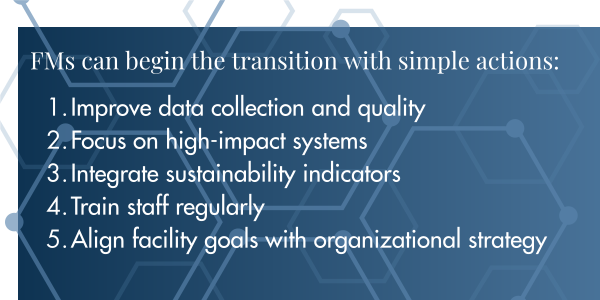 These steps help build momentum toward smarter and more sustainable operations.
The future of facility management is smart, sustainable and human-centered. Automation was the first step. Intelligence and responsibility are the next.
By combining technology, sustainability and leadership, facility managers can create buildings that are efficient, resilient and environmentally responsible. From Indian smart cities to Canadian green buildings, the global direction is clear: facilities must support both business performance and planetary well-being.
Smart and sustainable facility management is not only a professional responsibility. It is a social responsibility that shapes the future of communities, cities and environment.

Shashank Shrivastava is a facilities management professional with over 12 years of experience in integrated facilities management across commercial and institutional environments. He holds certifications in project management, supply chain management and sustainability, including IFMA’s Sustainability Facility Professional (SFP). His work focuses on smart building operations, predictive maintenance and data-driven decision-making aligned with ESG and net-zero goals. Shrivastava is passionate about leveraging technology to improve operational efficiency and long-term asset performance in the built environment.
References
Top image via Getty Images.
International Energy Agency. (2023). Buildings: Energy and emissions statistics. https://www.iea.org/reports/buildings
MacMillan, D. (2024). Net-zero strategies in Canadian commercial buildings. Canadian Sustainability Review.
Drucker, P. (2001). The Essential Drucker. HarperBusiness.
McDonough, W., & Braungart, M. (2002). Cradle to Cradle: Remaking the Way We Make Things. North Point Press.
Read more on Sustainability and Facility Technology & Data Management or related topics Facility Technology , Sustainable Facility , Carbon Footprint and Energy
Explore All FMJ TopicsRelated articles
-
Smart Building Control Systems
The foundation for a grid-interactive buildingBy Andre Marino09.25.2024 -

Smart Building Innovation
Cutting costs & carbon footprints without compromiseBy Andrew Butterworth09.12.2024 -

Chart the Path
Building sustainable cities & a sustainable futureBy Izzat Ali Khan & Aykean Forde12.16.2024
