
 Membership
 Network
 Regional Sites & Affiliates


 Events
 Participate
 Resources

 Training
 Credentials
 Government


 Content Channels
 Tools
Tools


 Business Overview





Beyond Pass/Fail
Reinventing the subcontractor prequalification process

Subcontractors bring specialized skills that are essential for delivering complex work safely and on time, but they can also introduce significant risks. A subcontractor struggling with financial instability, poor safety practices or quality issues can derail an entire project. The impact is rarely contained to a single job: defaults often cost more than the original subcontract value, while delays and reputational harm ripple long after the project ends. The concern is growing. According to the 2024 AGC/FMI Risk Survey, 70 percent of respondents reported an increase in subcontractor distress or defaults over the past year, and nearly half experienced project disruptions.
To mitigate subcontractor risk, the industry relies on prequalification. To do this, pass/fail rubrics and surveys have long been the standard tools for deciding who makes the cut. The problem is that these evaluations are rarely given enough consideration when making hiring decisions. Subcontractors are often chosen for their skills, availability, bid or past relationship; while prequalification data that can reveal underlying risks left on the sidelines. That disconnect leaves projects exposed. Today’s labor shortages, paired with increasingly aggressive schedules, demand a more holistic approach that not only identifies qualified subcontractors but also uses risk insights to enhance safety performance, broaden the available talent pool and improve project outcomes.
.svg) With 94 percent of construction firms struggling to hire, subcontractor capacity is shrinking, leaving general contractors and facility managers with fewer choices. Lowering standards is not the answer. Instead, organizations need a prequalification model that balances business and safety risk while adapting to today’s labor market. This is the foundation of the Contractor Success paradigm.
With 94 percent of construction firms struggling to hire, subcontractor capacity is shrinking, leaving general contractors and facility managers with fewer choices. Lowering standards is not the answer. Instead, organizations need a prequalification model that balances business and safety risk while adapting to today’s labor market. This is the foundation of the Contractor Success paradigm.
What is Contractor Success?
This approach moves beyond a yes/no prequalification decision to establish a more collaborative, full life cycle approach to risk mitigation. With Contractor Success, prequalification is traditionally viewed as a distinct step during the preconstruction phase. And once a subcontractor is awarded, the project team or FM assumes the ongoing risk associated with their performance, financial stability, safety practices and overall ability to complete their scope of work.
Alternatively, the Contractor Success model mitigates risk by shifting prequalification from a single point in time before a project starts, to ongoing, real-time communication and collaboration throughout the project's life cycle. Contractor Success is a strategic partnership framework wherein hiring managers work to understand each subcontractor’s unique areas of concern and continuously engage with them to improve performance throughout the project and build a foundation of collaboration and trust that can expand well beyond the initial project.
Adopting Contractor Success: A 3-step process
Step 1: Prequalification
To prequalify subcontractors, companies have traditionally emphasized historical metrics that detail a subcontractor’s safety record. These lagging indicators, such as total recordable incident rate (TRIR) or experience modification rate (EMR), provide meaningful insights. However, the results can be misleading without additional context and offer limited value for predicting future risk. A low TRIR could indicate a strong safety program or just indicate that a company has been lucky.
Lagging safety metrics are an important part of understanding risk, but as mentioned previously, more context is needed. Having a conversation about circumstances, types of injuries, severity and learnings is critical. Rates alone can be misleading, as they are often skewed by a company's size. For example, a single incident at a company with 10 employees will dramatically increase its overall TRIR, while several incidents at an organization with 500 employees will only have a relatively minor impact on rates.
Rate calculations also treat all incidents the same. As it relates to TRIR, without detailed classifications, a minor laceration appears statistically identical to an injury that resulted in days away from work and had the potential to result in a serious injury or fatality (SIF). Insight into the specific events provides a much more accurate picture of the overall risk profile for the contractor.
Uncovering contributing factors, root causes and corrective actions for incidents provide further insight into future risks. For example, a subcontractor with a high TRIR may have implemented new processes that can improve safety performance and contribute to a stronger safety culture. Of course, this change will not be immediately reflected in incident rates until the impact is realized and performance improves year-over-year.
In addition to gathering context on lagging data, effective prequalification should also evaluate leading indicators, such as:
-
-
Safety programs: Programs that identify job-specific hazards and outline targeted measures to mitigate those risks create safer work environments as compared to those that mainly restate standards and regulations.
-
Safety management systems: Cultural frameworks enable managers to implement safety programs effectively. Strong safety management systems encompass leadership involvement, employee training, accountability and recognition, periodic safety inspections, communication and regular program evaluations.
-
Safety training: Programs that provide comprehensive, continuous, job-specific instruction with high completion rates indicate workers have the necessary skills to perform safely.
-
Prequalification also involves assessing potential default risk. Surety bond underwriters use the 3 Cs — character, capacity, capital — in their decision process. These principles can also be effectively applied to a strong prequalification process.
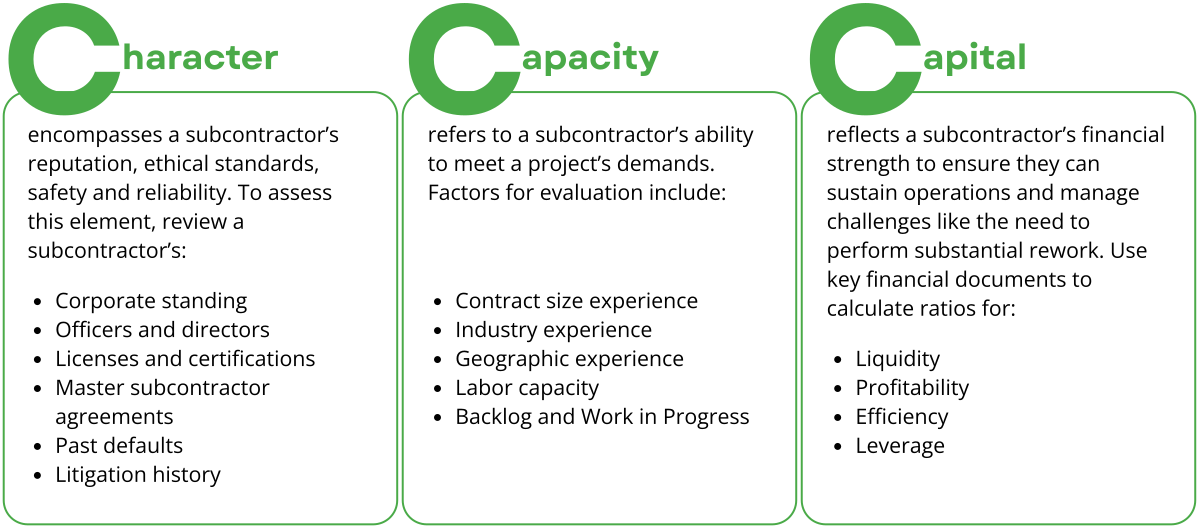
Work quality must also be factored into prequalification decisions, as poor quality work is a common cause of subcontractor default. Subpar craftsmanship that requires rework increases costs, time and safety risks. A subcontractor’s level of sophistication and approach to managing quality must be part of the evaluation.
This holistic approach to prequalification involves many variables and countless documents. It may be tempting to take shortcuts, but there is no such thing as a low-risk subcontractor. The same is true for subcontractors with long-standing relationships. Relying on prior positive experiences without thorough re-evaluation can expose companies to unforeseen changes in a subcontractor's financial stability, safety risk or operational capacity.
Step 2: Develop plan(s)
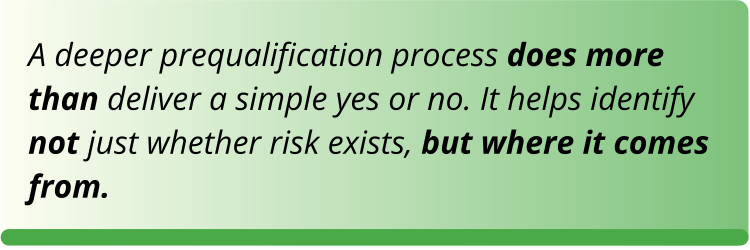
A deeper prequalification process does more than deliver a simple yes or no. It helps identify not just whether risk exists, but where it comes from. With that insight, teams can develop targeted risk mitigation plans (RMPs) that make it possible to work confidently with a wider range of subcontractors. When owners and contractors collaborate around clear standards and expectations, they strengthen overall risk management and drive better performance across projects.
For example, consider a contractor who brings the specialized skills needed for a project but also carries an elevated EMR and TRIR. A closer analysis shows the issues stem from gaps in their manual material handling safety program. Rather than eliminating that contractor from consideration, the hiring team can work with them to create a corrective action plan (CAP) that includes targeted worker education on proper manual material handling and identification of opportunities to use mechanical aids. This approach ensures critical expertise is retained on the project without compromising safety expectations.
Detailed prequalification also uncovers financial risks, which can often be addressed through an exception management plan. For example, if there are liquidity concerns, the project team might decide to issue joint checks to guarantee supplier payments or purchase key materials directly. Strategies like these make it possible to work with smaller but highly qualified contractors who may have limited financial history or capital reserves, while still protecting the project from unnecessary exposure.
This thoughtful and collaborative risk mitigation approach not only expands the pool of candidates but also builds stronger, more resilient partnerships that contribute to overall project success.
Step 3: Execute on plan
Once a project begins, the plan must be implemented with ongoing monitoring and check-ins. Regular on-site inspections confirm that contractors follow corrective action plans and meet safety expectations. Observed behaviors highlight gaps between policy and practice, as well as emerging risks. With this information, project teams and contractors can adjust protocols, training, equipment or other factors in real time to reduce exposure and strengthen safety throughout the project life cycle.
Transparency and oversight are equally important for managing financial and operational risks. Senior leaders need visibility into active exception plans to understand financial exposure and ensure accountability for risk management. Regular reviews align stakeholders with project goals and support proactive mitigation before issues escalate.
Finally, when a subcontractor completes their scope of work, the project team should evaluate overall performance, including safety, work quality and schedule management. Aggregated data from site inspections, incident tracking and evaluations can inform future hiring decisions. These insights clarify how to strengthen performance on upcoming projects or, when needed, identify contractors who may not be a fit for future work.
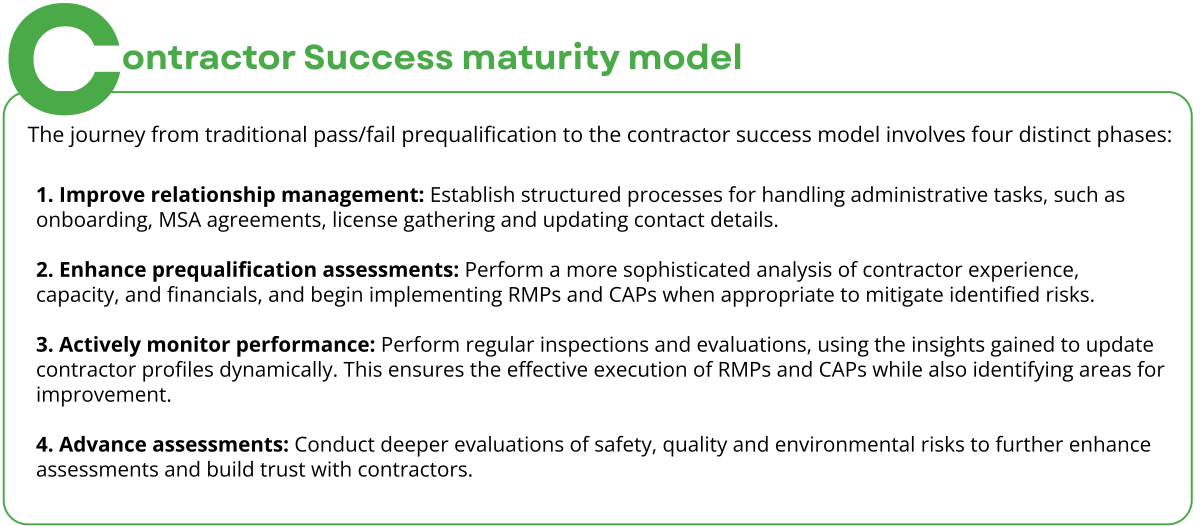
As you move through these phases, teams build a collaborative culture of continuous improvement. Each progression unlocks new opportunities, such as adopting subcontractor default insurance (SDI) or contractor-controlled insurance programs (CCIPs).
Technology supports Contractor Success
Managing Contractor Success at scale requires significant data and analysis. Technology streamlines these tasks to deliver enhanced insights for better decision-making. Contractor management software also reduces the administrative burden on contractors by providing online portals and digital forms, which simplify information gathering.
AI further improves processes by expediting manual tasks such as reviewing safety manuals. AI-powered platforms can spot gaps and compare documents from different contractors in minutes rather than hours. These tools can then layer in safety metrics, incident reports, financial documents and other data to deliver a comprehensive risk analysis and pinpoint issues needing attention.
Throughout a project, contractor profiles should be updated with new insights and behavioral observations. AI and machine learning models can analyze large data sets to uncover patterns and emerging risks before they impact projects. With this insight, teams can proactively mitigate risks throughout the project life cycle.
Prequalification is a process, not a single step
Treating prequalification as a procedural step is a disservice to projects and contractors. Organizations have an opportunity to improve performance and reduce risk by evolving their approach from a checklist exercise to a process that drives continuous improvement.
By gaining a deeper understanding of the specific risks associated with potential partners, organizations can confidently engage a broader range of subcontractors through targeted, collaborative risk mitigation efforts. Collecting data and observing behavior enhances these strategies, driving better performance from preconstruction through project completion. Embracing this dynamic approach leads to safer, more successful projects and stronger partnerships.

David Tibbetts is a Certified Safety Professional and chief safety officer at Highwire. His focus is on continued product development, client success and customer support with the goal of helping clients implement full life cycle risk mitigation in their contractor management process, which delivers contractor success. Prior to joining Highwire, Tibbetts served as the manager of construction safety in Harvard University’s Environmental Health & Safety Department. He was responsible for managing Harvard’s Construction Safety Program, which included maintaining Harvard’s Construction EH&S standard, overseeing a comprehensive substance abuse prevention program and monitoring effective use of contractor safety assessment programs. In this role, Tibbetts focused on helping project teams at the university manage risk across Harvard’s campuses on dozens of projects involving hundreds of contractors each year.
Read more on Risk Management and Occupancy & Human Factors or related topics Occupant Safety and Supplier or Vendor Management
Explore All FMJ TopicsRelated articles
-

A New Approach
Improving business continuity with alarm managementBy Brad Freeman09.09.2024 -

Beware of Growing Cyberthreats
Why it’s time for stronger facility cybersecurityBy Andrew Harris & Eric Headington10.30.2024 -

Going Up?
Keeping elevators safe & compliantBy Dave Myers & Doug Taylor11.06.2024
