
 Membership
 Network
 Regional Sites & Affiliates


 Events
 Participate
 Resources

 Training
 Credentials
 Government


 Content Channels
 Tools
Tools


 Business Overview





Beyond Physical Security
Why FMs are strategic risk leaders

Global organizations are operating in an environment shaped by increasing complexity, disruption and uncertainty. Climate-related emergencies, geopolitical instability, cyber-physical threats, workplace violence concerns, supply chain disruptions and evolving regulatory expectations are influencing how facilities are managed and protected.
Facilities and portfolios are no longer viewed solely as physical assets requiring maintenance and operational oversight. They are recognized as critical environments that influence business continuity, workforce well-being, corporate reputation, sustainability performance and organizational preparedness. As a result, FM and security functions are becoming more interconnected than ever before.
This convergence is reshaping the expectations placed upon facility leaders globally. Modern facility management professionals are expected to understand risk, resilience, crisis preparedness, governance, technology integration and operational continuity.
The expanding risk landscape
Today’s facility environment faces risks that are broader and more interconnected than in previous decades. Traditional operational concerns such as maintenance, access control and physical safety remain essential, but organizations are now managing a far wider range of interconnected risks.
Geopolitical instability can affect supply chains, workforce mobility, transportation systems and critical infrastructure. Climate-related events such as heatwaves, flooding and severe weather are more common, creating operational disruption and financial pressure. Cybersecurity incidents can disrupt physical building systems, operational technologies and access management platforms, highlighting the growing convergence between digital and physical infrastructure.
The global workplace has also changed significantly. Hybrid work models, evolving employee expectations, health and safety concerns, and increasing focus on well-being have transformed how facilities are used and managed. Facility leaders are now expected to support not only operational efficiency but also employee confidence, safety, experience and organizational culture.
Why FM & security are converging
Modern operational resilience depends on collaboration between FM, security, technology, human resources, health and safety, legal and executive leadership teams. Organizations recognize that crisis management, emergency preparedness, continuity planning and resilience initiatives require multidisciplinary coordination.
FMs are responsible for environments where people, operations, technology and infrastructure intersect. This places them at the center of resilience planning and operational coordination.
 This convergence is also visible within environmental, social and governance (ESG) frameworks. Organizations are under increasing pressure to demonstrate responsible governance, workforce protection, sustainability performance and crisis preparedness.
The rise of the strategic FM leader
The modern facility leader is expected to possess skills beyond operational management. Strategic FM leadership now requires an understanding of resilience, governance, stakeholder coordination, technology integration, crisis management and organizational risk.
Several competencies are becoming valuable for future-focused facility leaders:
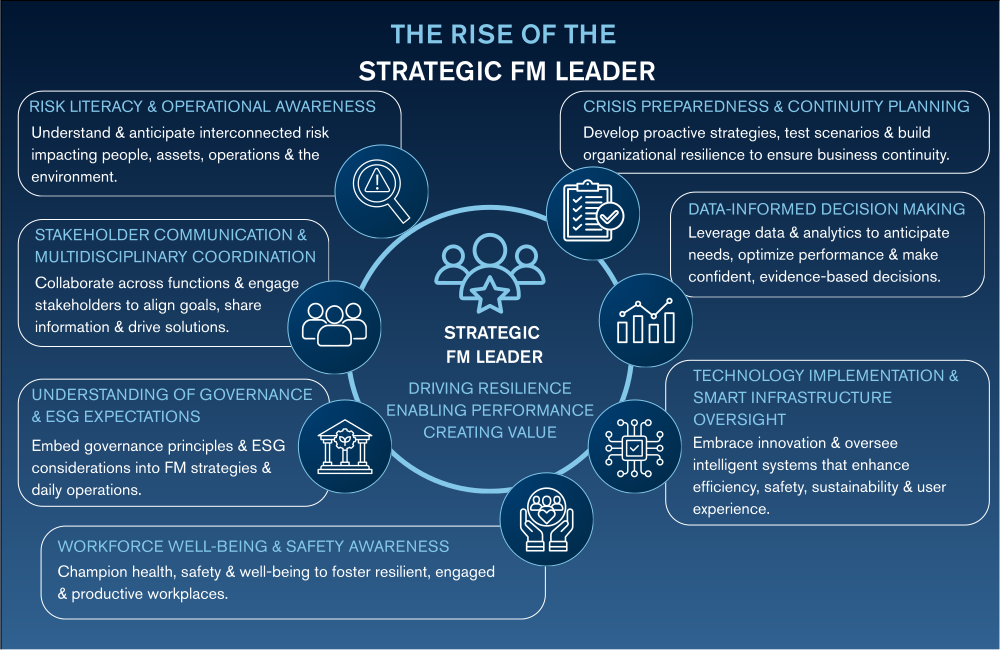 Organizations that invest in these competencies may strengthen both operational performance and organizational resilience.
Technology & the intelligent facility environment
Smart buildings, connected infrastructure, predictive maintenance systems, occupancy analytics, integrated monitoring platforms and AI-enabled operational tools are transforming how facilities are managed.
These technologies can provide facility teams with improved operational visibility, enhanced situational awareness and faster decision-making capabilities. Integrated systems can help organizations identify operational disruptions earlier, monitor energy performance, improve maintenance planning, support workforce safety and strengthen continuity planning.
Technology is most effective when supported by governance, trained personnel, operational procedures and cross-functional coordination.
Practical actions for FM teams
-
Conduct integrated risk assessments involving FM, security, technology and continuity teams.
-
Include FM personnel in emergency simulations and crisis exercises.
-
Develop resilience-focused performance indicators alongside traditional operational metrics.
-
Strengthen collaboration between facility management, security, information technology, sustainability and executive leadership.
-
Align facility operations with ESG priorities.
- Prioritize workforce confidence, well-being, accessibility and preparedness.
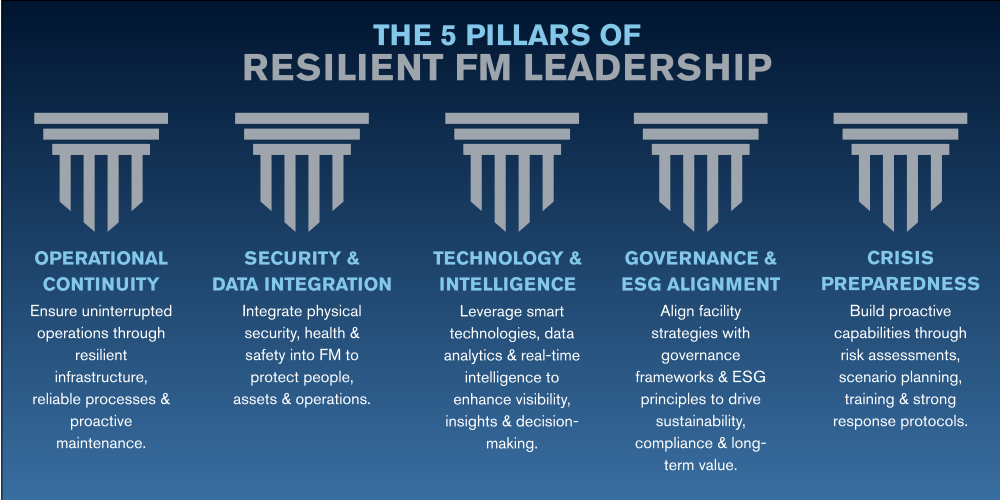 These pillars reinforce the idea that resilient facilities require both operational excellence and strategic coordination.
The FM landscape reflects the growing convergence between operational resilience, workforce safety, crisis preparedness and strategic governance. Resilience-focused FM forums and international industry dialogue in Europe repeatedly highlight that facility leaders are no longer viewed solely as operational managers, but as strategic contributors to organizational continuity and resilience.
One recurring theme across these discussions is the recognition that resilient organizations depend on cross-functional coordination between FM, security, technology, sustainability and executive leadership teams. As global risks evolve, FM professionals are central to organizational preparedness, workforce confidence and operational stability.
The future of FM leadership
FM is undergoing a significant global transformation. As organizations face interconnected operational, technological, environmental and geopolitical challenges, facility leaders are becoming essential contributors to organizational resilience.
The future FM leader is therefore not defined solely by operational efficiency, but by the ability to support resilience, continuity, safety, adaptability and strategic coordination in a rapidly evolving world.
Building a resilience-centered facility culture
Resilience is recognized not only as an operational capability, but also as an organizational culture that must be reinforced consistently across the built environment. FM teams play a critical role in helping organizations create environments that support preparedness, adaptability, workforce confidence and continuity under pressure.
One of the most significant developments in modern facility leadership is the growing expectation that resilience planning should be embedded into daily operations rather than treated as a standalone emergency management activity. Organizations are integrating resilience principles into procurement processes, vendor management, infrastructure investment decisions, sustainability strategies, workplace design and operational governance frameworks.
For example, global organizations evaluate suppliers and contractors not only on cost efficiency, but also on continuity capability, cybersecurity maturity, emergency response readiness and environmental resilience. This broader approach reflects the understanding that operational disruption often originates outside the immediate facility environment.
Workforce expectations are also reshaping resilience priorities. Employees expect workplaces to demonstrate visible preparedness, clear communication structures, health and well-being support, and effective emergency coordination. Therefore, FMs contribute not only to operational performance, but also to organizational trust and workforce confidence.
Training and awareness programs are vital components of resilience maturity. Organizations are expanding emergency awareness initiatives beyond traditional evacuation drills to include digital disruption scenarios, severe weather preparedness, communication escalation exercises and multidisciplinary crisis coordination workshops. These initiatives help reinforce organizational readiness while improving coordination between operational departments.
 Resilience-focused organizations also place greater emphasis on post-incident review processes and operational learning. Following disruptions or emergency exercises, FM teams conduct structured assessments designed to identify lessons learned, operational gaps, communication challenges and recovery improvement opportunities. This continuous improvement model supports stronger long-term resilience capability.
Another emerging trend involves the integration of sustainability and resilience objectives. Climate adaptation planning, energy efficiency initiatives, infrastructure modernization and operational continuity planning are viewed as interconnected priorities rather than separate organizational programs. FM leaders are becoming important contributors to both sustainability strategy and enterprise risk management discussions.
As operational risks continue to evolve globally, organizations that prioritize resilience-centered FM may be better positioned to maintain continuity, protect workforce well-being, strengthen stakeholder confidence and support long-term organizational stability.

Christina Alexander Alexandropoulou is an international strategic risk, security, and resilience professional whose work focuses on the convergence of facility management, operational resilience, governance and ESG within complex operational environments. She serves as the private sector chair for Greece within the Overseas Security Advisory Council (OSAC), chapter co-chair of the Institute of Strategic Risk Management (ISRM) Mediterranean Chapter and board member of the IFMA Greece Chapter. Her professional experience and international engagement focus on resilience-driven operations, infrastructure security, crisis preparedness and the evolving strategic role of facility management in organizational continuity and workforce wellbeing, having worked for adidas, Avaya, Four Seasons Hotels & Resorts and Philip Morris International. Alexandropoulou has been internationally recognized through features including SIA’s Women in Security Forum Power 100 for 2026, Security Magazine’s Women in Security 2024, the “Security Leader of the Year – Europe” distinction, and has contributed to global discussions surrounding strategic security leadership and operational resilience.
References
Top image via Getty Images.
Read more on Risk Management and Leadership & Strategy or related topics Strategy , Physical Security and Environmental, Social and Governance (ESG)
Explore All FMJ TopicsRelated articles
-

A New Approach
Improving business continuity with alarm managementBy Brad Freeman09.09.2024 -

Beware of Growing Cyberthreats
Why it’s time for stronger facility cybersecurityBy Andrew Harris & Eric Headington10.30.2024 -

Going Up?
Keeping elevators safe & compliantBy Dave Myers & Doug Taylor11.06.2024