 Membership
 Network
 Regional Sites & Affiliates


 Events
 Participate
 Resources

 Training
 Credentials
 Government


 Content Channels
 Tools
Tools


 Business Overview




Book Excerpt: Work on the Move 3
Building better workplaces after the pandemic
Editor's note: An excerpt from the IFMA Foundation’s new book, Work on the Move 3, Building better workplaces after the pandemic.
The idea of the office has been undergoing constant change throughout the past few decades. Driven by technology, the ability to work anytime, from anywhere, has freed the workforce from the traditional constraints that dictated where work was performed.
By late 2019, concepts of agile workspace, hoteling, hot desking, and activity-based working had taken hold and were becoming standard ways of designing and using office space.
Then the pandemic hit. In the early part of 2020, the world collectively decided that COVID-19 represented an immediate health danger. Most countries went into lockdown and everyone whose job did not require in-person contact shifted to working from home.
After vaccines were produced and deployed, at least in developed countries, companies are planning for or in the midst of a return to the office.
Organizations are now thinking about how to move beyond the reactionary, pandemic-driven remote work response and on to a purposeful plan for the future of work. The opportunity, now, is to build on what was learned in 2020 to create a workplace that combines the best aspects of in-person collaborative work with remote work, an approach that has been termed the hybrid workplace. In the U.S., more than 68 percent of workers would prefer a hybrid work model, which keeps the benefits of flexibility and work-life balance they have enjoyed while working from home. Therefore, a purposeful and thoughtful approach to hybrid work is critical for leaders looking to attract and retain diverse talent.
As organizations undertake development of a new strategy for the hybrid workplace, several issues should be considered. These include understanding and appreciating the role of office space for collaboration and organizational culture, changes needed in workplace design, the use of technology in managing the hybrid workplace and the need for new management practices.
The role of the office in the hybrid workplace
Is corporate office space even needed at all? With remote working having been more successful than imagined, the idea of completely virtual companies has gained currency. Indeed, during the past 20 years, there have been examples of companies, mostly in technology fields, where all employees work remotely. While some organizations may choose to go completely virtual, for most organizations, the office will continue to serve different but important functions. Here are five reasons why offices will continue to be important.
1. Robust collaboration
Researchers Anne-Laure Fayard, John Weeks and Mahwesh Kahn wrote about the limits of virtual communication. “When communication takes place remotely, the connection is severely weakened and nonverbal signals are harder to pick up on, even when people can see each other on a screen. In [face-to-face encounters] people are often energized and more likely to empathize with each other, which supports organizational culture and collaboration.”
While videoconferencing can prove adequate for routine meetings, some activities need the benefit of high-bandwidth interaction that supports the nuances conveyed with body language and facial expressions. Activities such as product design, brainstorming, strategizing, and discussing painful or difficult topics are all done more effectively in live, face-to-face settings.
2. Innovation from random encounters
An early research study in environmental psychology by MIT Professor Thomas Allen in the 1970s found that face-to-face communication decreases exponentially as a function of distance. More recently MIT Professor Alex Pentland researched how ideas are exchanged between employees of different departments and found that physical proximity plays a major role in random encounters and innovation driven by the cross-pollination of ideas.
A recent study of Microsoft employees found that departments were becoming more siloed during remote work necessitated by the pandemic and that team interactions and connections were diminishing. According to senior principal researcher at Microsoft, Dr. Nancy Baym, “When you lose connections, you stop innovating. It’s harder for new ideas to get in and groupthink becomes a serious possibility.”
It will be important for organizations with virtual or hybrid workplaces to consciously find other mechanisms where ideas can be exchanged in an unstructured setting.
3. Learning & mentoring
Most jobs require knowledge that goes beyond what can be learned from a book, video or class. This real-world knowledge is most effectively gained in an informal, unstructured environment. This is easy in live settings, but difficult when working remotely.
Fayard, Weeks and Kahn describe the office as a schoolhouse. “Much knowledge can be codified, efficiently scaled and distributed by knowledge-management systems, but the really critical knowledge in most organizations cannot be made explicit.”
Before the pandemic, some companies adopted a policy requiring that employees work their first year of employment in the office before becoming eligible for remote work. A good variation of this in the new hybrid workplace model would be to require relatively more office workdays for new employees, particularly those just entering the workforce.
4. Company culture
According to Bradford Bell, professor of strategic human resources at Cornell University, “Company culture is really about the connection that employees have, number one, to a company. Culture is important for signaling what companies’ value. Are we an innovation company? Are we a traditional company? What is the point of this company? How is disagreement handled here? Is seniority more important than innovation? Are rules to be bent, broken, or followed with precision? How are ideas challenged? None of this is handled or transmitted through the employee handbook, it’s transmitted through relationships.”
The challenge of the virtual workplace and the hybrid workplace is to provide other means to impart this informal, but important, information to employees who are not working in proximity.
5. Human connection
Human beings need social interaction for life satisfaction.
In his recent book, Together, U.S. Surgeon General Vivek Murthy wrote, “One of our most important sources of connection is the workplace. Given that most of us today spend more of our waking hours on the job than at home and many of us interact more with our colleagues than with our non-work friends, we need meaningful connection at work to sustain us.”
Although tools such as chat and video conferencing can partially compensate, they do not provide the human connection of face-to-face communication that is provided by an office environment.
Design implications of the hybrid workplace
As individual work shifts from office to home workplaces, the office will increasingly be seen as a social hub and place for group collaboration. The shift in balance between “me space” and “we space” will drive changes in space use and office design.
Shared desking
Even before the pandemic, facility and workplace managers observed that fewer than half the workstations in most offices were being used at any given time. Following the pandemic, the increase in working from home will further exacerbate this phenomenon.
This is problematic for two reasons. First, it will be hard to justify the expense of real estate that is not well used. Second, office spaces that are mostly empty lose that “energy” that is important for a positive and productive workplace experience. Of course, too much energy, noise and movement are also problematic, so the key is to find the right balance.
The solution to maintaining real estate cost effectiveness for many organizations will be shared desking. By adopting the practice of unassigned seating, companies will be able to reclaim those workspaces, increase utilization, increase the sense of energy, and provide sufficient workspace while reducing the portion of office space used for individual work.
Collaboration space
With the primary function of the new hybrid office being a setting for group work, meeting spaces will have increased importance. Important considerations will include top-quality systems for video conferencing, good acoustics, the ability to easily reserve rooms online, special purpose spaces for ideation and spaces to support social gatherings.
Using technology to manage the dynamic workplace
Until recently, it has been very difficult to understand how buildings and workspaces were being used on a day-to-day and hour-by-hour basis. With advances in sensors, wireless communication, and machine learning, this has changed. Today workplace planners can collect detailed, hour-by-hour utilization data that can be analyzed to determine usage patterns and peak loads, providing trustworthy, actionable data.
Developments in digital information screens and integration of enterprise systems have also enabled an array of devices that enhance employee workplace experience. Of particular interest are the following:
-
Scheduling systems that allow hoteling workspaces, focus rooms and meeting rooms to be booked in advance.
-
Meeting room information screens to let people know instantly if a room is available and allow them to book the room on-site.
-
Information screen devices for hoteling workspaces to show whether a workspace is available and, if so, allow an employee to book the space for short-term use.
-
Wayfinding systems to provide navigation assistance for employees and visitors, helping them locate specific meeting rooms or other locations.
-
Visitor systems used to enhance the visitor check-in process.
-
Mobile applications providing an easy way for employees to access workplace services and information.
The impact of the hybrid workplace on corporate real estate
The dramatic shift to a hybrid workplace will have significant effects on real estate portfolio management. As more work is done from home and organizations move to staggered work schedules, it is likely that organizations will reduce their real estate footprints. More significantly, it is likely that organizations will make changes in the type and configuration of the real estate they use. Changes will include:
-
An increase in collaboration space and decrease in personal workspace.
-
An increase in co-working to provide flexibility. Co-working is the practice of people from different companies sharing a common workspace.
-
A move from large central corporate campuses to “hub and spoke” models that provide office space closer to employees’ homes.
-
A reduction in real estate in expensive city centers, particularly in large cities like New York, London, Hong Kong and San Francisco.
Closing thoughts
The world is in the midst of a workplace revolution. The pandemic has accelerated this revolution, as people and organizations, through necessity, found new ways of working. Workplace concepts that were experimental a few years ago have become familiar today. Organizations and individuals are more willing to consider new ways of working than ever before. The issue of how to return to work has become the question engaging every business leader and the need for vision and leadership in workplace management has never been greater.
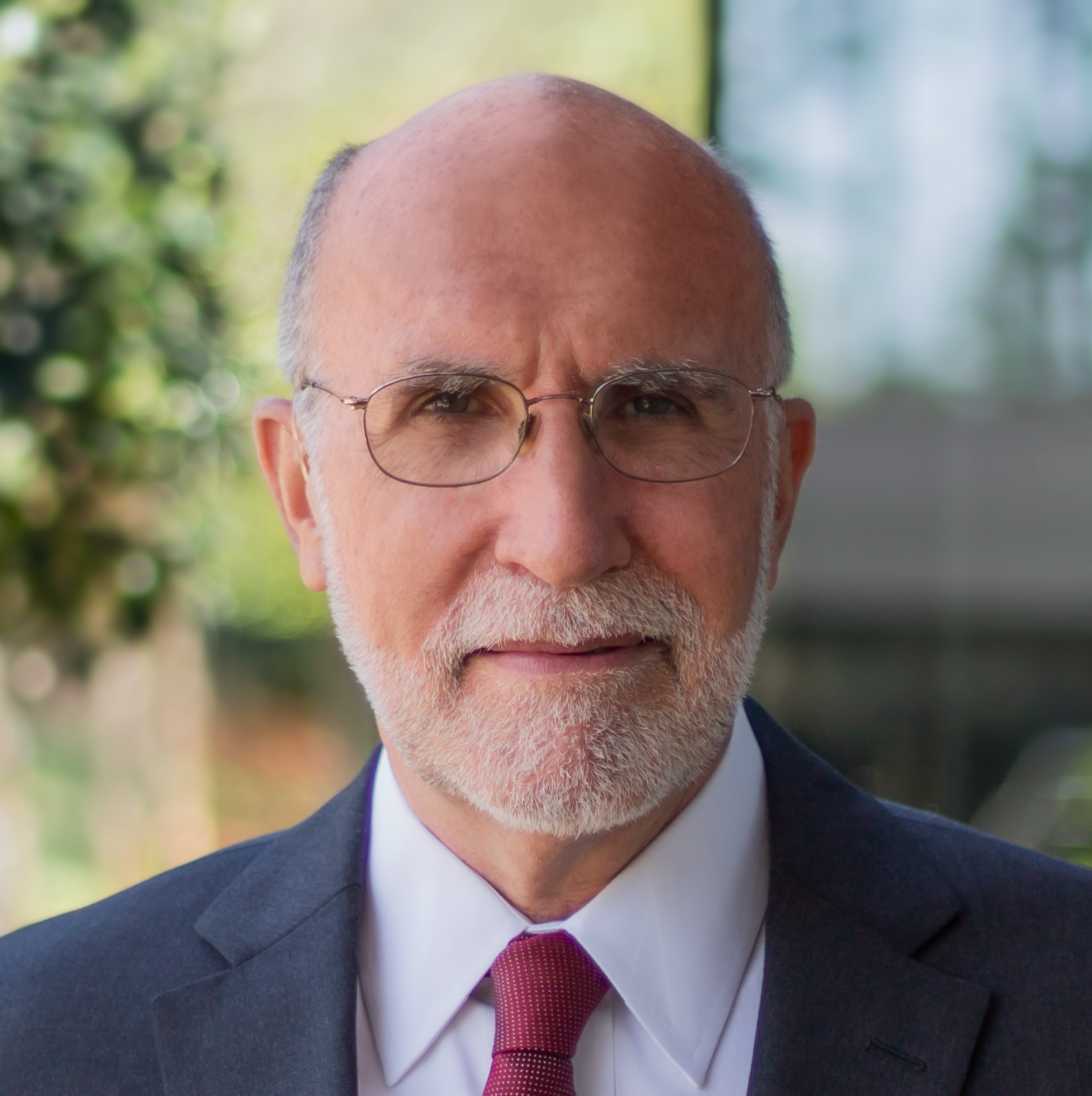
Michael Schley, IFMA Fellow is the founder of FM:Systems, a leader in technology for the digital workplace. He led the company as CEO until his retirement in 2017. Today he serves on FM:Systems’ board of directors and is engaged in guiding company strategy. Shley is recognized globally for his expertise in facility management technology. He served as chair of the IFMA Foundation and organized the Workplace Strategy Summit conference held at Cornell University in 2012 and in Great Britain in 2014.
References
Read more on Workplace or related topics Workplace Utilization , IFMA Foundation and Book Excerpt
Explore All FMJ Topics