
 Membership
 Network
 Regional Sites & Affiliates


 Events
 Participate
 Resources

 Training
 Credentials
 Government


 Content Channels
 Tools
Tools


 Business Overview





Budgeting for Solar
Lowering future costs while improving building performance
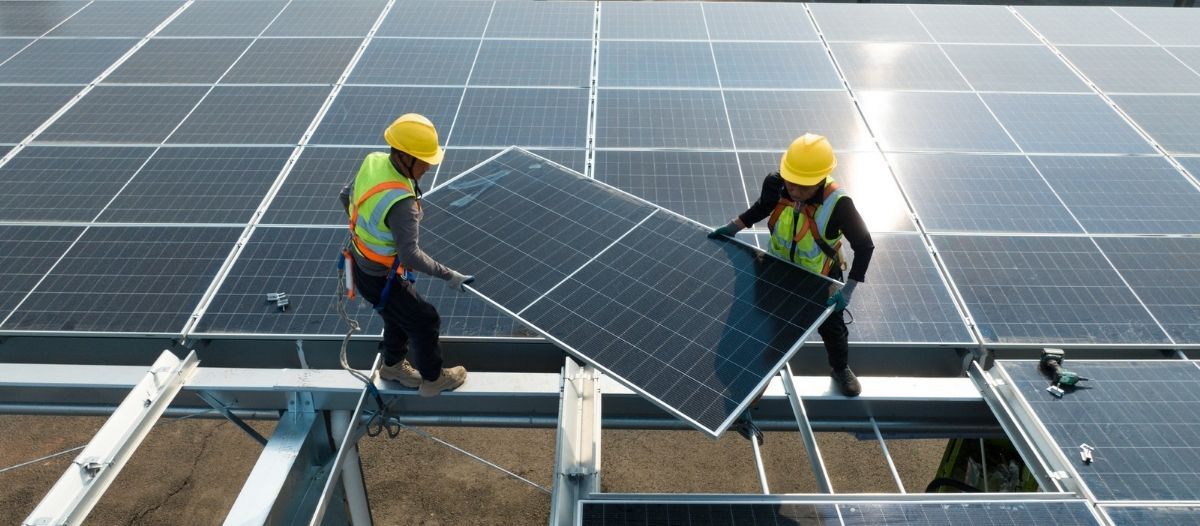
Be it consumer demands, compliance or just good business sense, solar energy is becoming a critical part of built landscapes in many countries. Facility managers are familiarizing themselves with the technology and its opportunity to lower costs and meet sustainability goals.
FMs juggle a lot of responsibilities to ensure properties are running as cost-effectively as possible. These responsibilities include keeping track of different maintenance and operations expenses as well as finding new ways to improve building performance. Monthly electricity costs are a direct result of this process and one of the most important variable costs for an organization.
While the cost of utilities is already one of the most substantial budget line items, it is steadily rising due to increased demand, higher prices for generating energy and unstable fossil fuel costs. So, how can FMs prepare for and lower future electricity costs for their properties?
One effective option for properties is on-site solar. On-site solar includes solar photovoltaic (PV) panels that are either installed on the rooftop, mounted on the ground or sometimes built as canopies over parking lots. These solar arrays generate energy that offsets energy procured by the utility.
By incorporating solar into the budget, FM can see returns on their investment for decades to come.
Leverage incentives to reduce costs
Solar energy incentives are a critical component that directly impact a system’s cost and return on investment (ROI). The availability of incentives will vary by location, utility service territory and sometimes the local government. By working with an experienced solar developer, FMs can ensure that relevant incentives are secured.
Some of the common incentives include:
-
Net metering or the 1:1 retail crediting of excess generation
-
Property tax exemption
-
Solar renewable energy credits (SRECs)
-
Federal Investment Tax Credit (ITC)
Offset costs with net metering
Installing on-site solar energy on the property can directly reduce the facility’s electricity bill and translate to a better Net Operating Income (NOI) for the company that owns the building, thanks to a policy framework known as “net metering.” Net metering allows customers with distributed energy sources, like solar, to give the excess energy produced by their system back to the electricity grid. In exchange, customers receive credits that lower their electricity bill.
Solar energy systems are typically designed with a building’s annual energy usage in mind. This means that the system can “overproduce” solar energy, particularly during the summer months, and draw from that bank of credits when there are more loads than what can be supported by the system. Similarly, because the target is to offset the property’s historic annual consumption, there is no need to be concerned when the solar array is covered by snow a few days a year, or there is an unusually cloudy week. Simply put, the more energy the solar system produces, the less the electricity bills will be. According to EnergySage, the average commercial property saw an 89 percent decrease in their annual utility bill after installing solar. However, it is important to note that customers on tariffs that include demand charges will still have demand, measured as the highest power draw over a 15-minute interval for the month. Over its useful life, solar will reduce demand from time to time when peak loads match peak output from the array.
Increase property value without paying more taxes
In the U.S., 36 states offer a property tax exemption for the value that a solar system adds to a property. Some states even exempt solar 100 percent from a building valuation. Because a property’s value can increase by US$20 for every US$1 reduction in annual utility bills, there is a huge benefit from this incentive. Building owners can enjoy a higher market value without having to pay any additional taxes.
Monetize environmental benefits
FMs can also take advantage of the environmental benefits produced from on-site solar. In many states, a company that owns a solar array can receive a solar renewable energy credit (SREC) for each megawatt-hour (MWh) of electricity produced by their system. These credits can be worth hundreds of dollars when sold to other entities. The only downside for companies that own the facility is that they give up the right to “claim” the renewable energy production as a carbon offset. However, it can be lucrative to reassign RECs to the utility, should they offer such an incentive program for commercial customers.
Apply federal tax credits
If a facility is not located in one of the U.S. states that offers a property tax exemption for solar or administers the SREC programs, companies that install solar can still benefit from federal incentives. The federal Solar Investment Tax Credit (ITC), gives businesses across all states a one-time dollar-for-dollar reduction on their corporate taxes for installing on-site solar. Coupled with accelerated bonus depreciation, which allows system owners to frontload their depreciation, almost half of project costs are recouped via tax benefits.
Understanding the budget impact
Even with such great incentives for the U.S. solar market, FMs might wonder how much needs to be allocated in the budget to install solar. The impact on the budget will depend on the company’s preferred procurement method.
Businesses can either directly purchase a system to reap all policy benefits (like the ITC) and earn ROI over time. The other option is to enter into a power purchase agreement (PPA) to reduce installation costs, which does not require an upfront investment. With a PPA, a facility would agree to buy electricity from an energy provider or solar developer. In exchange, the developer would install a solar power system on the facility and sell the energy produced by the panels to the owner of the property at a predetermined rate. As investment parameters are specific to each company, solutions can be tailored to meet those needs. In short, solar has never been more attainable.
International benefits
Some of the best markets for solar energy include China, Germany and Japan. India, Kenya and Costa Rica are rapidly expanding their solar outputs as well. The governments of each of these countries are implementing policies that incentivize companies to install solar power on their facilities.
For example, China, Japan and Germany have a solar Feed-in Tariff policy. Under the Feed-in Tariff framework, the government sets a fixed price for every kilowatt hour (kWh) produced from the solar energy system for a fixed period of time. The price is high enough that companies that adopt solar are able to receive credits at or close to the retail price of electricity.
Long-term benefits of solar
By including solar in the budget, companies can simultaneously reduce operational costs, advance sustainability goals, and aid in increasing the property's competitive advantage.
Reduce cost uncertainties
Incorporating solar in the budget will allow the facility to achieve financial resiliency and reduce cost uncertainty. For U.S.-based FMs, one of the greatest advantages of the PPA option is reducing risk by hedging rising energy prices. With a PPA, FMs can lock in a rate over the length of a contract (typically 20-25 years) that is lower than the rate that is being paid to the local utility. The result is budget certainty and long-term savings.
If it is decided that the solar energy system will be purchased directly, there would be a higher upfront cost. However, the ongoing energy expenses would be substantially less, giving the facility owners a greater ROI and extra money to pocket over time. It is an opportunity to effectively turn an expense into an asset.
Once there is space in the budget, even more can be accomplished. Money can be put towards more important line items than energy, such as upgrading lighting, essential repairs or installing new windows. It is important to remember that there is no return on funds spent each month on the electric bill. Therefore, solar energy helps FMs take greater control of their overhead.
Low maintenance cost
Another advantage of installing solar through a PPA contract is that FMs do not have to be responsible for upkeep and maintenance of the arrays; the PPA fee includes operations and maintenance services. Hence, going solar does not necessarily raise the costs for other parts of the budget.
Solar maintenance is relatively minimal. Each year, the inverter’s intake vents should be cleaned, and in years 11-13, the inverters will need replacement.
Sustainability impact
Beyond the monetary gains, it is also important to note that the environmental benefits are increasingly important as companies reduce their carbon footprint as part of a larger sustainability strategy. Some of the most well-respected global brands are looking to solar to meet their sustainability targets and are developing projects around the world.
For every kW energy of solar installed, the facility can lower its CO2 emissions by more than 3,000 pounds annually. If the installed solar system has a capacity of 150 kW, a facility will prevent more than 450,000 pounds of CO2 from going into the air each year.
Given this growing trend, integrating sustainability measures like solar into commercial properties has become a market necessity to attract tenants, draw emerging talent into the company and comply with shareholder demands. The facility, and by extension, the company that owns the property, can diff erentiate itself, increase revenue, and keep diff erent stakeholders satisfi ed by including solar in the budget.

Gerald Espinosa has seven years of experience in solar energy, including installation, operations, project feasibility and project development. As a business development manager, he works with Pivot Energy’s customers to understand their unique needs and deploy solar energy solutions that aid their competitive advantage.
Read more on Sustainability and Finance & Business or related topics Financial Analysis , Operational and Capital Budgeting and Energy
Explore All FMJ TopicsRelated articles
-

Smart Building Control Systems
The foundation for a grid-interactive buildingBy Andre Marino09.25.2024 -

Smart Building Innovation
Cutting costs & carbon footprints without compromiseBy Andrew Butterworth09.12.2024 -

Chart the Path
Building sustainable cities & a sustainable futureBy Izzat Ali Khan & Aykean Forde12.16.2024