
 Membership
 Network
 Regional Sites & Affiliates


 Events
 Participate
 Resources

 Training
 Credentials
 Government


 Content Channels
 Tools
Tools


 Business Overview





Building Technologies in the Post-coronavirus Environment
5 facility action items to implement now
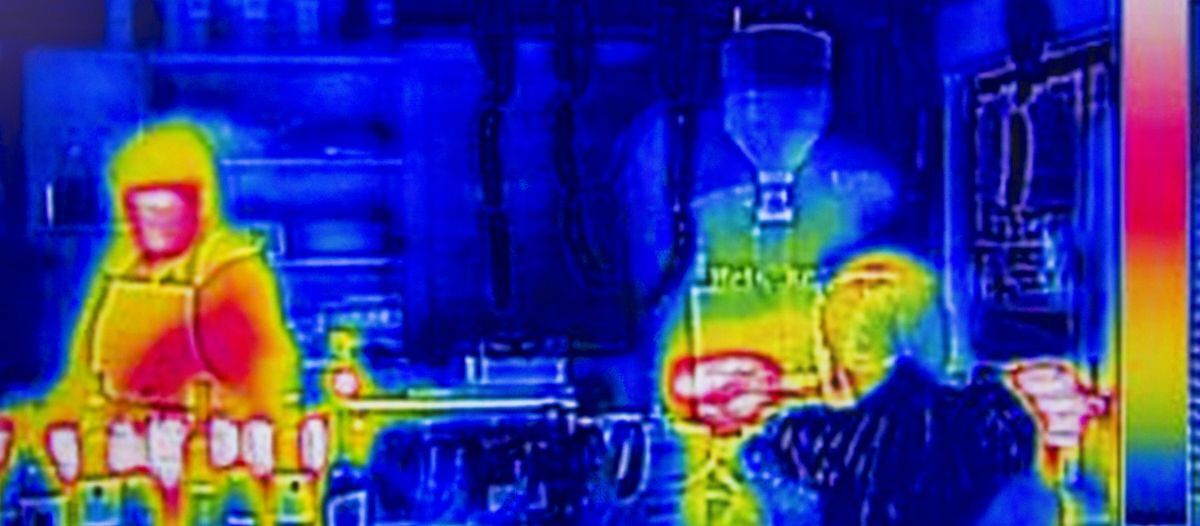
“The new electronic independence recreates the world in the image of a global village.”
— Marshall McLuhan, Understanding Media: The Extensions of Man
There is broad agreement that the post-COVID-19 era will create a “new normal.” However, much of the upcoming anxiety likely will be centered around trust — how does one go back into buildings to work and interact in-person after becoming accustomed to telecommunications-enabled social distancing during these stay-at-home times? Anticipating that anxiety, it is time to ask two important questions:
-
What will it take to give people the confidence to be in buildings with other people again?
-
What can be done to make buildings intelligently cooperate with humans in new ways designed to facilitate and maintain healthy interactions?
Technologists have answers for these conundrums using existing intelligent building technology (IBT) developed over the last decade. While to date, IBT has focused primarily on building energy efficiency and maintenance, recent applications have pivoted toward humanistic purposes, leveraging occupancy data to support physiological and psychological goals.
The following five “big ideas” take IBT and the related technologies of sensors and beacons that define the Internet of Things (IoT) to practical applications with human elements and goals to improve and safeguard lives.
1. Enable remote connections
Accommodating a hybrid of people inside buildings with those working from home or elsewhere is the most immediate concern. Many institutions are already prepared for this scenario, as videoconference rooms and distance-learning classrooms have proliferated over the last decade or so. The rapid shift to working and learning at home has forced many organizations to evaluate the readiness and efficacy of their current facilities, with an eye toward the next steps in upgrades and expanded use.
Building owners should take stock of their existing assets and consider how additional spaces may be adapted with these telecommunications features. Special considerations must be made to include remote workers “in the field” and not in their homes. New tools such as augmented reality glasses may be very useful in these circumstances, providing both a view of the field to office workers along with communications with field workers.
2. Design for smart systems
Post-pandemic, the exposure to other people’s airborne fluids and residual aerosols is the greatest concern. Social and physical distancing with facemask barriers is the obvious and practical way to mitigate the direct transmission of fluids between people. Current experience and anecdotes show that this can be difficult for a variety of reasons: social norms, accidents or blatant disregard for the risks. The masks must come off at some point, though, and physical distancing will become more important again.
Building owners can implement effective occupant exposure tracking for a variety of purposes using Bluetooth and Wi-Fi beacons and smartphones in buildings. For example, devices can alert people using vibration to warn when proximity is too close, or when an appropriate set-point gathering number such as 10 people or more is identified. This type of IoT technology is already being used to monitor social distancing. Further, when someone is positively identified for coronavirus or other contagious ailments, immediate alerts may be sent to anyone who has been in proximity to the infected person so that they may seek testing.
3. Build healthy infrastructure
Air quality monitoring schema may be leveraged to mitigate airborne threats. For example, the LEED™ (Leadership in Energy and Environmental Design) program — known primarily for building energy efficiency criteria — offers useful and required guidelines designated as indoor air quality (IAQ.) Applying these guidelines as a baseline to include viruses and bacteria that fall under the particulate matter (PM) categories — beyond the traditional CO2, CO and volatile organic compounds (VOC) — could prove effective. Designing for smaller “zones” or “micro zones” in HVAC systems can help to build occupant confidence in their air quality; and in extreme or executive spaces, can be localized to include individual zones.
A variety of sensors are available to integrate for monitoring compliance. Other, more human-oriented guidelines from Well and Fitwel also address some of these same issues. Features already present in building automation systems (BAS) equipment that monitors air filter conditions can be used to send this data to occupant-facing dashboards. Displaying this data in digital signage in lobbies and other circulation paths gives occupants the peace-of-mind that their building’s IAQ is as healthy as can be. Standards-based guidelines for such HVAC system best practices are provided by the American Society of Heating, Refrigerating and Air-Conditioning Engineers (ASHRAE).
Expect to see a flurry of development of new IoT devices. These may be IoT-enabled versions of existing devices, such as with thermostats, fire extinguisher charge indicators and water purifier filter status reminders. New devices could include hand sanitizer and antibiotic soap dispensers with fluid level alerts, breathing masks and other PPE dispensers, localized air purifiers or virus test stations.
Although no one can predict which of these devices will be desired in any particular building, facilities can be designed to accept them and connect them to the IBT systems. There will likely be higher interest in restrooms, where the most extreme precautions should be taken to ensure occupant confidence. New building-related smartphone apps could include information such as when the restrooms were last cleaned, which stalls are ready, occupancy status, etc. A transition from group to individual restrooms may also be in the space planning future.
4. Create app-based connections
Beyond air-quality issues, testing for infection and/or antibodies will be important as people are permitted (or not permitted) to enter buildings. One of the early indicators of coronavirus infection is heightened body temperature. IoT devices such as smartwatches and fitness bands that are already worn by millions of people are tracking their owners’ temperature on an ongoing basis. One company is using crowdsourced body temperature tracking to alert public health officials to potential concentrations of infected people. This same technology may be used on a building-wide basis for similar purposes. Other companies offer equipment that may check body temperature and other vitals, such as blood pressure, heart rate and blood oxygen level.
Yet another promising IoT solution pioneered at Carnegie-Mellon University uses voice recognition to identify voice signatures that are characteristic of people with COVID-19. This is based on crowdsourced input that could become more accurate through time. Occupant voices within buildings could be monitored for such signatures by deploying microphones throughout the building, as with gunshot detection systems or via dedicated test stations.
It is possible to create smartphone apps that are specific to a building, campus or enterprise. These apps would be the likely interface between the building occupants and the IoT devices being implemented. The usefulness and accuracy of the data would be dependent on occupants’ permission to participate, and as with any such app, there would need to be a level of confidence in the cybersecurity of the system. There are already examples of such apps in retail, museum and higher education venues, among others. Additionally, public signage could satisfy some of the communications needs with people not participating in the app program.
Attention to the real-time potential of infection that can be spread among building occupants may also be communicated by building-wide emergency announcement messages. Building owners may consider updating their announcement systems to comply with NFPA 72: National Fire Alarm and Signaling Code. This would apply particularly to buildings without these emergency announcement capabilities. New connectivity between IBT systems and the announcement systems could help expedite getting the message to occupants.
IoT devices have long been useful in automating various business transactions, and it is time for building professionals to consider incorporating them in a more dedicated manner in the built environment. For example, smartphone apps may be used to order from grab-and-go cafes with trusted virus protection schema to minimize human interaction. Likewise, dedicated rideshare pickup/drop-off locations may be built for the same purpose. These ideas will become even more important in the transition to deploying more autonomous vehicles.
Additional building-wide preparations may include relatively recent innovations. For example, occupants will certainly have heightened awareness of what they touch or who and how many people they are encountering. This could include doorknobs and strikes, elevator buttons, intercoms and other common interfaces. Some people may choose to be alone in elevators and wish to have indicators that elevator cabs are empty.
Many of these ideas may be implemented with voice-activated, touch-free devices. Entrances to facilities will be the most important, and security systems may be similarly enhanced. Entrances will be particularly important to prevent entry to possibly infected people and may be equipped with disease detection systems. These may be automated with temperature, blood sampling or other appropriate technologies, or with new types of personnel stations manned by testing professionals.
5. Managing change & confirm for confidence
A successful approach to incorporating these technology implementation ideas in buildings begins with empowering a new role: the Intelligent Building Technology Project Manager to oversee the project’s efforts. Both the ANSI-TIA 4994 Standard for Sustainable Information Communications Technology and the ANSI/BICSI 007-2017: Information Communication Technology Design and Implementation Practices for Intelligent Buildings and Premises provide guidelines for coordination and project phase implementation. These two building-systems standards equip practitioners to deliver design packages that include interconnectivity drawings and specifications. As with any guidelines, especially those involving technology interactions, training and encouragement/enforcement is needed for the mitigations to work properly.
Complimenting existing building commissioning agency (CxA) processes, new occupant commissioning (CxO) plans could be created to ensure that all permanent and temporary occupants become willing partners in ensuring everyone’s health. As building owners learned through years of experience with the LEED™ program, a lack of occupant buy-in can lead to abandonment or gaming of the system, resulting in reduced advantages of the investment.
Next steps toward a new normal
When implementing any new technology, some unforeseen consequences and interactions should be carefully considered. In the case of these five steps there may be a tendency to infantilize people, paying less attention to what is happening around them as they become dependent on the technology. This is no different than some other areas of peoples’ lives, particularly in transportation, where more and more automation is being incorporated into automobiles. These five ideas are intended to create safer and less stressful environments.
Once again, McLuhan’s observations predicted the future: “The Age of Anxiety is, in great part, the result of trying to do today's job with yesterday's tools and yesterday's concepts.” Proactively planning for returning to buildings now will make the transition to the post-coronavirus era smoother, less anxious and more successful.

Dr. Joseph Bocchiaro brings a wealth of audiovisual thought leadership, consultant and integrator experience to higher education, corporate, financial, judicial, publishing, training and conference centers. With degrees in educational technology, media studies, electro-optical engineering and cinematography he is dedicated to the improvement of audiovisual industry professionalism and its increasingly vital role in the Architectural, Engineering and Consulting (AEC) industry. An accomplished writer and presenter, Bocchiaro has published over 100 technical articles in professional journals and has presented across 16 countries at more than 50 audiovisual and information technology conferences.
References
Read more on Leadership & Strategy and Facility Technology & Data Management or related topics Facility Technology and Strategic Planning
Explore All FMJ TopicsRelated articles
-

Artificial Intelligence in FM
The stakeholder’s perspectiveBy Dr. Jake Smithwick & Dr. Kenneth Sullivan & Nneka Ubi05.01.2024 -
Mastering Change in Hybrid Environments
Insights from global operational leadersBy Meg Swanson09.02.2024 -

Plugged In
Solving the data disconnect in real estate and FMBy Amanda Muzzarelli & James Waddell07.01.2024