
 Membership
 Network
 Regional Sites & Affiliates


 Events
 Participate
 Resources

 Training
 Credentials
 Government


 Content Channels
 Tools
Tools


 Business Overview





Case Study: At the Crest
Innovation in the built environment
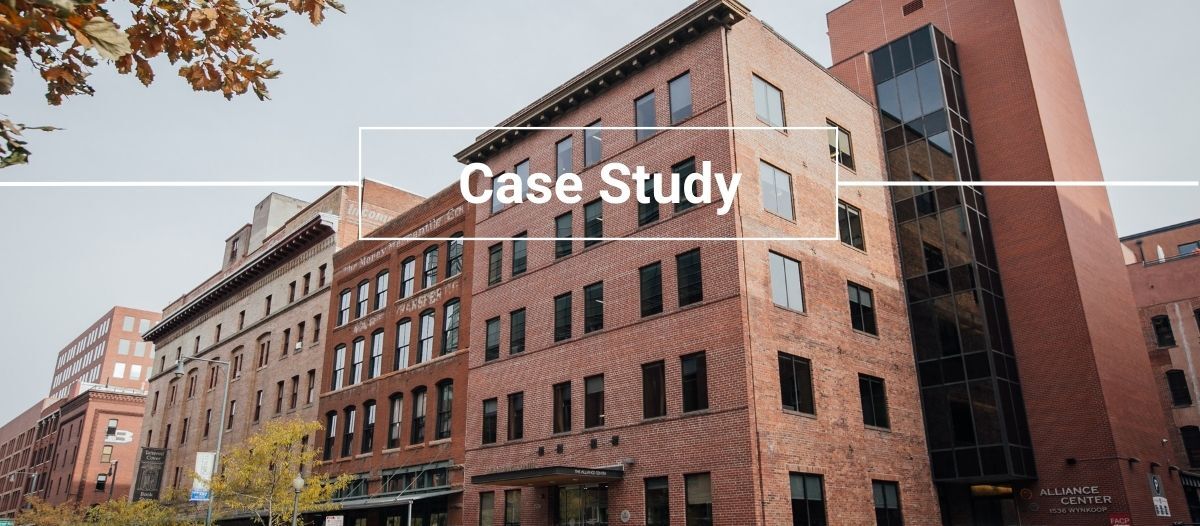
Envision the surf of the ocean with waves coming to land, some small, some big, some fizzle out, others make it to the shore. The Alliance Center has a proven track record of riding and leading the most impactful waves to pilot innovation in the built environment for the 113-year-old building it owns and operates in landlocked Denver, Colorado, USA. It has continuously been at the crest with building performance, transformative technology, and human health and wellness.
The Alliance Center is a 40,000-square-foot coworking space in the heart of Lower Downtown Denver that has served as the hub of Colorado’s sustainability movement since its founding in 2004. The organization’s broader mission is to bring people together from all sectors to create solutions for pressing social, environmental and economic challenges, most notably the climate crisis. The Alliance Center also utilizes its building as a living laboratory, demonstrating sustainability in action and testing innovative green building practices to improve performance in the building sector and the wellness of building occupants. With the living laboratory program as the basis for piloting innovation and sharing successes and challenges, The Alliance Center shows continuous commitment to finding and leading cutting-edge sustainability efforts for the commercial building sector.
Proven building performance
Building operations account for 28 percent of global CO2 emissions, and building materials and construction comprise another 11 percent. Committed to the efficient operations of existing buildings, The Alliance Center received the first of many green building certifications to communicate their commitment to the market and its customers soon after its founding. This focus on performance was this first wave that set the organization on the path for success in the built environment and has been a constant effort for nearly two decades.
In 2006, The Alliance Center earned its first two Leadership in Energy and Environmental Design (LEED) certifications from the U.S. Green Building Council (USGBC), receiving Existing Buildings Gold and Commercial Interiors Silver. It was the first historic building in the world to earn two LEED certifications. LEED has grown in popularity throughout the U.S. and continues to expand its building certification efforts to a global level. As this growth continued, The Alliance Center proceeded as an educator and early adopter of LEED certifications, while also pushing for more rigorous performance standards themselves. In 2011 the center earned LEED Existing Buildings v2009 Gold recertification.
The LEED existing building certifications required a substantial time commitment and included a heavy focus on policies over actual, real-time performance. This meant very few buildings continued to certify their environmental performance, and a LEED certified building did not necessarily mean it was efficiently operated. The Alliance Center recognized this problem and joined as an early adopter of USGBC’s Dynamic Plaque, now Arc platform, that focused on streamlining existing building performance reporting and certification across energy, waste, water, transportation, air quality and human performance. The Alliance Center was the fifth building in the world to participate in this program and continues to emphasize the importance of efficient building operations above prescriptive guidance.
A better commercial office model
The Alliance Center is a space for mission-driven people to come together to collaborate and was one of the first to develop a coworking space in Denver. This model focuses on making it easy for individuals and organizations to work together in shared spaces and uses economies of scale to provide the communal resources occupants need. More than just a building, The Alliance Center is viewed as a destination for collaboration and the hub of sustainability in Colorado.
The Alliance Center undertook a full building renovation in 2014 to transform its 1980s office space into one that provides a variety of workspaces and amenities. Sparked by an end-of-life mechanical system, this renovation also enhanced the building performance. The result of the renovation was that the space’s occupancy and revenue doubled, while its energy usage decreased nearly 20 percent. The building also earned Energy Star with a score of 94 in 2016, and achieved LEED Arc Gold and finally LEED Existing Buildings Operations + Maintenance v4 Platinum recertification in 2017.
In 2020, The Alliance Center was recognized as the most energy-efficient building in its area and was listed among the top 10 in Denver. Built in 1908, it took a fully holistic approach to sustainability and a dedicated project team to perform at standards even modern-day buildings often do not accomplish.
As building performance takes on an increasingly more important meaning with efforts worldwide to meet rigorous climate goals and a focus on human health and wellness, The Alliance Center sought ways to expand its impact by using the building as a demonstration site for climate mitigation solutions. New waves in the building sector were forming in 2016, including smart grids and transformative technologies, and The Alliance Center took this as an opportunity to expand beyond status quo.
Microgrids & building electrification
The first of these waves relates to how the energy grid functions today, an approach that originated just a few decades before The Alliance Center building was built and has changed very little since. Until recently, power plants generated and distributed almost exclusively alternating current (AC) electricity. However, with the advancements of photovoltaics (PV) batteries and other renewables, new opportunities are arising to save energy by changing the path from the generation to end use phases.
In 2017 The Alliance Center jumped on this new wave and completed one of the country’s first fully direct current (DC) microgrids, which includes a PV array and battery storage. The significance of this system is that it is exclusively DC based. DC power is inherently more efficient than AC power, and recent forecasts indicate that 80 percent of electricity will flow through native DC devices. With renewables that natively generate DC, such as PV, and battery storage, which natively stores DC, considerable savings could be seen in utilizing DC power and removing inefficient conversions and long-term transmission. There are also operational gains given the resilience provided by on-site generation and storage. By piloting this technology, The Alliance Center hopes to be an early adopter to show efficiency gains in power usage and emissions reductions.
The DC project has had many successes as well as challenges in its short history. One year after completion, an equipment outage and bankruptcy of a key member of the project team resulted in equipment protected by intellectual property being inoperable and a down system. The Center continued sharing lessons learned with others in the building sector and sees potential for DC-based microgrids in the right settings.
Housed in an all-electric building since its founding, The Alliance Center has also observed the converging trends of building, transit and utility electrification and is focusing its efforts on supporting this important transition. Enter in the wave of electric vehicle charging. The Center is a strong proponent of electric vehicles (EV) and electric vehicle charging (EVSE) as is evident by multiple pieces of state legislation signed in their parking lot by the last two Colorado governors. In 2017, one of the first fast-charging EVSE in the state was installed to advance adoption of the technology.
This year, The Alliance Center installed one of the world’s first bidirectional electric vehicle chargers that also incorporates a publicly available carsharing vehicle. This project reduces their electricity costs by using the EV’s onboard battery to reduce the building’s utility demand charges. While this is valuable in its own right, providing carsharing to reduce the number of vehicles on the road from a partner who provides subsidies to low-to-mixed income communities allows for even more benefits and a win-win proposition. On-site research is beginning to evaluate how this model could scale for building or community resiliency, utility savings and adoption into other markets. This includes building automation on how the building can best leverage this distributed energy resource to respond to utility pricing signals.
Occupant health & wellness
As an organization focused on holistic sustainability, catching the right wave for The Alliance Center does not always take on the form of energy efficiency improvements. Waste reduction, transportation mitigation and water reduction are all focus areas; however, buildings are for people and the COVID-19 pandemic has only increased the significance of the Center’s work on workplace wellness and air quality.
During the COVID-19 pandemic, The Alliance Center adapted its operations to make their space a safe environment where its community could return. To provide verifiable evidence the building was following best practices and providing a safe workspace, The Alliance Center pursued the International WELL Building Institute’s WELL Health-Safety Rating. Requiring a minimum of 15 features to be awarded the rating, The Alliance Center earned 21 of 22 features. Addressing topics such as reducing surface contact, planning for healthy reentry, supporting mental health recovery and monitoring air quality, it became one of the first in Colorado to earn this rating.
The pandemic necessitated exploration of increasing outdoor air and heightened focus on filtration media and evaluating air cleaning or disinfecting technologies. However, one important piece of information was missing: does this matter to the occupants’ feeling of well-being and change their behavior? The Center and its partners are hoping to answer the question, “Does indoor air quality (IAQ) transparency increase occupant satisfaction with IAQ and perceived infection risk?” The team is in the midst of a one-year research effort that will share those results to a peer reviewed journal. However, this will not be enough as many building owners and operators want information today related to balancing IAQ against energy use, thermal comfort and when someone will return to work. The Center is also studying this to share important information to consider.
All of this work points toward a future in which buildings are connected and responsive to their occupants to create a better experience and more efficiently utilize resources. People spend 87 percent of their time indoors. How does that building greet them? Does it know what temperature that person likes their office, whether their EV (or maybe electric bike) will be parked for multiple hours for the building to discharge and charge the onboard battery? Will a sensor in their office give them confidence that the air is clean, or maybe something else entirely? The Alliance Center began its work with a focus on why a building is used and how it is performing. What is most important are the waves of the future. As grids become more interactive with buildings, occupants appropriately demand more from their workspaces and the climate crisis becomes more urgent, building operators have a critical role to play and will need to focus on what they can do today to choose the right wave. The Alliance Center continues to ponder these questions and is doing their best to be at the crest.

Chris Bowyer is The Alliance Center’s director of building operations and responsible for the strategic development and day-to-day operations of the building’s systems. He serves as lead on the Living Laboratory program and has overseen the building’s LEED certifications, WELL Health-Safety Rating and many other significant projects. Bowyer is an active member of the IFMA Denver Chapter and a LEED AP O+M and was selected as an Energize Denver Individual Leadership Award winner in 2020.
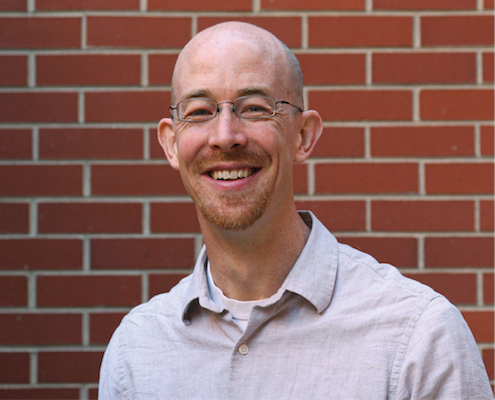
Jason Page is The Alliance Center’s chief operating officer and responsible for maximizing the impact of the Center’s collaborative coworking and high-performance building efforts. He oversaw The Alliance Center‘s award-winning building renovation which later received LEED Platinum certification. He is a Project Management Professional and LEED AP O+M.
References
Images courtesy of The Alliance Center
Read more on Sustainability and Project Management or related topics Sustainable Facility , Environmental, Social and Governance (ESG) and Project Management
Explore All FMJ TopicsRelated articles
-

Smart Building Control Systems
The foundation for a grid-interactive buildingBy Andre Marino09.25.2024 -

Smart Building Innovation
Cutting costs & carbon footprints without compromiseBy Andrew Butterworth09.12.2024 -
Chart the Path
Building sustainable cities & a sustainable futureBy Izzat Ali Khan & Aykean Forde12.16.2024
