
 Membership
 Network
 Regional Sites & Affiliates


 Events
 Participate
 Resources

 Training
 Credentials
 Government


 Content Channels
 Tools
Tools


 Business Overview



Case Study: Avoiding the Loss of Institutional Knowledge
How a university develops tradespeople amid the retirement boom

Facility management organizations across higher education are facing a growing challenge as experienced tradespeople approach retirement. When experienced staff leave, they take decades of institutional knowledge with them, which is challenging to replace. This issue is already evident at the University of Tennessee, Knoxville, USA (UTK), where the facilities services (FS) department is responsible for maintaining more than 250 buildings and 920 acres that support nearly 40,000 students. The department employs about 600 staff members across 10 units, with tradespeople working primarily in maintenance and repair, utilities services and in-house construction.
From 2020 to 2025, 97 employees retired from FS, representing about 3.4 percent of the total staff. In 2020, 15 employees, or 2.6 percent, retired. The following year, 19 retirees, or 3.5 percent of the workforce, retired. In 2022, retirements were the second lowest with just 16, or 2.7 percent, of employees retiring. In 2023, retirements peaked at 26, accounting for 4.5 percent of staff. Finally, in 2024, there were 21 retirements, or 3.5 percent of employees. These departures included both trades and nontrades employees, influenced by years of service, age eligibility or medical factors. Although not all retirement-eligible employees choose to retire, the steady loss of experienced workers underscores the need for proactive planning.
 Sharing institutional knowledge is a critical component of operational success in FM. Tradespeople gain knowledge and expertise through years of performing maintenance, repairs and installations while working alongside more experienced colleagues. As seasoned workers approach retirement, it is crucial to share their knowledge effectively with newer employees to prevent the loss of essential know-how about campus systems and procedures.
Professional development plays a key role in sustaining and preventing the loss of institutional knowledge. Opportunities such as apprenticeship programs, continuing education, vendor or contractor training, and in-house leadership development programs help employees develop both trade-specific and leadership skills. FM employees may also take part in continuing education programs to improve their industry knowledge. Collaborating with vendors and contractors enables them to share their expertise, thereby enhancing the overall institutional knowledge of their clients.
To improve skills beyond trade-specific expertise, FS partners with professional development groups within the UTK university system and with organizations like the Association of Physical Plant Administrators, which provide programs to strengthen leadership capacity among FM professionals. The goal of these partnerships is to promote organizational alignment and success while cultivating leaders at all levels.
 Problem
The FM workforce is aging rapidly, and the number of new tradespeople entering the industry is not keeping pace with retirements. A 2021 study revealed that 31 percent of FM employees are older than 55 and will be eligible for retirement between 2022 and 2037. This trend poses a significant threat to the continuity of institutional knowledge and operational effectiveness. If younger employees do not acquire critical skills and knowledge before their more experienced colleagues retire, departments may struggle to maintain campus infrastructure efficiently. The Industrial Development Corporation published a report indicating that organizations spent more than US$12 billion on redundant work. This duplication of effort is further evidence that organizations lack strong knowledge-sharing systems.
Without proper planning, retiring employees will take with them valuable insight into systems, processes and problem-solving approaches that cannot be easily documented or replaced. Many FM departments are already facing challenges in developing structured training environments that support the hands-on, skills-based learning required for tradespeople. The lack of formal training opportunities hinders employees' ability to advance their technical and leadership capabilities. The issue is compounded by limited career advancement pathways within FM. While career paths can help define the knowledge, skills and abilities needed to move into higher levels of employment, they are often unclear or unavailable.
This discourages younger workers from entering or remaining in the industry, further intensifying the shortage of qualified tradespeople to replace retirees. The result is a widening gap between experienced employees nearing retirement and newer staff who are not yet equipped to fill their roles. This imbalance places institutional knowledge and operational reliability at risk.
Solution
To prepare for the upcoming wave of retirements, FM organizations must prioritize both the development of tradespeople and the transfer of institutional knowledge. They can do this by addressing the following five points:
1. Strengthen professional and leadership development
Apprenticeship programs are one of the most effective ways to develop skilled tradespeople. These programs combine hands-on training with formal education, typically lasting from several months to several years. At UTK, the Maintenance & Repair unit is currently the only unit that operates an apprenticeship program. In addition to apprenticeships, FM organizations should encourage participation in vendor-led training, trade certifications and leadership programs. Mandatory OSHA and compliance training ensure safety and ethical standards are upheld, while voluntary programs, such as equipment-specific courses or EPA certifications, deepen trade-specific expertise. Investing in these opportunities improves technical capability and builds a sense of value and engagement among employees. When staff feel supported through professional growth, they are more likely to remain with the organization, reducing turnover and strengthening institutional continuity.
2. Implement structured knowledge sharing
Knowledge sharing is essential for employees to develop their skills and expertise, as well as for creating succession planning programs to prepare for attrition due to retirement. Therefore, knowledge loss can be reduced through intentional knowledge-sharing practices.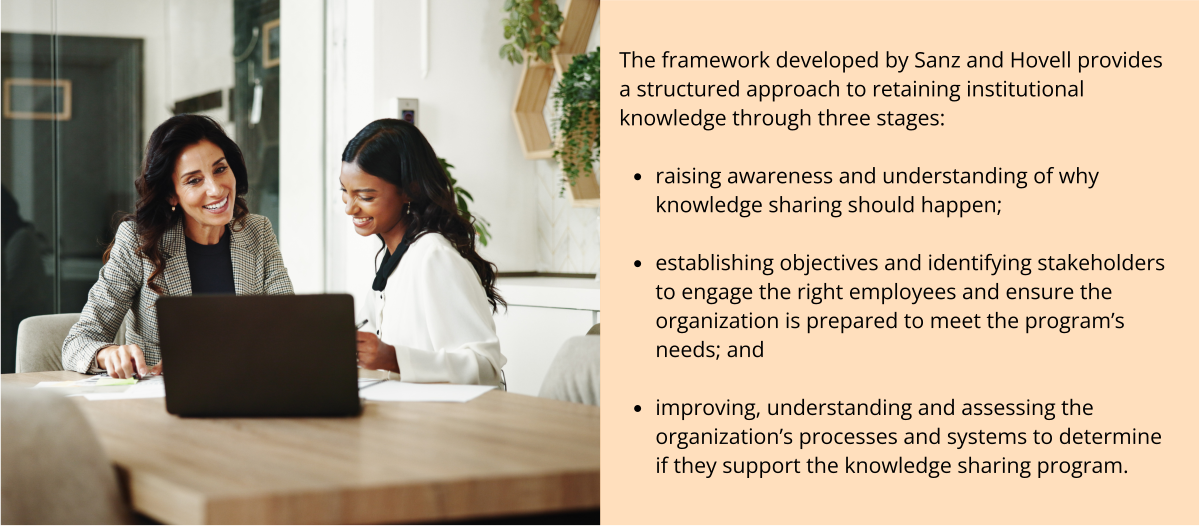
Employees at all levels within an organization possess knowledge that is essential to retain. Establishing clear guidelines for what knowledge should be shared, how it should be documented and who is responsible for mentoring others can help prevent the loss of critical expertise. Encouraging collaboration among tradespeople and supervisors fosters a culture of trust and openness, which supports consistent knowledge exchange.
3. Use data to inform workforce planning
Organizations should conduct needs assessments to identify the skills tradespeople need to improve. This is especially important as the older generation of employees approaches retirement, making certain skills harder to find. FM organizations should also adopt an action research approach to identify areas that require improvement. This will help address problems, diagnose organizational issues and implement solutions. The action research approach emphasizes five areas: diagnosis, analysis, feedback, action and evaluation, which work together to foster learning. Pairing needs assessments with an action research approach helps leaders develop data-driven solutions that support workforce readiness and professional growth.
4. Build career pathways in FM
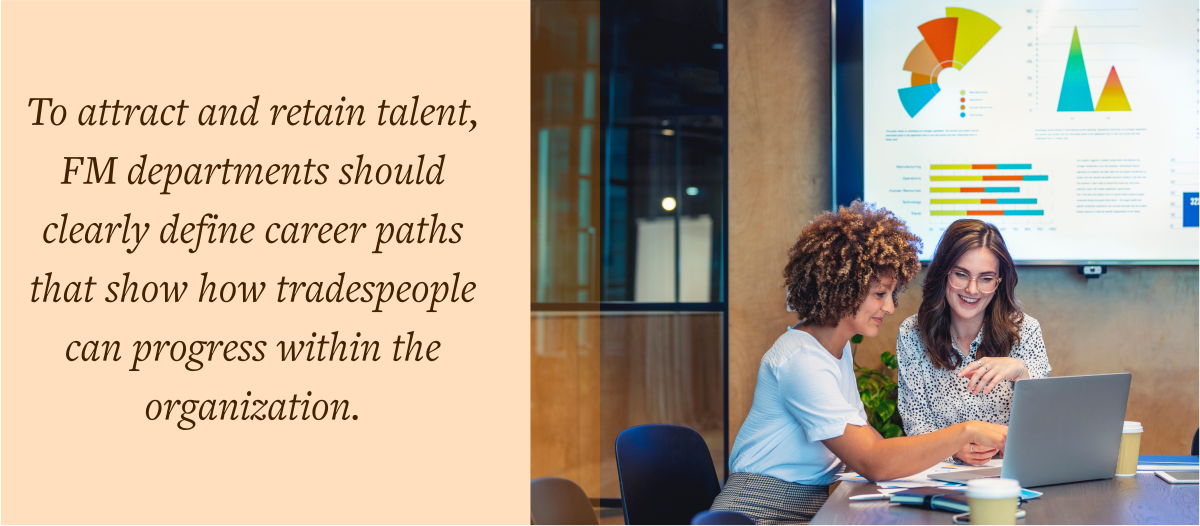
Career paths are defined as a series of training and educational programs connected with support services that help individuals get a job in a specific trade or industry and advance to higher levels of employment over time. Tradespeople with career advancement aspirations can follow a career path that outlines the specific knowledge, skills and abilities required to progress to the next level in their chosen trade. As previously indicated, the lack of a clear career path in FM is discouraging young people from entering the industry, thereby decreasing the number of employees available to replace retirees. To attract and retain talent, FM departments should clearly define career paths that show how tradespeople can progress within the organization. These pathways should outline the skills, certifications and experiences needed to advance into senior or leadership positions. Providing visible advancement opportunities will help draw younger professionals into FM and encourage long-term commitment to the field.
5. Foster a culture of continuity
Ultimately, the key to addressing the impending retirement boom lies in building a culture where knowledge sharing and employee development are part of daily practice. By pairing experienced tradespeople with newer employees, offering robust development programs and recognizing the value of institutional knowledge, FM departments can preserve expertise and strengthen operational resilience.
Conclusion
When employees retire, they take the institutional knowledge they have gained during their time with the organization with them. To prevent the loss of vital intellectual capital, FM organizations should focus on implementing a knowledge transfer framework that encourages knowledge sharing among employees. Additionally, organizations should consider developing their younger tradespeople's skills to match the performance level of retirement-eligible employees. Creating professional and leadership development opportunities for younger, less experienced employees will help offset the loss of tacit knowledge due to attrition from retirement.
Organizations in the FM industry should encourage their tradespeople to share knowledge, preventing the loss of critical information on maintaining and repairing vital equipment and systems, which ensures buildings and spaces stay operational. To achieve this, employers must foster a culture of trust among their tradespeople, ensure support from supervisors for employees to participate in knowledge sharing, and establish succession planning to develop and maintain the skills needed to prepare for the upcoming retirement boom. At UTK and across all FM organizations, implementing a knowledge-sharing program will improve departmental success as well as the operations and maintenance of all systems.

Read more on Leadership & Strategy or related topics Training and Succession Planning
Explore All FMJ TopicsRelated articles
-

Artificial Intelligence in FM
The stakeholder’s perspectiveBy Dr. Jake Smithwick & Dr. Kenneth Sullivan & Nneka Ubi05.01.2024 -

Mastering Change in Hybrid Environments
Insights from global operational leadersBy Meg Swanson09.02.2024 -

Plugged In
Solving the data disconnect in real estate and FMBy Amanda Muzzarelli & James Waddell07.01.2024