
 Membership
 Network
 Regional Sites & Affiliates


 Events
 Participate
 Resources

 Training
 Credentials
 Government


 Content Channels
 Tools
Tools


 Business Overview





Case Study: Back to Class
How LLLCs transform schools
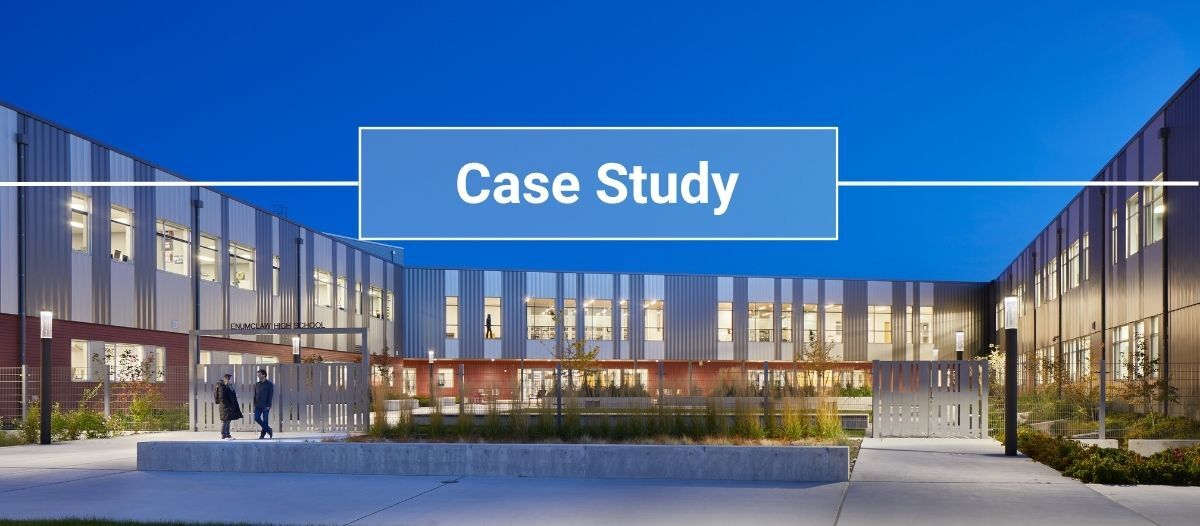
On clear mornings in Western Washington, the sunrise illuminates Mount Rainier’s glacial peak with soft pinks, blues and yellows. In years past, students could see the mountain outside some classroom windows, but they didn’t experience any of that natural light while at their desks. Instead, they sat under old flickering fluorescent lamps.
That changed when a small team of facility managers retrofitted the school’s lighting fixtures with a long-term, adaptable solution. They installed LEDs with sensor-based Luminaire Level Lighting Controls (LLLC) in each fixture. The technology offers innovative settings that allows facility managers FM to simply walk around in the classroom with a tablet and adjust the lighting levels as needed.
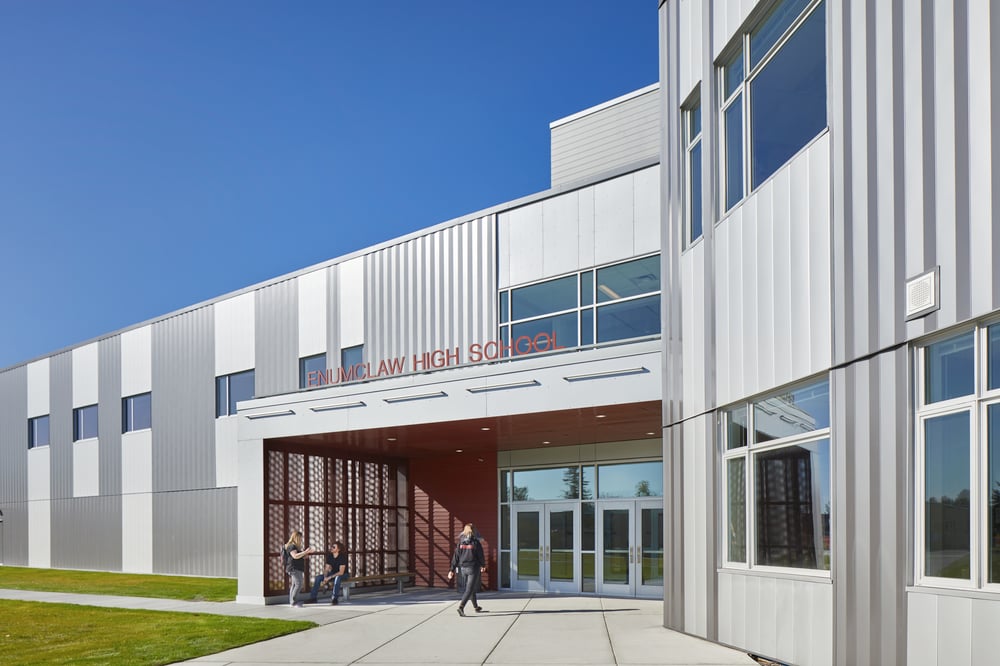 Across the campus of 1,700 students and staff, people are choosing less bright lighting for something more ambient. Not only is it creating more comfortable learning environments, but it’s saving energy – now and for years to come.
It’s particularly been a game changer for counseling centers and special education classrooms, where students are sensitive to light. Teachers and staff can turn down brightness of the light and choose to bring in the natural daylight to create a more calming setting.
Enumclaw School District anticipates approximately 137,000 kWh in energy savings annually, reducing costs by US$13,000 each year. Many think that for results that impressive, a complex installation process must have preceded it. But the opposite is true.
The installation was so easy that it’s already expanding across two elementary and two middle schools in the district. Here is how the team determined that LLLC was the right fit for Enumclaw High School, how instrumental partnerships played a part and how this is sustainably equipping schools.
 Studying up
The FM team at Enumclaw School District is small but mighty. These skilled custodians and facility technicians clean, maintain and repair facilities throughout district to support education by providing a clean, safe and comfortable learning environment.
Despite many aging buildings, the team maintains a very high standard for the general appearance and condition of their buildings.
So, when a retrofit came along as part of a three-year, large construction project at the high school that sought modern design and greater energy efficiency, the FM team hit the books to achieve the same aesthetic and lighting performance in all buildings.
Lighting needs varied from administrative offices to science labs, and they wanted a system that was customizable with the modernized campus. Many schools go with T-LEDs because of the affordable cost. But T-LEDs are not designed for most existing light fixtures. The output results in low quality and reflective lighting. Also, it oftentimes creates more reflection from above than the fluorescent bulbs. The FMs knew they needed a retrofit that was designed to pump light to the floor in a better way.
Additionally, reduced wattage fluorescent lamps (25 watt) weren’t working with existing ballasts, so they needed to pursue a better option.
The FM team started learning about LLLC – a type of Networked Lighting Control systems, utilizing networkable, individually addressable sensors that are factory-integrated into each luminaire.
LLLC describes lighting systems in which each LED fixture can independently modulate light intensity, apparent color, and sometimes even spectral distribution, often through on-board controllers and sensor packages. This typically includes a single multitype sensor for occupancy and daylight harvesting, with some also including air temperature sensors. These systems enable high-resolution, responsive lighting control and facilitate nuanced automated approaches. LLLC systems are typically deployed in commercial settings. Because each fixture is capable of sensing and responding to ambient conditions, LLLC systems provide light only where it is needed, saving significant amounts of energy while maintaining high levels of occupant comfort.
The technology was also a competitive choice for existing fixtures. A recent study was conducted comparing LLLC one-for-one (1:1) retrofits to a full lighting redesign approach. The findings showed that LLLC 1:1 retrofits provided similar energy and light quality performance at roughly one-third of the cost of a full lighting retrofit.
Also, as opposed to piecing together separate lighting and control system parts as in historical practice, components used in LLLC are typically mated by the manufacturer with partner devices – drivers, sensors and switches – for operational compatibility.
The big test
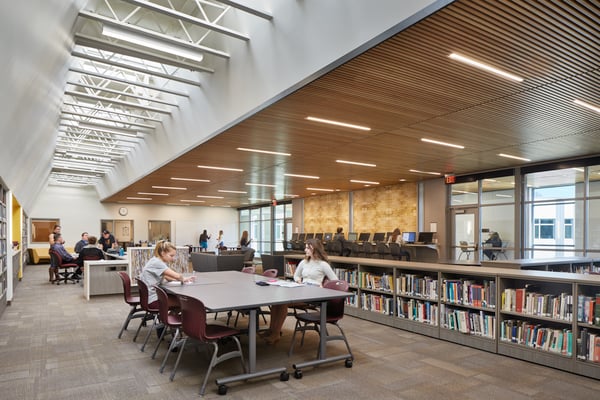 The FM team’s interest in LLLC piqued at the intersection of savings potentials and local utility incentives. When they learned about the easy installation, no maintenance costs and flexibility in space utilization – it was time to put the system capabilities to the test.
The school district worked with Washington’s Pacific Lamp & Supply Company to install a sample of several fixtures with LLLCs in an old mid-century building with unused kindergarten classrooms. This relationship was instrumental to finding the right fixture. According to Pacific Lamp’s Paul Rasmussen, lighting expert and account manager for the school district project, it’s critical to have the right lighting fixture in order to deliver maximum benefits
“You can usually tell with just five or six fixtures if you don’t like something,” Rasmussen said. “Rather than finding out down the road after you’ve installed 500+ fixtures.”
Together, Pacific Lamp and the FM team conducted tests over a six-month period. The FMs experimented with the fixtures. Also, school leaders and staff used the system during the trial period.
They immediately discovered an unanticipated benefit: flexibility. The color temperature was a lot nicer than with the fluorescent, and it lacked high frequency flickering.
Everyone had nothing but positive feedback.
The result? An out-of-the-box product with wireless programming capabilities and 4000K LED bulbs.
Class in session
To get LLLC in the classrooms, the costs needed to fit in the US$68 million renovation budget, which was already spread thin over many priorities. So, the School District and Pacific Lamp applied for an energy efficiency grant of $35,800 through their local utility, Puget Sound Energy. Since the technology met certain requirements – like lights automatically turning off if rooms are unoccupied, among other things – then they were eligible for the grant. After factoring in the Puget Sound Energy grant, they would be able to pay back the installation cost after four years.
Hundreds of fixtures were ordered.
When the boxes arrived, the in-house team rolled up their sleeves. Installing the retrofit kit was a no brainer.
The LLLC-enable fixtures simply connected to existing power leads. No control wiring involved. Just a simple wireless configuration setup. The team could easily walk away from one classroom and onto the next.
One person stripped the old fixtures and installed the new retrofit, while the others handled packaging and disposal of old troffers. It’s the latter – recycling the cardboard from boxes and getting rid of the old fixture parts – that was the most time-consuming part of the installation.
Once the lights were first powered up, the team discovered the light was too bright. By placing a light meter on the desks, they dimmed the fixtures to about 70 percent of their output and maintained good light intensity at the desk with 50 lumens. It was the biggest surprise of post-installation because the team anticipated having them at full bright. Not only did this save energy, but it also prevented over lighting the space for the occupants.
LLLC speed up installation dramatically. Fewer components shortened construction schedules and reduced errors during configuration. They completed the retrofit in three weeks
Since the installation, the team hasn’t had to manually switch off anything or monitor a central control. The lights just do their job as they were programmed, while also giving maximum control granularity to the people in the classroom. Additionally, it offers the FMs an easily reconfigurable backbone for future expansion.
Lessons learned
Updating lighting systems in schools is usually a once-in-a-decade decision, and that’s why Enumclaw School District invested in the most valuable long-term solution. Many of the lighting control systems out there are overly complex and poorly supported.
For the Enumclaw School District, the LLLC system is intuitive, but there are the three big takeaways for any FM considering an LLLC system.
-
See how the product works in person, try out different fixtures and install a sample.
-
Contact your local utility now to learn about incentives to offset fixture costs.
-
Make sure the FM team has local support if you choose a more complex system.
Since implementing LLLC at the high school – as well as six additional facilities in the district – the facility management team has seen over 500,000 KWH of savings. They’ve had no maintenance costs or failures since the installation.
One of the largest benefits of LLLC – of course – is the energy savings. It also met the challenge of different needs between hallways, classrooms, libraries, gyms, auditoriums, and more importantly, the people who use them. People in our schools experience improved lighting quality while adjusting lighting levels to fit their classroom. And that is invaluable.

Peter French has worked in facility management for more than 10 years. He is responsible for safe and efficient operation and maintenance of the Enumclaw School District’s sites. He also oversees construction projects, and often specifies, purchases and installs new equipment.
References
Images provided by C+C.
Read more on Sustainability or related topics Energy and Case Study
Explore All FMJ TopicsRelated articles
-

Smart Building Control Systems
The foundation for a grid-interactive buildingBy Andre Marino09.25.2024 -

Smart Building Innovation
Cutting costs & carbon footprints without compromiseBy Andrew Butterworth09.12.2024 -

Chart the Path
Building sustainable cities & a sustainable futureBy Izzat Ali Khan & Aykean Forde12.16.2024