
 Membership
 Network
 Regional Sites & Affiliates


 Events
 Participate
 Resources

 Training
 Credentials
 Government


 Content Channels
 Tools
Tools


 Business Overview





Case Study: Brighter Days Ahead
How a community library leveraged LLLCs
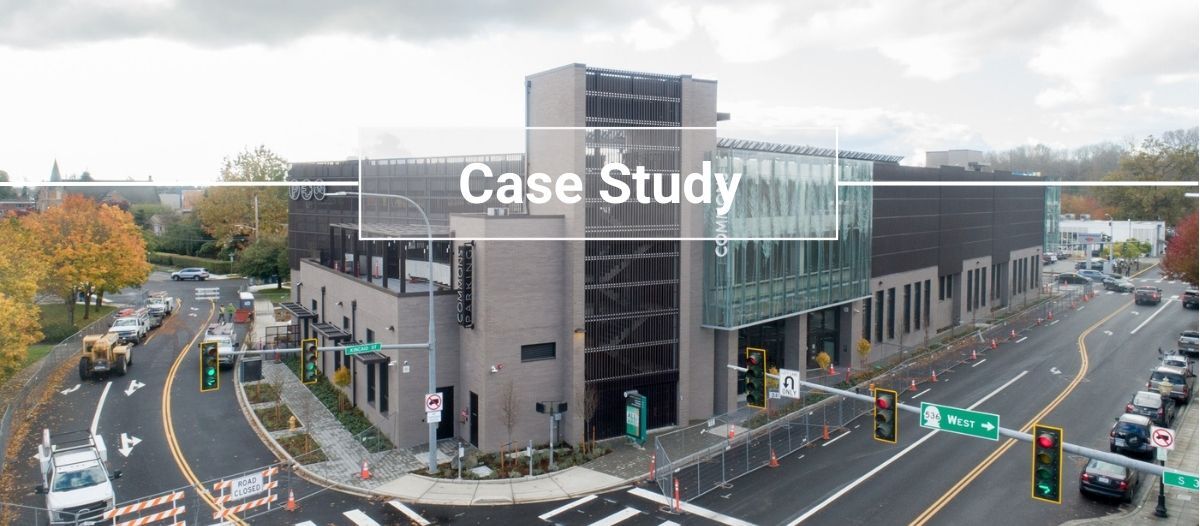
Even on a rainy afternoon in the U.S. Pacific Northwest, the Mount Vernon Library Commons (MVLC) greets patrons with the kind of warmth a good book brings.
That is exactly what Library Director Isaac Huffman wanted — for the community to feel comfortable and welcomed with warmer lighting to create a more inviting space.
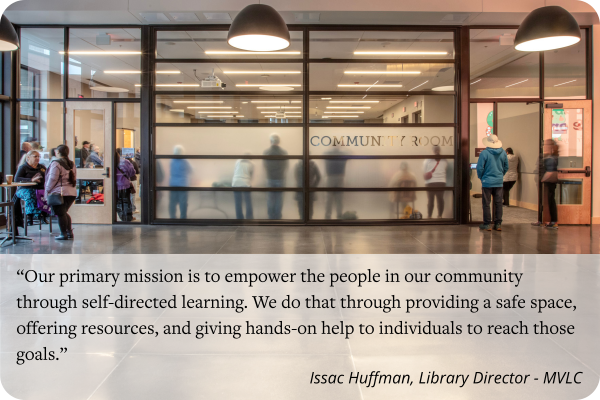
“It’s a library, and so you have to be able to see the materials and the people in the environment,” he said. “We wanted a well-lit space.”
That visibility helps people feel secure in a safe place, a core value of the American Library Association: access, public good and sustainability. These ideals overlap with what luminaire level lighting controls, or LLLC, are designed to do.
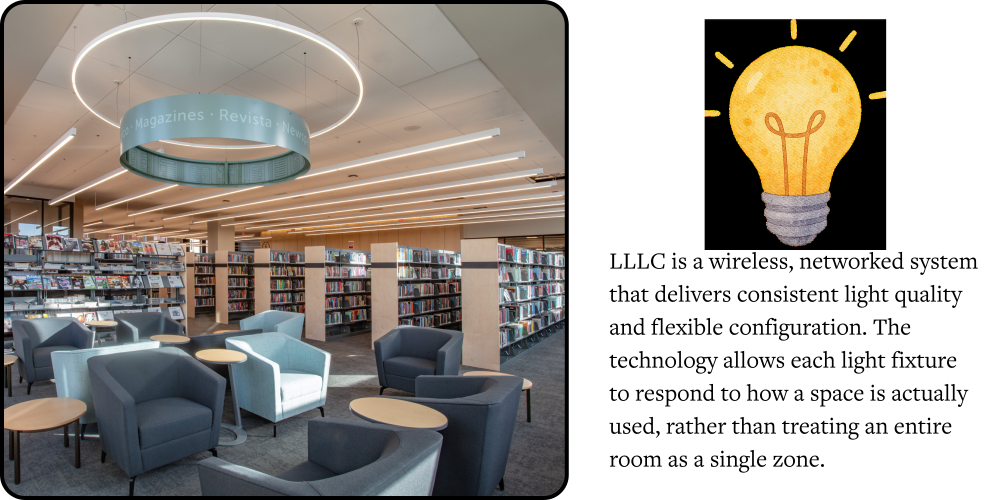 Because each fixture includes its own sensor and controller, lights adjust individually to occupancy, daylight and activity. That functionality gives building operators far more flexibility and efficiency than traditional lighting controls, while creating a foundation for future integration with other building systems. It also provides a level of granular control that staff can manage easily through a familiar app-based interface.
However, integrating that technology into a full rebuild required coordination up front.
Huffman did not have to take it on alone. With support from their regional public utility, Puget Sound Energy (PSE), and the project’s architects and engineers at HKP Architects, TFWB Engineers and Dark Light Design, Huffman shaped a lighting plan that aligned with how the community would use each space.
A building designed around comfort & efficiency
The MVLC took shape after years of community input and a commitment to create something more than a conventional library.
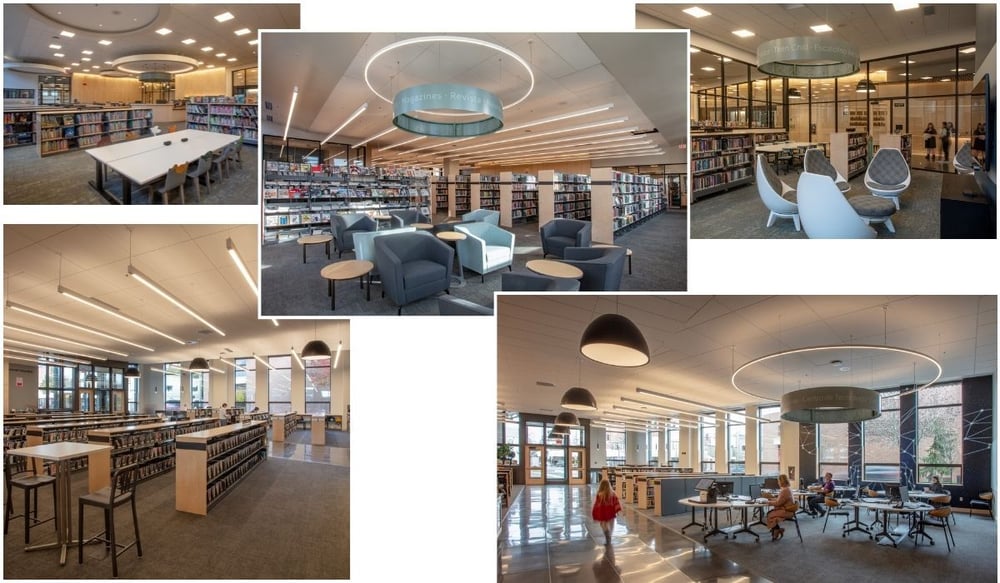
The final design combined a library, a community center and a community kitchen in one structure — a single building meant to serve many needs. That vision came with a practical challenge: how to light a space defined by openness and 14-foot windows.
“We started working with an integrated design lab at the University of Washington on the daylighting,” said Julie Blazek, partner at HKP Architects. “That was primarily the highest focus — having a lot of good natural light in the building, which reduces the amount of artificial light you need.”
Daylight harvesting became a central design strategy, both to cut energy use and to rely more heavily on natural light. LLLC systems are particularly well suited to that approach because each fixture can sense and respond to changing conditions throughout the day. As sunlight increases near windows, fixtures automatically dim, while lights deeper in the building maintain appropriate levels. The result reduces energy use while avoiding the stark contrasts and excessive illumination that can make daylit spaces uncomfortable.
Increasingly, LLLC proved to be the system that could complement daylight rather than compete with it. The team wanted warmth, consistency and the ability to keep light from feeling harsh, all while designing a building that met Passive House standards.
Passive House is a set of international building criteria that originated in Germany in the 1990s to dramatically reduce energy use while improving indoor comfort. It has since become one of the world’s most proven, voluntary approaches to energy reduction. The standards emphasize airtight construction, continuous insulation, high-performance windows, and careful control of heat, air and moisture.
“The Mount Vernon Library Commons is Phius certified,” explained Blazek. “That's one of the passive building certifications you can get in the United States, and so it meets a certain energy model. It's basically reduced the energy use in this building by up to 70 percent.”
That efficiency mirrors the performance of LLLC fixtures, which are about 70 percent more efficient than a typical fluorescent option.
Early projections show the MVLC saving about 30 percent more energy compared with a standard design, thanks to its lighting controls, a high-efficiency HVAC system and a tightly sealed, well-insulated structure. Those savings translate into real dollars, lowering operating costs for the city and easing long-term budget pressures.
Installation & takeaways
Once the design was finalized, installation moved forward as a coordinated phase of work. Commissioning was completed over a few weeks and focused on system programming and fine-tuning. HKP worked closely with the electrical engineer and lighting designer to align the integrated controls, ensuring more than 600 fixtures were connected and operating as a unified system.
Blazek said the shift from traditional conduit-heavy layouts to a largely wireless system required a new mindset, but the result delivered exactly what the team envisioned.
“It was very energy-efficient and highly adaptable,” she said. “It gives the owner the ability to really fine-tune the lighting. They can change things in the future very easily.”
That flexibility fit the city’s goal of creating a demonstration project — one that showed how future-forward design could serve both the public and long-term sustainability efforts.
Installing LLLC surfaced two lessons that can inform future projects in the city and in other communities considering similar work: the importance of training in the technology and the value of understanding how to leverage utility incentives.
Early planning for training allows ample time to train facility managers and building staff on lighting controls, focusing on the app and control interfaces to help ensure the system can be used as intended. Proper training reduces confusion, minimizes callbacks, and sets building operators and FMs up for long-term success, all while improving occupant comfort.
The project also highlighted the role utility incentives can play in making advanced systems financially viable. Reviewing available programs for both new construction and retrofit projects, and working closely with the local utility, helped the team identify incentives and connect with lighting specialists who supported the project from design through implementation.
How incentives made the project possible
Utility incentives play a growing role in accelerating the adoption of advanced lighting systems like LLLC. Because the controls deliver verified energy savings over time, many utilities offer financial incentives that help offset upfront costs.
The project at MVLC was funded with more than US$61 million in community, county, city and state funding, as well as a whole-building incentive from PSE.
“LLLC fixtures really offer a lot of benefits for community spaces like this, most being the increased efficiency,” said Taylor Pitts, a senior energy management engineer at PSE. “They're expected to get a lot of energy savings, so that should benefit the community in multiple ways — from having a nice space to enjoy and having to pay less for it to having a smaller impact on the environment.”
Lighting controls for every space & user
Now, LLLC is embedded in nearly every corner of the building, including study rooms, stairwells, offices, the kitchen and even the parking garage. Occupancy sensors brighten a room the moment someone enters, and lights subtly adjust automatically as daylight shifts.
“LLLC is dimmable, which is great for community spaces like this with a lot of variability,” said Pitts. “You can have a higher light level for somebody in a reading space or a lower light level for someone using a computer. With LLLC, you can tailor the lighting to the needs of the space, creating a more comfortable environment with a much nicer feel that people genuinely enjoy.”
That control now sits with staff. In the old library, lights frequently went out, and staff had little ability to adjust brightness or zones. Today, they can modify lighting profiles for community events, set different levels for whiteboard use or computer work, and tailor individual work areas.
“We have a desktop interface and a phone app to control the system,” said Huffman. “We’ve created new lighting profiles and new occupancy guidelines, and it’s as simple as making a few adjustments in the app. You have settings you can use for weeks or months at a time very effectively.”
Lighting built for what comes next
As cities balance rising energy costs, climate goals and community expectations, systems that combine efficiency, adaptability and occupant comfort are becoming central to long-term planning. In that context, lighting is no longer just a standard necessity. It is a tool for shaping how public spaces function, feel and endure.
For city leaders and library staff like Huffman, the result is a building that works today while remaining ready for what the community needs next. Because public spaces evolve — from new programming to changing uses — LLLC allows the system to be updated rather than replaced, protecting the city’s investment over the long term.
Today, and into the future, the lighting serves as a conduit for gathering and connection. It guides how people move, gather and settle into the building.
“It gives people their sense of welcoming and belonging,” Huffman said. “Lighting tells the story of the space.”

Angela Pilant has more than 25 years of experience working within the lighting and energy industries. She has a diverse background as a utility specialist, manufacturer’s representative, and consultant, working side by side with customers to upgrade their facilities with energy-efficient technology. She has worked at Evergreen Consulting Group since 2009 and specializes in market and trend analysis, utility program development, client engagement strategies, and training. She is a certified instructor for the Building Operator Certification Program (BOC) and has developed and conducted cross-industry curriculum, including sales training, throughout the country. She has earned a Lighting Certified Professional designation from the National Council on Qualifications for the Lighting Professions (NCQLP).
References
Photo credit: HKP Architects/Leslie Schwartz Photography.
Read more on Sustainability , Occupancy & Human Factors and Facility Operations or related topics Energy , Occupant Services , Wellness and Well-being , Operational and Capital Budgeting and Case Study
Explore All FMJ TopicsRelated articles
-

Smart Building Control Systems
The foundation for a grid-interactive buildingBy Andre Marino09.25.2024 -

Smart Building Innovation
Cutting costs & carbon footprints without compromiseBy Andrew Butterworth09.12.2024 -

Chart the Path
Building sustainable cities & a sustainable futureBy Izzat Ali Khan & Aykean Forde12.16.2024
