
 Membership
 Network
 Regional Sites & Affiliates


 Events
 Participate
 Resources

 Training
 Credentials
 Government


 Content Channels
 Tools
Tools


 Business Overview





Case Study: The ROI of RO
Environmental & cost benefits of reverse osmosis systems
Plastic pollution is one of today’s most significant environmental challenges, with bottled water containers contributing heavily to waste streams, carbon emissions and resource depletion. According to the United Nations Environment Programme, the world produces over 400 million metric tons of plastic waste annually, and single-use water bottles represent one of the most pervasive contributors to this crisis.
Facility managers are uniquely positioned to address this issue by implementing innovative solutions that reduce reliance on bottled water while maintaining access to clean, safe water for critical operations.
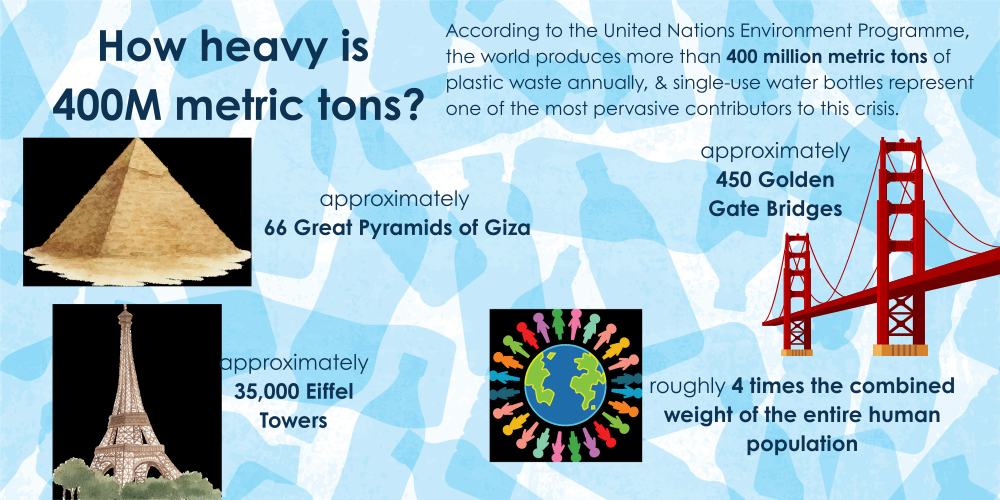 For FMs, the challenge is not simply one of environmental conscience — it is fundamentally a question of operational strategy. The true cost of bottled water extends well beyond the purchase price per bottle. When logistics, storage, labor, disposal and environmental liability are factored in, the financial argument for on-site water purification becomes compelling. IFMA has consistently recognized water stewardship as a core component of sustainable facility operations, and forward-thinking FMs are finding that technology investments in this space deliver measurable returns.
One such success story involves the installation of a 500-liter-per-hour reverse osmosis (RO) system at a customer facility. Before the installation, the organization relied on 5-liter bottled water exclusively for its canteen operations, including cooking, food preparation and other kitchen needs. This practice required 700-800 bottles per month, equating to 8,400-9,600 bottles annually, which were delivered by trucks over a distance of 220 kilometers from the nearest city. With the new RO system, the facility eliminated the need for bottled water entirely, replacing it with on-site purified water for all canteen operations.
This initiative highlights the transformative impact of reverse osmosis technology in reducing plastic waste, minimizing transportation emissions and enhancing operational efficiency, while offering a replicable model for the global FM industry.
The problem: Reliance on bottled water for canteen operationsAt the customer facility, 5-liter bottled water was exclusively used in the canteen for cooking, preparing food and other kitchen operations. While bottled water ensured safe and clean water for these activities, this practice posed substantial environmental, operational and logistical challenges across multiple dimensions. Environmental impactThe facility consumed 700-800 bottles per month, equating to 8,400-9,600 bottles annually. Even reusable large water bottles eventually enter the waste stream, contributing to the global plastic waste crisis. The environmental toll of plastic bottles extends beyond what is visible at point of disposal: each bottle requires the extraction of petroleum-based raw materials, energy-intensive manufacturing processes and long-distance distribution before it ever reaches the end user. When a bottle is discarded — even if it reaches a recycling facility — the embedded energy and materials are largely unrecoverable. Globally, it is estimated that fewer than 30 percent of plastic bottles are recycled, with the remainder ending up in landfills, waterways or incineration facilities. In remote or industrial settings where waste infrastructure may be limited, these figures can be even less favorable. Facilities that rely on bottled water at scale are, in effect, operating a continuous plastic waste generation program. Carbon footprintThe production, transportation and disposal of bottled water generated significant greenhouse gas emissions across every stage of the product life cycle. These emissions occurred from manufacturing raw materials to transporting bottles over long distances. The carbon intensity of bottled water is estimated to be approximately 300 to 600 times greater than that of tap water on a per-liter basis, largely driven by plastic production (which accounts for roughly 0.5 kg of CO2 per bottle) and transportation fuel consumption. For facilities located in remote or semi-arid regions — where municipal water quality may be poor and supplier distances are long — this carbon burden is compounded further. Logistical challenges of trucking bottled waterEach truck delivering bottled water had a maximum capacity of 20 metric tons. Calculating the weight of each 5-liter bottle:
For a facility requiring 700–800 bottles per month, the logistics would involve:
Beyond the emissions, the logistical burden created hidden operational costs: scheduling coordination with suppliers, receiving and unloading labor, dedicated storage space for bulk bottles and ongoing procurement management. Each of these activities consumed staff time and facility resources that could otherwise be directed toward core operations. Transportation distance & emissionsThe trucks traveled 220 kilometers one way (440 kilometers round trip) to deliver the bottled water. Truck emissions are typically estimated at 2.68 kg CO2 per kilometer for a fully loaded truck. Thus:
These transportation emissions further compounded the facility’s carbon footprint and operational inefficiencies — and represented a cost that was entirely avoidable with an on-site solution. To address these challenges, the facility management team installed a 500-liter-per-hour reverse osmosis (RO) system, capable of providing purified water directly on-site for all canteen needs. RO technology is widely regarded as one of the most effective methods for water purification, offering superior environmental and operational benefits. |
How reverse osmosis works
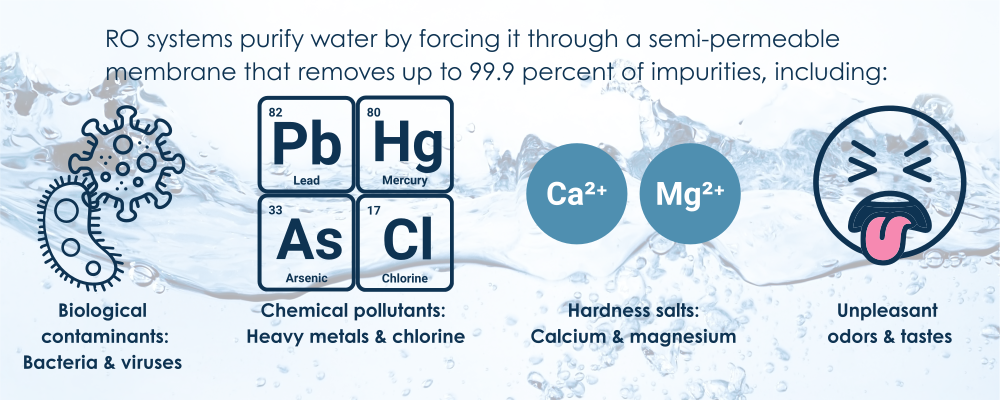 The semipermeable membrane operates at the molecular level, with pores typically measuring 0.0001 microns: small enough to reject dissolved salts, organic molecules and microorganisms. The process relies on applied pressure rather than chemical treatments, making it a particularly clean and reliable purification method. Many systems are also equipped with a mineralizer stage, which reintroduces essential minerals such as calcium and magnesium into the purified water at controlled concentrations, enhancing its taste and nutritional profile.
By installing the RO system, the facility replaced all bottled water in its canteen operations with purified water produced on site. This ensured safe and high-quality water for cooking and food preparation, while eliminating all dependence on external water delivery.
Implementation considerations
For FMs evaluating a similar transition, several implementation factors warrant careful planning:
-
Site assessment: Incoming water quality should be tested to determine the appropriate pre-treatment stages (e.g., sediment filters, activated carbon pre-filters) needed upstream of the RO membrane.
-
Capacity sizing: The system capacity should be matched to peak daily demand, with a buffer for high-use periods or equipment maintenance windows.
-
Regulatory compliance: Depending on the jurisdiction, water dispensed from an RO system for food preparation may need to meet specific potable water standards. Documentation and periodic water quality testing support compliance.
-
Staff training: Canteen and maintenance staff should be trained on routine tasks such as pre-filter replacement and system sanitization to ensure consistent performance and longevity.
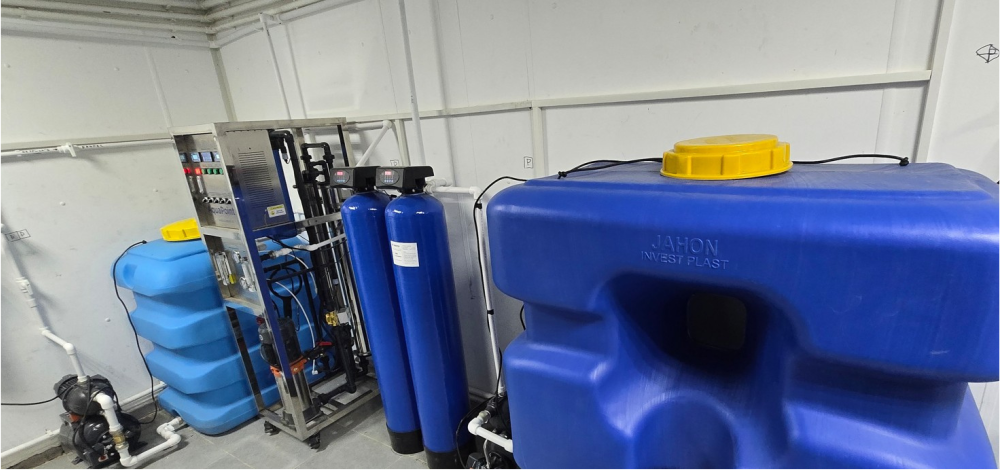
Above: Installed RO system. Image provided by Bakytzhan Orazaliyev.
Key benefits of RO systems
The FM team identified RO technology as the ideal solution due to its ability to deliver clean, reliable water while eliminating the drawbacks of bottled water.
Environmental benefits
-
Plastic waste reduction: By reducing bottled water bottle consumption to zero, the organization prevented approximately 8,400–9,600 bottles from entering the waste stream annually. Over a 10-year operational horizon, this equates to between 84,000 and 96,000 bottles — a substantial legacy of avoided plastic waste.
-
Carbon emissions savings from trucking: Eliminating the delivery logistics saved approximately 3,537.6 kg CO2 annually, directly reducing the facility’s Scope 3 emissions footprint.
-
Carbon emissions savings from bottled water production: By replacing bottled water with RO-filtered water, the facility avoided:
-
Manufacturing emissions: 9,600 bottles × 0.5 kg CO2 = 4,800 kg CO2 annually.
-
Transportation emissions: 3,537.6 kg CO2 annually (trucking).
-
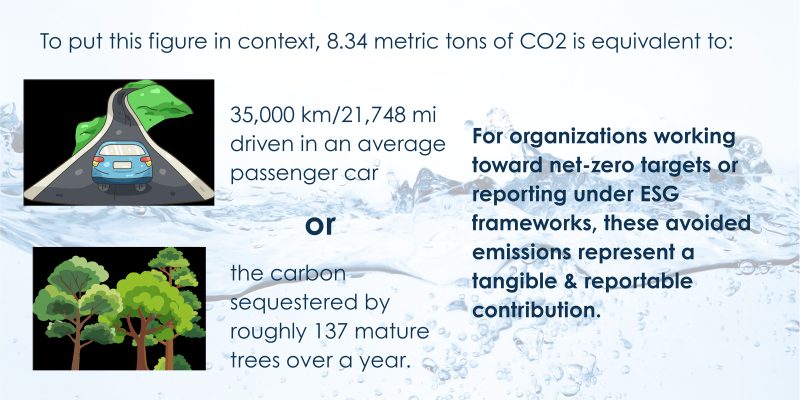
Total Emissions avoided: 8,337.6 kg CO2 annually (8.34 metric tons).
-
 Operational benefits
-
Cost savings: Over time, the operational costs of running the RO system proved far lower than the recurring expenses for bottled water procurement, storage and delivery logistics.
-
Efficiency gains: The system eliminated the logistical burden associated with bottled water scheduling, receiving and storage — freeing staff and physical space for other operational priorities.
-
Supply chain resilience: An on-site water purification system removes dependence on a third-party supplier, insulating the facility from delivery delays, price volatility and supply disruptions.
Technical advantages
-
Highest degree of purification: The RO membrane retains nearly all known contaminants, consistently delivering water quality superior to that achievable with conventional filtration methods.
-
Hardness removal: Removal of calcium and magnesium ions prevents scale buildup on kitchen equipment, plumbing fixtures and appliances, reducing maintenance frequency and extending asset life cycles.
-
Safety & consistency: By eliminating biological and chemical contaminants, the system delivers reliably safe water for food preparation — a critical consideration for any canteen serving large numbers of building occupants or workers.
-
Convenience: The system provides continuous, on-demand access to purified water without the need for bulky storage containers, manual handling or supplier coordination.
Long-term cost implications
While the upfront cost of purchasing and installing a reverse osmosis system can be significant, the long-term financial benefits are compelling and well-documented in FM practice.
Upfront Investment
-
Equipment costs: High-quality RO systems suitable for commercial canteen use can range from a few thousand to tens of thousands of dollars depending on throughput capacity, pre-treatment requirements and post-treatment stages (including mineralization).
-
Installation costs: Professional plumbing and electrical integration may be required, adding to the initial capital outlay. In many cases, the installation can be completed within an existing utility room or kitchen infrastructure with modest modifications.
Operational costs
-
Energy consumption: Modern RO systems are highly energy efficient, with typical power consumption for a 500-liter-per-hour unit ranging from 0.3 to 0.6 kWh per cubic meter of water produced — a minor contribution to facility energy expenditure.
-
Maintenance costs: Routine maintenance — including pre-filter cartridge replacement, membrane inspection and annual sanitization — typically costs US$200–$500 per year for systems of this scale.
Elimination of bottled water costs
For an organization using 800 5-liter bottles per month:
-
Monthly bottled water cost: Assuming US$3–$5 per bottle, the facility spent US$2,400– $4,000 per month (US$28,800–$48,000 annually).
-
Post-RO installation costs: Operating the RO system (energy + maintenance) costs approximately US$1,000–$3,000 annually.
-
Annual savings: Organizations can realistically save US$25,000–$45,000 annually after switching to reverse osmosis.
Payback period
With annual savings of this magnitude, the payback period for installing an RO system is typically within 3 years — a strong return on investment by any capital project standard. When factoring in the avoided costs of plastic disposal, potential carbon credit value, and the growing regulatory and reputational risks associated with high plastic consumption, the financial case strengthens further.
Broader implications
The case study is illustrative of a broader opportunity for the FM profession. Water stewardship is an area where FMs can exercise genuine strategic leadership, making decisions that reduce environmental impact, lower operating costs and future-proof facilities against tightening sustainability regulations.
As organizations increasingly adopt ESG reporting frameworks — including GRI Standards, the UN Sustainable Development Goals and national net-zero commitments — facility-level interventions such as RO installations become traceable, reportable sustainability actions.
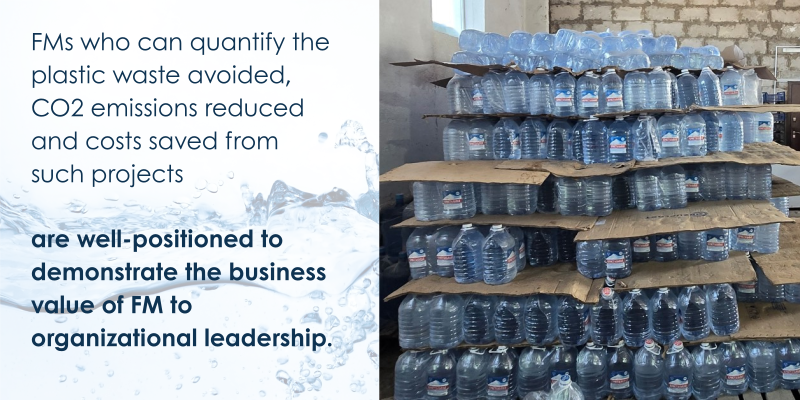 Moreover, the principles demonstrated in this case study — identify a high-consumption, high-impact operational practice; evaluate technology alternatives; conduct a rigorous cost-benefit analysis; implement and measure — represent a transferable FM methodology applicable well beyond water management.
Conclusion
The installation of a 500-liter-per-hour RO system at this facility serves as a compelling example of how sustainable practices can drive measurable environmental and financial impact.
This project highlights the critical role of facility managers in driving environmental stewardship, operational efficiency and organizational resilience. RO systems offer a scalable, impactful and commercially sound solution for organizations seeking to reduce plastic waste, lower costs and align operations with sustainability goals. As global plastic regulation tightens and ESG accountability increases, now is the time for FMs to evaluate their water consumption practices and act.

Bakytzhan Orazaliyev, MSc, FMP, PMP, CSSBB, is a senior facilities management leader, serving as the head of facilities and technical operations for a major organization in Kazakhstan & Central Asia region. An active advocate for the profession, Orazaliyev is passionate about integrating digital transformation and sustainable operational strategies to achieve high-performance facilities. He focuses on leveraging technology to drive operational efficiency and professional development, thereby advancing the FM industry in emerging international markets and positively impacting organizational success and the workplace experience.
References
Top image via Getty Images.
Read more on Sustainability and Facility Operations or related topics Sustainable Facility , Water , Operations and Maintenance Planning and Case Study
Explore All FMJ TopicsRelated articles
-

Smart Building Control Systems
The foundation for a grid-interactive buildingBy Andre Marino09.25.2024 -
Smart Building Innovation
Cutting costs & carbon footprints without compromiseBy Andrew Butterworth09.12.2024 -

Chart the Path
Building sustainable cities & a sustainable futureBy Izzat Ali Khan & Aykean Forde12.16.2024
