
 Membership
 Network
 Regional Sites & Affiliates


 Events
 Participate
 Resources

 Training
 Credentials
 Government


 Content Channels
 Tools
Tools


 Business Overview





Case Study: They Don’t Know What You Think They Know
Increasing student awareness through conference attendance
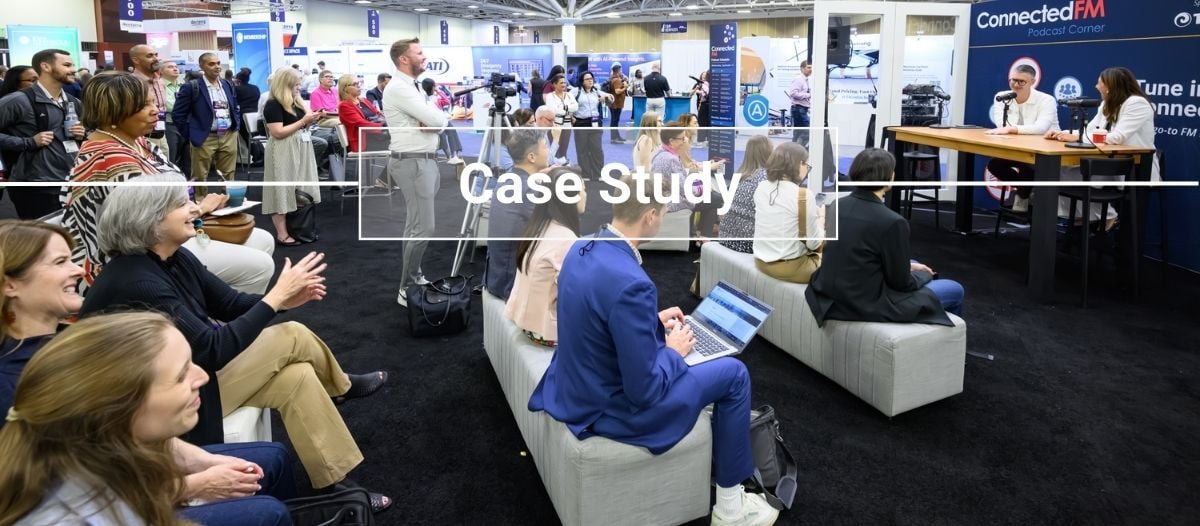
Engage in a conversation with a group of facility managers for any length of time and the conversation will likely drift to lamentations over attracting and retaining FM staff. While leaders know how to make data-driven decisions rather than acting on anecdotal chit-chat, it appears this water cooler kerfuffle has teeth. JLL Technologies’ The State of Facilities Management states that nearly 50 percent of FM practitioners claim their FM team is understaffed. With estimates of 40 percent of the FM workforce retiring by 2026, this is not an issue that will soon self-correct.
There are multiple contributing factors to FM understaffing, but a particularly puzzling one is the shortage of new talent entering the field. It is no insider secret that FM is a secure and fulfilling career path. The U.S. Bureau of Labor Statistics has strong projections for FM job outlook, and U.S. News and World Report ranks Facilities Manager as 12th in Best Business Jobs. Voice of the Facilities Manager, a PropTech report, found 76 percent of FMs are happy with their role, and 82 percent expect to be working in the industry for at least the next three years.
So, what gives?
It is a good job with good pay and the people are happy; what must FMs do to get young people to see this?
One aspect to consider is that FMs is often sidelined by students and early-career professionals, particularly those not directly enrolled in FM degree programs. Even though FM plays an important role in everyone’s day-to-day activities, it is not often at the forefront of organizational charts. Students from related disciplines, such as industrial technology, management and engineering, possess skills that align well with FM roles, but they remain unaware of the sector's opportunities. This gap in awareness may be attributed to the lack of exposure and professional identity development within the FM field during academic training. It is not just a matter of them suffering a void in metacognition and not knowing what they do not know; they actually do not know what current professionals think they know: that a career in FM is a prudent, fulfilling and prestigious choice.
Two advisors from the University of Central Missouri decided to embark with 28 students to IFMA’s Facility Fusion 2025 in Austin, Texas, USA, and determine what, in fact, these young and talented students do not know about a career in FM. The group consisted of students pursuing master’s degrees in industrial management, technology or various computer science disciplines.
The University of Central Missouri does not offer an FM degree program, but the advisors recognized the overlap in FM core competencies and the students’ current curriculum. These students could enter a facilities-related job and make lateral moves to FM or acquire a professional certificate and enter an FM role directly.
At the behest of the advisors, all 28 students joined IFMA within a year prior to the conference date. The students completed a survey before and after attending Facility Fusion. Questions were adapted from learning outcomes of a U.S. Bureau of Labor Statistics career selection activity. The attendees were asked to rate the following six statements:
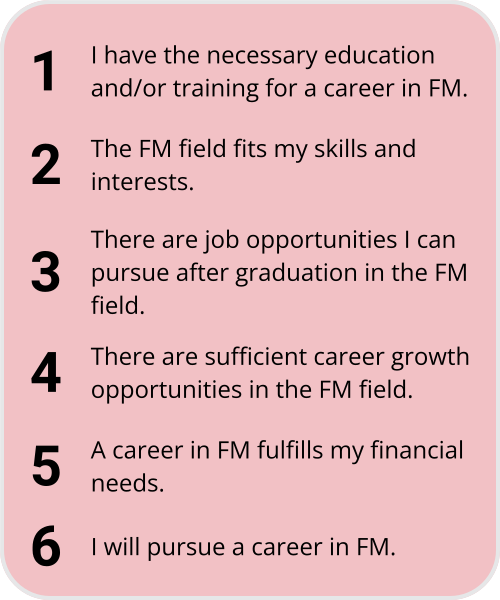
Responses were ranked on a five-point scale, with responses ranging from “strongly agree” to “strongly disagree,” and a sixth option for “I don’t know.” Upon returning from Facility Fusion, the students were administered a follow-up survey, and the responses were compared using the Wilcoxon signed rank test. The hypothesis was an increase in agreement on all six questions.
The results were intriguing. As hypothesized, all six questions showed an increase in agreement from pre- and post-attendance surveys. However, there was not a statistically significant increase in Question 1 or 2. These students were confident in their knowledge, skills and abilities to be an FM, and attending the conference neither substantiated nor refuted their perceptions. They also remained statistically unchanged in their belief that FM fits their skills and interests. Additionally, these were the only two categories for which no student responded, “I don’t know.” Clearly their perceptions of a career in FM were not clouded by a lack of confidence.
The remaining four survey questions showed a significant increase in agreement post-conference. Attending Facility Fusion 2025 made a measurable difference in the students’ perception of viable job opportunities in FM, providing financial satisfaction and career growth. Not only do the students show an increase in agreement that they will pursue a FM career, but they are also actively seeking internship opportunities through connections they made at Facility Fusion 2025 and IFMA’s World Workplace 2025 and through online searches. Descriptively and quantitatively, the buzz among the students is that FM is the bee’s knees.
Are professional conferences such as Facility Fusion and World Workplace the caustic elixir to unclog the talent pipe of the FM industry? The experiences of students from the University of Central Missouri are promising. Qualitative interviews from the University of Central Missouri students indicated the first conference they attended, Facility Fusion 2025, opened their eyes to the FM industry. The second, World Workplace 2025, helped them understand the culture.
The largest impact of attending Facility Fusion included fostering a sense of excitement and urgency regarding FM. The students were actively researching certification programs and relevant courses for FM careers during and directly after the conference. Laterally or conjunctively to the excitement, students were affected by seeing passionate FM practitioners collaborating, solving problems and commiserating in their natural environment. This experience cannot be recreated in any classroom environment; meeting in the space between learning and practicing is the most effective option.
While one case study does not a causation make, current literature supports using professional conference attendance to strengthen student convictions in a career path. Conference experiences facilitate students’ career options by making them aware of subfields and professional tracks they were previously unaware of.
For graduate students, this awareness is crucial as they transition into the workforce, where interdisciplinary and cross-sector skills are increasingly valued. Undergraduates benefit from early exposure to diverse industry roles through conference participation, often identifying, changing or redefining their career goals. Conferences provide updates on industry trends, networking opportunities and interactive sessions that help participants understand how their academic skills apply to real-world challenges. Students who attend professional conferences gain access to insights beyond the classroom and often report increased motivation and direction in their career growth. In addition, attending professional conferences increases career clarity, professional identity and exposure to diverse roles and sectors. Students develop a stronger sense of belonging and commitment to their profession after attending professional conferences and gain transformative learning experiences that reshape their understanding of their chosen profession.
FM practitioners among the nearly 50 percent working on understaffed teams can appreciate the importance of this discussion to the industry at large. Increasing student attendance, while not a panacea for industry-wide understaffing, can solidify young talent on a path to fill roles on FM teams.
What can be done, individually and systematically, to capitalize on the benefits of having students attend professional conferences?
Measures do not need to be as harrowing as shepherding 28 students across 1,400 miles and leading them on the path to FM enlightenment. Leave that to the professionals. Small but significant actions can create a juggernaut. First, mentors should encourage students to attend conferences. It is not an automatic and inherent action for them to spend the resources to attend; they must be nudged. Secondly, support student attendance and student pricing at professional conferences. This can be achieved through feedback surveys, a nearly cost-free option for giving support. Thirdly, as conference attendees, be patient and engage with students. This can be a challenge, as the ennui of youth can be misinterpreted as indifference to a mentor’s existence; but interviews with the University of Central Missouri students concluded that they deeply appreciated when professionals acknowledged and interacted with them.
A common misconception is that universities will provide students with funding to travel to professional conferences. The reality is that funding is limited and priority is given to students who are presenting their scholarly work through presentations or research poster competitions.
Attending a conference for career and personal growth is tolerated but not funded. FM practitioners wishing to up their game in support of student conference attendance can participate in scholarship fundraising drives or donate to entities such as the IFMA Foundation. Contact local branches of professional organizations or universities for help with connecting with students who could utilize travel sponsorship. Companies employing interns should make conference attendance part of their professional development. This tactic has an especially high return on investment if the organization intends on transitioning the intern to a long-term employee.
The data gleaned from University of Central Missouri students attending Facility Fusion 2025 and World Workplace 2025 was both affirming and revealing. The students’ experience supported prevailing research findings that attending conferences benefit students’ professional growth and help them bond with the represented industry.
What the data helps the FM field understand is that the students already knew FM existed as a career option, and the students believed they possessed the knowledge, skills and abilities to succeed in an FM career. However, the students did not know, and they knew they did not know, whether the FM field has lucrative opportunities and paths for growth.
Therein lies the issue. FMs know there are certainly ample opportunities for healthy career paths in facility management. FMs know students have access to this information through advisors’ advice or reading information on the web. According to the students’ responses, they did not accept this knowledge as truth until after they attended the conference. Existing with FM practitioners in the plane between the classroom and the office drove the point home. Supporting student participation in professional conferences serves as a low-risk, high-reward initiative in the mission to ensure the ongoing stability of the FM industry by keeping the talent pipeline flowing.



Read more on Leadership & Strategy and Emerging Topics or related topics Staffing , Case Study and Influencing
Explore All FMJ TopicsRelated articles
-

Artificial Intelligence in FM
The stakeholder’s perspectiveBy Dr. Jake Smithwick & Dr. Kenneth Sullivan & Nneka Ubi05.01.2024 -

Mastering Change in Hybrid Environments
Insights from global operational leadersBy Meg Swanson09.02.2024 -

Plugged In
Solving the data disconnect in real estate and FMBy Amanda Muzzarelli & James Waddell07.01.2024