
 Membership
 Network
 Regional Sites & Affiliates


 Events
 Participate
 Resources

 Training
 Credentials
 Government


 Content Channels
 Tools
Tools


 Business Overview





Cognitive Intelligent Buildings
The next evolution of smart infrastructure

The built environment is undergoing a profound transformation. For years, smart buildings focused on automation — pre-set lighting schedules, programmable HVAC systems, remote access control and sensor-based monitoring. While these systems improved efficiency, they largely operated on rules. The next frontier goes further.
Cognitive intelligent buildings represent a shift from automation to intelligence; they are not just connected — they are learning systems. By integrating artificial intelligence (AI), the Internet of Things (IoT) and advanced data analytics, these environments function as a central nervous system for facilities, continuously sensing, analyzing and adapting in real time.
From automation to cognition
Traditional building management systems respond to predefined triggers: if temperature exceeds a threshold, cooling activates; if motion is detected, lights turn on. These systems are reactive.
Cognitive buildings, by contrast, are predictive and adaptive. They analyze patterns across large datasets — occupancy trends, weather forecasts, energy pricing, equipment performance and user behavior — to anticipate needs before they are explicitly expressed.
This transition marks a fundamental change:
-
Automation executes instructions.
- Cognitive systems learn, reason and optimize.
The result is an environment that improves over time rather than remaining static.
The central nervous system of the built environment
At the heart of a cognitive building lies an integrated data architecture. IoT sensors distributed throughout the structure collect real-time information on: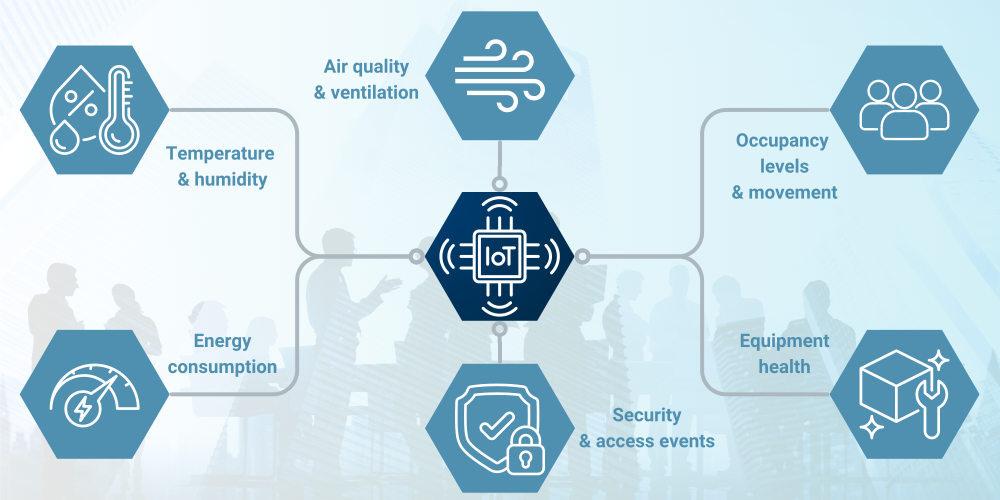
1. Predictive energy optimization
Energy is one of the largest operational expenses in commercial and residential buildings. Cognitive systems analyze occupancy patterns, environmental conditions and usage history to optimize consumption dynamically. Instead of maintaining fixed schedules, systems adjust based on real demand. Spaces that are unused are minimized for energy draw, while high-traffic areas receive optimized climate and lighting conditions.
Over time, the system learns seasonal variations and behavioral trends, further improving efficiency.
2. Enhanced occupant experience
Modern tenants and users expect personalized environments.
Cognitive buildings can:
-
-
adjust temperature zones based on occupancy
-
optimize lighting for productivity or comfort
-
monitor air quality and adjust ventilation accordingly
-
reduce noise interference in sensitive areas
-
By analyzing behavioral patterns, these systems create responsive environments that align with user preferences — without requiring manual input.
This results in improved satisfaction, productivity and well-being.
3. Intelligent security & access control
Security systems in cognitive buildings are no longer isolated cameras or access points. Instead, they operate as part of an integrated intelligence network.
AI-driven analytics can detect anomalies in real time: unusual movement patterns, unauthorized access attempts or operational inconsistencies. Rather than relying solely on alerts, the system can initiate coordinated responses, such as adjusting lighting, notifying personnel or activating surveillance protocols.
This initiative-taking approach enhances both physical safety and operational resilience.
4. Predictive maintenance & asset longevity
Equipment failure is costly, not only regarding repairs but also in downtime and disruption. Cognitive buildings monitor performance data from mechanical systems continuously.
By analyzing vibration patterns, energy draw fluctuations and operational cycles, AI models can predict potential failures before they occur.
This enables:
-
-
scheduled maintenance instead of emergency repairs
-
reduced downtime
-
extended asset lifespan
-
lower life cycle costs
-
The shift from reactive to predictive maintenance significantly improves operational efficiency.
5. Data-driven decision-making for FM
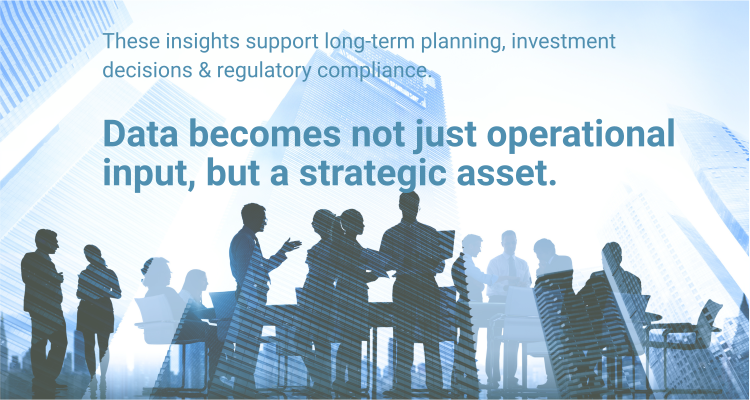
Beyond operational systems, cognitive buildings generate strategic insights.
Facility managers and developers can access dashboards that provide:
-
-
energy performance analytics
-
space utilization metrics
-
environmental efficiency scores
-
occupant behavior trends
-
sustainability reporting data
-
Integration of AI, IoT & analytics
The foundation of cognitive intelligence lies in three converging technologies:
-
IoT: Provides distributed sensing and connectivity across devices and systems.
-
AI: Enables pattern recognition, predictive modelling, anomaly detection and adaptive control.
-
Data analytics: Transforms raw data into actionable insights, enabling optimization across energy, operations and user experience.
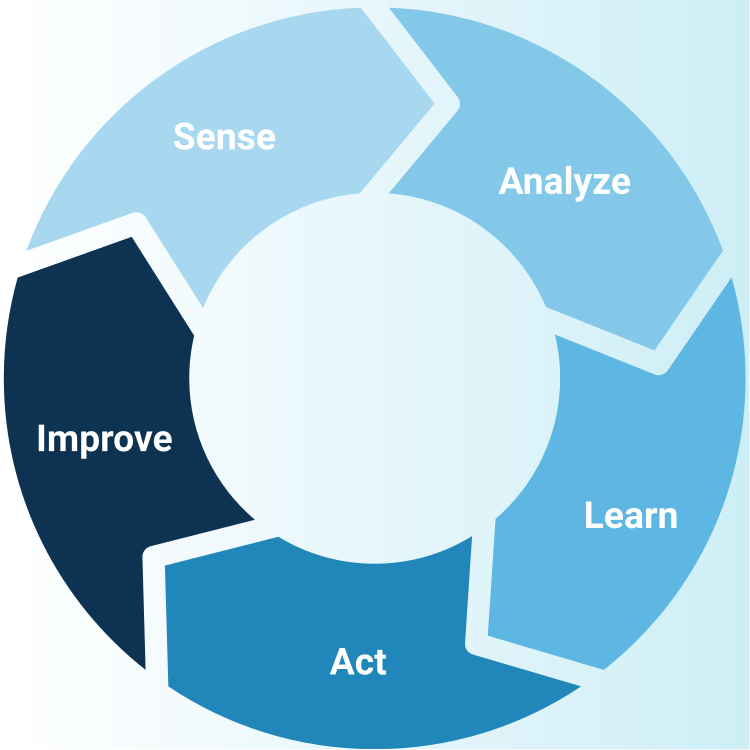
Together, these technologies create a continuous feedback loop:
Sense → Analyze → Learn → Act → Improve.
Sustainability & environmental impact
Cognitive buildings play a critical role in sustainability initiatives. By dynamically managing resources, they reduce energy waste, water consumption and carbon emissions.
Key environmental benefits include:
-
reduced peak energy demand
-
improved HVAC efficiency
-
smarter lighting control
-
data-backed ESG reporting
-
support for net zero strategies
As global regulations and sustainability targets become more stringent, intelligent infrastructure will be essential for compliance and performance.
Economic value & long-term ROI
While cognitive systems require upfront investment in infrastructure and integration, the long-term financial benefits are significant:
-
lower operational costs
-
reduced maintenance expenses
-
increased tenant retention
-
higher asset valuation
-
improved market differentiation
Buildings that adapt intelligently tend to command stronger occupancy rates and premium positioning in competitive markets.
In many cases, cognitive capabilities become a differentiator in real estate valuation and investment attractiveness.
The future: Self-optimizing built environments
The next phase of development will see buildings become increasingly autonomous. With advances in machine learning, edge computing and distributed AI models, cognitive systems will operate with greater independence and precision.
Future buildings may:
-
self-adjust in response to real-time energy markets.
-
integrate with city-scale infrastructure networks.
-
coordinate across multiple properties for portfolio-wide optimization.
-
continuously refine algorithms based on behavioral learning.
Cognitive intelligent buildings represent the evolution of the smart infrastructure movement. By combining AI, IoT and analytics into a unified system, these environments function as adaptive, self-learning ecosystems. They optimize energy, enhance occupant experience, strengthen security and reduce operational costs — all while supporting sustainability goals.
In an increasingly data-driven world, buildings are no longer passive structures; they are becoming intelligent platforms — capable of sensing, learning and improving continuously.

David Rowden, MBA is a seasoned C-level executive with 20 years of experience in the Middle East and 12 years in the Asia-Pacific region, including Australia. He is an experienced regional vice president and business consultant with a demonstrated history of working across a variety of industry verticals, varying countries and culturally adept. Rowden is a regular contributing author to Middle East sustainability and advanced building technologies bodies and magazines. He is a seasoned entrepreneurial C-suite leader, highly resilient, adaptable and capable of navigating complex crises while consistently balancing the needs of their team with broader organizational goals.
References
Top image via Getty Images.
Read more on Facility Technology & Data Management and Real Estate or related topics Real Estate Management , Facility Technology and Space Management
Explore All FMJ TopicsRelated articles
-

Artificial Intelligence in FM
The stakeholder’s perspectiveBy Dr. Jake Smithwick & Dr. Kenneth Sullivan & Nneka Ubi05.01.2024 -

Don’t Drop the Ball
How a CMMS can make or break an FM organization’s successBy Michael Carmean09.17.2024 -

Beware of Growing Cyberthreats
Why it’s time for stronger facility cybersecurityBy Andrew Harris & Eric Headington10.30.2024
