 Membership
 Network
 Regional Sites & Affiliates


 Events
 Participate
 Resources

 Training
 Credentials
 Government


 Content Channels
 Tools
Tools


 Business Overview





Collaboration & Communication
Tools for facilities of the future

No matter the industry, scale or type of facility, facility managers face the same basic challenge of communicating efficiently and effectively with busy teams who are on the move or off site. This was already a challenge for FMs with teams spread throughout facilities in siloed departments or in multiple locations. COVID-19 has all but eradicated traditional in-person meetings and forced many team members to work remotely, making the FM’s job of keeping everyone synced all the more difficult. The entire face of team communications has changed, escalating the need for alternate ways to communicate. Internal and external communications are merging as facilities strive to reconnect with disconnected teams in virtual environments.
Email is not enough and video conferencing is creating Zoom fatigue. Remote work requires mobile communication delivery at an unprecedented level. To meet these challenges, FMs are leveraging emerging communications technologies that provide faster, more effective ways to communicate meaningfully with simple, plug-and-play digital solutions.
Future-proofed facilities: App-connected FMs
Mobile team communication applications are becoming the go-to solution in facilities, from smaller commercial properties to large logistics warehouses. App features are more comprehensive than ever with integrated augmented reality (AR), artificial intelligence (AI) and mixed reality programs, as well as text chats, audio calls, video conferencing, file and screen sharing, discussion threads, forums and more, all combined into one communications hub.
Today’s apps allow FMs to communicate, collaborate and manage more efficiently. They can help achieve a number of tasks, such as tracking assets and employees, supervising work process flows and managing facilities.
Apps also do a great job of connecting personnel who would otherwise be disconnected via real-time data sharing. As an example, a very common scenario is maintenance inspections. An FM can create a work order digitally in an app (on a smartphone, desktop or tablet), which would then be shared online with a maintenance technician. If any issues were to arise during the inspection, the technician could use the app to take a photo and upload the image with comments to the digital work order. The FM would then receive a real-time notification, allowing them to resolve any issues or request further repairs instantly from there. This gives the FM unparalleled visibility into what is happening in their facility right now – even if they are remote or working from home – and the ability to deliver a rapid response.
Furthermore, digital management apps allow FMs to store information like work orders and other important documents digitally, with robust time stamping and audit trails of who did what when, thus eliminating the need for rows of file cabinets filled with endless amounts of paperwork. Centralizing all the data digitally also means that any user with the right level of permissions can access these documents online via secure login from any location or device globally. Gone are the days when FMs would be asked for documents or information. With digital data, all stakeholders can access it themselves.
Centralized data storage paired with AI also equips FMs with powerful forecasting capabilities. Apps can analyze data generated from historical records and patterns, which can be used to create predictive analytics and intelligent recommendations when planning preventative maintenance schedules, facility management budgets and so forth. Information is power, and the possibilities do not end there. With the multitude of app options available, the key is determining which apps provide the functions that will best address specific organizational needs.
Aside from the immediate benefits apps present to daily operations, switching over to these types of digital solutions also provides long-term advantages that help future-proof facilities. Innovation is happening at a rapid pace never experienced before in human history, and what is significant today may be obsolete tomorrow. Facilities must be adaptable and ready to adjust to the constantly changing environment. With digital management systems and applications, infrastructure can easily be updated to support new advancements and solutions as they become available in a post-COVID-19 world.
Same day delivery: No/low-code customized solutions
The FM industry has highly specific processes that sometimes require more customized communications interfaces. The emergence of no-code/low-code development platforms (LCDP) have made it possible for developers and customers to accelerate the delivery of these types of custom applications.
FMs use LCDPs to create applications that replace emailing documents, spreadsheets and other files back and forth. They’ve even been used to build platforms that streamline trash collection for university campuses. Though they can be deployed on virtually any platform, mobile accessibility is a driving factor behind the use of LCDP apps, which allow workers to tap into on-premise or cloud data from a mobile device.
Where security and compliance risks are a concern and privacy is essential to protecting sensitive information, there are communication apps that can be self-hosted on a company’s own servers and integrated directly to the user interface rather than through a third-party server.
Digital collaboration: Push-to-talk systems
Though team text chats and video conferences are productive, nothing compares to live voice messaging in real time, either one-to-one with individuals, or one-to-many with groups. Team apps that offer a walkie-talkie feature enable push-to-talk (PTT) to transmit instant voice messages to colleagues without risk of cross-talk or eavesdropping, while also reducing the number of devices workers carry and thus cutting IT costs.
PTT makes communication instant. minimizing the time to report safety, security and maintenance issues. Feature-rich apps also allow FMs to track locations, trigger alerts in critical situations, coordinate logistics and quickly resolve issues.
Traditional private radio and land mobile radio (LMR) networks often require significant up-front capital expenditures (CAPEX). The spike in mobile workforces is driving explosive growth in push-to-talk over cellular (PoC) for wide-area communications due to the low operational expenditure (OPEX) for startup and subscription-based services. With the press of a PTT button, PoC provides the same capabilities as traditional two-way radio systems and enables instant group calls to multiple users. Because PoC leverages existing LTE cellular and ubiquitous Wi-Fi networks, systems can be deployed more quickly with no infrastructure required.
PoC network services can also be located on privately hosted servers using gateway routers to provide connectivity between the LTE network and the PoC server. Another approach is unified communications (UC) platforms, which integrate diverse radio systems with PoC and PTT over Wi-Fi into one centralized ecosystem.
Moreover, with social distancing and “lone worker” measures in place, communication has quite literally been pushed beyond its limits. Thankfully, because PoC is not limited to a specific site, communication is possible anywhere there is 3G, 4G or 5G network coverage. To top it off, PTT functions can be performed on a multitude of different devices.
PoC devices such as radios and smartphones are purpose built for professional communications as compact, rugged, easy-to-operate handheld devices. Digital mobile radios (DMR) with advanced features can support PoC functions, including instant group calling, GPS location tracking and status update notifications. FMs can spend far less time scoping where issues are, and more time resolving them.
Enterprise models of ruggedized smartphones now have programmable buttons that support PTT communication and integrate with walkie talkie apps, which offers FMs and teams a similar experience to using the two-way radios they might already be familiar with. Warehouse and logistics facilities can even use programmable buttons to enable scanning and tracking capabilities.
For harsher work environments like industrial settings, there are PoC devices tested for durability in extreme temperatures, low pressure and high vibration, along with IP ratings for water and dust resistance. Some devices even offer enhanced touch or enlarged buttons for warehouse employees who are required to wear gloves while working.
Specialized accessories for the FM workforce
Many team communication apps are compatible with hands-free PTT accessories, including headsets and Bluetooth adaptors, which allows freedom of movement when operating machinery, maintaining facilities and a host of other physical tasks. A single button push connects FMs with staff or workers with other team members.
A vast array of accessories are available that augment audio and voice quality, including throat mics and earmuffs for high noise environments like manufacturing plants and entertainment venues. However, few manufacturers specialize in making affordable professional-grade products that far surpass most low-cost alternatives. Practicing due diligence is important when making any purchase, but especially so when it comes to communication devices. Hygiene is also a primary concern, which is why experienced makers offer swappable accessories specifically designed for individual or one-time use.
FMs are striving to raise team communications and productivity to a higher level, while reducing expenses. They are demanding simpler, more cost-effective solutions that are also dependable and backed by strong support to ensure smooth operations and optimal teamwork. Software applications, digital management programs LCDPs, PoC networks, devices and accessories are solutions that answer the call, providing FM teams with communication and collaboration that will stand the test of time.
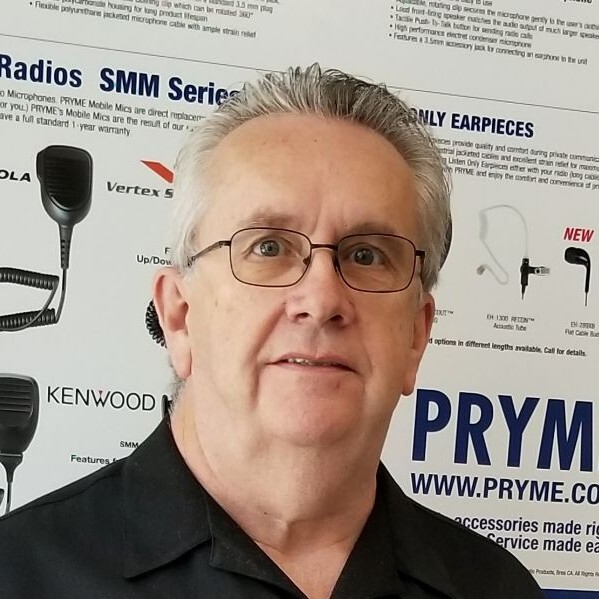
Dave George, chief technologist and president of Pryme Radio, holds 29 patents and is the inventor of multiple award-winning products. An RF engineer for more than 40 years, George is a key influencer in the public sector’s transition from radio to broadband. He is considered an industry thought leader whose keen insight is renowned in the communications technology field. Aside from running a successful communications accessory company, George also coaches a Southern California high school robotics team.
References
Top image via Getty Images
Maintain X. (2020, July 14). 3 New Technologies for Facilities Management Teams.
getmaintainx.com/newtechnologies-facility-management
FacilityManagement.com. How Mobile Technology Benefits Facility Managers to Be More Efficient. facilitymanagement.com/mobile-technology-facility-managers/
Retail Info Systems (RIS). (2021, February 23). Look for Tech’s Starring Role in 2021 Facility Management.
risnews.com/look-techs-starring-role-2021-facility-management
CrowdComfort. A World-Class Workplace Starts with Employee Empowerment. crowdcomfort.com/
Forbes. (2016, May 16). Citizen Developers: Low Code is Now Enterprise-Class.
forbes.com/sites/jasonbloomberg/2016/05/16/citizen-developers-low-code-is-now-enterprise-class/?sh=da97573b4f52
AppSheet. (2019, February 12). What is a No-Code Development Platform. blog.appsheet.com/what-is-no-code-development-platform
ANT Telecom. Push to Talk Over Cellular (PoC). anttelecom.co.uk/poc
Insights. (2021, February 17). What is the Best Rugged Mobile Device for Warehouse and Logistics? insights.samsung.com/2021/02/17/what-is-the-best-rugged-mobile-device-for-warehouse-and-logistics/
Read more on Communication and Leadership & Strategy or related topics Collaboration and Communication Skills
Explore All FMJ Topics