
 Membership
 Network
 Regional Sites & Affiliates


 Events
 Participate
 Resources

 Training
 Credentials
 Government


 Content Channels
 Tools
Tools


 Business Overview




Curing the FM Poison
Defeating a toxic culture for success

Facility managers are doomed: they will most likely never get the recognition they deserve for what they do. Why? Because the benefits they deliver are most likely undermined by parameters that are not in their hands. However, there is a novel and simple approach to help FMs reduce this handicap.
FMs provide work environments that are appropriate for employees. This can be understood as providing the minimum conditions for people to do what they are supposed to do. It can also be understood as a way to improve performance.
The first and minimalistic approach requires FMs to have the necessary technical skills to make sure that everything works as expected: as long as there is light, and employees have a table and chair to do their job, the way they feel is not important. The expected basic outcome that can be measured with an indicator is equipment up-time.
The second approach assumes that work environments impact the level of employees’ engagement, their retention and ultimately the company performance. In this latter case FMs are expected to contribute to the overall performance of the organization. Therefore certain FMs are measuring the impact of the work environment on employee’s well-being and performance, along with factors such as lighting, temperature and noise.
The problem is that if the physical work environment impacts well-being and performance, it is not the only parameter. No FM improvement can compensate for the demotivation that results from the presence of a workplace toxin: the unappreciative, less-desirable personnel as defined by Professor Robert Sutton in his best-seller “The No-A**hole Rule”. High-performance teams working in decent work environments will deliver much higher output than a dysfunctional team working in the most magnificent environment.
Most FMs have come to understand that organizational culture and facility management are influencing each other. FM professionals try to ensure that any significant change in the work environment must be compatible with the prevailing culture and the intent of the top management. The most sophisticated ones do culture surveys and/or have extensive meetings with senior management to maximize the alignment between managerial practice and the changes to be introduced.
This approach is unfortunately not enough because senior management intent does not mean that what is desired can be implemented. Senior managers of a multinational corporation have declared that innovation and entrepreneurial behavior are priorities, but the middle managers simply ignored this top management aspiration. One of the reasons was that their bonuses depended on their ability to deliver short term operational objectives. Middle managers wanted good executers rather than innovators who were perceived as “sand in the gears” preventing plans from being executed optimally. Senior management intent is too often remote from what is happening at the field level.
The role of culture
Because of some built-in issues, culture surveys are helpful, but also not enough for FMs.
-
First, surveys assume that the organizational culture is homogeneous. This is obviously not the case. For instance, in a software company, the culture of the salesperson is usually quite different from the culture of the programmers writing code. Understanding and exploiting these nuances is far from easy with aggregated data.
-
Second, survey’s such as Franklin Becker’s workplace change-readiness survey like usually assume certain management or leadership practices are supporting change initiatives. If they provide interesting clues, they are not covering the full spectrum of situations that govern people’s behaviors in organizations. They are mostly useful for pointing out the hurdles or red flags that may impede the introduction of a new work environment, but they do not provide ways to address them.
-
Third, those surveys can be time consuming for the respondents and those who are analyzing the data. This means that they are costly.
-
Fourth, even though they usually provide an interesting diagnosis of the characteristics of the prevailing culture, the surveys do not account for the level of engagement of each team or the presence of the toxic workplace jerks. This is nevertheless very important for FMs because the mindset at the team level will have a huge impact on how changes in the work environment will be welcomed. Moving to an activity-based environment with no dedicated desks will be received very differently by a team that has great team spirit compared to one managed by a toxic leader.
Measuring the level of team engagement is a paradigm change
If the culture or change-readiness surveys are useful to get a feel of the overall company culture and to provide some guidelines for FMs, it is not enough to predict a willingness to accept the proposed changes at the team level. What would help FMs is to know the mindset of each team to be affected by the changes to be introduced. As measuring team dysfunctionality could be delicate, it is easier to focus on team engagement. A dysfunctional team will never be as engaged as a healthy team. Consequently, a disengaged team will certainly not embrace and take full advantage of an improved workspace as an engaged team.
Because there are many routes for achieving a high level of engagement, only measure the end-result obtained by management instead of measuring what they do that may increase or reduce change-readiness. The end-result is the level of engagement of their team. The only assumption is that engaged employees trust their management and are committed to the success of their employer. The highest possible level of engagement will optimally support workplace transformations. Conversely, employees’ disengagement is poison for FMs.
Measuring preexisting team engagement is a very helpful predictor of openness to change, which will have a big impact on the final outcome of what FMs can deliver. It should be the best practice for FMs to measure current team engagement before implementing or even designing the workplace transformation they intend to introduce. This indicator will tell them how any change will be received, regardless of the one they have in mind.
By measuring pre- and post levels of engagement, the boldest FMs could even measure the impact of their workplace transformation on the level of engagement.
As there are four kinds of engagement, it is important to distinguish between:
-
Intrinsic motivation: the personal trait of people who have doing a good job at heart
-
Engagement for the cause: for example, people who are motivated for to heal people or to help children learn important skills
-
Engagement for an employer: employees who are proud to work for a prestigious firm
-
Engagement generated by the manager’s leadership: the extent to which a manager can build engagement
Since it has been demonstrated that the manager’s ability to generate engagement accounts for up to 70 percent of the total level of engagement, measuring the fourth kind of engagement is the most important. The good news is that it is also the easiest and most inexpensive engagement to measure. It can be measured with a simple and free software that asks a handful of questions such as:
On a scale of 0 to 5, and independently of company policies or work conditions, to what extent
-
does your manager give you the desire to contribute?
-
do you recommend your manager to others considering joining your team?
-
do you want to be led by your current manager?
-
is your manager capable of attracting and retaining talent?
For the result to be reliable, the respondents must be able to respond without fear. Because it guarantees total anonymity in producing an engagement score for each team and the questions can be customized to truly measure what FMs want, the free online solution provided by www.EazyMirror.com was used.
A new role for FMs?
If the engagement score is very low, the FM should begin by helping the team to become less dysfunctional. It might sound odd that FMs should get involved in management and leadership issues when their job is to take care of the conditions of the work environment. The real question is: “What is the consequence of not addressing the level of engagement?” The answer is rather simple: not addressing the level of dysfunctionality – the poison - will undermine the efforts of FMs and prevent them from delivering optimum outcomes. Because they will not deliver spectacular results, FMs will not be recognized for their contribution, regardless of what they do in the work environment. That’s rather frustrating and wasteful.
Because the price of ignoring the level-of-engagement issue is high, FMs for their own success have no choice: they must tackle this issue one way or another. The FMs who do not (yet) have the skills to help teams become more engaged can easily team up with experts in employee engagement to obtain the desired outcome. Maximizing engagement is the antidote to the poisonous disengagement that will undermine FMs efforts.
A holistic approach is a prerequisite
FMs have another hurdle to address: how can they convince their internal customers that they should also be involved in team engagement levels? The answer is simple: because what happens in the workplace – level of engagement- is at least as important as how the workplace supports those activities, a holistic approach is indispensable to obtain the desired result from the changes to be introduced.
Furthermore, considering that engaged employees can improve profits and productivity by up to 35 percent, every decision-maker should be thankful for anyone who can help measure and possibly improve the levels of team engagement.
To help convince internal customers, there is the Engaged Team Charter, a tool with specific characteristics that differ from traditional team charters. They include fundamental governance principles and expected behaviors. Such guidelines can be essential in changing the way people will interact in the new workplace. Issues such as how to take private calls did not exist in closed office environments but have a big impact in activity-based settings. Agreeing on guidelines can considerably alleviate the pain of transitioning from one type of work environment to another. As codes of conduct and workplace optimization go hand in hand, a holistic approach makes a lot of sense.
One of the characteristics of the Engaged Team Charter is that it is designed by the whole team. As it also includes an enforcement mechanism, it creates engagement. The team debate for producing the Engaged Team Charter is a wonderful opportunity for FMs to truly understand the dynamics that drive each team. This understanding opens the door for identifying solutions in the work environment to help the teams interact better.
Harmonizing people’s interactions with their workplace conditions provides a global approach that should yield better results than having FMs taking care of the workplace and other soft skills experts handling interactions separately. Integrating the work environment with the way people interact in the environment truly creates a virtuous circle.
Designing an Engaged Team Charter is best achieved with the help of a neutral facilitator who has no stake or involvement in the team, however, it is not always easy to find such trustworthy neutral facilitators. FMs could become those neutral facilitators and learning the necessary skills is not out of reach.
Improving team interactions and workplace experiences in parallel would not only expand the range of their strategic impact on organizations, it would at the same time make FMs’ roles much more meaningful and essential, in turn bringing higher levels of recognition and appreciation.
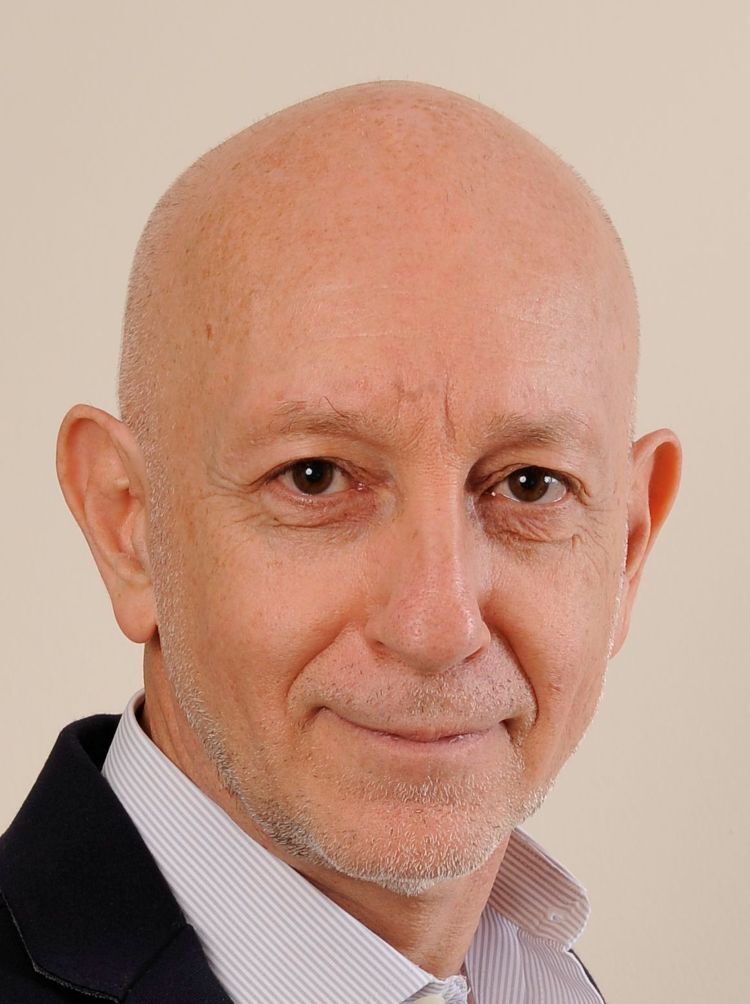
Raphael H. Cohen is the founder and CEO of Management Boosters. He has for many years been a serial entrepreneur, business angel, professor, lecturer, author and member of boards of directors. As an expert in executive education and director of the Entrepreneurial Leadership specialization of the University of Geneva eMBA for 18 years, he teaches novel innovation and leadership tools to managers and senior executives. His latest bestseller maps the leadership levers that impact employee’s level of engagement. His previous book provided a roadmap for analyzing innovation. He holds a Ph. D from the University of Geneva.

Clark Elliott, Workplace Strategies Consultant, is a Social Psychologist and Environmental Designer. Based in Geneva, Switzerland, Clark is one of the first Workplace Strategists in Europe. His career started in 1984 developing new ways of working at DEC Compaq HP. Since 1999, Elliott has provided advisory services to some of the world’s largest organizations. He is a senior associate at AWA, Advanced Workplace Associates, specializing in workplace change management and is vice president and co-founder of IFMA’s new Workplace Evolutionaries Swiss Hub.
References
Top image via Getty Images.
Read more on Leadership & Strategy and Communication or related topics Communication Management , Relationship and Conflict Management and Team Management
Explore All FMJ TopicsRelated articles
-

Artificial Intelligence in FM
The stakeholder’s perspectiveBy Dr. Jake Smithwick & Dr. Kenneth Sullivan & Nneka Ubi05.01.2024 -

Mastering Change in Hybrid Environments
Insights from global operational leadersBy Meg Swanson09.02.2024 -

Plugged In
Solving the data disconnect in real estate and FMBy Amanda Muzzarelli & James Waddell07.01.2024