
 Membership
 Network
 Regional Sites & Affiliates


 Events
 Participate
 Resources

 Training
 Credentials
 Government


 Content Channels
 Tools
Tools


 Business Overview




Damage Control
A hidden cost of protecting high performers

A facility manager has a decision to make. The highest-producing employee consistently delivers exceptional results. Projects finish ahead of schedule. Clients request them by name. Their revenue is strong.
There is only one problem.
Nobody wants to work with them. When assignments are announced, people hope they will not be on their team. Meetings are quiet when they start talking. Newer employees stop offering ideas because they have learned they will be dismissed. Some people say, "That's just how they are," and everyone laughs, even though nobody thinks it is funny.
The exception that becomes the culture
Many leaders assume their greatest risk comes from poor performers, but research and experience show something different. Poor performance can be identified quickly. That person can receive coaching, performance plans and be held accountable or they eventually leave. But high performers who consistently violate behavioral expectations receive something else. Exceptions. Leaders justify the behavior because the employee brings in the largest sales or accounts. Maybe they solve the toughest technical problems, manage the most complex facilities or possess historical knowledge that feels impossible to replace.
 Employees learn from what leaders tolerate
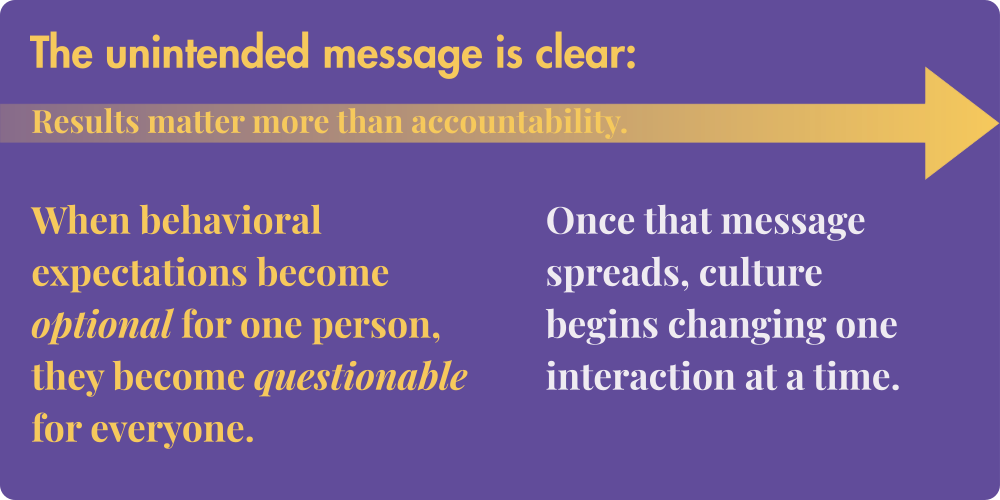
People define culture as the way they relate with each other. Culture is the collection of behaviors that are demonstrated, rewarded and discouraged. Employees pay way more attention to what leaders tolerate than what they say. An organization can claim that collaboration, respect or teamwork are the company values. But if the person consistently interrupting, publicly criticizing and ignoring agreed-upon processes continues to receive promotions without accountability, it is clear what values matter.
Not every problem comes from an aggressive salesperson. Sometimes it comes from the respected 25-year veteran technician who resists every change initiative. They are not openly disruptive, but they influence others. "We've tried this before." "The old system works fine."
 On their own, these comments might seem harmless, but collectively, they create resistance before change even begins. New employees quickly learn that embracing change may cost them acceptance by their peers. The tolerated behavior becomes cultural permission and the behavior spreads while others feel resentful and disrespected.
The real cost is hidden
Turnover will eventually attract attention, but bigger costs happen much earlier as employees disengage and withdraw. They stop sharing ideas, avoid difficult conversations and do only what is required because they no longer believe speaking up or going above and beyond will make a difference.
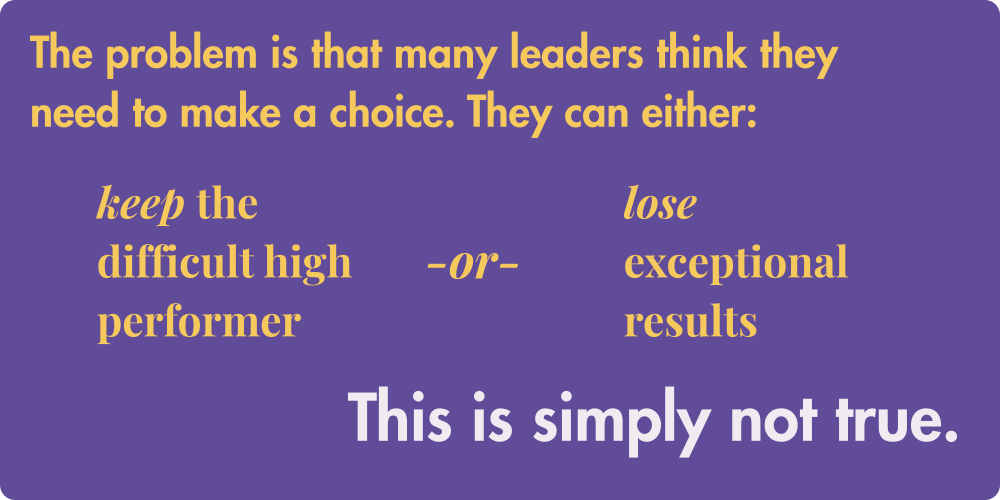
Leaders often believe they cannot afford to lose one exceptional performer. What they fail to calculate is the cost of disengaging 20 other employees who work around that person every day. Gallup estimates that actively disengaged employees cost approximately 18 percent of their annual salary in lost productivity. For an organization with just 50 actively disengaged employees earning an average salary of US$80,000 that adds up to about US$720,000 in lost productivity every year.
When employees stop challenging poor decisions because they want to avoid conflict, innovation slows. When people withhold rather than risk embarrassment, operational mistakes increase. When psychological safety disappears, learning also disappears. For FM leaders who are responsible for safety, regulatory compliance, operational continuity and cross-functional coordination, these hidden costs directly influence organizational performance.
High performance & healthy culture are not mutually exclusive
 Research conducted by Harvard professor Amy Edmondson consistently demonstrates that teams who have psychological safety outperform teams where employees hesitate to speak up.
Psychological safety is the shared belief that people can speak up, ask questions, admit mistakes and challenge ideas without fear of embarrassment, punishment or retaliation.
Google also had similar experience in Project Aristotle. They identified psychological safety as the strongest predictor of team effectiveness. The highest-performing teams are rarely the teams with the smartest individuals. They are teams where expertise is combined with trust, respectful challenge, accountability and open communication.
The difficult conversation leaders avoid
The problem is not that leaders do not notice the behavior. Leaders know who creates relational friction. The problem is their belief that confronting the behavior risks losing a valuable person.
Ironically, avoiding the conversation creates greater organizational risk. As the behavior continues, another employee concludes that accountability is optional. Others decide not to share ideas and even more choose to stay silent. Eventually the organization loses people who contribute positively while retaining the person creating the damage.
Address the behavior, not the person
 Effective leaders separate performance from behavior. Instead of labeling someone as "toxic," they identify observable behaviors.
For example:
-
interrupting colleagues during meetings.
-
publicly criticizing others.
-
ignoring communication processes.
-
an unwillingness to change.
-
responding defensively to feedback.
-
undermining change by insisting “we’ve always done it this way.”
Observable behaviors can be coached. Labels and judgement cannot. Behavioral expectations should apply consistently. The highest performer should be held to the same behavioral standards as the newest employee, maybe even higher.
Build accountability into performance
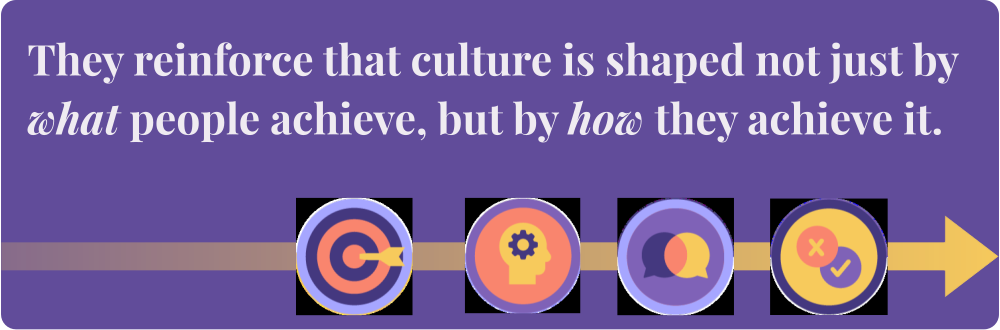
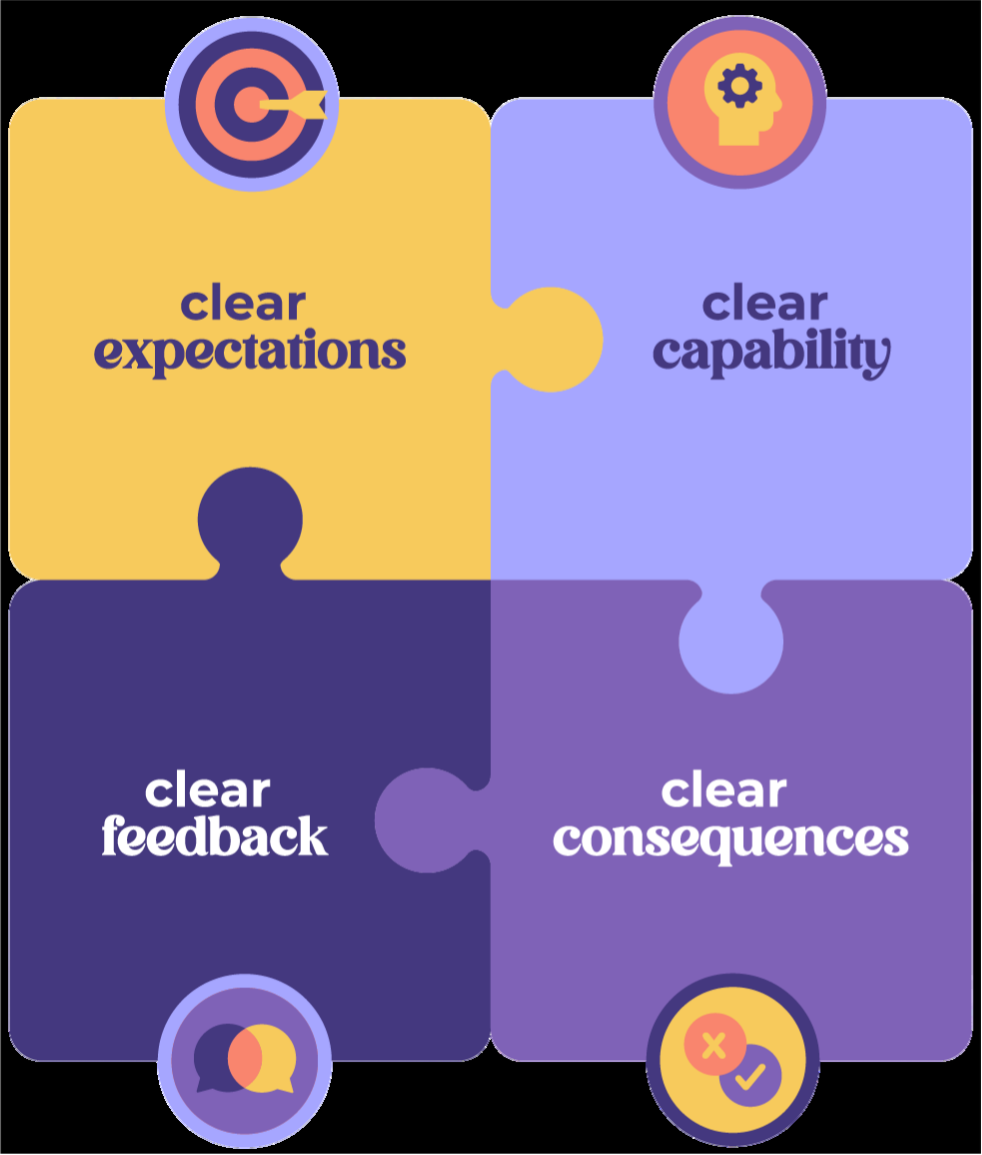 Most organizations measure what people accomplish, but fewer measure how they accomplish it. Culture is shaped by both. Performance evaluations need to include operational outcomes and leadership behaviors. When addressing a high performer whose behavior is damaging the team, accountability should focus on observable behaviors, not perceptions or judgments. One practical approach is the Four Cs of Accountability.
-
Clear expectations: Define what success looks like by making behavioral expectations just as clear as performance. If collaboration is a company value, leaders must describe what it looks like in practice. This includes what is and is not acceptable. For example, collaboration means the organization invites input from others before making decisions that affect the team. It also means we do not make decisions in isolation and inform others afterward.
-
Clear capability: Before assuming the person is unwilling, determine whether they have the skills and the capacity to be successful. High performers are not automatically equipped with strong relational skills. A question such as, "Do you have the resources, skills, and support you need to be successful?" helps determine whether the issue is ability or willingness.
-
Clear feedback: Address behaviors early, specifically and directly. Effective feedback focuses on observable behaviors and the impact rather than labeling someone. For example: "I've noticed you frequently respond to requests from other departments by saying, 'That's not my job.' Our expectation is that we respond to requests in an agreed-upon timeframe or help connect them to the appropriate resource."
-
Clear consequences: Reinforce that behavioral expectations apply to everyone. When unacceptable behaviors continue without consequence, leaders unintentionally communicate that high performance excuses poor behavior. Consequences are not always negative. They also include helping employees understand the positive outcomes of changing their behaviors. This might mean promotional rewards, better relationships, greater trust, improved collaboration, and increased influence.
When accountability focuses on behaviors instead of personalities, leaders create opportunities for growth instead of defensiveness.
 There are also helpful questions leaders can ask themselves when evaluating performance:
-
Does this person contribute to building trust?
-
Do people want to collaborate with them?
-
Do they improve team performance and individual performance?
-
Do others feel respected after working with them?
These conversations help shift culture from accidental to intentional.
Culture is built through everyday decisions
Leaders do not decide to create unhealthy cultures. More likely, accidental cultures emerge from small compromises over time. Eventually those exceptions become expectations. FM depends on trust across departments, contractors, vendors, technicians, occupants and executive leadership. Every interaction strengthens or weakens relationships. The organizations that sustain high performance over time understand that exceptional results should never require acceptance of unacceptable behavior.
The strongest cultures are not built by protecting the highest performer, they are built by holding everyone accountable for both results and relationships. The behaviors leaders tolerate today become the culture of tomorrow.

Natalie Johnson is a cofounder of Vidl Work. She oversees business development, partnerships, strategy and innovation while working with clients on keynotes, consulting, training and coaching. With more than 30 years of experience in human performance, resilience and leadership, she brings a deeply practical and human-centered approach to culture change. Johnson holds a master’s degree in Wellness Promotion and is an industry recognized performance coach sought-after keynote speaker, Certified Dare to Lead™ Facilitator and Wellcoaches® Certified Coach. She is known for her engaging presence, big picture thinking and her ability to help people align everyday choices with purpose and values. She is also the author of Leading the Culture Journey: Elevating Everyday Actions to Create Extraordinary Workplaces with Vidl Work co-founder Rebecca Johnson.
References
Top image via Getty Images.
4Cs image courtesy of the author.
Read more on Leadership & Strategy and Communication or related topics Communication Management , Team Management , Networking and Workforce Development
Explore All FMJ TopicsRelated articles
-

Artificial Intelligence in FM
The stakeholder’s perspectiveBy Dr. Jake Smithwick & Dr. Kenneth Sullivan & Nneka Ubi05.01.2024 -

Mastering Change in Hybrid Environments
Insights from global operational leadersBy Meg Swanson09.02.2024 -

Plugged In
Solving the data disconnect in real estate and FMBy Amanda Muzzarelli & James Waddell07.01.2024