Membership
 Network
 Regional Sites & Affiliates


 Events
 Participate
 Resources

 Training
 Credentials
 Government


 Content Channels
 Tools


 Business Overview




Designing Workplace Experience
Five mandates for future-ready spaces
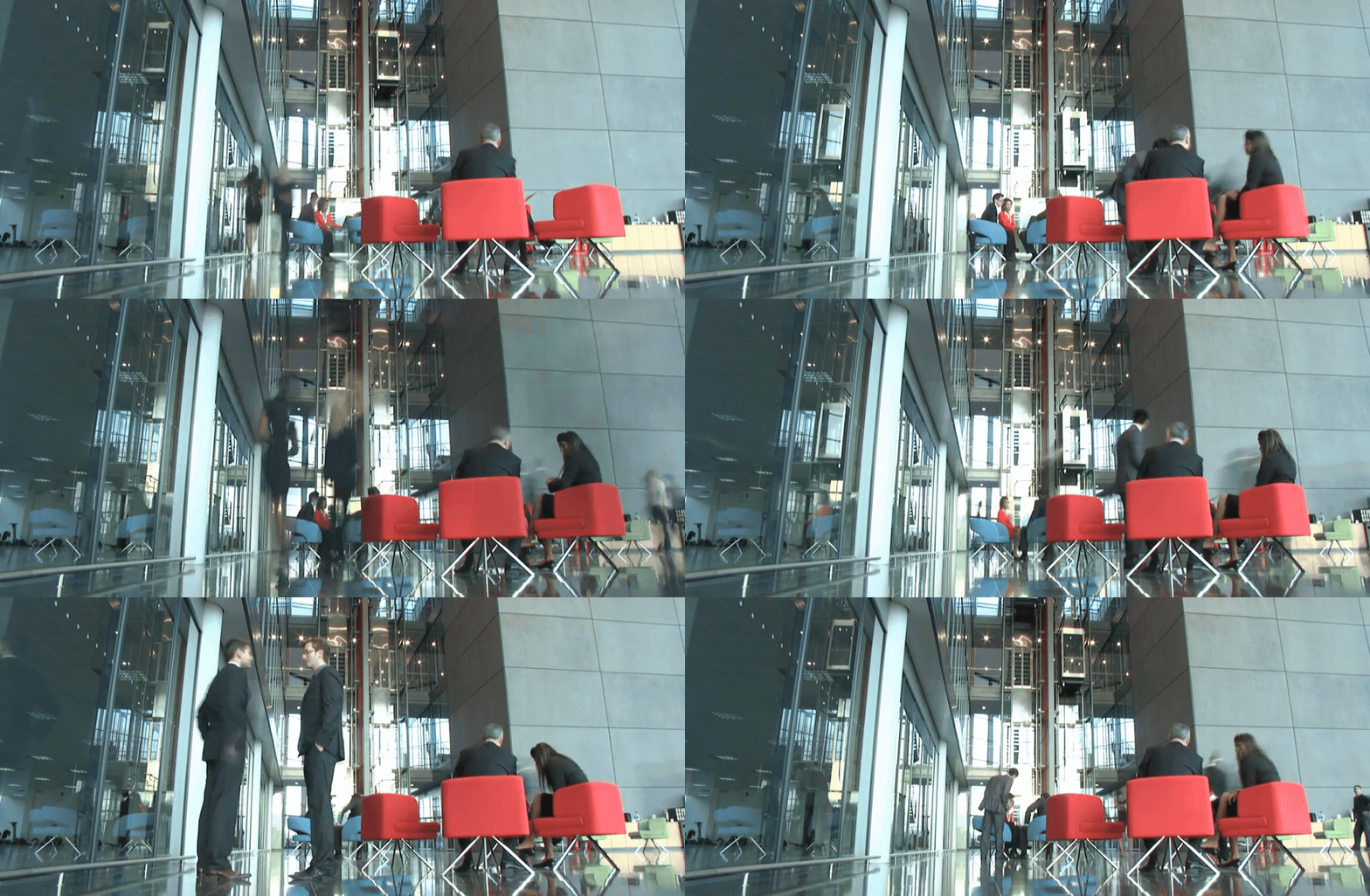
The workplace is so much more than simply a space where employees complete tasks. It is a tool for strengthening culture, supporting performance, fostering collaboration and reinforcing organizational identity. The “workplace experience” is the sum of every interaction employees have with their workplace. This experience shapes their engagement, productivity and connection to the organization. Yet despite growing investment in workplace experience, many organizations understandably begin planning too late, compressing major decisions into lease timelines that leave little room for strategic thinking.
For facility managers, the challenge has become increasingly complex. Employees expect environments that support multiple work styles, seamless technology and well-being, while leadership teams seek spaces that strengthen innovation, retention, efficiency and organizational performance, all without breaking the budget.
Success in these circumstances rarely comes from making faster decisions. More often, it depends on making earlier, better-informed ones. The strongest workplace environments emerge through alignment around culture, budget, technology and employee needs years before occupancy becomes a pressing concern. These five mandates can help organizations establish that foundation and create workplaces that continue to evolve with their people.
1. Begin early before the lease drives the process
Many organizations still approach workplace planning as a sequence of deadlines tied to lease negotiations or occupancy targets. Under pressure to move quickly, teams rush from programming to design and construction with little opportunity to reassess priorities. The assumption is understandable: identify a space, design and build it, and move in. In practice, workplace delivery is a dynamic process rather than a straightforward sequence.
Workplace planning involves competing priorities, evolving stakeholder expectations and shifting organizational goals. Treating it as an overly linear transaction can lead to costly adjustments, especially when important conversations happen too late. Organizations that achieve the strongest outcomes often begin planning two to three years before lease execution. That time creates room for leadership alignment, stakeholder engagement and informed decision-making before major commitments are made. It also allows organizations to engage the design team, consultants and cost estimators early enough to evaluate options, test assumptions and align priorities before making major real estate commitments.
Early visioning workshops can reveal priorities that are not immediately obvious. A company initially focused on reducing square footage may discover that preserving informal mentorship or cross-functional collaboration is equally important to long-term performance. The goal is to create enough space for better decisions without slowing momentum. When planning begins early, organizations can adapt thoughtfully rather than being forced to react under pressure. This allows them to define the culture that they want the workplace to support before deciding what that workplace should become.
2. Design begins with defining culture
Organizations often describe their desired culture in broad terms such as collaborative, innovative or people-centered. Translating those aspirations into a meaningful workplace begins with understanding the behaviors behind them.
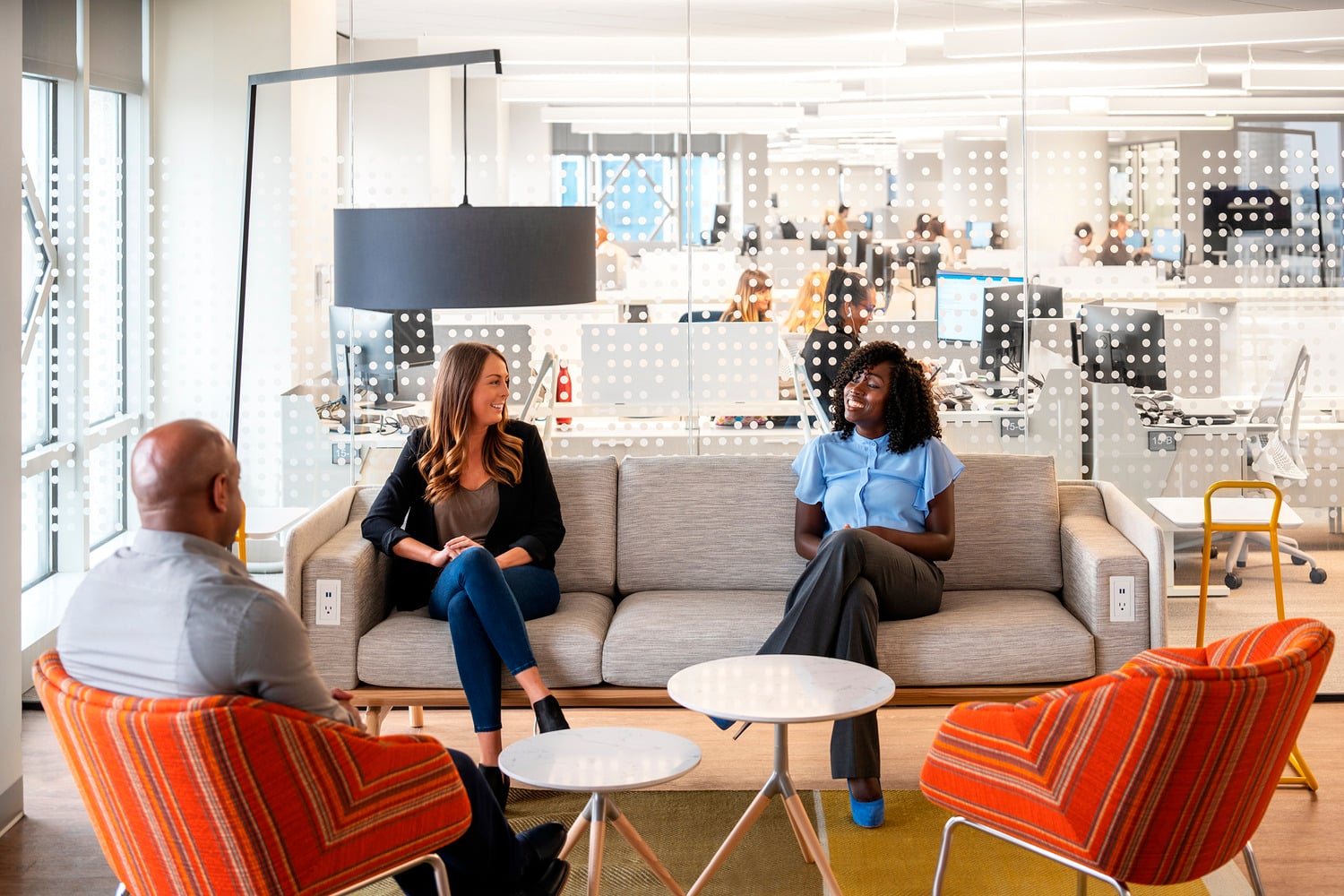
Culture is expressed through the everyday behaviors, habits and interactions that become normalized across an organization. These behaviors are what employees experience day to day, ultimately shaping how people collaborate, make decisions, solve problems and connect. For example, a collaborative culture may depend on frequent informal interactions across teams, while spontaneous idea sharing and opportunities for experimentation may strengthen an innovative culture.
Workplace programming translates those desired behaviors into functional requirements. It is the bridge between organizational strategy and the physical workplace: programming establishes what the environment must enable, workplace design gives those requirements physical form; then a stronger culture and interaction become the outcome.
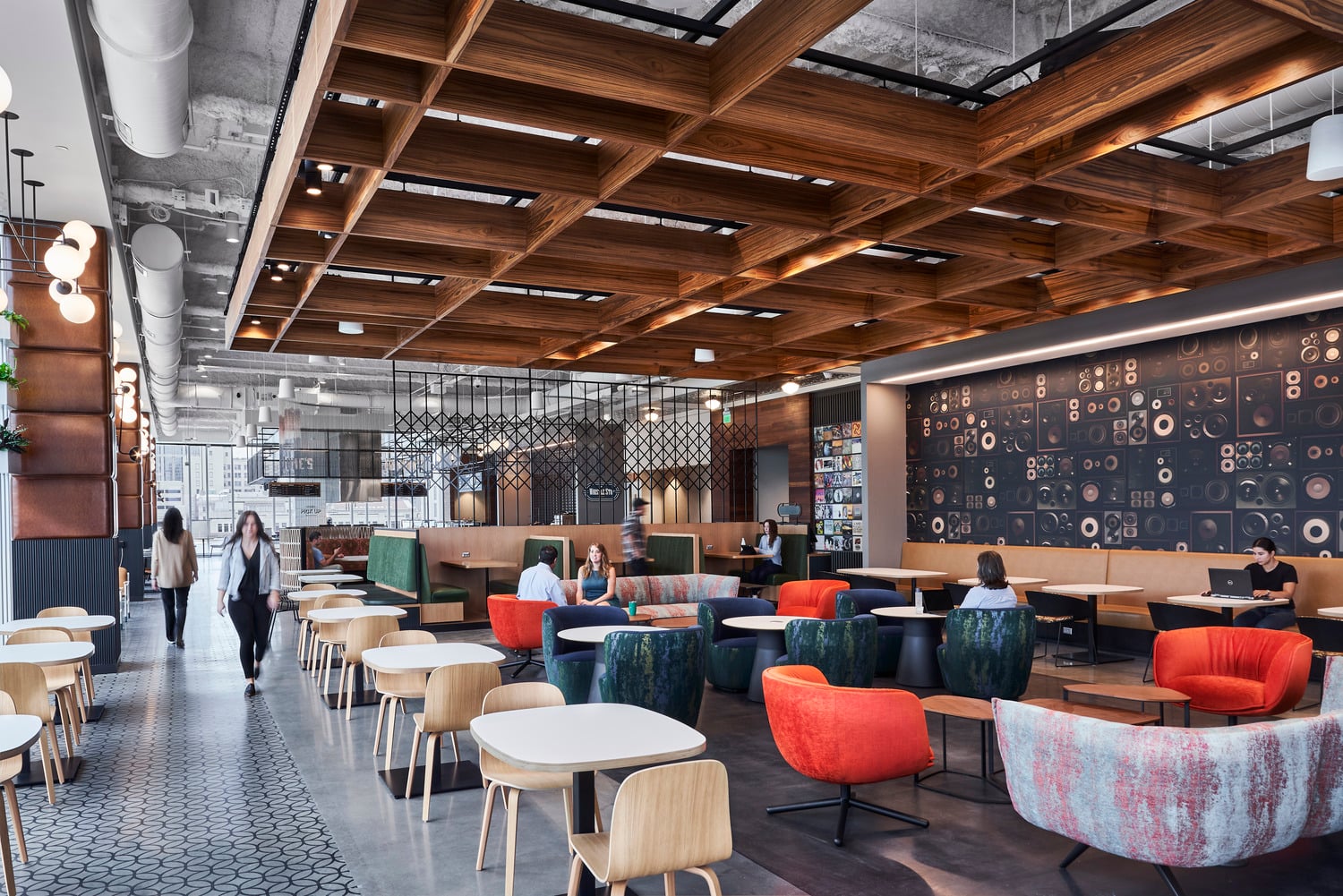
For one organization, programming may reveal a need for hospitality-inspired gathering spaces that reinforce its culture. Informal cafés, lounges and flexible third spaces can then be designed to support focused work, mentoring, team meetings and social interaction throughout the day. For organizations with limited footprints, shared building amenities, outdoor areas and nearby neighborhood destinations may extend the experience beyond the office itself.
A strong workplace culture does not happen by accident. It is intentionally cultivated by defining the experiences an organization wants employees to have, developing programs for the behaviors that create those experiences, and designing environments that support them. Turning that vision into reality, however, requires an equally clear understanding of what the organization can afford.
4. Integrate technology into the experience
Technology expectations have changed dramatically as hybrid work continues to evolve. Conference rooms are no longer just places for in-person meetings. Increasingly, they function as digital hubs where remote and in-office participants are expected to collaborate seamlessly.
Yet technology still too often feels layered onto the workplace rather than integrated into it. Plug-and-play meeting environments, intuitive audiovisual systems, interactive displays and frictionless connectivity have become baseline expectations. Employees expect rooms to work immediately without technical barriers delaying the conversation.
Technology also performs best when the environment supports it. Even advanced conferencing systems struggle when audio quality is poor or glare limits visibility. Acoustics, lighting and environmental controls must be considered alongside the systems themselves.
The goal is for technology to support the workplace so naturally that employees can focus on their work rather than the tools around them. The same principle applies to the broader environment: it should respond intuitively to the different ways people work.
5. Design for individual experience
Designing for individual experience means recognizing that workplace experience is not uniform. Employees experience the workplace differently based on how they work, collaborate and process their environment. Today’s workforce reflects a broad range of work styles, sensory preferences, generations, cultures and performance needs. A one-size-fits-all workplace no longer supports how people actually work.
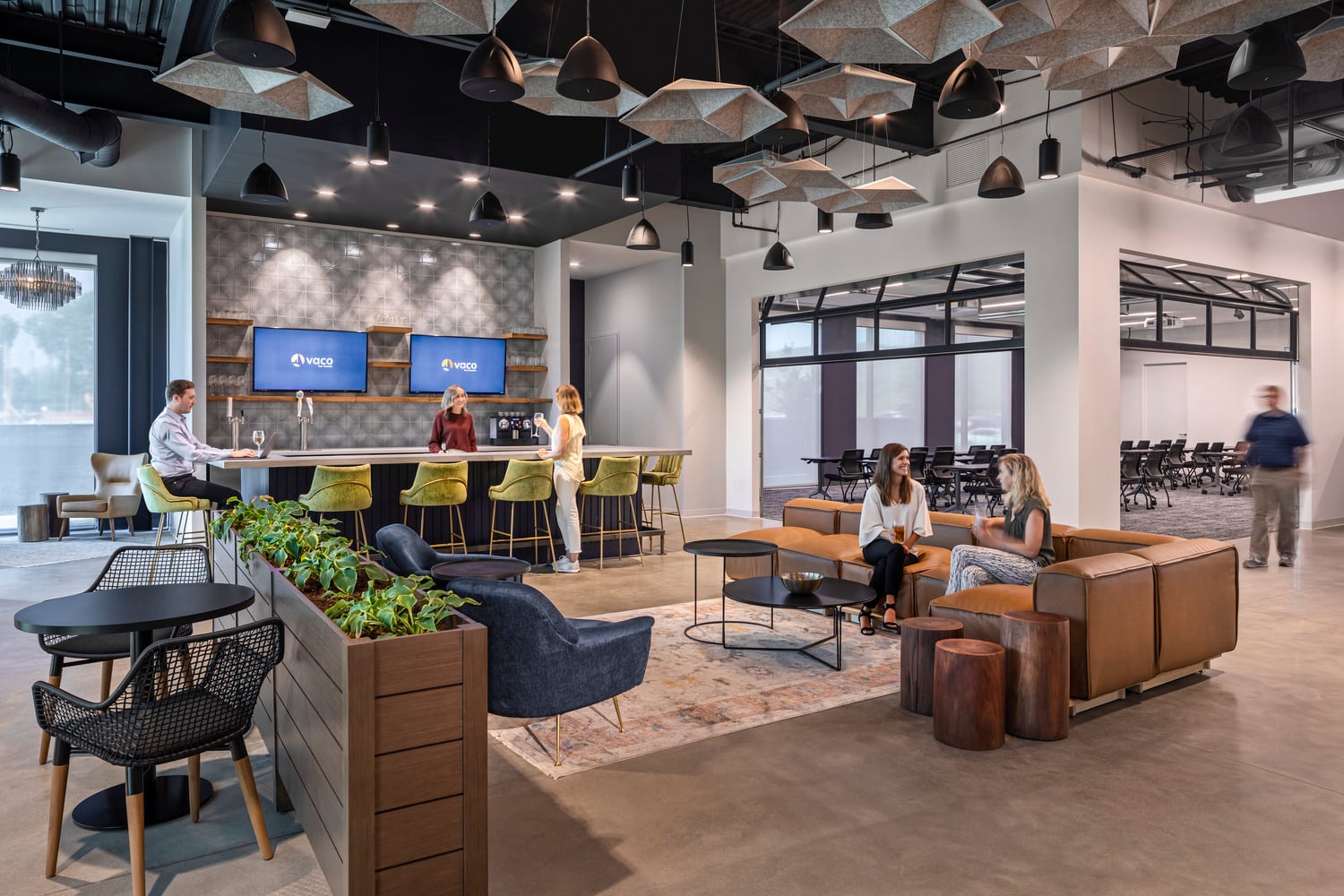
Some employees thrive in collaborative settings; others perform best in quieter environments designed for concentration. Neurodiversity, differing work rhythms and varying sensory preferences all influence how people experience space. Successful workplaces respond with choice, balancing collaboration zones with focus rooms, quiet spaces and a range of acoustic conditions.
Greater autonomy allows employees to select the setting best suited to the task at hand. This positions the workplace as a performance tool that supports individuals as intentionally as it supports teams. As needs change, a range of flexible settings also gives organizations room to evolve without repeatedly reinventing the entire workplace.
The workplace as a leadership tool
Organizations that invest time at the beginning build a foundation to move through the design process more efficiently, make informed decisions and evolve their workplaces appropriately as needs change. The strongest environments are rarely the product of rushed schedules or commodity real estate decisions. They emerge through leadership alignment, early benchmarking, intentional programming, integrated technology and a clear understanding of how people work.
For facility managers, workplace strategy is no longer simply a real estate decision. It is a leadership tool that can shape culture, performance and the employee experience. The work does not end at occupancy, nor does it require constant reinvention. Organizations that get it right remain attentive to how their people and priorities evolve, using that insight to keep the workplace relevant, welcoming and effective long after the lease is signed.

Laurel Harrison, NCIDQ, IIDA, LEED AP, is Project Executive, Life and Work Places, with Gresham Smith. She can be reached at laurel.harrison@greshamsmith.com.
Read more on Leadership & Strategy , Occupancy & Human Factors and Project Management or related topics Risk Management and Planning and Design
Explore All FMJ TopicsRelated articles
-

Artificial Intelligence in FM
The stakeholder’s perspectiveBy Dr. Jake Smithwick & Dr. Kenneth Sullivan & Nneka Ubi05.01.2024 -

Mastering Change in Hybrid Environments
Insights from global operational leadersBy Meg Swanson09.02.2024 -

Plugged In
Solving the data disconnect in real estate and FMBy Amanda Muzzarelli & James Waddell07.01.2024