
 Membership
 Network
 Regional Sites & Affiliates


 Events
 Participate
 Resources

 Training
 Credentials
 Government


 Content Channels
 Tools
Tools


 Business Overview






Facility management organizations are rapidly expanding their use of wireless sensors and controls. These technologies support energy management, safety, asset monitoring, space utilization and occupant comfort across commercial buildings, industrial sites, health care facilities and public infrastructure. As portfolios scale, however, a critical challenge has emerged alongside digital transformation: powering a growing number of distributed devices efficiently and sustainably.
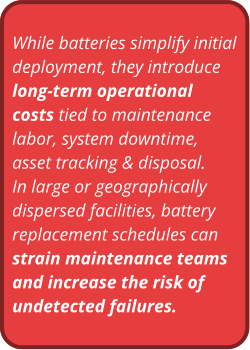
Most wireless sensors rely on disposable batteries. While batteries simplify initial deployment, they introduce long-term operational costs tied to maintenance labor, system downtime, asset tracking and disposal. In large or geographically dispersed facilities, battery replacement schedules can strain maintenance teams and increase the risk of undetected failures. Environmental concerns further complicate the issue, as battery manufacturing requires energy-intensive material extraction and processing that generates emissions, while end-of-life disposal can contribute to waste streams and potential soil or water contamination.
Energy harvesting has emerged as a viable alternative. By converting small amounts of ambient or mechanical energy into usable electrical power, energy harvesting enables wireless devices to operate without batteries or fixed wiring. This approach is gaining traction globally as FMs seek to reduce maintenance burdens while improving system resilience and sustainability.
What energy harvesting is & how it works
Energy harvesting refers to the capture of naturally occurring energy from the environment or normal building operations and its conversion into electrical power for low-energy devices. In facility applications, energy harvesting typically falls into three categories: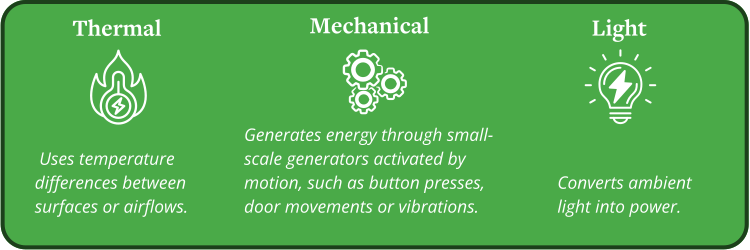
Rather than providing continuous power, energy-harvesting systems accumulate energy in small components and release it to a sensor that needs to transmit data. Advances in low-power electronics and wireless communication protocols have made this model increasingly reliable for FM applications.
The effectiveness of each harvesting method depends on environmental conditions and use patterns. Selecting the appropriate energy source is a critical first step in successful deployment.
Why battery dependence is becoming unsustainable
At a small scale, battery-powered sensors appear cost-effective. At the facility scale, their limitations become more apparent.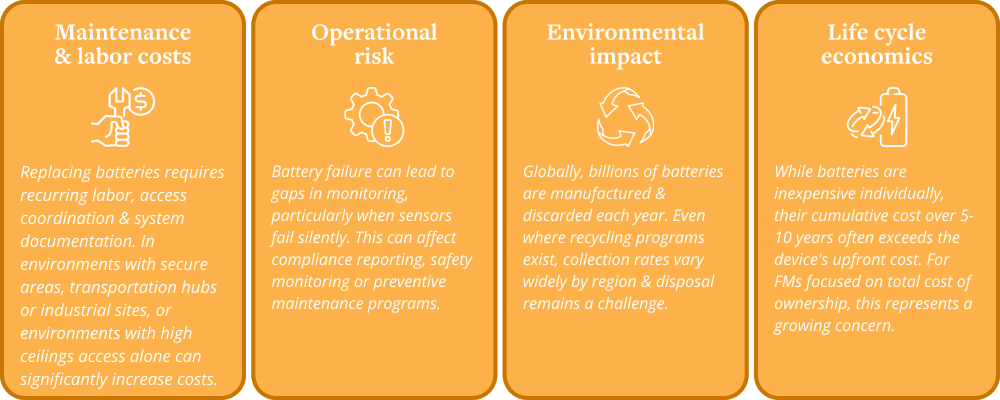
These challenges have prompted organizations to evaluate power strategies as a core part of digital infrastructure planning rather than a secondary consideration.
Where energy harvesting is being applied
Energy harvesting is not suited to every device, but it performs particularly well in applications where data transmission is event-based or intermittent. Several use cases are proving valuable across regions and facility types.
-
leak detection & environmental monitoring
-
access monitoring & security
-
lighting & space controls
-
condition-based maintenance
-
remote & resource-constrained environments
Water damage remains a leading cause of property loss globally. Battery-free leak detectors can remain dormant for extended periods and activate only when moisture is detected. This makes them well-suited for mechanical rooms, restrooms and remote infrastructure locations.
Doors, gates and access points naturally generate mechanical energy. Harvesting this energy enables wireless monitoring of open and closed states without batteries, supporting security, compliance and space utilization strategies.
Energy-harvesting switches and controls enable lighting retrofits without running power cables. This is particularly useful in leased spaces, historic buildings and facilities where downtime is not an option.
Sensors powered by vibration or motion can support equipment monitoring in industrial and logistics environments. These systems enable early detection of issues without adding battery maintenance tasks.
In regions with limited access to labor or inconsistent grid power, battery-free sensors reduce reliance on routine service visits, supporting more resilient facility operations.
Instructional framework: Evaluating energy harvesting for facilities
FMs considering energy harvesting can apply a structured evaluation approach:
-
Assess available ambient energy: Identify whether motion, light, heat or vibration is consistently present at the intended installation point.
-
Define data requirements: Determine how frequently data must be transmitted and whether communication is event-driven or continuous.
-
Evaluate system integration: Confirm compatibility with existing building management systems, IoT platforms and communication protocols.
-
Analyze life cycle costs: Compare upfront investment against long-term savings from reduced labor, downtime and battery replacement.
-
Pilot before scaling: Small pilot deployments allow teams to validate reliability and performance under real operating conditions.
This approach helps ensure that energy harvesting is applied where it delivers measurable operational value.
Data-driven insights & economic impact
Industry analyses indicate that battery replacement can account for a significant portion of wireless sensor operating costs over time, particularly in large portfolios. Labor, access equipment and downtime often outweigh the cost of the batteries themselves.
By eliminating routine battery replacement, energy-harvesting systems shift costs toward initial deployment while reducing ongoing expenses. This model is especially relevant in regions facing labor shortages or rising maintenance costs.
From a sustainability perspective, reducing battery usage supports corporate environmental goals and aligns with evolving regulations on waste and materials management in multiple regions.
 Reliability, standards & common concerns
Concerns about reliability remain a primary barrier to adoption. Modern energy-harvesting systems address this through:
-
ultra-low-power electronics
-
event-based communication models
-
energy storage components designed for long service life
-
redundant data transmission strategies
Standardization efforts and open communication protocols are also improving interoperability, making integration less complex than in earlier generations of wireless systems.
Education and clear performance metrics help FM teams distinguish between appropriate and inappropriate use cases.
The role of energy harvesting in sustainable facilities
Energy harvesting supports sustainability goals in several ways:
-
Reducing hazardous waste associated with battery disposal.
-
Lowering emissions tied to battery manufacturing and transport.
-
Enabling broader deployment of monitoring systems that support energy efficiency and preventive maintenance.
For organizations reporting on environmental performance, battery-free systems represent a tangible, measurable improvement rather than an abstract commitment.
Looking ahead
As facilities continue to adopt connected technologies, power strategy will increasingly influence scalability and long-term performance. Energy harvesting offers a path toward wireless systems that are easier to maintain, more resilient and better aligned with sustainability objectives.
Ongoing advances in materials, micro-generation and low-power communication are expected to expand the range of viable applications. For facility managers operating across diverse geographies, battery-free technology provides a flexible solution adaptable to local conditions and regulatory environments.
The shift away from battery dependence represents not just a technical evolution, but a strategic opportunity to rethink how digital infrastructure is powered in the built environment.

Danielle Hicks is vice president of marketing at WePower Technologies, leading global strategy and communications for energy harvesting technologies that support wireless Internet of Things (IoT) infrastructure. She specializes in translating complex technical innovation into actionable insights for facility and business leaders. Her work focuses on advancing sustainable, battery-free approaches to powering connected environments.
References
Top image by Getty Images.
Read more on Sustainability or related topics Energy
Explore All FMJ TopicsRelated articles
-

Smart Building Control Systems
The foundation for a grid-interactive buildingBy Andre Marino09.25.2024 -

Smart Building Innovation
Cutting costs & carbon footprints without compromiseBy Andrew Butterworth09.12.2024 -

Chart the Path
Building sustainable cities & a sustainable futureBy Izzat Ali Khan & Aykean Forde12.16.2024
