
 Membership
 Network
 Regional Sites & Affiliates


 Events
 Participate
 Resources

 Training
 Credentials
 Government


 Content Channels
 Tools
Tools


 Business Overview





Europe’s New Green Deal
What FMs can do to play a vital role
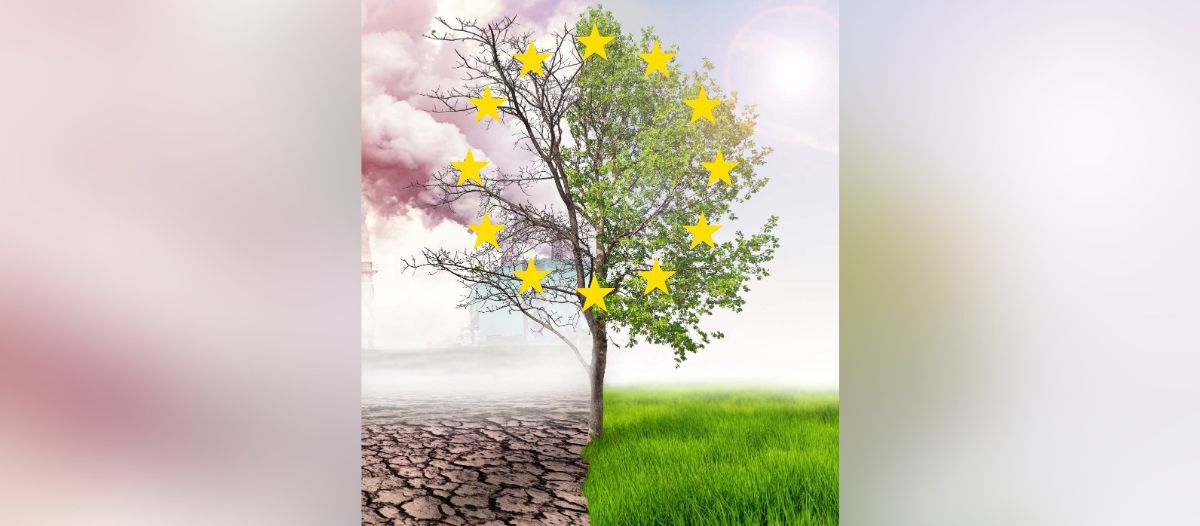
Europe is to become the first climate-neutral continent by 2050 according to the New Green Deal presented by the new President of the European Commission, Ursula von der Leyen. To do so, the European Union (EU) will come forward with a Climate Law in March 2020 that will enshrine the 2050 climate neutrality objective in legislation. All the different sectors, including the built environment, must come together to reduce the EU’s greenhouse gas emission reductions target by at least 50 percent by 2030 (current goal is 40 percent) and aim towards 55 percent compared with 1990 levels in a responsible way.
To deliver the European Green Deal, there is a need to rethink policies for clean energy supply across the economy, industry, production and consumption, large-scale infrastructure, transport, food and agriculture, construction, taxation and social benefits. The construction sector, as part of the built environment, is under the spotlight and seen as one of the main polluters.
The Green Deal proposes to increase the value given to protecting and restoring natural ecosystems, to the sustainable use of resources and to improving human health. This is where transformational change is most needed and potentially most beneficial for the EU economy, society and natural environment. The EU should also promote and invest in the necessary digital transformation and tools which are essential enablers of the changes.
Looking at the Commission’s Green Deal, what are the policy hooks and possible pieces of legislation that may impact FM? Based on past experiences in Government Relations, how can IFMA build on its relationship with the European institutions and ensure that the role of FM is recognised in the work led by the European Commission?
Why a Green Deal?
Following increased societal pressure for policy action to tackle climate change, the EU wants to be a global leader on sustainability issues and now is the time to walk the talk. May 2019’s European elections brought a “green wave” to the European Parliament with a significant increase in the number of Green MEPs (+22 seats). This confirms that green and sustainability issues are key to European citizens and in response to this, all the main political groups have adapted and integrated language around sustainability.
President, von der Leyen, who is from the European People’s Party group is the one who initiated this Green Deal, something that would not have been conceivable a few years ago when the centre-right group did not focus its political program on such topics but rather on economic growth. However, it seems now clear that business and sustainability go hand in hand and that industrial players will play a crucial role in delivering the Green Deal.
A Green Deal, also for the built environment
The Green Deal is an integral part of the EU’s strategy to implement the United Nation’s 2030 Agenda and the sustainable development goals (SDGs). It touches upon a broad range of topics from transport to biodiversity but also clean energy, zero pollution and making sure the transition towards a more circular economy is one that is fair and does not negatively impact those who are the most at risk.
The most relevant initiatives in the Green Deal for facility managers are:
The New Circular Economy Action Plan
This Action Plan will look at how the make linear production become more circular by mainstreaming the “Reduce, Reuse, Recycle” principles into all policy areas and across all sectors, including the built environment. In other words: everything you integrate into a building, everything you use within the building and what you remove from the building will have be as sustainable as possible.
Resource-intensive sectors like the construction sector will be under pressure to be more ambitious on climate change and guide the transition. The Commission will consider legal requirements to boost the market of secondary raw materials with mandatory recycled content (for instance for packaging, vehicles, construction materials and batteries).
All in all, the goal for the construction sector and the built environment will be to become more circular, notably from the very start at the design stage of the building, until its last breath in the demolition phase.
Building and renovating in an energy and resource efficient way
The built environment, whether it be during the life cycle of a building or during renovation, consumes significant amounts of energy resources and the built environment account for 40 percent of energy consumed. The Commission estimates that in order to reach the EU’s energy efficiency and climate objectives, the annual renovation rate will need to at least be doubled.
To improve energy efficiency and help users reduce their electricity bill, Member States will be encouraged to engage in a “renovation wave” of public and private buildings. This “renovation wave” initiative for the building sector will be launched in 2020 and is meant to boost the construction sector by providing new jobs at local level and support small and medium enterprises (SMEs).
IFMA can play a vital role
IFMA has been part of the policy conversation in Brussels on how future energy efficiency legislation for the built environment should look like. Since 2016, IFMA continuously engaged with policy makers in order to underline the need for a holistic approach of a building. Where EU legislation for far too long has focused solely on seeking to obtain energy efficiency gains from the construction phase of the building, most of those savings come from optimized operation of the building throughout its entire life cycle. FMs help achieve those savings through their day-to-day operations.
With the Energy Performance of Buildings Directive, IFMA successfully managed to have the role of facility management reflected in the Directive.
The time has now come to again position FM as a solution-maker for increasing energy efficiency of the built environment, also in the renovation phase, and as a green dealmaker for everything circular economy related.
By the very nature of the profession facility managers are ideally placed to increase the energy performance of a building, and do so much more. They facilitate and ensure effective waste management, advise on the use of right construction products in the design and renovation phases, and properly manage the performance of technical building and automation systems.
Through its participation in expert groups, and through targeted bilateral meetings with key decision-makers, IFMA will therefore make sure that the voice of facility managers is heard when the renovation wave initiative and circular economy action plan will be launched. With the support of data, best practices and case studies IFMA will showcase with EU decision-makers how facility managers help the EU’s building stock grow green, and help the EU implement its Green Deal.
Case Study IFMA’s role in the Energy Performance of Building DirectiveThe Energy Performance of Buildings Directive is a piece of EU legislation that sets out requirements for the energy efficiency in buildings. Through IFMA’s lobbying efforts in Brussels, IFMA successfully inserted language about facility managers in the piece of legislation that is now being translated into national legislation. The wording recognizes the added value that facility managers play in shaping and managing the opportunities for energy efficiency improvement in a building: 4. The building automation and control systems shall be capable of: (a) continuously monitoring, logging, analysing and allowing for adjusting energy use; (b) benchmarking the building’s energy efficiency, detecting losses in efficiency of technical building systems, and informing the person responsible for the facilities or technical building management about opportunities for energy efficiency improvement; and (c) allowing communication with connected technical building systems and other appliances inside the building, and being interoperable with technical building systems across different types of proprietary technologies, devices and manufacturers. The Directive thereby not only recognises that facility managers play a crucial role in analysing the data that can lead to energy efficiency improvement, but also use this data to propose and implement tailored solutions to enhance the energy efficiency of the building in which they work. |

Frédéric Aertsens is Director in the EU Mobility & Energy team at Interel and works on a wide range of issues for clients in the mobility area, including emissions, safety, connected driving and mobility as a service. Aertsens has led the public affairs activity for a pan-European homebuilding federation. He successfully managed campaigns to safeguard the sector’s competitiveness. He has a master's degree in law, European and International law, with a focus on European Environmental Law.

Soline Whooley is an EU public affairs specialist having gained experience in the environmental and energy sectors. She mainly follows topics related to the circular economy, notably in the built environment and food sectors. She holds a Master’s degree in Political Science from Sciences Po Bordeaux.
References
Top image via Getty Images.
Read more on Sustainability or related topics Sustainable Facility
Explore All FMJ TopicsRelated articles
-
Smart Building Control Systems
The foundation for a grid-interactive buildingBy Andre Marino09.25.2024 -
Smart Building Innovation
Cutting costs & carbon footprints without compromiseBy Andrew Butterworth09.12.2024 -
Chart the Path
Building sustainable cities & a sustainable futureBy Izzat Ali Khan & Aykean Forde12.16.2024
