
 Membership
 Network
 Regional Sites & Affiliates


 Events
 Participate
 Resources

 Training
 Credentials
 Government


 Content Channels
 Tools
Tools


 Business Overview





Facility Management
What really matters

Facility management is a complex and dynamic profession. FMs are expected to have a wide knowledge base, understanding everything from HVAC, electrical, building envelopes, building automation, security, sustainability, procurement and real estate, to energy management, cleaning techniques and much more. FM journals are filled with the most recent technology developments, better water filters, cordless vacuums and ice storage. Conferences have vendors from every trade and technology.
However, is this really what makes facility managers successful?
FM is a people-intensive business. Ninety percent of all funding, effort, management, leadership and process involves a human being performing in some manner. All too often, managers focus on the technical aspect of facility management, ignoring what really matters: people. The ability to manage behaviors, emotions and attitudes can be the difference between success and failure.
FMs can greatly improve their performance by spending some time focused on basic human needs, emotional intelligence, change management, conflict management, motivation, recognition, positive mental attitude and customer service. These soft skills can have a dramatic impact on job performance and department success.
Every day, life decisions are made and actions taken based on what individuals think, feel and believe is most important. Having a basic understanding of the underlying factors that influence and motivate these decisions can help FMs appreciate why employees behave the way they do.
While people are not always consciously aware of why decisions are made, the truth is that each person has unique filters of perception that naturally rank certain decisions and actions higher than others. There are more than 7 billion versions of reality unfolding each day on the planet, and each person shares a set of human needs that guide decisions and actions.
Abraham Maslow’s theory of human behavior provides a foundation for this concept of human needs. was a humanist psychologist who is often referred to as the father of the humanist movement. Humanism emerged in response to the two prominent schools of thought at the time: psychoanalysis and behaviorism. Humanist thinkers felt that psychoanalysis tended to be too pessimistic, focusing solely on negative aspects of human nature. Behaviorism, on the other hand, was too mechanistic, allowing little room to consider things such as free will.
Maslow first introduced his theory in a 1943 paper titled, “A Theory of Human Motivation,” published in the Journal Psychological Review. In it, he outlined the basic five-stage model of human behaviors: Self-actualization, esteem, love/belonging, safety and physiological.
“He wears his emotions on his sleeve,” and “She is comfortable in her own skin” are two common behavioral idioms describing the difference between a person with poor emotional intelligence and a person with high emotional intelligence. Ninety percent of all workplace terminations are due to low emotional intelligence.
Emotional intelligence has emerged as a key differentiator between high- and average- or low- performing employees. Emotional intelligence is measured through a variety of exams known as emotional quotient (EQ). This is different from the standard measure of intelligence, the intelligence quotient (IQ). Emotional intelligence skills result in improved leadership, better recruiting, better customer service skills, employees who engage in professional development, take direction better and can result in an improved bottom line for a company. Many mental health professionals assert emotional intelligence is a valuable asset in the workplace. Employees with high levels of emotional intelligence are better able to cooperate, manage work-related stress, solve conflicts in the workplace and learn from previous mistakes.
Leaders with low emotional intelligence display attitudes and behaviors such as criticizing other people when they make mistakes, refusing to accept personal responsibility for errors, always playing the role of the victim, refusing to accept critical feedback, using passive, aggressive or passive-aggressive styles of communication, refusing to integrate with the team or not being open to others’ opinions.
"What is change management?" This is a question often asked in the break room or in passing at FM organizations. While people know change management’s definition, conveying to others what it really means is not easy. In thinking about how to define change management, it is important to provide context related to two other concepts: the change itself and project management. Change management and project management are two critical disciplines that are applied to a variety of organizational changes to improve the likelihood of success and return on investment. FMs must understand the fundamental goal of change is to improve an organization by changing how work is done. When introducing a change to the organization, one or more areas will be impacted, including processes, systems, job roles, organizational structure and/or finances.
While numerous approaches and tools that can be used to improve the organization exist, all of them ultimately prescribe adjustments to one or more of these five parts. Change typically results as a reaction to specific problems or opportunities the organization is facing due to internal or external environmental changes. In the words for former General Electric CEO Jack Welch, “change before you have to.” The business environment for both private and public sectors is changing rapidly. To remain competitive or even remain viable, organizations much change.
In every aspect of life, there is conflict. FM presents an almost constant environment of conflict such as customers reporting facility issues, employee conflict, vendor conflict and the personal conflicts that employees allow to bleed into the work environment. How these conflicts are handled will directly impact an FM’s success. There are five types of conflict management: accommodating, collaborating, competitive, avoiding and compromising. The workplace setting is overflowing with conflicts due to the dynamics and interdependency of the employee-to-employee, customer-to-employee and employee-to-outside-vendor relationships. Recognizing and addressing the factors that give rise to the potential for conflict can have a positive impact on productivity and the workplace environment. A good FM will be prepared to manage conflict and recognize good and bad conflict. Understanding different conflict styles will help resolve workplace issues.
A positively motivated workforce is the key to organizational effectiveness and efficiency. This is why the topic of employee motivation garners considerable attention from management scholars and consultants. Motivation inspires employees, individually and collectively, in the workplace. Whether an employee is successful or failing, dedicated or apathetic, behaving or not, their output is the result of motivational forces. Of course, employee output includes complaint, grievances and, in extreme cases, lawsuits. Thus, understanding the forces that drive employees can help employers mitigate legal exposure.
In a general sense, employee motivation can be understood by analogy to the laws of motion. An employee at rest will stay at rest unless acted upon by a prevailing motivational force. Work is produced when a motivational force acts on an employee. An employee at work will remain at work unless acted upon by a countervailing motivational force. For every motivational force, there is an equal and opposite motivational force. Yet, motivation is more complex. Motivational forces may be physical, metaphysical, emotional, intellectual, rational or irrational. Motivation is unique to each employee and varies over time with changes in the employee's personal life, work environment and personal beliefs.
The primary purpose of an employee reward and recognition program is to motivate employees to be successful. The challenge is identifying the circumstances that will effectively stimulate employees to produce long-term, measurable results. The accomplishment of the desired results depends on the ability to precisely define the importance of the intended goal. The accomplishments recognized in an awards program should align with the mission, vision and values of the organization.
An awards program must align with the strategic goals and objectives of the organization. First, use overall business objectives as the foundation of any awards program. These objectives will provide the infrastructure for all the other components of the program. The bottom line is well-defined objectives will ensure the program is on track.
The power of positive attitude can turn an average FM to an outstanding one. The great thing about attitude is that the individual completely controls it. A person with positive thinking mentality anticipates happiness, health and success, and believes that he or she can overcome any obstacle.
Positive thinking is not a concept that everyone believes and follows. Some consider it unproductive and laugh at people who encourage positive thinking. However, there is a growing number of people who accept positive thinking as a fact and believe in its effectiveness. Attitude is the only thing an individual can completely control – a person is only as happy as they decide to be when they wake up in the morning.
The most important communication skill for leaders is the ability to listen. Professional listening skills include listening for the message, listening for any emotions behind the message and considering relevant questions about the message.
Listening for the message means hearing the facts accurately, without prejudgment or being distracted by other thoughts. It’s also important to listen for any unusually strong stresses in the sentences or other signs of emotion. In training, leaders can practice using role-play; if they hear these signs of emotion, they can respond by saying, “You seem to feel strongly about this. Please tell me more.”
On average, people retain just 25 percent of what they hear. The good news is that people can learn to be better listeners and significantly increase retention. There are principles and practices that can help people be intentional, purposeful and conscientious when listening, making a huge difference with the spirit of team members.
To earn and maintain quality relationships, employees need to know leaders genuinely care about them. By listening with an empathetic ear, putting themselves in their shoes and maintaining an open mind, leaders develop a culture of enthusiastic and energetic teamwork. Conscious listening, which is listening to understand and learn, is a gift to others.
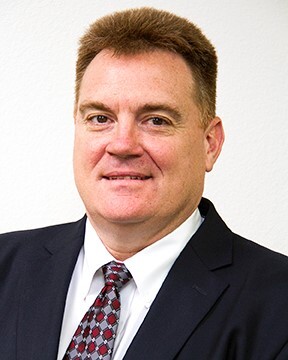
Doug Pearson is the associate vice president for facilities planning and operations at Kent State University. He has 32 years of experience in engineering, construction and facilities management, working in higher education, health care, K-12 and with the federal government. Pearson has a bachelor’s of science degree in electrical engineering from South Dakota State, a master’s of science degree in industrial engineering from New Mexico State and a Ph.D. in business administration from Northcentral University. Pearson is a Certified Facility Manager and an IFMA member since 1998.
References
Top image by Getty Images.
Read more on Leadership & Strategy , Quality and Occupancy & Human Factors or related topics Influencing , Quality Improvement and Occupant Health
Explore All FMJ TopicsRelated articles
-

Artificial Intelligence in FM
The stakeholder’s perspectiveBy Dr. Jake Smithwick & Dr. Kenneth Sullivan & Nneka Ubi05.01.2024 -

Mastering Change in Hybrid Environments
Insights from global operational leadersBy Meg Swanson09.02.2024 -

Plugged In
Solving the data disconnect in real estate and FMBy Amanda Muzzarelli & James Waddell07.01.2024