
 Membership
 Network
 Regional Sites & Affiliates


 Events
 Participate
 Resources

 Training
 Credentials
 Government


 Content Channels
 Tools
Tools


 Business Overview





Facility Managers
Leaders, innovators, visionaries

It has been said that if a person really enjoys their job, they do not view it as work. What makes the workplace even more appealing is being firmly ensconced in a comfort zone. What worked last year worked last week, worked today, and should work tomorrow. With that mindset, FMs can feel they are totally in control and all is well. Complacency sets in and continuous improvement takes a back seat to the status quo. Nothing ventured truly leads to nothing gained. Where is the fun in that?
If everything seems to be going well, then something was overlooked. FMs can only sit on their hands for so long before the world catches up with them. Only after a person has stepped outside their comfort zone can they begin to grow.
Leadership and innovation go hand in hand. If a person is not a leader, it will be difficult to introduce new ways of doing things. If a leader is not an innovator, they may be perceived as complacent and relegated to doing the same old thing.
One definition of leadership is =the ability to influence a group toward the achievement of goals. Innovation is the setting of goals beyond standard procedures. It is the over-arching catalyst of change and continuous improvement. It is not a cookie-cutter process, but a matter of adapting an approach that best fits a specific situation or team.
A leader works with teams to identify needed change, creating a vision to guide improvements through inspiration, and executing new processes with committed members of a group. Strong leadership empowers employees while enhancing their motivation, morale and job performance through a variety of mechanisms. This entails being a role model for followers, inspiring them and raising their interest in a project. It means challenging team members to take greater ownership in their work, while understanding the strengths and weaknesses of the facility staff. This allows an experienced FM to align personnel with tasks that enhance their performance. It is also important to understand the qualities a leader can bring to a work organization. FMs must adapt to different situations, share a collective consciousness, self-manage and stay aware of the big picture while inspiring the team.
FM is in a constant state of flux, with ever-changing demands from stakeholder needs and ever-increasing pressure to become more sustainable in operations. This involves researching new ways to be more streamlined and satisfy the imperative to fulfill the precepts of the triple bottom line, which is people, planet and profits. There is also an expanding appropriation of other innovations which FMs must embrace to help organizations improve their bottom line by upgrading general operational efficiencies.
Innovation
FMs are waging a multifront war against attrition, but opportunities for improvement abound. Managing facilities the way it has always been done will not keep pace with the workplace’s ever-changing developments. In a world where FMs are tasked with doing more with less, trying new things is sometimes the only way to improve operations.
In its modern meaning, innovation is a new idea, creative thoughts, new imaginations in form of device or method. It is the application of better solutions that meet new requirements, unarticulated needs or existing facility needs. Such innovation takes place through the provision of more-effective FM products, processes, services or technologies . An innovation is something original and more effective. It is related to, but not the same as invention. Innovation is more apt to involve the practical implementation of an inventive way of operating to make a meaningful impact in a facility. Not all innovations require an invention; they often manifest themselves via a new process when the problem being solved revolves around stakeholder satisfaction or is of a technical nature.
Innovative leaders are focused on moving past the status quo and ushering in new projects, acquisitions or initiatives. As a result, these leaders must be comfortable with failure and the volatile effects of change. If the status quo is routine, then that is a mold that must be broken. In an innovative and creative environment, the status quo could be viewed as a benchmark, of sorts. It reflects the best that is being done at the time (best being a relative term), but it does set a baseline for improvements. An innovator is a creator of new ideas. Their role is to go beyond the curve and act as a pioneer. They prepare or open a way for others. They need to own a sense of wonder, willing to dream and have access to those dreams.
Perception is based on patterns. The usual mode of thinking is based on judgement, which serves to reinforce existing patterns. FMs need some method for getting out of familiar routines. Sometimes they will need a jolt for stimulating system change, some provocation to start them rethinking. Disruptive innovation is sometimes necessary. Heretics, troublemakers and change agents can be the key to success when all else fails. The words "no, don’t, can’t" make creative choices uncomfortable or force rebellious action. FMs must ignore the negatives and absolutes. Conformity is so ingrained in society that it sometimes masks a person’s true identity. FMs must be willing to undermine the conventional wisdom on which everyday competencies depend.
Innovative spirit is the spirit of optimism. It takes positive thinking on the part of the leader as well as facility staff members to be successful. It also takes perseverance and a determination not to let anything or anybody discourage them. As leaders, FMs should not only allow, but encourage those they work with to develop their skills and try out new things. They need to be positive about the future, and in turn, promote creativity and new ideas within their teams.
To innovate is not to reform. It is a way of creating improvements and introducing a new way of performing operations in any organization. Even if it has been implemented somewhere else in the business world, FMs can take on the role of early adopter and still successfully introduce new ideas. An adoption life cycle is a sociological model that describes the acceptance and utilization of a new product or innovation, according to the psychological and demographic characteristics of defined adopter groups. This integration viewed over time is typically illustrated as a classic normal distribution or bell curve. The model indicates the users of a new product are innovators, followed by early adopters. Next come the early majority and late majority, and the last group to eventually adopt a product are the laggards" or phobics. This latter group will implement the latest and greatest only as a last resort and will probably never try to understand it.
Comes a vision
When creating a facility strategic plan, having a vision is part of the package. Strategy is based on assumptions. No one can predict the future, but FMs should have a good idea of where the challenges will arise and how they will deal with them. More intriguing is the development of wild ideas, based on what-if and best-case scenarios, in which successful FMs can envision optimum conclusions, aim at dreams and work to fulfill them.
A facilities visionary is one who thinks about the future or improved operations in a creative and imaginative way; someone who is ahead of their time and has a powerful plan for change in the future. Good visionary leaders will prepare for what they want the organization to look like and create strategies for how they can accomplish that goal.
Visions are part of long-term planning. In the pursuit to improve performance and spur change, visionary leaders can be intensely focused. They have set their goals and are willing do all in their power to accomplish them. Visionary leaders have the self-control and self-discipline to effect positive change and inspire those who report to them. It is hard to follow someone who does not lead by example, and good visionary leaders understand this. One of the most important characteristics an FM can display is enthusiasm for their vision. Their passion and zeal should reach others and inspire them to feel the same.
Successful FMs are leaders, in that they understand how necessary it is to encourage a sense of accomplishment and to let workers know their contributions are meaningful and useful to the company. They will align their work to the ultimate vision and goal, be leading innovators who show consistent improvements in the market share of their company, contributing to the bottom line and alleviating stakeholder concern.
Perspectives
FMs should be visionaries as well as leaders and innovators. They all tie together. The FM profession was based on a vision. Forty years ago, IFMA’s founders foresaw the need for FM and created the discipline that forms the basis of the profession as it is known today. It was innovative spirit and leadership that led to opening this field of endeavor. What started as a focus on space management alongside operations and maintenance has evolved to concentrations in 11 core competencies. FMs now deal with challenges like increasing energy efficiency, cost control, resource management, security, cybersecurity, emergency preparedness, sustainability/streamlined operations, biomimicry and the aging of facilities, to name a few.
A vision is long term. Today’s FM must consider the FMs of tomorrow. It may be difficult enough to teach an old dog new tricks, but it is a completely different proposition to get the next generation up to speed. Industry newcomers may be well-versed in technology and the proclivities of their peers, yet there are lessons that must be learned about the holistic scope of FM.
Existing and experienced FMs must lead the new generation and be innovative in finding unique ways to impart knowledge and strategy to those new in the industry. They need to hold on to a vision of FM’s future and pass that down. They should always ask themselves what steps are needed to be more successful. If those can be defined and accepted as guidelines, the road may be that much easier to travel. There is a lot invested in this profession, even though things change, they somehow stay the same. That is a concept that should serve FMs well into the (un)foreseeable future.
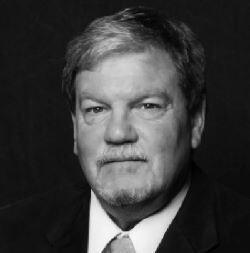
Bill Conley, CFM, SFP, FMP, LEED AP, IFMA Fellow, is a facility manager at Yamaha Motor Corp. in Cypress, California, USA. He previously served as owner and chief sustainability officer of CFM2, a facility management company. Conley has more than 40 years of experience in the facility management profession and has been a proponent of sustainable operations for more than 20 years. Conley has served on the IFMA board of directors, is a recipient of IFMA’s Distinguished Member of the Year award and has received the association’s Distinguished Author award three times. He has been a regular contributor to FMJ for almost 30 years and has authored more than 100 FMJ articles.
References
Top image via Getty Images.
Read more on Leadership & Strategy and Quality or related topics Quality Improvement , Influencing and Problem Solving
Explore All FMJ TopicsRelated articles
-

Artificial Intelligence in FM
The stakeholder’s perspectiveBy Dr. Jake Smithwick & Dr. Kenneth Sullivan & Nneka Ubi05.01.2024 -

Mastering Change in Hybrid Environments
Insights from global operational leadersBy Meg Swanson09.02.2024 -

Plugged In
Solving the data disconnect in real estate and FMBy Amanda Muzzarelli & James Waddell07.01.2024