 Membership
 Network
 Regional Sites & Affiliates


 Events
 Participate
 Resources

 Training
 Credentials
 Government


 Content Channels
 Tools
Tools


 Business Overview





Facing Fears
Using touchless access control & VMS to safely reopen a facility
In the movies Psycho and The Shining, hotels literally housed humans’ deepest fears. The forest fulfilled the same role in The Blair Witch Project and The Cabin in the Woods. The protagonists in Alien and Gravity faced their preternatural terrors in outer space.
But reality is odder than fiction. Not even Hollywood could come up with a scenario in which people fear returning to the humble office, an environment containing less-than-spooky accoutrements such as Post-It notes, copy machines and paper clips.
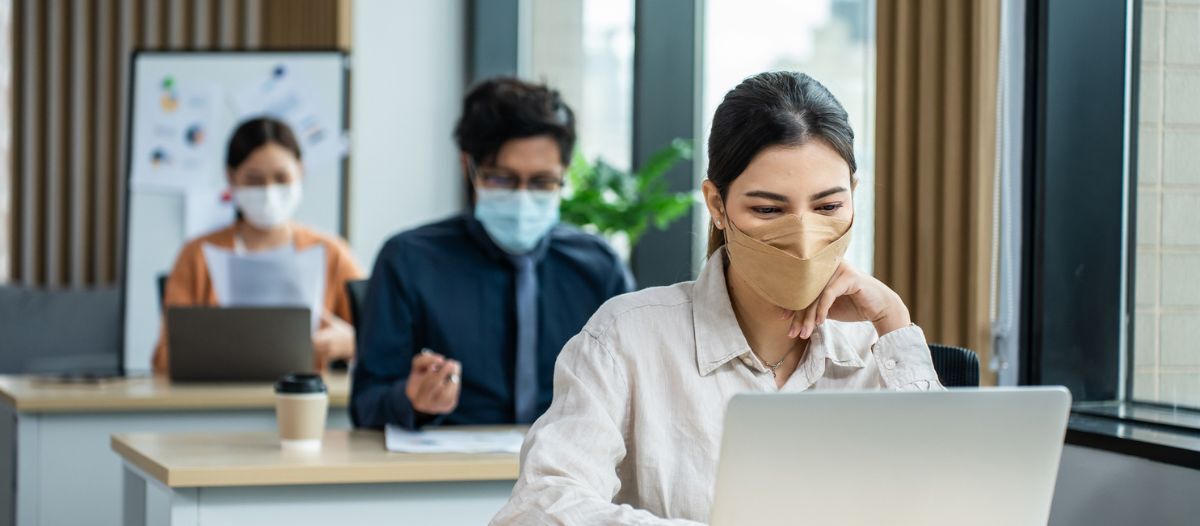
COVID-19 has done just that. Workers have been cloistered at their home offices for months and are now being summoned into an environment they cannot control, where any interaction with a colleague, touch of an elevator button, or visit to the kitchen arouses fears of contamination.
The most important contribution that facility managers can make to the office is peace of mind. Many are doing so by installing systems and components, specifically access control and visitor management systems, that replace uncertainty with confidence.
Visitor management systems
Facility managers at small- to medium-sized organizations sometimes say that only large corporations with hundreds of daily guests need visitor management systems (VMS). Often times, smaller companies assume manual sign-ins will suffice.
Issues with logbooks
That attitude has become untenable in the age of big data and during a global pandemic. Logbooks and analog sign-in processes are pro forma. They capture only name, date, time and person visited — and that is assuming that the visitor is being honest and complete. Onsite movements cannot be tracked, location is unidentified in an emergency and departure cannot be electronically verified.
Worse yet, logbooks require visitors to use the same pen. They also give visitors a glimpse of the guest list, which could constitute a privacy violation under laws such as the General Data Protection Regulation or the U.S. Health Insurance Portability and Accountability Act. A 2018 survey of U.S. and U.K. office workers indicated that 62 percent look to see who signed in before them. Logbook maintenance, storage and destruction also implicate these same laws.
Electronic VMS fall under the same compliance requirements as logbooks. However, VMS data can be encrypted, password protected and otherwise rendered secure.
Key components of VMS
Preregistration VMS goes to work long before someone arrives on site. For a business to operate, clients and potential clients, contractors, job applicants, service providers, partners, consultants and others sometimes need to visit the office. By using a preregistration system, companies can both vet the guest beforehand, have them provide up-front materials or documentation such as photos or proposals and reduce waiting time in the reception area on the day of the visit.
Information flows the other way, too. Organizations can apprise visitors beforehand of hours of operation, rules on hygiene such as mask use and social distancing and other health requirements.
Staff can also preregister expected guests for specific dates and times. Repeat visitors would then have a streamlined check-in process.
Intercoms
Most everyone is familiar with the basic intercom systems for office buildings: a device typically placed at an exterior door that allows a guest to communicate with a receptionist, security officer, or other staff member inside. The staff member then decides whether to allow the visitor to enter the premises.
Video supercharges the experience — staff receive far more information to help them decide on whether to allow access. With audio only, a guest could disguise their voice, intentionally mumble or lie about their identity. Video allows staff to confirm identity — such as by matching the person to a photograph — and read visual cues such as gestures and facial expressions, determine whether the visitor’s bearing and garb are appropriate for an office environment and see whether the person is carrying or attempting to conceal a weapon.
Touchless check-in
With COVID-19 cases spiking, guests still do not want to unnecessarily touch anything. Touchless check-in systems demonstrate respect for the health and wellbeing of office visitors. Apps or scannable QR codes can be used so visitors can check in with their own phone rather than touch a possibly dirty screen. Touchless systems also eliminate lines, making check in quicker. With the elimination of lines or an elevator queue, it is easier to comply with appropriate social distancing to mitigate the risk of disease spread.
Badge printing
Badges should include the date, time period and names of the person and the host so staff knows whether and when a person unknown to them is allowed on site. Badges should automatically print and dispense to the guest, ensuring only they touch them.
Contactless access control
Ideally, VMS will integrate with the organization’s access control system. Companies are increasingly looking at touchless and frictionless systems to support health, hygiene and goodwill.
Plastic key cards dominated access control for decades. They allow organizations to allocate access based on staff role, level, time of day and other factors. FM teams or security staff can audit door use to determine occupancy levels, identify pedestrian flow and conduct investigations.
Hygiene
The hegemony of the card may be nearing its end as touchless systems are making strides. Biometric systems such as contactless fingerprint scanners, facial recognition and mobile phone credentials offer a more hygienic experience.
Cost & convenience
These systems hold additional appeal because they eliminate the cost, time and inconvenience of lost, forgotten or stolen cards and printing and delivering their replacements. On a cloud-based access control system — in which the database sits not on a server in the office but in a data center managed by service providers — receptionists, FM staff, security or others can remotely and instantly grant, modify or revoke access. When used for both physical and network access control, immediate remote revocation can prevent information theft, data destruction or other mischief by recently terminated workers.
For more sensitive security applications, many systems offer multi-factor authentication. For example, an employee might gain access to a server room only by being recognized and matched by a face recognition system and holding his or her mobile phone credential to a reader.
Integrated visitor management & access control
Combining VMS and access control creates powerful applications for security, occupancy monitoring, contact tracing and space planning.
Security
Organizations can set, such as by geofencing, permissible areas for guests to travel, as well as areas that will trigger an alarm. By being able to track the movements of everyone on the premises, some systems can identify when a visitor tailgates behind someone with legitimate access rights or can determine whether occupants are violating social distancing rules.
In addition, security can use access data to create watchlists for banned or dangerous individuals. Having photos and descriptions of violent spouses, angry customers or wayward contractors on hand can help staff prevent incidents, bar visitors or quickly marshal resources.
Occupancy monitoring
Integrated visitor management and access control systems combine to provide thorough people counting and location identification. In case of an active assailant, bomb threat, fire alarm, natural disaster, or other emergency the organization will know who is where.
Contact tracing
Those same features facilitate contact tracing. If someone who was on premises tests positive for COVID-19, the company can audit that person’s movements and identify anyone who may have to be quarantined or tested. Components such as video surveillance and intercoms improve that process.
Space management
Organizations can leverage their visitor management and access control systems to crunch key data, such as high-traffic times and areas, recurring guests, traffic flow and time spent in specific areas. Not only can the organization tailor its resources accordingly — such as posting security officers — it can enhance the visitor experience through concierge services.
Building a better facility
Building security starts at the front door. Thus, the entrance to any facility should be armed with the best defense that recent technology innovation and advancement offer. COVID-19 has exacerbated the outdated nature of current efforts to keep buildings as safe and secure as possible. The pandemic has been an opportunity for property owners and FMs to build a better facility. Looking into the future, the front entrance of any building will be more than a welcoming threshold. It will be the first defense against any security or health threat. FMs that prioritize modern solutions that build a better facility will, in doing so, build a facility that is resilient and able to withstand unforeseen adversity.
In films from Men in Black to The Mummy to Prometheus, a cinematic trope shows the dire consequences of someone touching something they shouldn’t. Chaos is released. A doomsday clock is triggered. The unknown is stirred. After months at home watching movies and TV, returning employees and visitors may see their offices as a horror movie of their own: a den of contagion. But good policies, procedures, communication and engineering — to include smart access control and visitor management — can go a long way toward allaying those fears and returning a productive and comfortable workforce.

Michael Gips, JD, CPP, CSyP, CAE has written almost 1,000 articles and columns on virtually every topic in security. As a contributing writer at Swiftlane, he develops content surrounding the future of access control as well as specific topics around touchless, hands-free entry solutions. He is the principal of Global Insights in Professional Security, LLC, a firm that helps security providers develop cutting-edge content, assert thought leadership, and heighten brand awareness in a crowded marketplace.
Read more on Workplace and Occupancy & Human Factors or related topics Occupant Health and Physical Security
Explore All FMJ Topics