
 Membership
 Network
 Regional Sites & Affiliates


 Events
 Participate
 Resources

 Training
 Credentials
 Government


 Content Channels
 Tools
Tools


 Business Overview





Finding Balance
Progress & protection on the job

On any active worksite, projects move fast, and the pressure to deliver is constant. Those leading operations know the tension well: balancing progress and protection in an environment where one wrong step can bring both to a halt. Every choice made carries weight, and the margin for error is thin.
A growing push for productivity often places project leaders in a difficult position. Supervisors, foremen and managers are tasked with meeting performance targets, yet they are also the first line of defense when it comes to spotting risks. When every hour counts toward pushing a project along, it is easy for safety processes to feel like obstacles rather than enablers – or something to “get through” versus build into the way work gets done.
Those moments of hesitation or compromise in making safety moves represent the quiet decisions that define whether a job runs smoothly or someone gets hurt. The leaders responsible for navigating those choices often operate in environments of competing expectations: pressure from clients to stay on schedule, from crews to stay safe and from budgets to stay lean. These competing priorities can stretch even seasoned facility managers thin.

The reality of competing priorities
Workplace safety has long been viewed as a foundation of operational excellence, but it is increasingly challenged by compressed timelines and shifting expectations with technological changes. Global labor shortages, supply chain disruptions and cost inflation have all intensified the pressure to deliver projects faster with fewer hands on deck. Globally, close to 3 million workers die each year from work-related accidents or illnesses, showing just what is at stake when safety slips down the priority list.
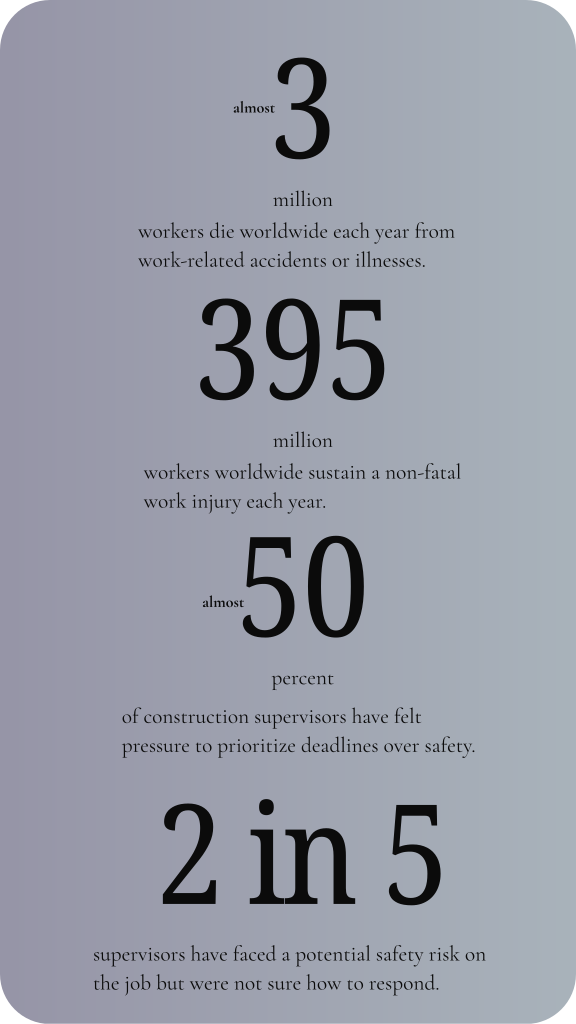 Nearly half of construction supervisors have felt pressure to prioritize deadlines over safety, while around 2 in 5 have faced a potential safety risk on the job but were not sure how to respond. But these challenges around safety blind spots are not unique to one industry or role. Whether coordinating contractors, overseeing maintenance or managing complex projects, leaders across sectors face the same question: when time and safety compete, which wins?
That push and pull does not necessarily come from neglect, though. In many cases, it is rooted in unclear expectations or inconsistent communication. Without crystal-clear authority to pause work, or without confidence in how leadership will respond, even experienced supervisors may hesitate to speak up when faced with competing priorities.
Building confidence step by step
As older, more experienced workers retire, younger leaders are stepping into roles that demand technical skill, emotional intelligence and safety judgment – and are often doing so without the depth of mentorship that shaped the generations that came before them. In some industries, Gen Z supervisors are significantly less confident than their peers in handling potential jobsite safety risks.
Leadership confidence, or a lack thereof, presents both a challenge and an opportunity for improving operational readiness. Consistent training can help new leaders develop the instincts and comfort needed to respond quickly and effectively, while micro-learning modules can reinforce safe decision-making without pulling anyone off the job for long periods.
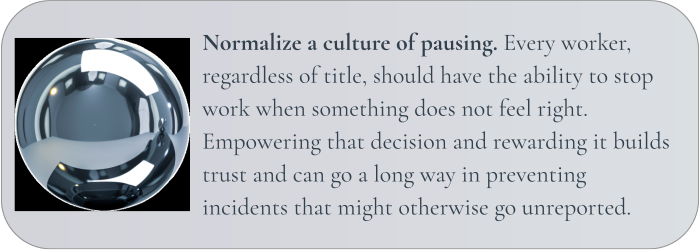
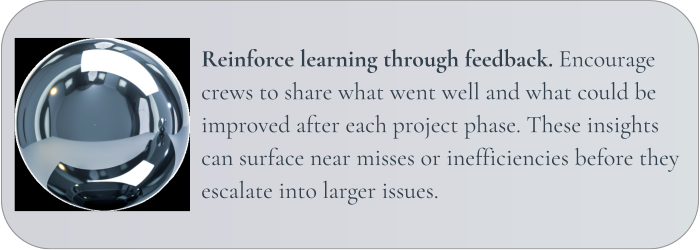
Equally important is creating systems for which learning does not end once a certificate is earned. Regular refreshers can help project leads make informed calls in the moment, while ongoing team discussions can turn experience into shared knowledge. Open channels for feedback wherein teams can share what is working and what could be improved also help, transforming learning into an ongoing growth cycle. These practices reflect a shift toward treating safety as an evolving daily priority and not just a one-time requirement.
Confidence grows when leaders see safety modeled by those above them. Senior managers who admit uncertainty, seek input or celebrate cautious decision-making show that leadership is about knowing when to ask the right questions, and not always just about having the answer. Over time, that attitude filters down, replacing hesitation with self-assurance that is rooted in both competence and support.
Practical steps for leaders
Maintaining both progress and protection on the job requires leaders to reframe how safety fits into their daily operations. A few strategies can help build systems that make safety second nature:



Building a culture of clarity
When supervisors hesitate to act, it is rarely because they do not care – more likely it is because they are uncertain. Clear expectations, accessible training and consistent communication give project leads the confidence to make the right call, even under pressure.
Balancing progress and protection does not mean you have to choose one or the other. The key is designing operations in which they coexist naturally; where productivity is sustainable because safety is built from the ground up into every plan, conversation and decision. Projects that meet deadlines safely are not the result of sheer luck, but of deliberate systems that make communication and accountability part of the daily rhythm of work. The more leaders model that mindset, the more it becomes part of an organization’s identity.
As organizations continue to build faster and projects continue to aim higher, the leaders that stand out will be those who know when to listen and lead with safety. To lead with the clarity and confidence that today’s active workplaces demand means building workplaces where safety guides progress, no matter how quickly the world moves.

Read more on Leadership & Strategy and Risk Management or related topics Occupant Safety , Occupant Health , Staffing and Training
Explore All FMJ TopicsRelated articles
-

Artificial Intelligence in FM
The stakeholder’s perspectiveBy Dr. Jake Smithwick & Dr. Kenneth Sullivan & Nneka Ubi05.01.2024 -

Mastering Change in Hybrid Environments
Insights from global operational leadersBy Meg Swanson09.02.2024 -

Plugged In
Solving the data disconnect in real estate and FMBy Amanda Muzzarelli & James Waddell07.01.2024