
 Membership
 Network
 Regional Sites & Affiliates


 Events
 Participate
 Resources

 Training
 Credentials
 Government


 Content Channels
 Tools
Tools


 Business Overview





Finding the Unfindable
How precision leak detection saves facilities thousands

Every day, facilities lose millions of gallons of water through leaks that go undetected for weeks, months and sometimes years. The American Water Works Association (AWWA) estimates that the average water loss in U.S. municipal systems is 16 percent, with some systems losing more than 30 percent of treated water before it ever reaches its destination. For large campuses, hospitals and industrial facilities, even a single unnoticed underground leak can translate to tens of thousands of dollars in wasted water, increased energy costs for pumping and heating, and hidden damages to structures.
But water loss is not just a utility bill problem. Small leaks left undetected can lead to interior damage, rotted studs, failed flooring, mold outbreaks and indoor air quality issues — all of which are far costlier to remediate than the leak itself. For facility managers, the challenge is clear: find leaks quickly, fix them efficiently and prevent them from coming back — all while minimizing disruption to operations.
Why leaks go undetected
Unlike a burst pipe that immediately demands attention, most leaks develop silently. A pinhole in a pressurized line can seep thousands of gallons per day without any visible surface pooling. Irrigation systems may run overnight, masking pressure losses. Small drain or fixture leaks may only reveal themselves after weeks of subfloor saturation.
Complicating matters, many facilities are sprawling environments with decades of retrofitted piping systems — water mains running under parking lots, sewer laterals under roadways, irrigation lines criss-crossing landscaped areas. Finding a single failure point in this maze without damaging hardscape or shutting down critical systems can feel like searching blindfolded.
Modern tools for precision diagnostics
Today’s leak detection specialists have access to tools that turn guesswork into actionable data. While it still may not be a perfect science, the goal is the same: identify the source of the problem with minimal disruption to operations and property.
Key technologies include:
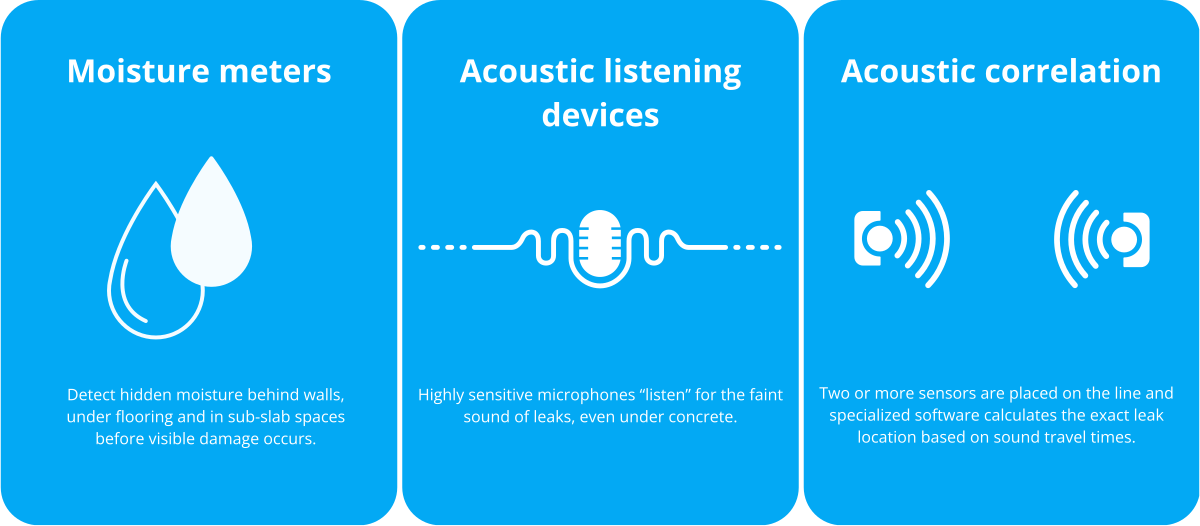

These technologies give FMs the perfect tool kit for whatever leak they may run into.
Case Study 1: UCSF Children’s Hospital – Precision in a critical environment
At a major children’s hospital, a booster pump ran continuously, and shutting down patient care areas was not an option. Using tracer gas, an air compressor and acoustic listening devices, a leak was found on a three-inch underground irrigation main. To be thorough, technicians extended their survey to the rooftop gardens, acoustically testing irrigation lines to rule out additional losses. A single, targeted excavation revealed the leak within inches of the mark — no unnecessary shutdowns, no exploratory trenching and no disruption to patient care.
Case Study 2: College campus – Recirculation line failure
A college campus reported inconsistent hot water service across multiple buildings. Thermal imaging quickly revealed an anomaly in the asphalt parking lot, and acoustic leak finders narrowed it to a four-inch recirculation line between structures. Because this was a continuous loop, the campus had been paying to heat water that never reached its destination — wasting thousands of gallons and significant natural gas every month. Repairing this one leak restored system efficiency and cut utility costs dramatically.
Case Study 3: Winery – From leak to full utility mapping
When a large winery discovered wastewater pooling near production areas, initial testing located the failing sewer line. But the project evolved into a complete infrastructure mapping effort. Using GPR and drone photography, the entire facility’s underground utilities — drains, water mains and conduits — were mapped and documented. This digital record now serves as a planning tool for expansions and helps prevent accidental utility strikes during maintenance projects.
The cost of delay
Industry data shows that a - leak as small as one-eighth of an inch in a pressurized line can waste more than 3,000 gallons per day — more than 90,000 gallons per month. When heated water is involved, energy costs climb as boilers or recirculation pumps work overtime. Add the risk of structural damage, mold remediation, slip hazards and service downtime, and it is clear that waiting for a leak to surface is an expensive gamble.
Building a leak response strategy
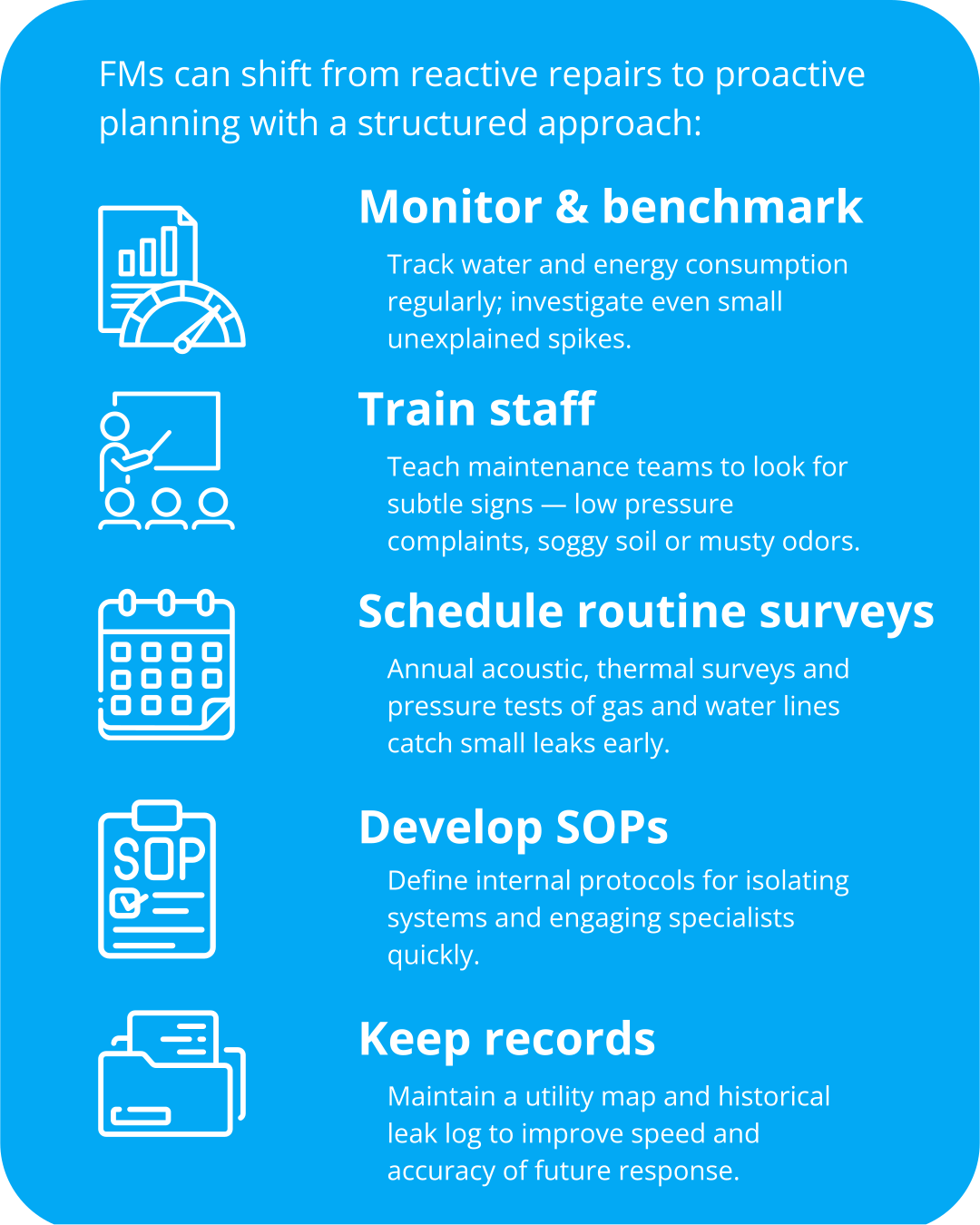
Key takeaways for FMs
-
Water + Energy = Compounded cost: Heated water leaks drain two budgets simultaneously.
-
Early detection prevents interior damage: Moisture mapping and routine inspections avoid costly drywall, flooring and mold remediation projects.
-
Precision saves money: Modern tools reduce downtime, excavation and guesswork.
-
Think long-term: Use each leak event to improve infrastructure documentation and resilience.
Smarter detection, stronger facilities
Water is one of the world’s most valuable resources — and one of the most destructive when left unchecked. By adopting a trained specialist in precision leak detection strategy, FMs can save thousands of dollars, protect building interiors and keep operations running smoothly.
Proactive detection blends technology with sustainability, delivering benefits that go beyond the water bill: extending asset life, improving occupant safety and supporting environmental goals for years to come.
Read more on Risk Management and Facility Operations or related topics Facility Resilience and Risk Management
Explore All FMJ TopicsRelated articles
-

A New Approach
Improving business continuity with alarm managementBy Brad Freeman09.09.2024 -

Beware of Growing Cyberthreats
Why it’s time for stronger facility cybersecurityBy Andrew Harris & Eric Headington10.30.2024 -

Going Up?
Keeping elevators safe & compliantBy Dave Myers & Doug Taylor11.06.2024