
 Membership
 Network
 Regional Sites & Affiliates


 Events
 Participate
 Resources

 Training
 Credentials
 Government


 Content Channels
 Tools
Tools


 Business Overview





FM’s Carbon Footprint
First compute, then improve

The Paris Agreement’s long-term goal is to strengthen the response to climate change by keeping a global temperature rise this century well below 2 degrees Celsius above pre-industrial levels. Climate-neutral building operation is expected within the next two decades posing an additional challenge for facility managers. While methods for the construction sector already exist, there are almost none for the service sector, especially within FM. Consequently, for facility services, such as space management, cleaning, security, catering, transport, inspection, and maintenance, a method is needed that allows CO2 emissions to be determined and evaluated regarding their drivers. An additional challenge lies in the lack of key figures on carbon emissions per product used within service delivery.
Motivation & challenge
IT tools supporting carbon management in that field barely exist. This challenge was taken up by a consortium of two Berlin universities in collaboration with FM practitioners. As a result, the project “CarMa1” was initiated to develop a methodology for determining the carbon footprint of facility management. This effort is now continued with the help of the German FM Association (GEFMA) and a group of leading service providers in a project called “CarbonFM.”
Carbon management research
Whereas CarMa developed the carbon management method, CarbonFM builds an open IT platform to apply this method in practice, where organizations can input, analyze and compare data of their services thereby getting valuable suggestions on how to reduce their carbon footprint.
ISO 14067 defines the carbon footprint of products as the sum of greenhouse gas emissions and removals in a product system expressed as CO2 equivalents (CO2e) and based on a life cycle assessment using the single impact category of climate change. Here, services are regarded as products.
The method for determining the carbon footprint is based on the Life Cycle Assessment (LCA) approach according to ISO 14040 comprising four steps:
1. Goal and scope definition: The functional unit and the system boundary scope must be defined according to the objectives. This can be a cleaned area.
2. Life cycle inventory (LCI): This requires effort for data capture.
3. Life cycle impact assessment: The objects considered in Step 2 are assigned an impact in terms of climate change.
4. Life cycle interpretation of the carbon footprint: The resulting challenges are addressed and the characteristic values are to be interpreted and benchmarked.
These standards do not define how functional units or system boundaries need to be chosen. When similar products or services are compared, the framework conditions for LCA must be regulated in product category rules (PCR), according to ISO 14025. When implementing an LCI users can be assisted by several databases such as ecoinvent. Based on PCR, manufacturers must provide information on their products’ carbon footprint via Environmental Product Declarations (EPD) according to ISO 14025 or EN 15804. However, information for products important for FM exist only occasionally, which also applies to the “The International EPD System.”
The CarMa method considers four modules, each contributing to FM carbon emissions:
-
Equipment: equipment and materials, regularly used for one or more specific services,
-
Operating consumables: consumables and resources, such as electricity, detergents and water, required for a service or equipment usage,
-
Transportation: regular transportation of products and services that mainly include the arrival of the personnel and recurring deliveries,
-
Overhead: service-specific overheads, associated e.g., with the deployment of customer advisors or property managers.
A national standard
Based on CarMa research, a national standard (GEFMA guideline 162-1 2) was developed and published in 2021, explaining the carbon management method for the determination and improvement of the CO2e key figures for FS. This allows service providers to gain a competitive advantage in tendering processes. Target groups are FM customers as well as FM service providers, consultants, IT companies and researchers.
The method described helps FM providers identify to what extent the activities in their value chain contribute to their carbon footprint and how they can be reduced. These facts can be used can also be used for sustainability reporting. FM customers can use the method to procure CO2e-optimized FS and to develop CO2e benchmarks.
The open technology platform CarbonFM
GEFMA 162-1 provides an Excel template to demonstrate the stepwise carbon footprint calculation for FM. However, working with Excel on a larger scale becomes cumbersome. Collaboration, data sharing or evaluation is not really supported. CarbonFM was developed to overcome these restrictions.
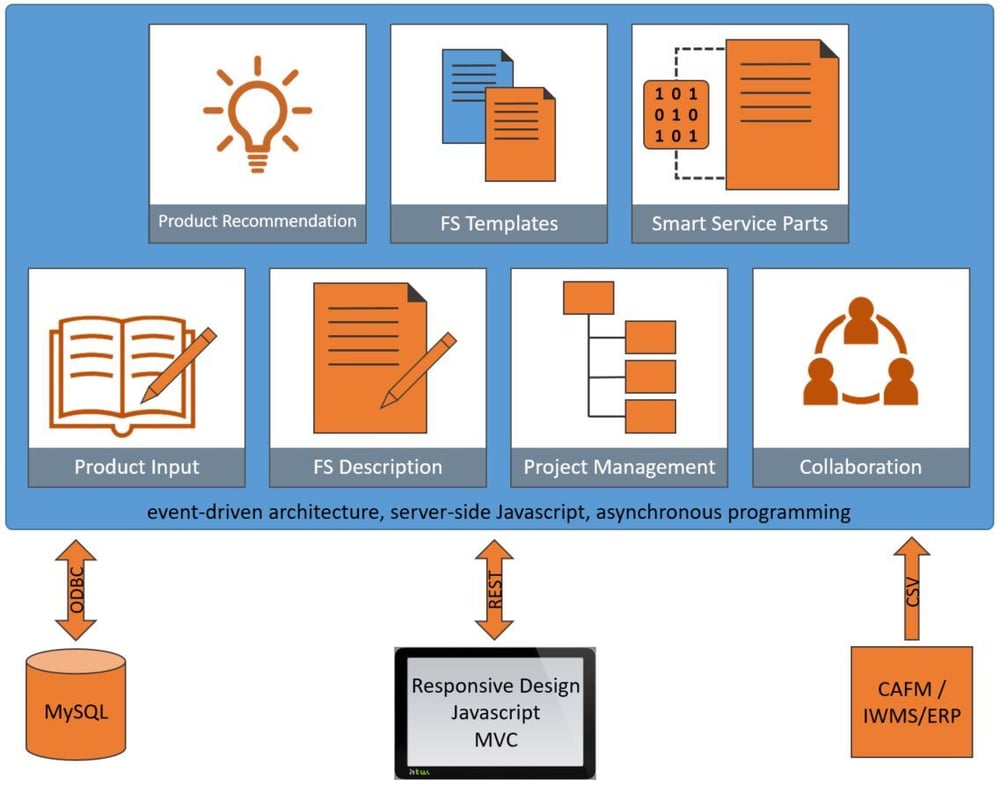 Fig. 1 Software architecture of the open CarbonFM platform
CarbonFM is based on a client-server architecture where the client side uses a web application to support a variety of devices. The backend uses MySQL database linked by an ODBC connection. The entire development uses the model-view-controller (MVC) paradigm and open-source software. There is also an interface to external sources, such as CAFM/IWMS, using standard file formats such as CSV.
The CarbonFM platform supports various core functions:
-
Project management: Several FM services can be structured and combined to carbon footprint projects. Multiple services can be created within one project scope and enable service hierarchies (Fig. 2). Duplicating, merging and reorganizing projects is supported. If an FM service is completely modeled, a copy of this project can be used to develop an optimized service.
-
Collaboration: Permissions to view, edit or manage projects can be granted to any users of CarbonFM. Different users can edit the same FM service or project during data acquisition. Furthermore, FM customers can be allowed to view projects and learn details about carbon footprints.
-
FM service templates and smart service parts: To determine an FM service, users can start from scratch. Alternatively, an existing FM service can be copied with all relevant products, transportation and overheads, and be adapted. For the fast entry of combined products and other aspects CarbonFM offers so-called smart service parts (SSP).
-
Product input: The carbon footprint of a product within an FM service is determined either by entering product information provided by manufacturers or by estimation as described above.
-
Product recommendation: Products are assigned to product categories. Interchangeable products belong to the same category. Based on categories, products used in FM services can be compared and recommended by CarbonFM when possessing a better carbon footprint.
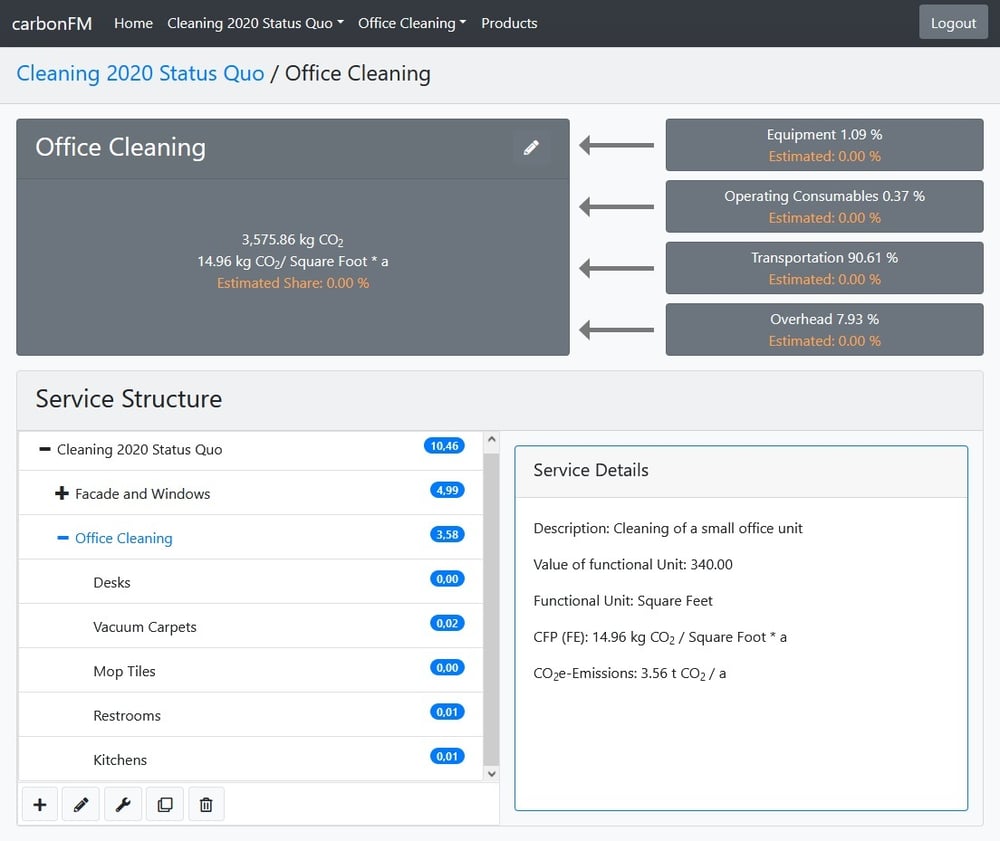
Fig. 2 Service hierarchy of FS “Office Cleaning”
Usability of CarbonFM & parametric design of services
A key aspect of the CarbonFM platform is maintaining the balance between fast input of data using rough estimates and high-level accuracy by considering all aspects and their object/project-specific impact in detail. CarbonFM offers functions to calculate carbon footprints on a high level. Utilizing these features requires collecting basic data. Using predefined equipment from database catalogs with available EPDs simplifies the process, but there is demand for straightforward data entry.
CarbonFM allows using service templates including the structure of services. However, the basic data of the underlying equipment and other components must be checked manually after input. An even easier way of setting up services is to design FS by using service parameters. In this sense, it might be conceivable to calculate the overall carbon footprint, for a service such as cleaning, by parameters like building type, cleaning area, and cleaning service type.
However, there is no clear idea about the parameters to use for various kinds of FM services, facility types, and FM service organizations. Therefore, CarbonFM uses a different approach. In contrast to finding complete sets of parameters, only small parts of the services are considered. For instance, the object manager supervising service delivery is such a service part (referring to overhead). For the carbon footprint of this service part, it is easier to identify parameters for calculation like the size of his/her office, type of the HVAC system and estimation of power consumed. Having defined the parameters allows users to reuse the service part (the specific object manager) in all related services (Fig. 3). Other resources used by the object manager (PC, monitor, printer, etc.) can be added. SSPs are defined once and are reused frequently for calculations. CarbonFM
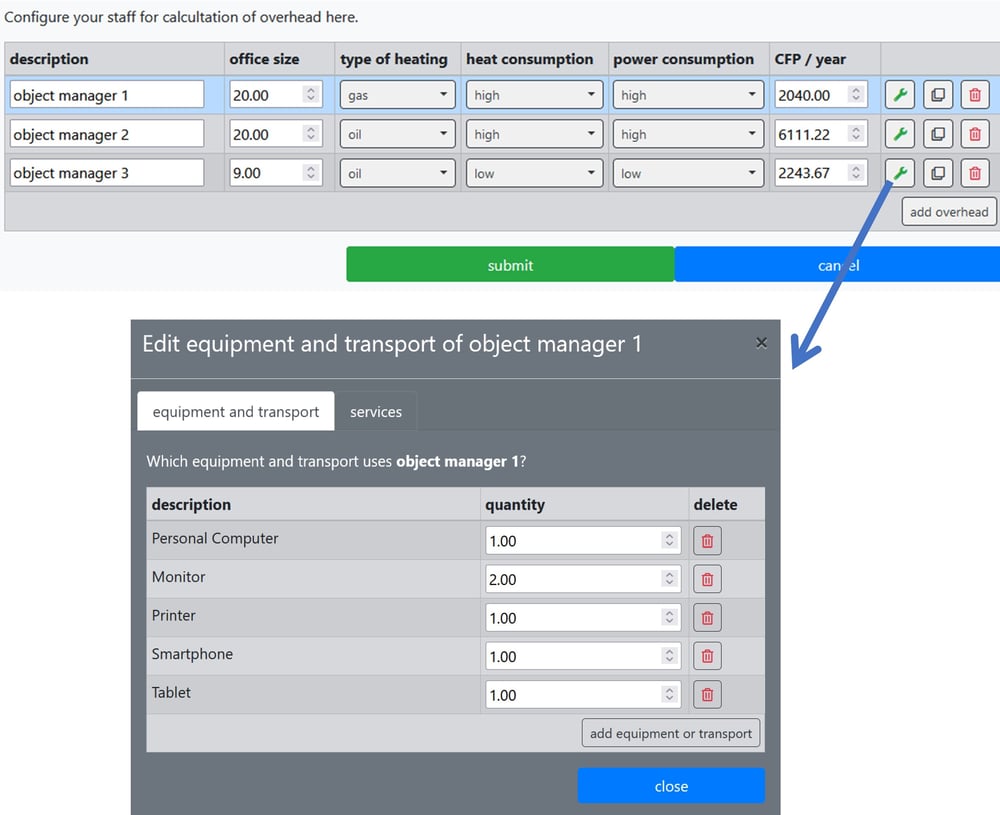 Fig. 3 Smart Service Part “Overhead Staff calculation”
CarbonFM perspectives
Considering future developments, a distinction must be made between CarbonFM’s database content and new software features.
More users are encouraged to input their case studies of services. GEFMA and the industry consortium, The Enablers are supportive by increasing the number of case studies and the validity of CarbonFM data. Reference services will be published as templates as well as reporting features for internal benchmarking and sustainability assessments. Finally, a set of carbon footprint projects, comprising the FM services of different building types will be available for statistical analysis.
To extend the functionality of CarbonFM the creation of new SSPs is key. A library of SSPs will be developed facilitating the description of services and achieving the aggregation of SSPs to a full parametric service design. Furthermore, the integration of digital models generated by Building Information Modeling (BIM) will continue to improve usability. BIM models already contain useful carbon footprint data. The parametric design of building elements within BIM models offers versatile extension of parametric SSPs within CarbonFM. Finally, further development of the carbon management method is a serious challenge. Future FM services may not only emit less carbon, but enable technicians to replace building equipment at the right time. It is not always adequate to replace equipment with more energy efficient devices without considering their manufacturing carbon footprint. Consequently, CarbonFM will provide a smart recommendation function, focusing on carbon footprint optimization of entire buildings.
In Germany, the first tenders of FM services have been issued where carbon management is required by GEFMA 162-1. Since the method described is not limited to FS in Germany, it could also serve as a blueprint for an international approach.
Dr. Markus Krämer has been a professor of information and communication systems in facility management at the University of Applied Sciences (HTW) Berlin since 2006. He is the study program director of FM bachelor and master study programs and co-founder of BIM Competence Center at HTW. His current research is related to digitalization and process optimization in FM, linked data approaches with BIM, CAFM/IWMS, digital capturing methods.

Dr. Michael May is Professor em. of IT and FM at the University of Applied Sciences HTW Berlin. He works as research manager at the Society for the Advancement of Applied Computer Science GFaI in Berlin. He holds a Ph.D. in mathematics and a habilitation in computer science. He is the editor and author of several books including The FM’s Guide to Information Technology, CAFM Handbook, and BIM in RE Operations. He is a GEFMA ambassador for international relations, member of IFMA’s IT Community and EuroFM ambassador to Germany.

Philipp Salzmann, MSc. FM studied facility management at the University of Applied Sciences (HTW) Berlin in the bachelor’s and master’s programs. Afterwards, he was engaged as a researcher in various projects with a focus on serious games, augmented reality and sustainability. Within the CarbonFM project he is involved in developing and testing the CarbonFM platform. Additionally, he is an FM lecturer at HTW Berlin.
References
Top image by Getty Images. Graphics provided by HTW-Berlin.
Pelzeter, A.; May, M.; Herrmann, T.; Ihle, F.; Salzmann, P.: Decarbonization of Facility Services Supported by IT. Corporate Real Estate Journal 9(2020)4, 361-374
Carbon Management von Facility Services. GEFMA 162-1, 2021-01
“Greenhouse Gas Protocol,” available at: ghgprotocol.org/sites/default/files/standards_supporting/Chapter7.pdf (accessed 12th August 2021)
Read more on Sustainability and Quality or related topics Carbon Footprint and Measure and Monitor
Explore All FMJ TopicsRelated articles
-

Smart Building Control Systems
The foundation for a grid-interactive buildingBy Andre Marino09.25.2024 -

Smart Building Innovation
Cutting costs & carbon footprints without compromiseBy Andrew Butterworth09.12.2024 -

Chart the Path
Building sustainable cities & a sustainable futureBy Izzat Ali Khan & Aykean Forde12.16.2024