
 Membership
 Network
 Regional Sites & Affiliates


 Events
 Participate
 Resources

 Training
 Credentials
 Government


 Content Channels
 Tools
Tools


 Business Overview





FM’s New Benchmark
Embracing energy efficiency as a strategic priority

Consider the sheer magnitude of growth of global population has surged from 1.65 billion in 1900 to over 8.2 billion in 2025 and is projected to reach 10.3 billion by 2084. This expansion translates into countless more homes, industries and urban centers, each demanding substantial energy resources. For instance, buildings are responsible for about 40 percent of global energy consumption and roughly one-third of greenhouse gas (GHG) emissions; however, conditioning systems are responsible for 50-70 percent of a facility's energy consumed during peak seasons in extreme climates.
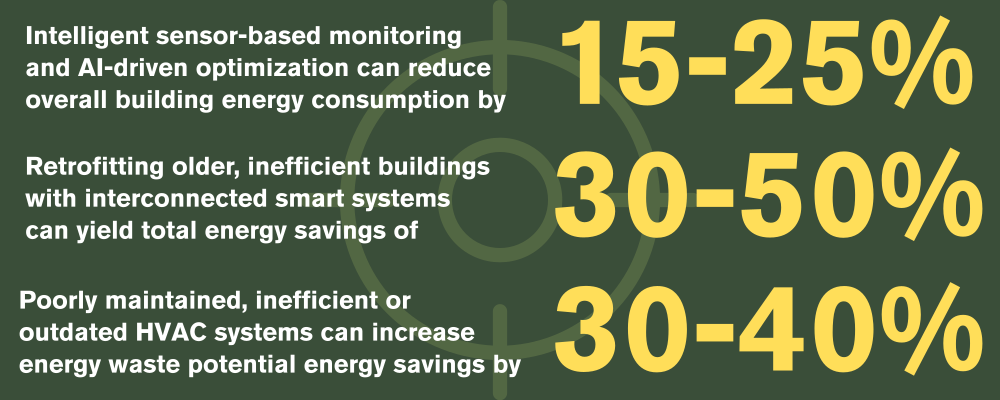
This demographic pressure is acutely amplified in regions facing extreme temperatures, where cooling evolves from a luxury to a health necessity, driving peak demand that strains grids to their breaking point. The resulting imbalance sees inelastic demand for base-load and peak cooling outpacing the ability of both traditional and renewable supply infrastructure to scale economically and swiftly. For example, inefficient or outdated HVAC systems waste 30-40 percent of potential energy savings, exacerbating supply gaps.
 These dynamic risks price volatility, grid instability and necessitate a critical re-evaluation of development models. However, evidence from 32 countries including the U.S., Germany and Japan shows that absolute decoupling of economic growth from energy consumption is achievable. These nations reduced territorial emissions by up to 40 percent while growing GDP by 16 to 29 percent between 2005 to 2019.
Greener demand, greater challenges
Today, per capita energy use in the built environment is among the highest drivers of electricity demand. Reports indicate that buildings alone account for the majority of total electricity consumption, with commercial, industrial and residential facilities consuming the largest share. Air conditioning often represents more than two-thirds of household electricity use, with the figure rising even higher in commercial towers, industrial complexes and health care facilities. This creates a dual challenge on the environmental side: high consumption translates into significant GHG emissions and increasing reliance on fossil fuels, placing sustainability goals and financial viability at risk.
According to a 2024 report by Grand View Research, the global FM market is projected to expand from US$1.46 trillion in 2024 to US$2.38 trillion by 2034. This growth is a direct response to the urgent need for specialized expertise to optimize energy use, underscoring a strategic industry shift towards outsourcing to achieve cost-effectiveness and scalability. Ultimately, this makes it imperative to decouple economic growth from energy consumption through radical efficiency to prevent consumption from escalating to unmanageable levels.
The facility management industry is also being revolutionized by digitalization. The integration of the Internet of Things (IoT), artificial intelligence (AI) and cloud-based platforms is creating a new paradigm of data-driven FM. AI-powered tools analyze vast datasets from building management systems (BMS) and sensor networks to optimize energy use, forecast equipment failures and streamline maintenance schedules. The potential for cost savings and environmental impact reduction is significant.
For instance, studies by the American Council for an Energy-Efficient Economy and case studies from leading building automation firms indicate that the implementation of intelligent sensor-based monitoring and AI-driven optimization can reduce overall building energy consumption by up to 15-25 percent. This is achieved by dynamically adjusting HVAC, lighting and other systems in real-time based on occupancy and environmental conditions.
The potential is even greater for modernizing older infrastructure and retrofit. Major engineering consultancies have published analyses showing that retrofitting older, inefficient buildings with interconnected smart systems can yield total energy savings of 30-50 percent in the built environment. This transformation moves energy management from a reactive to a predictive and preventive model.
The market adoption of these technologies is geographically uneven. According to a comprehensive market analysis by Markets and Markets, the Asia-Pacific region currently holds the largest share of the global smart building market, at approximately 38 percent as of 2024. This leadership is driven by massive government investments in new construction and smart city initiatives in countries like China, Singapore and India. Conversely, the same report identifies North America as the fastest-growing region, projected to exhibit the highest CAGR, propelled by its advanced digital infrastructure and a strong regulatory and corporate focus on environmental, social and governance (ESG) compliance and sustainability mandates.
Energy audits conducted by utility companies and the U.S. Department of Energy consistently find that inefficient or outdated HVAC systems waste 30 to 40 percent of the energy they consume. For FMs, this means nearly a third of the energy they pay for is literally disappearing often through poor insulation, leaky ductwork and improperly maintained equipment. This waste has a direct and substantial impact on the bottom line, as industry benchmarks show energy bills typically constitute 30-40 percent of a commercial facility's total operating budget. As energy prices fluctuate and large-scale projects scale up, these costs will escalate rapidly, making the adoption of smart, data-driven practices not just advantageous, but essential for financial and operational resilience.
FM’s influence
The global energy landscape is at a pivotal juncture. While demand continues to rise, the twin imperatives of climate change and economic efficiency have propelled energy conservation from a peripheral concern to a central strategic priority. The built environment is a critical battleground in this effort, accounting for a substantial portion of worldwide energy consumption. Within this context, the FM industry has evolved far beyond its traditional role of maintenance and upkeep. It has emerged as a decisive force, wielding the tools, technologies and expertise to transform energy waste into operational value, turning buildings from passive consumers into active, intelligent assets. The journey toward a sustainable future is not just about generating more power but about optimizing every watt consumed, and FM is the key to unlocking this potential.
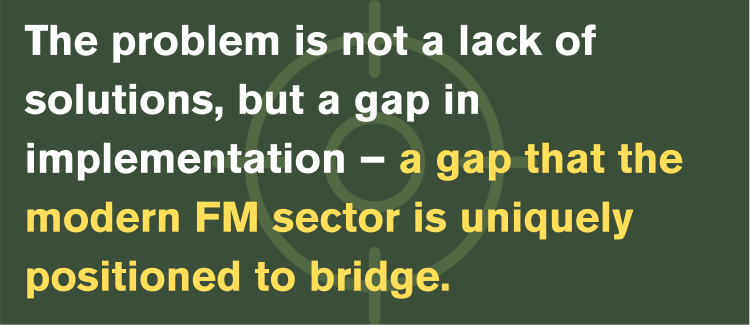
This inefficiency represents a staggering economic and environmental cost. If left unaddressed, the operational expenses and environmental impact of poorly managed buildings will continue to escalate, straining corporate budgets and planetary resources alike. The core of the problem often lies in aging infrastructure, a historical lack of investment in energy-efficient technologies, and siloed operations where energy management is divorced from core business strategy. Furthermore, a persistent lack of awareness and standardization at managerial levels has often hindered the adoption of best practices, leaving significant energy and cost savings unrealized. This inertia is no longer tenable. Rising energy prices, stringent regulatory frameworks and growing stakeholder demand for ESG compliance are creating immense pressure for organizations to act.
 Step 1
FMs should mandate a comprehensive energy audit as an essential first step, as it forms the non-negotiable foundation for any credible energy management strategy. Aligning with global standards like ISO 50001, this approach moves beyond basic utility bills by deploying IoT sensors and infrared imaging to transform guesswork into actionable data pinpointing waste in specific systems and revealing hidden inefficiencies like insulation leaks. Crucially, without this precise baseline, it becomes impossible to accurately quantify savings, validate ROI for future upgrades or support ESG reporting with trustworthy figures. This audit is the strategic enabler that shifts the role from reactive cost managers to proactive, data-driven value creators, positioning FMs as leaders in sustainable facility management.
Step 2
The second step is the strategic integration of smart technology and digitalization. This is the engine of modern energy efficiency. Implementing a centralized, cloud-based integrated workplace management system (IWMS) or BMS allows for real-time monitoring and control of all building systems. Integrating IoT sensors throughout a facility provides a constant stream of data on occupancy, temperature, humidity and equipment performance.
Step 3
This digital infrastructure enables the implementation of AI-driven predictive maintenance. Instead of following a rigid schedule or waiting for equipment to fail, AI algorithms analyze sensor data to forecast potential issues before they occur. For example, smart sensors can detect unusual vibrations in a chiller unit, triggering a maintenance alert long before a catastrophic breakdown happens. This approach drastically reduces downtime, extends asset lifespan and prevents the energy waste associated with running faulty equipment. Companies are already leveraging AI to proactively address HVAC inefficiencies, leading to significantly reduced energy consumption.
Step 4
The fourth step focuses on deep, strategic energy efficiency measures across all building systems. This includes retro-commissioning HVAC systems for optimal performance, transitioning to LED lighting with smart controls like daylight harvesting and occupancy sensors, and improving the building envelope through enhanced insulation and high-performance windows. Furthermore, effective space management, leveraging data from smart systems to optimize layouts and utilization, can result in cost savings of up to 30 percent on real estate, which is typically a company's second-highest expense.
Step 5
The fifth step involves renewable energy integration. On-site generation, particularly through rooftop solar PV systems, allows organizations to reduce their reliance on electrical grids, lock in long-term energy costs and shrink their carbon footprint. For projects where direct installation is not feasible, power purchase agreements (PPAs) with renewable providers offer a viable alternative.
Step 6
Finally, this entire process must be underpinned by continuous monitoring, optimization and transparent reporting. Energy efficiency is not a one-time project but an ongoing cycle of improvement. Continuous data tracking ensures measures are delivering promised savings and identifies new opportunities. Clear reporting on key performance indicators like energy use intensity (EUI) and carbon reduction is essential for demonstrating compliance with regulations and showcasing ESG progress to investors, customers and other stakeholders.
The accelerating demand for energy in the built environment represents both one of the greatest challenges and opportunities of our time. While buildings remain the largest consumers of electricity, driven primarily by inefficient cooling systems and outdated infrastructure, the rise of digital technologies, smart systems and renewable integration provides a clear pathway to change. FM, once seen as a support function, has now evolved into a central driver of sustainability and operational resilience. By adopting a structured, data-driven approach that begins with audits and extends through digitalization, predictive maintenance, retrofitting and renewable energy adoption, organizations can transform energy waste into measurable value.
The stakes are high: unchecked inefficiency threatens both economic competitiveness and environmental goals, yet decisive action can deliver cost reductions, regulatory compliance and long-term resilience. Ultimately, the future of energy management will be defined not by how much power we generate, but by how intelligently and responsibly organizations use every unit consumed. FM stands at the forefront of making that future a reality.
 Recommendations & outlook
Regardless of the region or facility type, energy efficiency is no longer a technical add-on; it is the backbone of sustainable facility operations. Organizations that treat energy management as a core priority outperform those that continue to rely on outdated, reactive practices.
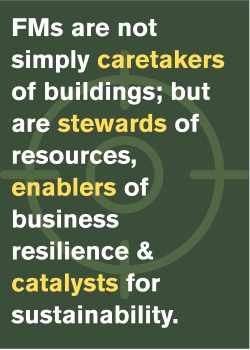
Now FMs must reframe their role. FMs are not simply caretakers of buildings, but stewards of resources, enablers of business resilience and catalysts for sustainability. To fulfill this role, organizations must shift toward an integrated, future-focused energy strategy.
Adopting comprehensive energy audits should be a non-negotiable starting point. Data proves how these audits uncover inefficiencies that otherwise remain hidden: air-conditioning units consuming double the energy they should, lighting systems running needlessly during off-hours or poorly insulated spaces driving up costs. An audit is not merely diagnostic; it is the foundation for an actionable roadmap. The industry must embrace digitalization and predictive technologies. Smart BMS and IoT sensors provide real-time data, empowering FM teams to act before a problem escalates. Instead of waiting for equipment failure, predictive maintenance ensures optimal performance, reduces downtime and saves substantial costs over time.
Another essential step is phased investment in renewable energy solutions. Solar rooftops, energy storage and clean power agreements are no longer futuristic concepts; they are practical measures with tangible returns. Integrating renewables not only reduces dependence on fossil fuels but also positions organizations as leaders in sustainable development.
Equally important is human engagement. Even the most advanced technologies cannot succeed without a culture of awareness and accountability. Training FM teams, educating occupants and embedding sustainability in daily routines ensures that efficiency becomes a shared responsibility rather than a management directive.
FMs must provide transparent reporting and performance tracking. Organizations that openly communicate their energy savings, carbon reductions and sustainability milestones build trust with stakeholders and reinforce their credibility in the market.
The vision is clear: FM’s future lies in a proactive, data-driven and sustainability-oriented approach. By embracing energy efficiency as a strategic priority, FMs can reduce costs, extend asset life cycles and contribute meaningfully to global sustainability goals. Energy stewardship is not just about cutting utility bills; it is about reshaping FM’s identity into a discipline that safeguards both organizational value and the environment.

Aykean Forde CFM SFP, FMP, MBA, MA, is the facilities director of The International School Port of Spain in Trinidad & Tobago (grades Pre-K-12). Forde serves as a trustee of the IFMA Foundation, is an IFMA Qualified Instructor and a past member of the IFMA Global Board of Directors. An ambassador of FM, she passionately serves and collaborates with others to positively impact workplace experience while leading organizations towards making their vision a reality. She has also spoken at conferences in Trinidad and Tobago, the Bahamas and the U.S.

Izzat Ali Khan, SFP, FMP, is the general manager at EFSiM Facilities Services. A seasoned FM professional, he is passionate about creating a positive impact in business through sustainability. He focuses on integrating sustainability and innovation in businesses to build the FM industry and make the world a better place to live.
References
Top image via Getty Images.
References
ACEEE, "Advanced Building Control Systems," 2023
Arup, "The Future of Building Retrofits," 2024
Markets and Markets, "Smart Building Market - Global Forecast to 2028"
U.S. DOE, "Common Commercial HVAC Energy Wastes"
Read more on Sustainability or related topics Energy , Sustainable Facility and Environmental, Social and Governance (ESG)
Explore All FMJ TopicsRelated articles
-

Smart Building Control Systems
The foundation for a grid-interactive buildingBy Andre Marino09.25.2024 -

Smart Building Innovation
Cutting costs & carbon footprints without compromiseBy Andrew Butterworth09.12.2024 -

Chart the Path
Building sustainable cities & a sustainable futureBy Izzat Ali Khan & Aykean Forde12.16.2024