
 Membership
 Network
 Regional Sites & Affiliates


 Events
 Participate
 Resources

 Training
 Credentials
 Government


 Content Channels
 Tools
Tools


 Business Overview





Getting There
Creating a sustainable facility
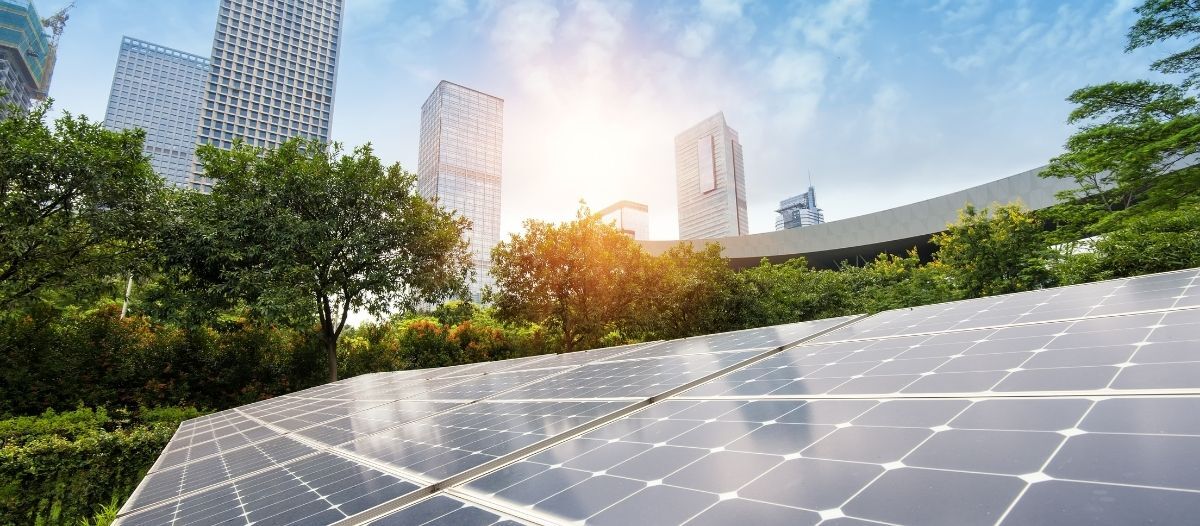
When it comes to greener and sustainability, FMs are pretty much in agreement that it is desirable to be greener, to run a sustainable operation. Yet many come to that conclusion without a complete understanding of what that means. It is very similar to wanting to be rich. Sure, who wouldn’t like great wealth? The real question lies in what must be done to achieve that. The same holds true with achieving sustainability.
Does anybody really care?
When it comes to views on sustainability, FMs tend to fall in one of a few camps. FMs enjoy being green if it means being energy-efficient and translates into cost savings. If sustainability and green initiatives cost a little extra—or a lot extra—interest wanes.
Conversely, there might be FMs who do not care at all about sustainability. It is all about running their building or operation as efficiently and cost-effectively as possible.
Finally, there are FMs who are all in, who see sustainability as the way to do business today and going forward.
What the first two camps must understand is the far reach of sustainability and how it impacts an organization, whether the company actively engages in it or not.
So what defines sustainability?
What is sustainable?
From a material perspective, sustainability refers to materials made from renewable resources. This means the product is made from a natural material that will biodegrade when disposed. Materials made of bamboo, natural rubber, cork and hardwood are excellent examples of sustainable items.
Those materials are not only sustainable but can be designated as rapidly renewable. As the name suggests, this means the material grows rapidly and replenishes itself quickly after it has been harvested.
Biodegradable is another term that falls in the highly desirable category within sustainability. Clearly, biodegradable items lend well to sustainability as they can be disposed of with minimal impact to the environment.
Another variable that might not be on the radar of FMs is the origin of the product. A locally harvested product—made from materials produced locally—will have the additional benefit of being more sustainable. How? Simply by the carbon footprint in getting the more sustainable product to the facility being far less than a product made of similar material from outside the region or outside the country.
How was it made?
Material type is important. How that material was made also contributes to its sustainability quotient. For example, were non-toxic materials used in the manufacturing? Was formaldehyde used in its production or any low-VOC/low-emitting materials?
What about the operating procedures of the manufacturing plant itself? Do they follow green manufacturing practices such as minimizing waste and using renewable energy such as solar or wind?
When considering a product’s sustainability, all things are considered from conception to the time it enters a facility.
Carbon footprint
Another consideration is the carbon footprint of the product. That starts with the collection of the raw materials needed to create the product. What machinery was required to attain those materials and how much energy/exhaust did that effort create?
The same measures can be applied to the production of the item. The amount of electricity or the energy source used in that production is part of the product’s sustainability data.
Invariably, transportation is involved in the creation of a product. How were the raw materials extracted and then delivered to their next destination for manufacturing? Once completed, how did the finished product meet its next destination? Truck, ship, plane or train? The energy consumed to get the item to a place where it could then be purchased all factors into sustainability, as does the cost to get it to the end-consumer.
Once delivered, the product must be installed. How much of a footprint does that leave behind? Installers may be workers at the place of business. Outside installers may need to be called in. All use some form of transportation to get there and that adds to the footprint.
Additionally, there probably is machinery involved with the installation, at the very least electricity for light or tools. This is also part of the carbon footprint.
How is a product used?
Flooring tiles are part of the fabric of a facility. The impact extends to business operations and staff. There is a certain effort in maintaining those tiles. Who does that maintaining? Do employees of the company maintain the flooring or is an outside vendor brought in for maintenance? How do those professionals get to and from the facility to perform that work?
Taking that a step further, what type of product is used to maintain the flooring? How is that made? Where did it come from and how did it get to the facility?
Product removal
This is where the proverbial rubber meets the road when it comes to carbon footprint. Removal of a product does involve labor and labor’s footprint (e.g. equipment to remove, energy required for removal, transportation of staff or vendor). Most importantly, removal calls for disposal. Where many products fall short on sustainability is whether a product can be re-used or recycled. This is why part of the research for capital improvements, an investigation of the manufacturer and if they offer a buy-back or recycling program is important.
From a big picture standpoint, using recycled materials to make new products offers huge benefits compared to using virgin materials. Because recycling materials does not require extracting additional ingredients from the planet and the process of grinding, cleaning and reusing a material generally requires far fewer resources than creating new materials from raw ingredients, there is much less impact on the environment. The following graphic summarizes the savings on global warming, acid rain, and smog from the recycling of plastics for use in new products versus making new plastics for use in new products.
Some manufacturers will offer a Life Cycle Assessment or LCA of their product. This demonstrates how long a product will actually last. For manufacturers that offer a buy-back and re-use program, the LCA of a product can be considerable.
How to rank sustainability
LEED (Leadership in Energy and Environmental Design) is the world’s most widely used green building rating system. It accounts for LCA, grades products and projects and creates a score. Goals of the LEED program include:
-
Reversing the contribution to global climate change
-
Enhancing individual human health and well-being
-
Protecting and restoring water resources
-
Protecting, enhancing and restoring biodiversity and ecosystem services
-
Promoting sustainable and regenerative material resources cycles
-
Building a greener economy
-
Enhancing social equity, environmental justice, community health and quality of life
To achieve LEED-certification, a building and the materials within it must meet criteria in one of three options, typically referred to as Building Product Disclosure and Optimization – Environmental Product Declarations (EPD). Those options are:
Option 1 – Use at least 20 Products from at least five manufacturers with EPDs
Option 2 – For 50 percent of the cost of project’s installed materials, reduce three LCA criteria below the industry average. Locally sourced products (within 100 miles) count twice as much. If 50 percent represents 40 products, of those 40 products, 20 must be from at least five manufacturers who meet the following criteria:
-
-
Greenscreen® Benchmark at 100ppm with no No. 1 hazards
-
Cradle-to-Cradle® v2 Gold/Platinum; v3 Silver/Gold
-
International Alternative Compliance Path REACH Optimization
-
Option 3 – Product manufacturer supply chain optimization. This calls for using at least 20 products from at least five manufacturers with documented, validated robust health and safety programs,99 percent documentation of ingredients and verified by a third party supply chain.
Using a point system, the LEED scorecard provides an idea of how green or sustainable a facility might be—or how close it is to becoming sustainable.
The more points, the higher the reward. With LEED, there are many rewards, ranging from healthier spaces to buildings that save money and resources. The number of points a project earns determines the level of LEED certification it receives. There are four levels of certification:
-
-
Certified (40–49 points)
-
Silver (50–59 points)
-
Gold (60–79 points)
-
Platinum (80+ points)
-
The LEED criteria tends to separate those companies who are looking at green alternatives as a cost-reducing function rather than a more global, long-term initiative. This is why organizations serious about sustainability will look at companies that offer products made from mostly recycled products with a lifetime expectancy of more than 10 years with a buy-back program to recycle the material being replaced.
Conclusion
Sustainability is a desirable goal for all facilities. It doesn’t have to happen overnight. It can take place incrementally with each capital improvement project. By doing some research and finding out the where and how of the products and materials purchased, a facility can make great strides towards sustainability.

Thomas Ricciardelli is the president of SelecTech, Inc.
References
Top image via Getty Images.
Read more on Sustainability and Leadership & Strategy or related topics Influencing , Sustainable Facility and Supply Chain
Explore All FMJ TopicsRelated articles
-
Smart Building Control Systems
The foundation for a grid-interactive buildingBy Andre Marino09.25.2024 -
Smart Building Innovation
Cutting costs & carbon footprints without compromiseBy Andrew Butterworth09.12.2024 -
Chart the Path
Building sustainable cities & a sustainable futureBy Izzat Ali Khan & Aykean Forde12.16.2024