 Membership
 Network
 Regional Sites & Affiliates


 Events
 Participate
 Resources
 Training
 Credentials
 Government


 Content Channels
 Tools
Tools


 Business Overview




Historic Impact
How COVID-19 is changing the workplace
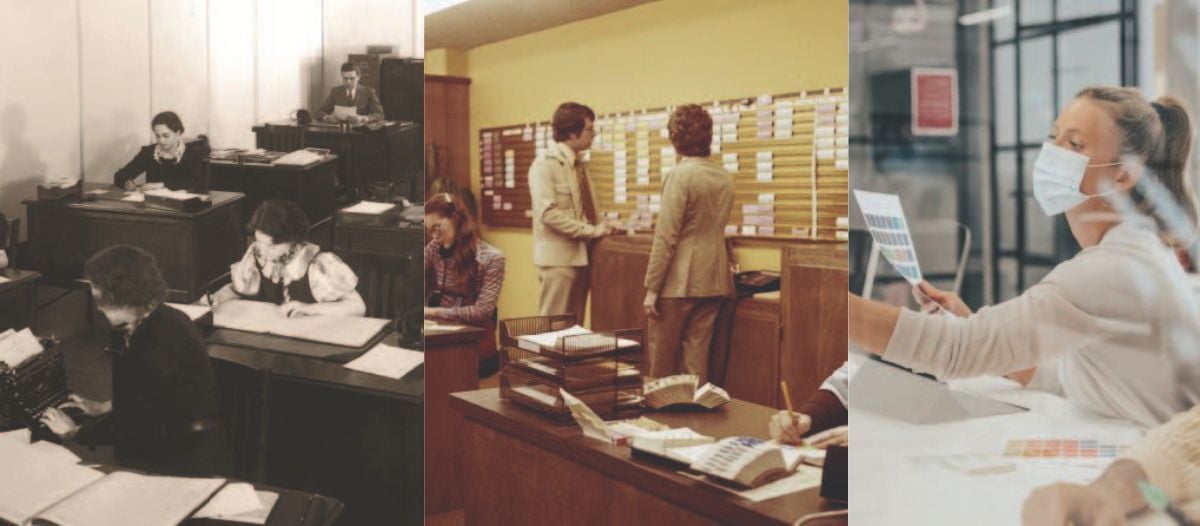
Modern history is full of milestones that have drastically changed cultures around the world. Many generations are defined by major events such as world wars, natural disasters and pandemics – and the complex social and economic impact these events leave behind.
In short, times of crisis leave a distinct mark often discussed through the lens of widespread social change, and the ripple effect extends in every direction – including the workplace.
In the 1940s, a new wartime economy opened production plants and manufacturing industries, and workers were needed. Some governments encouraged women to take roles in a broad range of industries to support the manufacturing and production of ammunitions and military supplies. The iconic Rosie the Riveter became a symbol of women’s contribution to the war effort, and women began signing up for jobs such as lumber workers, steel workers and even military service – a marked shift from previous roles as office secretaries, seamstresses and department store clerks.
Such broad entry of women into the workforce positively impacted workspaces, and after the war, society gradually became slightly more accepting of married women and mothers working outside the home. In the coming decades, women sought to break barriers and challenged widespread cultural beliefs about the acceptable roles of men and women, and the landscape of the workplace continued to change.
In the late 1960s there was the introduction of mass-produced cubicles in the office environment, a departure from previous open area bullpens that allowed managers and supervisors to observe employees. Offering a sense of defined personal space for employees – and acting as a sound barrier for the chatter of typewriters – cubicles were somewhere in between the open environment and the coveted personal corner offices of executives. Cubicles in the workspace became the norm in many offices around the world.
The effect of recent crises
The impact of crisis on the workplace continues through the decades and into more recent history. The terrorist attacks of Sept. 11, 2001, changed the governance of the United States and European nations’ security protocols, ushering a new era of uncertainty while dramatically increasing safety with heightened security measures.
A global pandemic
As COVID-19 spreads throughout the world, it has become clear that modern life will be forever changed. For the first time in recent history, large-scale mandatory shelter-in-place and social distancing regulations have been issued by world leaders. The global economy has been gravely impacted and border closures have resulted in massive supply chain shock, affecting access to medication, medical supplies and countless consumer goods that were previously readily available.
Businesses were forced to quickly implement remote work for employees wherever possible. In a short time, office buildings emptied out and people set up workstations at kitchen tables or around the house. People with home offices settled in, while others got creative with their setup. Seemingly overnight, remote work became the norm around the world.
As society continues to adapt to COVID-19 and its impact on global workplaces and businesses, there are many unknowns. Healthier workspaces & employee well-being. Employees are an organization’s biggest asset. They build up an organization, alongside founders and executive teams, and serve as a crucial driving force in building culture and provide the foundation for a stable business. As such, the new normal will call for healthy workspaces and healthy employees – and together they will become paramount to the overall health of an organization. In the short term, hand-sanitizing stations should be increased and positioned near coffee areas, on-site gyms, cafes and throughout other common areas. Door handles will give way to touchless digital entry points. Technology will likely continue to evolve as the demand for safe solutions grows. Companies may choose to discourage collision points that previously signaled a connected culture in favor of ample space. Access to natural light and the ability to take walks outside the office will be important.
There will also be a clear and long-term effort to prioritize healthy workspaces. Many businesses may opt to offer employees more opportunities for remote work than previously allowed. Teams and departments may take turns working from home through the week. This remote work trend was previously limited to only about 3.6 percent of the U.S. workforce. However, now most employers and their employees have proven working from home doesn’t negatively impact productivity, collaboration or revenue. When it comes to health, more employers will recognize the importance of the mental and physical well-being of their employees. Companies will increasingly add health benefits such as complimentary workout sessions, meditation classes, gym memberships, and confidential counseling and assistance programs to keep employees performing their best.
Work spacing, access & security
One of the biggest changes in the post-COVID-19 era of revitalizing workplaces and public areas will be work spacing – in other words, execution of social distancing guidelines. Handshakes and hugs will become less prevalent, replaced by elbow bumps and aerial high fives. Hiring additional cleaning staff will be prioritized. Arrow markings on office floors to guide foot traffic will be standard. Air flow will be considered in detail by employers. In Asia, the region that previously experienced the peak of the SARS epidemic, wearing masks and taking temperatures at businesses and public spaces is already part of the culture and viewed as an important preventative tool to fight the spread of illness. Now that trend is set to catch on in the U.S. and Europe. Wearing masks will be the norm, and temperature checks will be frequent. While the medical community is racing to develop a coronavirus vaccine, businesses are determining how to safely return employees to the office. Maintaining a six-foot distance is a good standard for organizations as they space out their employees. Global design firm Gensler states 70 percent of businesses have some sort of open floor plan. Thus, most businesses will be impacted, but there are strategies that can be implemented now that will help reopen workspaces.
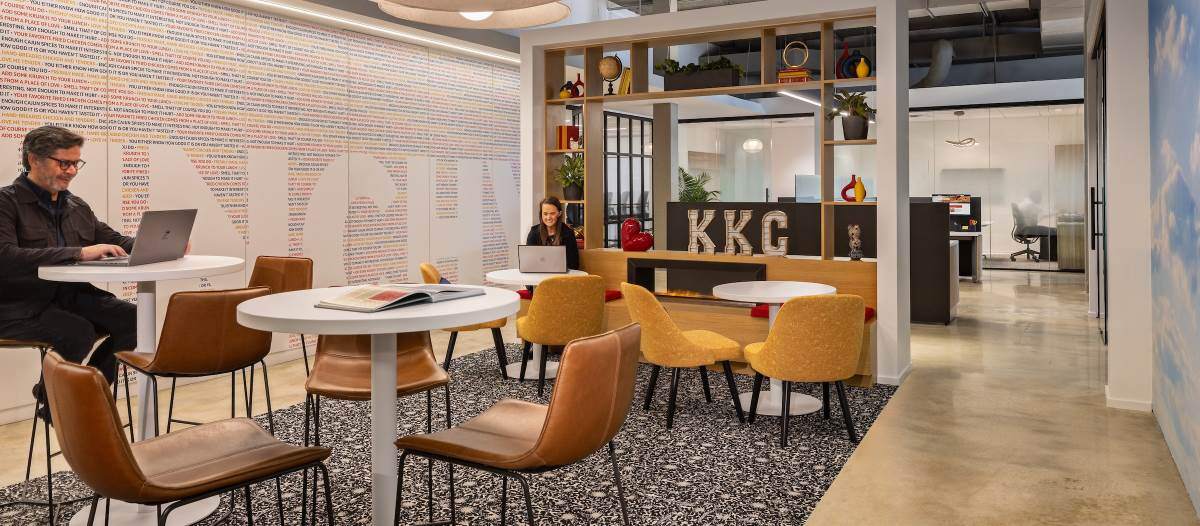
Companies can start with simple strategic changes to accommodate safe distancing. It will be important to incorporate appropriate distancing in open environments. When balancing the need for individual space with an open concept, businesses can certainly get creative. A first step is increasing space between desks, and even reevaluating which direction employee workstations face. Safe distancing can be quickly achieved with clear acrylic panels to divide workstations and by adding privacy panels and even side task desks.
Next, companies can consider converting large conference rooms, training areas or even on-site gyms into additional workspaces to maintain the optimal safe distance for employees. Repurposing existing space can help businesses quickly adjust. Another strategy to create separation is to bring plants into the workspace by way of individual planters and large-scale living walls. Greenery and plants add a desirable design aesthetic to the workspace and can function as natural barriers. Often, plants are an inexpensive choice.
In addition, business continuity plans must consider a 360-degree-view of a building’s security and accessibility. More than ever, businesses must take steps to prepare to maintain operations, communication and productivity in case of an outbreak or a major emergency.
Maintaining a cohesive culture
What sets a brand apart is its unique cultural identity. That cultural identity shapes a brand and enables the company and its employees to collectively thrive together. COVID-19 has presented companies all over the world with the challenge of retaining their unique cultural DNA and keep their employees connected. As such, maintaining a company’s authentic culture will be a challenge that brands will face as they recover in a post-pandemic world. Companies can tackle this challenge by keeping their employees closely involved and engaged as they make changes to adjust to a new normal. Employees are a brand’s true ambassadors and listening to them in this critical time will only help add to the authenticity and richness of a brand’s culture.
Taking the long view
Humanity has encountered countless crises and will face future challenges. Yet, it’s possible not only make it through the COVID-19 pandemic, but to come out the other side safer and stronger. Despite unspeakable devastation and loss of life worldwide, hope is possible. How will society be changed by this time in history? Perhaps people will place higher value time at the dinner table with children and family and special moments spent together. Perhaps people will continue to stay connected through virtual tools like Zoom and FaceTime. Only time will tell.
Workspaces will change dramatically in the near term, and companies will continue to innovate and improve. Keep experimenting and keep an open mind when it comes to workspace challenges. The key to innovation is the ability to try new things and to learn from successes and failures. Lead with empathy and focus on engaging with employees to create a meaningful and long-lasting healthy workspace.

Jason McCann, CEO and founder of Vari, has more than 20 years of experience building and running successful companies. Today, McCann oversees all aspects of Vari from design, to sales, to customer service and distribution. He earned both his bachelor's degree and MBA from the University of Houston.
References
Top image via Getty Images.
Tribune News Service, Coronavirus could lead to office layout changes, April 13, 2020.
Encyclopedia Britannica, History of the organization of work.
World War II Museum of New Orleans, Gender on the Home Front.
Business Insider, The progression of office culture from the 50s to today, October 12, 2018.
Kate Lister, Global Workplace Analytics website, Work-At-Home after Covid-19 – Our Forecast.
Read more on Occupancy & Human Factors and Workplace or related topics Wellness and Well-being , Occupant Safety and Occupant Health
Explore All FMJ Topics