
 Membership
 Network
 Regional Sites & Affiliates


 Events
 Participate
 Resources

 Training
 Credentials
 Government


 Content Channels
 Tools
Tools


 Business Overview





How Are You Using the Valuable Energy Data Your Building is Generating?
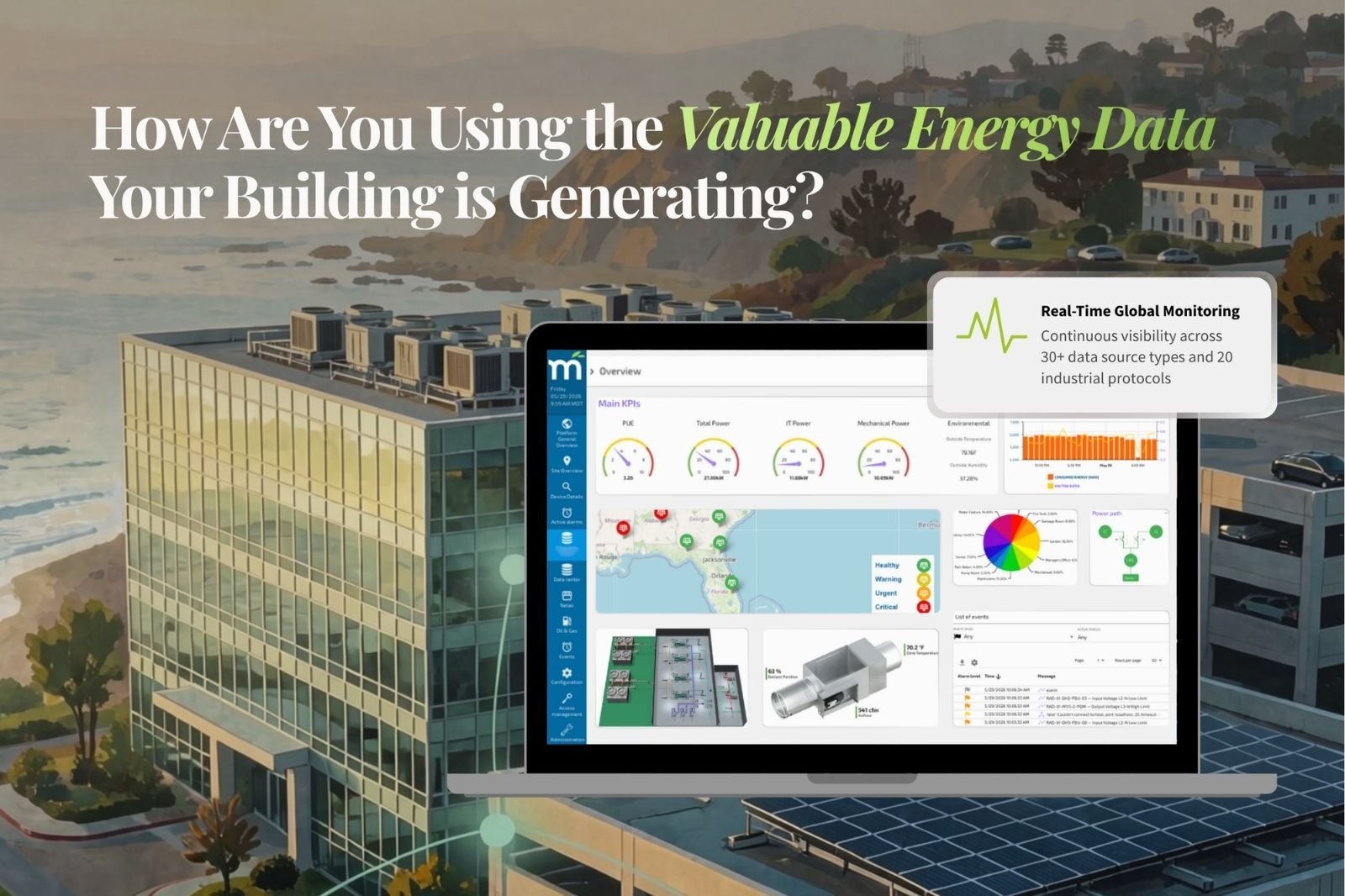 The climate and commercial facilities play a dual role – each impacts the other.
 The single largest energy consumer in most commercial buildings, according to the U.S. Energy Information Administration (USEIA), are HVAC systems, which account for 40 to 50 percent of total energy use. By 2050, the International Energy Agency (IEA) projects that the global number of air conditioning units will grow from 2 billion to 5.6 billion.
Most commercial facilities produce valuable energy data, but many owners continue to lose or ignore valuable data that can be leveraged for a wide range of operational and cost efficiency. The engagement gap with the collected energy data is due to either lack of real-time views into energy data or failure to leverage the full value of the data for building efficiency improvements.
Facility operators can use the energy data collected on their power and utility use beyond just confirming the accuracy of their utility bills. Done right, they can tap into their utility data and sub-metering data (HVAC, servers, chillers) to track where energy is used the most and where the consumption can be optimized to improve operational efficiency, remove inefficiency and drastically reduce costs. There’s a wealth of information that can be extracted from the building management system (BMS) to measure power used by equipment and systems across a facility, based on the temperature and humidity – information that can prompt actionable business decisions and facility improvements.
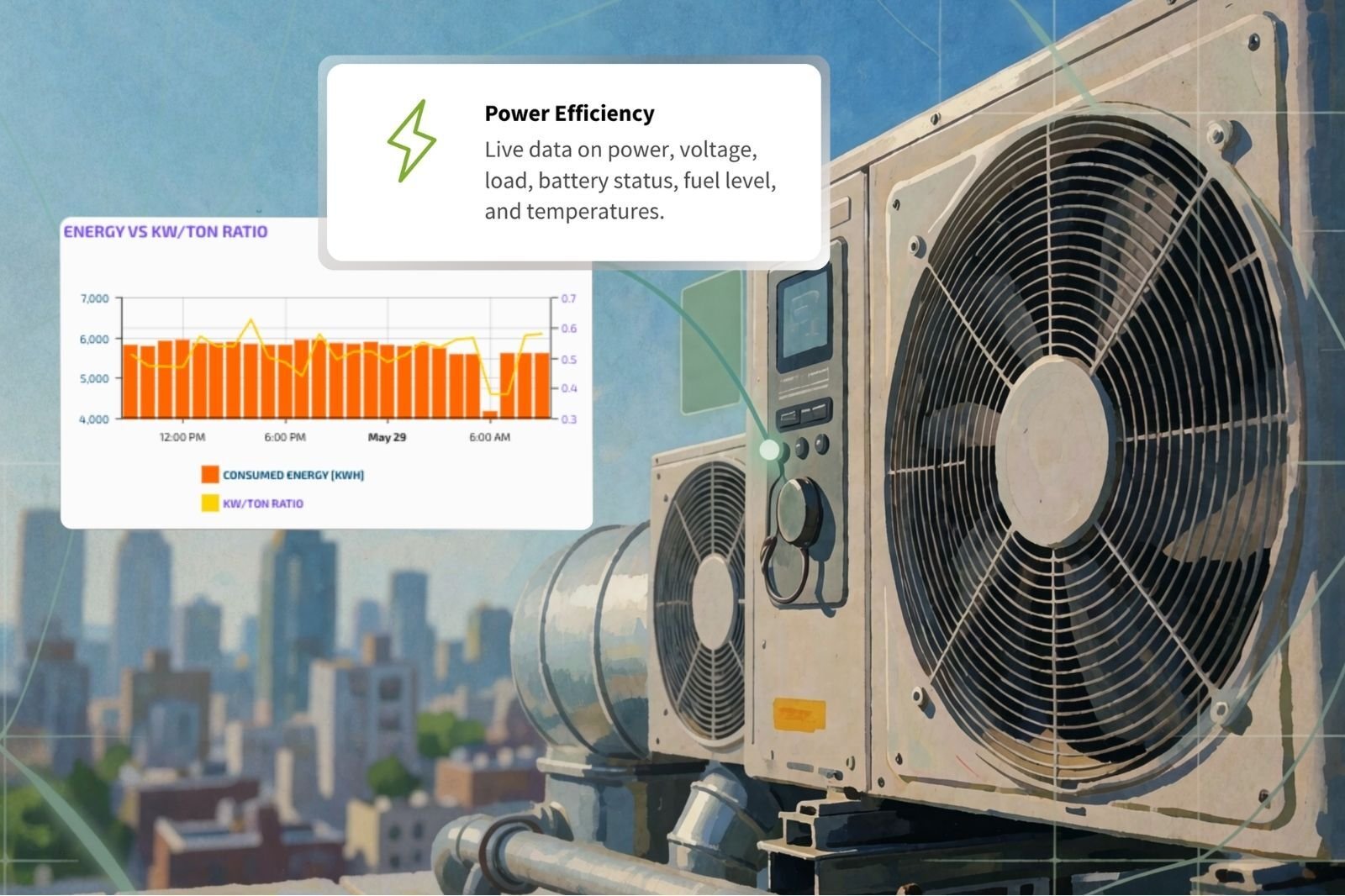
Leveraging energy data intelligence
Facility managers can unlock and easily extract energy consumption intelligence from a multitude of facility-wide devices, equipment and sensors. But this requires operators to capture, organize, analyze and determine how to best capitalize on the data for improved building management and business decisions. And it requires real-time, unified views of their entire infrastructure – regardless of vendor or equipment maker – so they can make the best operational and business decisions.
Extracting energy data from an entire facility provides only a fraction of the data intelligence. Sub-metering and other systems such as HVAC, lighting, chillers, boilers, data centers and elevators are all sources of valuable energy data building operators must have access to be able to use to improve operational efficiency, reduce costs and maintain sustainable operations.
Spikes in operating costs at commercial buildings are most often always due to energy waste. Nearly 30 percent of the energy used in commercial buildings is wasted because of “poor insulation, resulting in reduced HVAC efficiency, increased heat loss and heat transfer, and lower cost savings.”
What’s more, commercial building owners who signed up to the net-zero compliance in Australia, the U.S. and the U.K. are for the most part focusing their energy management on compliance matters alone.
Building operators can effectively bridge the engagement gap with their energy data insights by gaining real-time views of their entire infrastructure so that they can build operational workflows that can help extract valuable insights that will directly contribute to making decisions for more efficient and cost-effective operations.
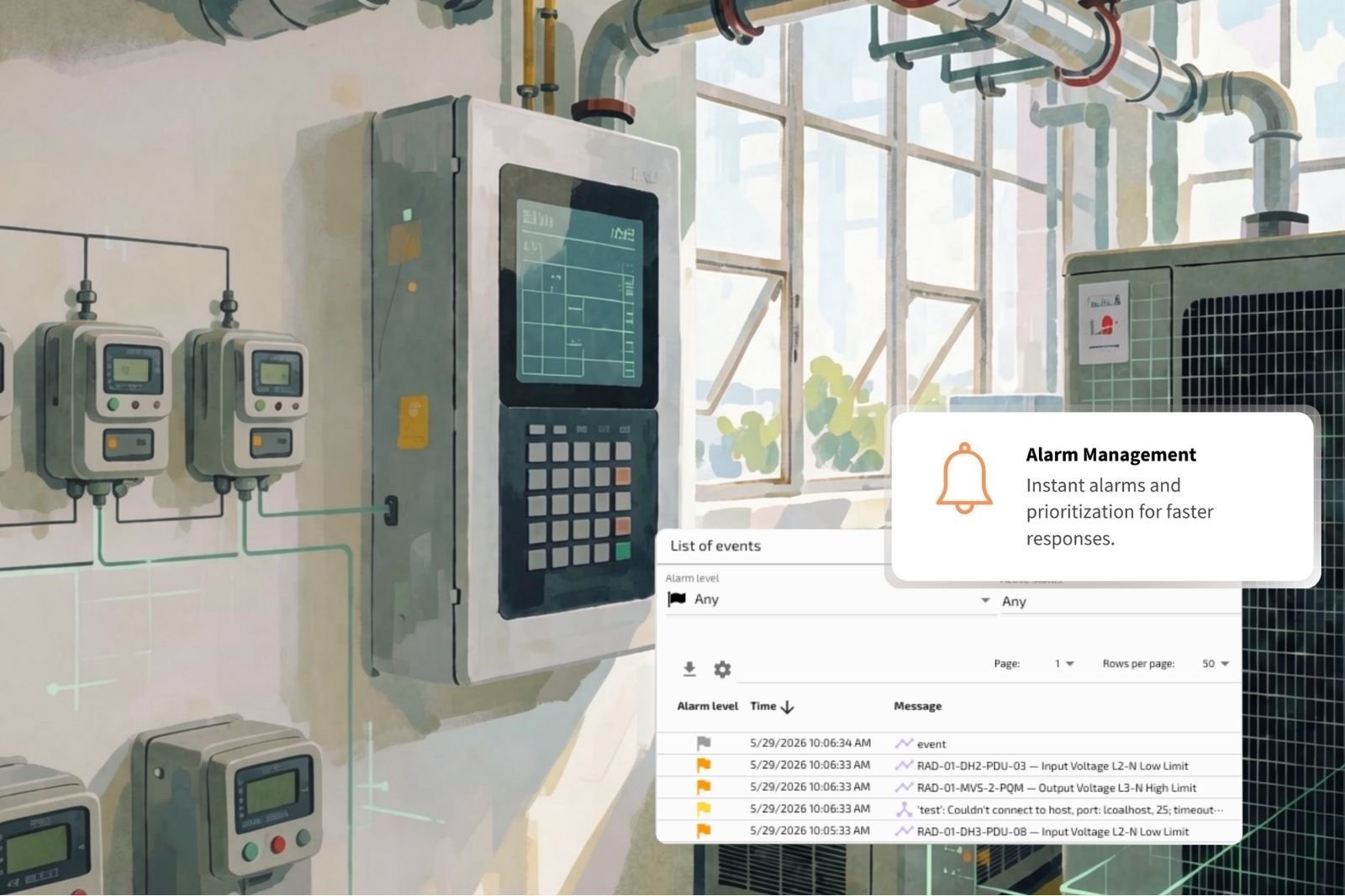 Here are a few ways operators can leverage their energy data using the IIoT and SCADA platform, Mango by Radix IoT which helps provide a data layer built for the complexity of modern commercial portfolios:
-
Monitor energy usage – tracking electricity, gas and water usage will help set baselines, determine seasonal trends across facilities and help predict future energy demand use – and set operational plans for improved budgeting and costs.
-
Establish predictive analytics – monitoring energy patterns to manage and preempt failing equipment and proactive maintenance and operational adjustments can prevent energy waste and equipment failures before irreversible risks unfold and help extend equipment life. Identifying and turning off energy-intensive equipment that operates during off hours can also reduce costs.
-
Manage peak demand – monitoring demand spikes at various hours, seasons, or climates can help operators shift loads during peak price periods to reduce demand charges and gain extra savings. This includes monitoring all traditional and renewable energy sources (solar, battery storage, etc.) to maximize energy use.
-
Benchmark building efficiency & occupancy – comparing performance data across various sites and campuses against industry standards can help operators identify and manage underperforming facilities and/or equipment. Mapping out energy usage, lighting and HVAC schedules with occupancy levels and patterns will help optimize facility operations, cut costs and maintain comfort levels for occupants.
-
Monitor retrofits – comparing and measuring energy usage data before and after upgrades or retrofits can provide measurable, quantifiable proof to qualify cost savings from equipment retrofits.
-
Analyze HVAC operations – monitoring heating, cooling and ventilation at peak performance levels can help lower energy usage. AI models for predictive HVAC, fault detection and demand response depend on quality, time-series data across multiple systems. Siloed HVAC data from occupancy and metering data will provide unreliable results.
-
Track carbon emissions & compliance – ESG and sustainability reports not only help manage, track and monitor energy consumption for facility improvements and compliance with local and federal laws, it also boosts energy compliance and Energy STAR ratings that can differentiate a facility and help attract new, environmentally conscious tenants.
-
Verify utility bills – having concise energy data helps operators compare utility bills with data obtained from monitored meters and confirm the accuracy of billed hours for the entire facility as well as individual tenants.
-
Fault detection & diagnosis – identifying failing equipment and sensors’ performance can help boost efficiency without compromising facility energy reliability for the occupants.
-
Demand vs. consumption – commercial buildings’ demand charges are the largest portion of the utility bill, but when fully managed with real-time energy data monitoring, especially during peak-demand times, demand spikes and loads can be managed by staggering equipment starts or thermal storage. This can help reduce costs without changing occupancy comfort levels.
Extracting and leveraging real-time critical energy data across all systems, devices and equipment can empower building owners to combine energy and operational data to act promptly and maximize efficiency and operations. They can also manage and lower equipment downtime by detecting anomalies across various systems, reduce energy waste by optimizing HVAC usage based on occupancy levels and expedite their ESG reporting by combining energy data across all their sources.
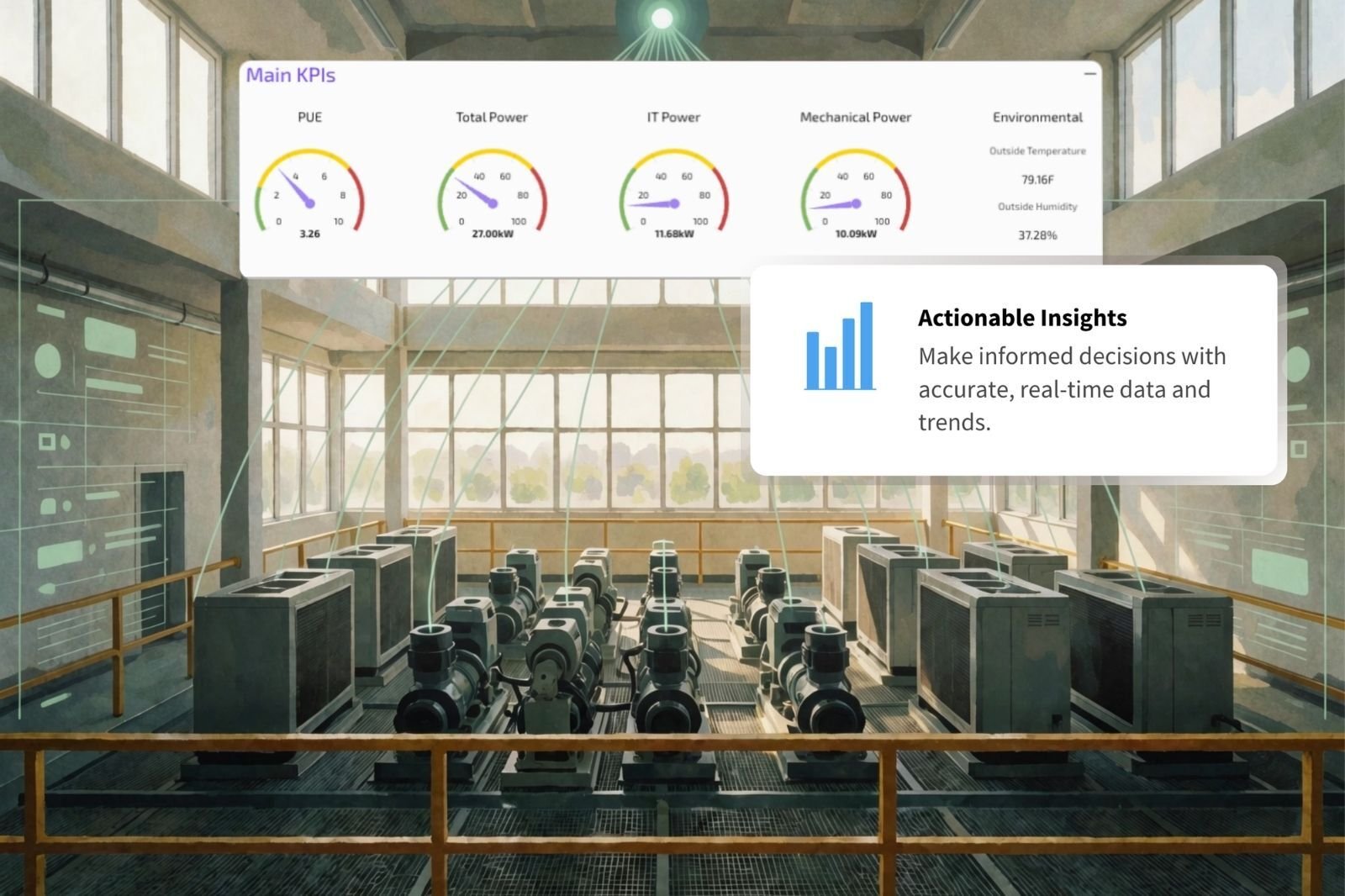 Much of the energy data described above already exists inside a building. The problem is rarely a lack of data, but rather that the data lives in disconnected systems that were never designed to talk to each other. Legacy BMS platforms, sub-meters, chillers, generators and IoT sensors each speak their own protocol often with their own software, which leaves operators with fragments rather than a usable view.
Mango, the IIoT and SCADA platform from Radix IoT, addresses this by sitting above existing infrastructure rather than replacing it. It supports over 40 communication protocols, including Modbus, SNMP, MQTT, BACnet and OPC UA, and normalizes readings from every device and vendor into one unified, real-time data layer. FMs gain a true global picture of all their assets.
That normalization is what turns raw energy readings into something operators can act on. Once metering, HVAC, lighting and utility data share a common language (regardless of vendor), teams can build the real-time views, baselines and operational workflows described above without stitching together separate tools for each system. It is also the foundation that AI and analytics depend on. Predictive HVAC, fault detection and demand response models only produce reliable results when trained on clean, contextual, time-series data drawn across systems rather than siloed feeds. Mango provides that consistency, then exposes it through an open REST API for analytics, predictive maintenance, work order management and automation.
Because Mango is vendor-neutral and scales from a single site to a multi-building portfolio, operators can benchmark performance across facilities, verify utility bills against monitored meters and expedite ESG reporting from one consolidated source. The result is not another dashboard to manage but a connective layer that closes the engagement gap between the energy data a building already generates and the decisions that data should be driving.
Schedule a demo to see how Mango unifies operational data into a single real-time view, using your protocols, your data model and your deployment requirements.

Radix IoT empowers companies worldwide with the real-time visibility and data insights needed to manage operations more effectively. Mango by Radix IoT, IIoT and SCADA platform enables monitoring and analytics at scale, unifying real-time views of usable data foundation AI models require, providing actionable analytics, and increased visibility to protect the bottom-line. On-premise, at the edge, or in the cloud, Mango connects data from devices and systems using native communication protocols.

Michael Skurla is senior advisor at Radix IoT, with more than 25 years of expertise in connected product design and commercialization, focused on critical infrastructure sectors’ control automation and building technology product design with Fortune 500 companies.
Read more on
Explore All FMJ Topics