
 Membership
 Network
 Regional Sites & Affiliates


 Events
 Participate
 Resources

 Training
 Credentials
 Government


 Content Channels
 Tools
Tools


 Business Overview





Hygiene in the Workplace
Using science to inform practice
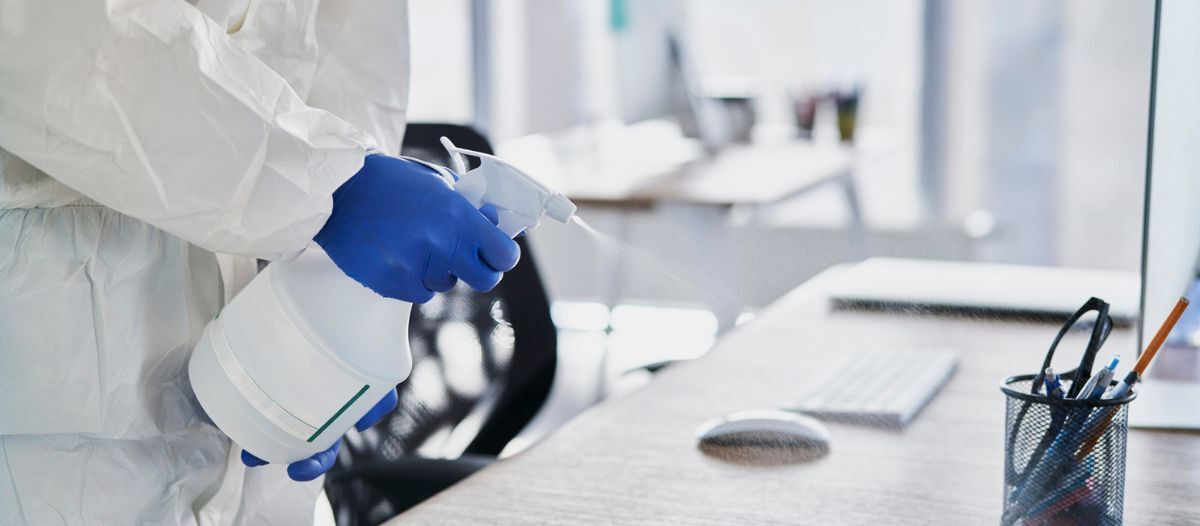
Whether conducting routine business, dealing with the challenges of a localized outbreak or global health crisis, facility management teams are responsible for ensuring healthy indoor environmental quality across their properties. This includes identifying risk reduction strategies for infectious agent transmission, regardless of the facility type.
An effective risk reduction strategy requires the adoption of two key science-based practices: health-based cleaning and occupant hygiene.
Practice 1: Health-based cleaning
Gone are the days when anyone could simply look at a surface to assess its cleanliness. Many applied, scientific research studies in various workplace environments have shown the need for health-based cleaning that targets high-contact touch points or “hot spots,” which may serve as vehicles of infectious agent transmission to uninfected individuals.
This targeted hygiene approach typically involves manual detergent cleaning of nonporous surfaces, followed by the application of an approved disinfectant. Health-based cleaning is promoted globally through many international organizations including the ISSA, BSCAI, IICRC and CIRI, among others.
What the science says
Many studies have been published on pathogen transfer between hands and surfaces, and on microbial pathogen survival on skin and surfaces. Disease can occur when contaminated fingers touch the mouth, nose or eyes. One particular study showed that a hand contaminated with a virus can contaminate up to seven other surfaces.
When anyone touches an object, they transfer organisms to that surface and/or accumulate more organisms on their hand. In a crowded environment, a surface contaminated by one person can be touched by many others who then touch other surfaces as they move around. Each of those contaminated surfaces can be touched again by other people, and so the touching and contamination process continues.
A major review of the significance of fomites (inanimate objects and materials) in the spread of respiratory and enteric viral disease, confirmed that both porous and nonporous surfaces or objects can become contaminated with pathogenic microorganisms and serve as vehicles of transmission. It stresses that disinfection of fomites may interrupt the spread of noroviruses, coronaviruses and rotavirus. Researchers concluded that a large portion of respiratory and gastrointestinal illnesses can be prevented through improved facility hygiene, with emphasis on better surface cleaning and disinfection, along with effective hand hygiene practices.
The importance of cleaning
Science supports the fundamental approach to reducing the risk of infectious agent transmission is the process of cleaning. Clean is a condition free of unwanted matter and cleaning is the process of achieving the clean condition, so human activities can take place in a healthy environment. For cleaning to be effective, unwanted matter must become separated from the environment.
Thus, the removal of soil (e.g., organic dusts, cells, oils and proteinaceous substances) and its associated microbial growth (biofilm) from key high-contact surfaces and materials, remains the primary approach to achieving a healthy environment. This cleaning process, through friction and dissolution, physically removes microbes and the associated matrices in which they may be embedded, such as saliva and/or nasal secretions from the nose or mouth, as generated by coughing or sneezing.
The manual cleaning process is crucial, as it removes substances that may block or interfere with the antimicrobial action of a disinfectant used to kill or otherwise inactivate any remaining microbial residues. Effective cleaning also utilizes those practices and procedures necessary for maximizing pollutant removal while containing the process and minimizing cross-contamination.
In all cases, cleaning must maintain the integrity of the surfaces/materials being treated, is heavily dependent on frequency of implementation and the efficiency of the cleaning equipment and products being used.
The science behind microbial spread
The importance of cleaning and environmental hygiene was emphasized in the results of a recent applied research study. The study investigated the spread of viral contamination via worker hands and key surfaces in an office building with 100 employees using 41 individual offices and 116 cubicles. Using a virus surrogate (MS2 phage) inoculated to a few workers’ hands and key surfaces, the spread of contamination was demonstrated, and an intervention using both surface disinfectant and hand sanitizer was found to significantly reduce viral concentrations on hands and fomites. It was also shown that the surfaces identified as most contaminated were the refrigerator, drawer handles and sink faucets in the break room, along with the push bar on the main exit of the building, and the soap dispensers in the women’s restrooms.
If the process is carried out at an established frequency, then the clean condition becomes easier to achieve on a routine basis. Additionally, as an adjunct practice to cleaning, and an additional enhancement to cleaning effectiveness, the fogging or electrostatic spraying of an approved biocide may be utilized, with an understanding of its limitations.
Custodial staff training: The key to vlean
The success of implementing a health-based cleaning program rests upon the implementation of its key practices by the custodial staff. Through education and training, custodial personnel must be able to:
-
understand how infectious agents can be transmitted from contact surfaces to workplace occupants,
-
identify surfaces considered as high-contact touch points associated with risk of disease transmission,
-
implement effective cleaning and disinfection practices to include selection of appropriate methods, products, materials and personal protective equipment,
-
conduct the targeted cleaning at a reasonable and economically feasible frequency, and
-
assure that employees have accessibility to products that will assist in promoting the hygiene of individual workspaces, such as disinfectant wipes and hand sanitizer.
Protocol
Facility hygiene
-
For health and safety, cleaning staff should wear appropriate protective gear, which includes gloves, mask and eye protection, at a minimum.
-
Following the closure of the building in the evening, all surfaces are to be cleaned and then disinfected with either a disinfectant wipe or a spray/aerosol disinfectant.
-
Spray cleaner can be applied directly to surfaces without electronics, left wet for at least one minute (if cleaner-disinfectant), then wiped clean. Disposable towels are recommended and can be folded and used again to complete the cleaning of the target surface before discarding.
-
For surfaces with electronics, such as computers, the spray cleaner-disinfectant is applied to a clean disposable towel, which is used to clean the surfaces.
-
Once surfaces are cleaned, they can be disinfected using disposable disinfectant wipes, one per surface, with folding once or twice as needed, followed by air drying. Larger surfaces such as counters may require several wipes. Spray or aerosol disinfectants may also be used.
-
Surfaces include all horizontal/vertical surfaces frequently touched, to include:
-
Entry door handles (both sides) and the frame surface above and below the handle for at least two feet and handrails.
-
Glass door surface adjacent to the entry handles and areas above and below the handle on both sides of the door and ADA push buttons.
-
Light switches, elevator buttons, mailboxes and remote controls.
-
Tabletops and soft materials of chairs and couches in waiting/reception areas.
-
Bathroom door handles, toilet seats, flusher handles, bathroom stall door handles and surfaces within two feet of handles, toilet paper and paper towel dispensers, sink handles, soap dispensers and countertops.
-
Shower control surfaces, shower walls and floors.
-
Door handles and surrounding door surfaces along with chairs, desktops, phones, keypads, drawer handles, keyboards, touch screens, computer mice, printers, pens, and other items in offices used by employees or customers.
-
Drinking fountain or watercooler, bottle-filler surfaces.
-
Kitchen or break room door handles, sink handles, soap dispensers, countertops, towel dispensers, appliance handles, tabletops and chairs. Frequently touched surfaces such as those listed above should also be wiped and disinfected on a regular basis during the day. Adherence to this daily schedule of cleaning and disinfection in facility environments will effectively work to suppress the microbial contamination on high-contact touch points or “hot spots,” and greatly reduce the potential for contact transmission of pathogenic bacteria, fungi and viruses — including COVID-19.
-
-
Practice 2: Occupant hygiene
Maintaining effective hygiene in the workplace extends beyond the implementation of science-based cleaning and disinfection practices by custodial personnel. It also requires workplace occupants to understand and practice effective hand hygiene. A variety of published, applied research studies have described the primary high-contact touch points or “hot spots” that produce a microbial contamination network throughout a work environment. These not only facilitate infectious agent transmission in the workplace, but also often result in the transfer of disease-threatening contamination to surfaces and materials in the workers’ home environments.
What the science says
Researchers artificially inoculated common-use surfaces in office environments with a copolymer resin tracer9. After touching contaminated surfaces, 86 percent of office workers from three separate offices transferred the resin tracer to their hands, while 82 percent transferred the resin to additional surfaces.
Following inoculation of a restroom faucet and exit doorknob, the resin spread most commonly to employees’ hands, faces, phones and hair. From an inoculated communal phone, the resin spread most frequently to hands, face, hair, desktop surfaces, drinking cups, keyboards, pens and doorknobs. Resin was also found on a nearby drinking water fountain.
Finally, from an inoculated copy machine button, resin transferred to copied and original documents, computer equipment and employees’ hands and faces. Five of the volunteers were accompanied to their homes for additional sampling, and 20 minutes after arriving home, resin was found on all subjects’ hands, personal items (backpacks, purses, keys) and home surfaces (doorknobs, light switches, countertops and kitchen appliances). Thus, the combined phases of the study have emphasized the importance of cleaning and disinfection of common touch points, along with attention to hand hygiene, to reduce the risk of transmission of disease-causing infectious agents.
Hygiene promotion
While encouraging employees to routinely undertake good hygiene practices may seem a daunting task, research has shown success in this effort. Implementation of a targeted risk reduction program, with surface disinfection of commonly touched shared objects and hand hygiene, including hand sanitizer at the desk and
simple employee education (via intervention instructions, promotional signage and emails), resulted in a significant reduction of virus transmission in an office setting.
Protocol
Workspace hygiene
-
Cleaning products and disinfectant wipes should be made available for use by employees on a regular basis during the workday.
-
Employees should be encouraged to maintain a clean and safe work area by periodically cleaning their workspace, especially daily during cold and flu season, an outbreak situation or pandemic.
-
Cleaning should focus on the most common general usage touch points, for both clients and staff, such as doorknobs, handles, counters, desk-tops, armrests, computer keyboards and telephones.
-
-
Employees should be aware of the need for handwashing and have access to hand sanitizer (with minimum 62 percent ethanol) at key locations, to include workspace, break rooms, copy centers, elevators, vending machines and restrooms.
A paired hygiene approach
The need for cleaning and disinfection is an essential step in stopping the chain of infection. While the need for hand sanitization is well understood, it is only effective when paired with the cleaning and disinfection of surfaces. Together, the combination maximizes the reduction of risk for pathogen transmission, since both the potential for depositing pathogens onto surfaces, as well as removing them from surfaces via attachment to fingers and hands, are greatly reduced. This was emphasized in a recent study showing that “a combination of hand hygiene and surface cleaning is more effective than any single intervention,” and that “hand hygiene alone is insufficient as a control measure for the fomite transmission of pathogens and must be paired with surface cleaning.”
Peer-reviewed, published, scientific research studies have confirmed the need for and importance of the combined interventions of health-based cleaning by the FM custodial staff, along with effective personal hand and workspace hygiene by the workplace occupants, to reduce the risk of transmission of disease-causing infectious agents in the work environment.

Dr. Eugene Cole, PH., is the former Professor of Environmental Health Sciences at Brigham Young University and Director of Research, LRC Indoor Testing & Research. He currently serves on the Executive Committee for the Cleaning Industry Research Institute (CIRI) also holding a position on its Science Advisory Committee. Cole has more than 35 years of research experience, with emphasis on identification and reduction of pollutant reservoirs and sources, bioaerosols, residential, school, and workplace exposure assessment and control, product evaluation, cleaning and restoration, mold and sewage remediation, and biocides.
References
Rheinbaben F, Schunemann S, Gross T, Wolff MH (2000). Transmission of viruses via contact in a household setting: Experiments using bacteriophage straight phiX174 as a model virus. Journal of Hospital Infection 46(1):61-66.
Lei H, Li Y, Xiao S, Yang X, Lin C, Norris SL, Wei D, Hu Z, Ji S (2017). Logistic growth of a surface contamination network and its role in disease spread. Scientific Reports 7:1-10.
Boone SA, Gerba CP (2007). Significance of fomites in the spread of respiratory and enteric viral disease. Applied and Environmental Microbiology 73(6):1687-1696.
Berry MA (2018). Cleaning Professionalism and Competent Management. Cleaning Science Quarterly 1(1):8–12.
Berry MA (2019). Matter Separation and Biological Destruction. Cleaning Science Quarterly 1(2):24-29.
Spivak SM (2019). Matters, Means and Methods of Surface Hygiene and Disinfection. Cleaning Science Quarterly 1(2):8-16.
Kurgat EK, Sexton JD, Garavito F, Reynolds A, Contreras RD, Gerba CP, Leslie RA, Edmonds-Wilson SL, Reynolds KA (2019). Impact of hygiene intervention on virus spread in an office building. International Journal of Hygiene and Environmental Health. 222(3):479-485. doi: 10.1016/j. ijheh.2019.01.001. Epub Jan 15.
Cole, EC (2020). Aerosol Surface Disinfection in a Pandemic World: Gas/Vapor-Phase Biocides, Fogging, and Electrostatic Spraying, Cleaning Science Quarterly, Summer 2020 2(2):8-15.
Reynolds KA, Watt PM, Boone SA, Gerba CP (2005). Occurrence of bacteria and biochemical markers on public surfaces. International Journal of Environmental Health Research 15(3):225-234.
Lei H, Xiao S, Cowling BJ, Li Y (2019). Hand hygiene and surface cleaning should be paired for prevention of fomite transmission. Indoor Air 30:49-59.2
RESOURCES
USEPA. Guidance for Cleaning and Disinfecting Public Spaces, Workplaces, Businesses, Schools, and Homes. epa.gov/sites/production/files/2020-04/documents/316485-c_reopeningamerica_guidance_ 4.19_6pm.pdf
CDC. Reopening Guidance for Cleaning and Disinfecting Public Spaces, Workplaces, Businesses, Schools, and Homes. cdc.gov/coronavirus/2019-ncov/community/reopen-guidance.html OSHA. COVID-19 Control and Prevention. osha.gov/coronavirus/control-prevention
ciriscience.org
Read more on Workplace , Occupancy & Human Factors and Risk Management or related topics Risk Management and Occupant Health
Explore All FMJ Topics