
 Membership
 Network
 Regional Sites & Affiliates


 Events
 Participate
 Resources

 Training
 Credentials
 Government


 Content Channels
 Tools
Tools


 Business Overview





Industrial Heat Pumps
Delivering the next generation of process heat & low costs
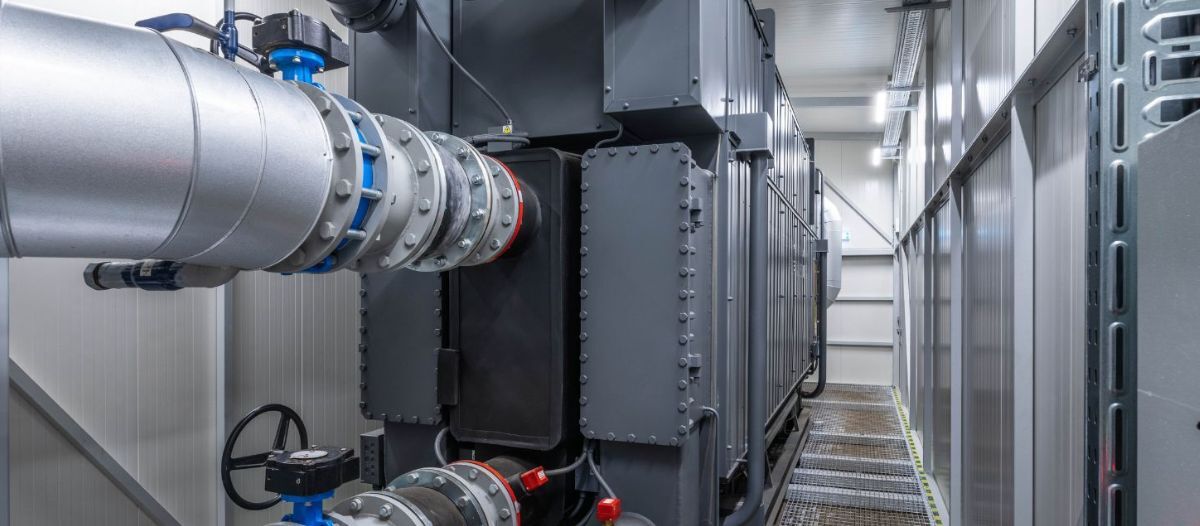
Process heating is the cornerstone of industrial operations across many critical industries. In fact, process heat accounts for roughly 50 percent of industrial energy demand. To achieve the high temperatures needed within industrial operations, most organizations still turn to inefficient fossil-fuel-powered boilers, driving up emissions for the already notoriously hard-to-abate industrial sector.
Industrial operations account for the largest share of global energy demand – roughly 40 percent, per the IEA. Organizations are seeking stronger decarbonization tactics and tools to help lower emissions, improve efficiency and future-proof their operations against volatile energy prices.
Heat pumps, which have recently gained attention and traction in residential settings, can also be deployed at industrial-scale to deliver low-carbon, medium-temperature process heat. Yet today, industrial heat pump adoption still hovers below 10 percent, and many facility managers remain unaware of their use cases beyond low-temperature hot-water applications. Additionally, many factories are designed with fossil-fuel-powered boilers in mind, making the transition to cleaner, more efficient alternatives like heat pumps challenging.
With the right policies and operational education in place, there are major opportunities for heat pumps to support both new and retrofit upgrades at factories, particularly in emerging economies.
Industrial heat pumps: What to know
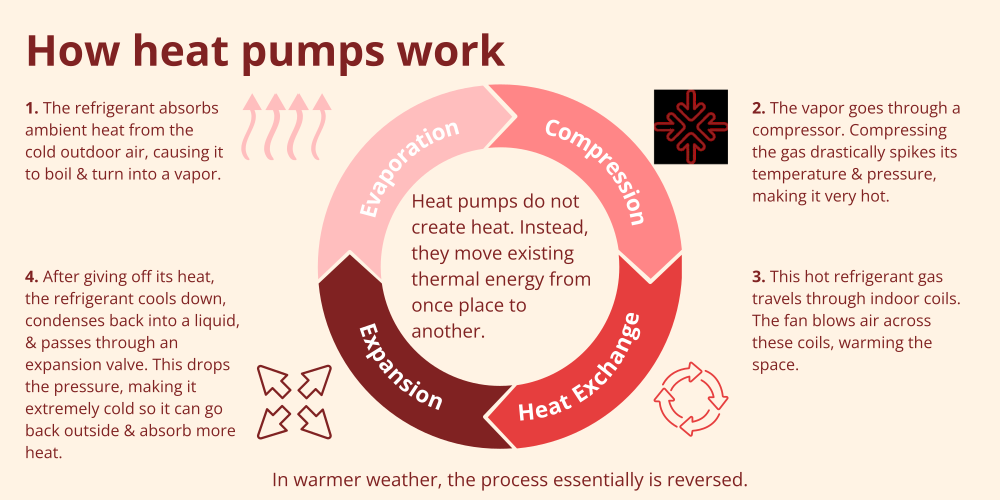
Heat pumps can support several critical functions across manufacturing and processing. Modern heat pump systems are capable of reaching approximately 200 degrees C (392 F), a sufficient temperature for steam/process heat in many applications. These heat pumps can also reach 200-400 percent efficiency compared to 90-95 percent for fossil fuel boilers. The scalability potential of industrial heat pumps is vast: it is estimated heat pumps could cover up to 45 percent of industrial process heat demand in the U.S. if fully scaled.
There can also be long-term cost-saving benefits associated with adopting heat pumps. With energy consumption savings of 75 percent or more, heat pumps can bring cost savings that pay back the capital expenditure in markets where the price of electricity is less than four times that of competing fossil fuel.
Industrial heat pumps are already showing promise in several key sectors like food, pulp and paper, textiles and automotive manufacturing as well as certain chemical processing. Existing deployments in industrial settings in Texas and Colorado are already delivering cost-saving and emissions-reduction benefits. Heat pumps are also being evaluated within district steam systems, where they provide steam to several facilities.
Heat pumps offer unique value to industries that generate high volumes of waste heat. Heat exchangers and heat pumps can put waste heat to use within existing processes, introducing new opportunities for efficiency and circularity. Promising applications for heat pumps that leverage waste heat from compressors to generate steam are beginning to gain attention as well.
Scaling the impact of heat pumps
High electricity prices may cause FMs to shy away from adopting heat pumps and other electric appliances, particularly if their facility operates in a region with consistently high or volatile electricity costs. One emerging solution to mitigate this challenge is installing storage in tandem with heat pumps. This allows organizations to be more discerning about when they operate their heat pumps (i.e., during non-peak pricing hours) and store heated water for use during peak hours. With energy storage, modern factories can also leverage new renewable energy sources more strategically, powering operations with cleaner, more reliable power.
Some countries and regions have implemented incentives and tax rebates designed to support organizations looking to upgrade their appliances and adopt more energy-efficient options like heat pumps. FMs should research these options to ensure they are taking advantage of cost-saving opportunities when making the switch to heat pumps.
Outside a facility’s walls, the power sector can take action to support broader adoption of heat pumps and other decarbonization technologies. Industrial operations are energy intensive, and demand can often coincide with periods of stress on the grid, both from peak system demand and variations in renewable generation. If utilities and regulators adopt rules that value the demand flexibility heat pumps can provide, they could further incentivize adoption and ensure heat pumps operate in a way that also benefits the larger energy grid.
There are also opportunities to update and refine energy efficiency incentive programs with industrial electrification and decarbonization in mind. Most national policies only focus on improving efficiency within a single fuel source, rather than offering incentives for switching from one source to another. Organizations that replace fossil fuel boilers with electric heat pumps would benefit greatly from incentives or rebates tied to making that shift.
 This, in turn, drives continued economic development for the communities where the company operates. Efficiency improvements lead directly to cost savings, helping companies maintain higher profit margins and stay competitive in global markets – particularly important for companies operating in emerging economies.
International trade policies are also beginning to prioritize low-carbon products, including the EU’s Carbon Border Adjustment Mechanism (CBAM), which places taxes on imported goods with higher embedded carbon. Shifting to cleaner production and energy sources will make it easier for companies to establish a presence in the EU, as well as other markets expected to follow similar policies.
The value heat pumps can bring to industrial operations has yet to be fully realized. Now is the time for facility managers to explore the role they can play in mitigating high energy costs, lowering emissions and boosting manufacturing competitiveness.

Colin Taylor is a senior manager on the Climate team at CLASP, an international NGO and the leading global authority on efficient appliances’ role in improving people’s lives and reducing climate emissions. He holds a B.A. in International Politics & Economics from Middlebury College and an M.A. in International Economics and Energy, Resources, and Environment from Johns Hopkins University’s School of Advanced International Studies.
References
Top image via Getty Images.
Read more on Facility Operations and Sustainability or related topics Operations and Maintenance Planning and Sustainable Facility
Explore All FMJ Topics