 Membership
 Network
 Regional Sites & Affiliates


 Events
 Participate
 Resources
 Training
 Credentials
 Government


 Content Channels
 Tools
Tools


 Business Overview




Infection Prevention
What FMs can learn from the COVID-19 frontline
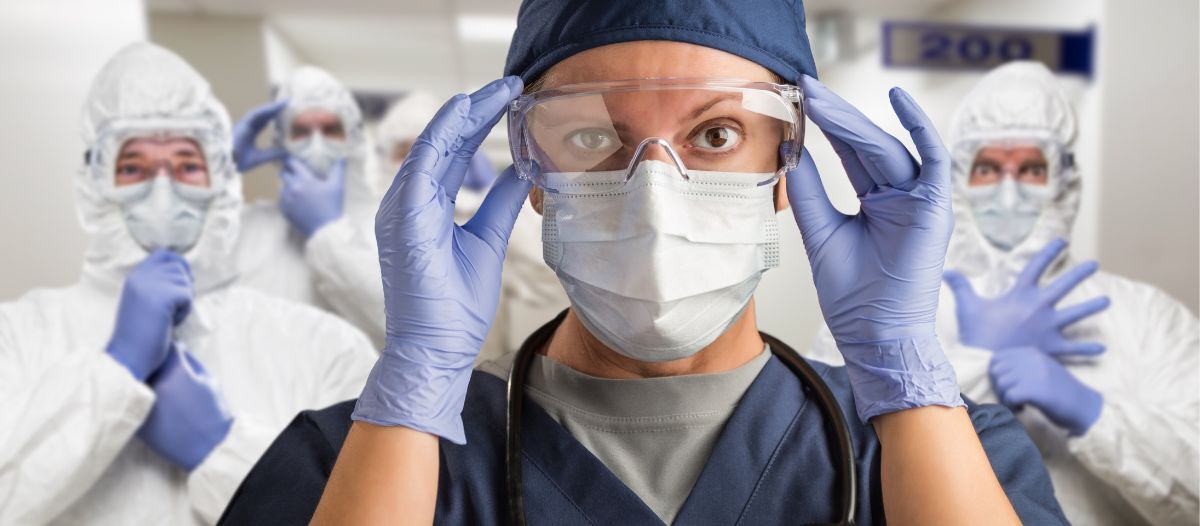
The unprecedented COVID-19 pandemic has had dramatic impact on everyday life - on health care systems and businesses, small and large - and on how everyone keeps clean, healthy and safe. Hospitals and health care facilities have been at the epicenter of this crisis.
Health care professionals on the frontline and behind the scenes, including cleaning and maintenance workers, are owed deep gratitude for their unrelenting commitment to saving lives. Everyone can learn valuable lessons from how they persevere and prioritize safety and protection.
Infection prevention is essential
This crisis has raised awareness that infection prevention and control is more vital than ever. As the world has witnessed with the novel coronavirus (SARS-CoV-2), viruses, bacteria and other pathogens that cause infections can spread and proliferate quickly, with fatal consequences. Preventing infections at health care facilities has always been a life and death, critical issue. COVID-19 introduced a greater urgency for all types of facilities and businesses to provide safe and healthy working environments for employees and visitors.
Learning from health care facilities
FMs across all industries must take the time to assess their current procedures and consider new cleaning and disinfecting protocols to protect workers and maintain safe operations. Whether it is a new virus strain or more common ones, such as influenza, norovirus, pertussis or Methicillin-resistant Staphylococcus aureus (MRSA), these pathogens affect millions of people every year, and, as has been witnessed with COVID-19, can quickly spread throughout any facility or work environment. Viruses also have staying power. They are not likely to completely disappear and might not always be seasonal.
All businesses can learn from the successful actions of leading health care facilities to prevent and control infections. Over the past several years, there have been an array of important scientific studies, new technologies and best practices to help health care facilities decrease infections and create clean, safe environments.
Integrated approach to infection prevention
Given the prevalence and highly contagious nature of infections, leading health care facilities are investing in new innovations and integrated, company-wide policies to fight this battle. This includes establishing comprehensive cleaning and disinfecting protocols, utilizing proper equipment and products, training all staff and maintaining adequate supplies.
Worker protection
Keeping workers protected and healthy is a priority for all facilities, and in a healthcare setting it is essential. Viruses and infections are so pervasive because they can be transmitted through many sources, including hands and skin, equipment and instruments, surfaces and the overall environment. An integrated approach incorporates products and procedures that address all the potential sources of transmission and contamination. Strict handwashing, skin hygiene, gloves, hand-sanitizer solutions and wipes are key for reducing bacteria transmission from the hands of health care professionals. Antiseptic wipes, swabs and wash cloths are used for a patient’s skin hygiene and personal hygiene. Effective products should have a wide antimicrobial spectrum, be fast acting and non-toxic, and meet the guidelines set by the Centers for Disease Control and Prevention (CDC), Occupational Safety and Health Administration (OSHA) and other infection control experts.
Best cleaning & disinfecting practices
Rigorous, established cleaning protocols and procedures must be implemented throughout an organization. This includes using a layered approach that combines traditional hard-surface cleaning with automated, no-touch total room disinfection. Manual cleaning and disinfecting of surfaces (including floors, counters, furniture and medical equipment) is needed daily and after a patient is discharged. Automated total room disinfection is an important second step for an effective infection prevention process. Pathogens can live anywhere and survive for months. An effective approach addresses both high-use, high-touch areas, as well as hard-to-reach spots where germs may linger.
Implementing new technologies
New automated, total room terminal disinfection technologies like ultraviolet (UVC) light, vaporized hydrogen peroxide or mist (VHP or HPM), and self-disinfecting surfaces are revolutionizing the infection prevention industry. They have been shown to be effective in reducing bacterial contamination and colonization. They also have other benefits such as providing consistent, safe decontamination of hard-to-reach areas. A recent study funded by the CDC showed enhanced terminal room disinfection with UVC reduced the relative risk of colonization and infection caused by epidemiologically important pathogens among patients admitted to the same room by a cumulative 30 percent in hospital settings with 93 percent compliance of standard disinfection protocols. (Individual hospital results may vary.)
Although these new technologies including UVC are primarily in use in health care facilities, other industries are evaluating their potential to adapt to their operations and facilities. The data and evidence are compelling and readily available to inform FMs on effective ways to protect the people within their environments, including employees and customers.
Engaging the entire organization
Establishing company-wide policies and training all staff on cleaning and disinfecting protocols is essential for effective infection prevention. An organization must have consistent communication and thorough training from top to bottom. Close monitoring and feedback will improve employee motivation, and ultimately, create a safer and healthier workplace.
Organizations should consider a top-to-bottom review of current cleaning processes to evaluate areas and processes that might need improvement. Also, an organization should perform a complete evaluation of products used to ensure they meet infection control guidelines. Close coordination and relationships with the facility’s supply chain is also important so that needed supplies and materials are stocked and available for staff. All employees at the facility should have access to certain cleaning products. Facilities should also assess training programs to ensure they are standardized and organized with regular reviews. Expanding communications to inform all employees and partners what types of cleaning and protective measures are put in place is also important for maintaining a safe environment. Planning for implementing new procedures and protocols will keep FMs in a good place to continue running operations.
Promoting safe, healthy environments
Improved safety, infection control and overall outcomes are the leading benefits of an integrated approach to infection prevention within a health care setting. The key to a successful integrated approach is creating organized, evidence-based processes that are consistently implemented. For best practices, as reported in the American Journal of Infection Control, health care facilities should establish strict cleaning/disinfection protocols, including both manual and automated cleaning, total room decontamination technology, combined with extensive training and compliance monitoring with feedback to staff. FMs at all types of facilities, beyond health care can learn from this and put into practice. Infection prevention is vitally important to all levels of an organization and across all industries as FMs strive to promote safe, healthy environments.
If one thing has been learned from the COVID-19 crisis, it is that the most critical and valuable ingredient in infection prevention is the human element. All facilities and businesses must support and appreciate their workers, and above all keep them safe and protected in a healthy working environment.

Sean Gallimore serves as senior vice president and general manager for PDI Healthcare, where he has overall strategic and financial responsibility for the health care division. Gallimore has extensive expertise in global strategy; solution development; mergers and acquisitions; transformations; developing high-performance teams; and brand, product and portfolio management. Gallimore earned a B.A. in chemistry and an MBA in marketing, both from Rutgers University. He has completed advanced management training courses at The Wharton School of the University of Pennsylvania, Northwestern University, the University of Notre Dame and the University of Chicago.
References
Top image via Getty Images.
Weber DJ, Kanamori H, Rutala WA. “No touch” technologies for environmental decontamination: Focus on UV devices and hydrogen peroxide systems. Current Opinions Infect Dis. 2016;29:424-431.
Weber DJ, Rutala WA, Anderson DJ, Chen LF, Sickbert-Bennett EE, Boyce JM. Effectiveness of UV devices and hydrogen peroxide systems for terminal room decontamination: Focus on clinical trials. Am J Infect Control 2016;44:e77-e84.
Anderson D, Chen LF, Weber DJ, Moehring RW, Lewis SS, Triplett P, Blocker M, Becherer P, Schwab JC, Knelson LP, Lokhnygina Y, Rutala WA, Sexton DJ, and CDC Prevention Epicenter Program. The benefits of enhanced terminal room (BETR) disinfection study: A cluster randomized, multicenter crossover study with 2x2 factorial design to evaluate the impact of enhanced terminal room disinfection on acquisition and infection caused by multidrug-resistant organisms (MDROs). The Lancet. 2017;389:805-814.
Rutala WA, Weber DJ. Best practices for disinfection of noncritical environmental surfaces and equipment in health care facilities: A bundle approach. Am J Infect Control. 2019;47:A96-A105
Read more on Occupancy & Human Factors and Risk Management or related topics Occupant Health , Occupant Safety and Wellness and Well-being
Explore All FMJ Topics