 Membership
 Network
 Regional Sites & Affiliates


 Events
 Participate
 Resources

 Training
 Credentials
 Government


 Content Channels
 Tools
Tools


 Business Overview




It’s the Principle of the Thing
Establishing a culture of principle-based decisions

“It’s not the money, it’s the principle of the thing.” Does this sound familiar? This phrase is usually used to justify actions taken regarding small dollar amounts that normally would be chalked up as negligible. It’s an excuse for much ado about nothing. And, spoiler alert, when people say that, it’s almost always about the money!
That is not meant to demean principles. It’s just that the deep-rooted integrity of a principle is based on a feeling of what is correct, and principles generally have no bearing in casual conversation. Principles define actions. They are fundamental truths or propositions that serve as the foundation for a belief system, a behavior or for a chain of reasoning. They are a fundamental source or basis for something. Building a permanent culture of continuous improvement requires that it be grounded in universal and timeless principles that drive business excellence and incite a relentless quest to make things better.
In fact, in facility management, having and holding to the right principles can lead to money – through cost avoidance, savings on utilities and productivity gains. It all depends on what principles are determined to be important and how they are represented in the workplace. In order to succeed in the current business environment, FMs need to strive for operational excellence that is built on principles or be at risk of losing efficiency in the workplace.
Operational excellence is an element of leadership that is dependent on adhering to basic tenets – ones aimed at supporting the business through consistency and continuous improvement. It stresses the application of a variety of those principles, as well as systems and tools that foster the sustainable improvement of key performance metrics. When FMs understand and take personal responsibility for developing and implementing a commitment to continuous improvement, this operational excellence facilitates successful organizational transformation. The principles supporting excellence manifest themselves through an integrated performance that includes revenue, cost and risk. The focus is on meeting stakeholder expectations through the continuous improvement of operations and the culture of the facility department.
This is not a new approach to management, nor is it a new set of tools or a new fad in the business world. It is the result of the facility-wide practice of ideal behaviors based on correct principles. Improvement requires great leaders, smart managers and empowered and engaged people. With proper mentoring and guidance, the principles of operational excellence can enable employees to have their personal values reflect the same principles. This can help foster thinking and behaviors that will create ingrained habits of operational excellence.
FM applications
One of a facility manager’s primary challenges is to creatively find solutions to challenges in the workplace, specifically by analyzing past experience and recruiting others to get things done. The principles of management define the activities designed to achieve goals. In other words, the means by which an FM actually manages, resolves issues and satisfies needs. Principles of management can be learned using a framework called P-O-O-L, which stands for Planning, Organizing, Overseeing, and Leading.
-
Plan the plan, then work the plan. Facility managers have to set objectives for an organization and decide how to achieve them. They need to define their objectives and weigh possible outcomes. Starting with a strategic approach, and developing tactics to support it, FMs have to determine and attain the resources necessary to accomplish the task.
-
Organize activities. An FM may have all the right tools but applying them correctly could be a challenge. This entails an outline of the job and the correct application of resources.
-
Oversee the work. Many professionals feel they don’t manage people, but they do manage processes and situations. Through communication and milestone checks, FMs can measure performance and job status and act if deviations or unforeseen challenges arise.
-
Lead correctly. Even if the premise holds true that FMs don’t manage people, they still need to lead and motivate them. FMs lead culture change, get their hands dirty and lead by example, and they should be there for guidance, advice and support. They need to provide direction and coordination and give leadership to human efforts in order to achieve their objectives. Further, facility managers need to develop themselves and their subordinates both for process improvement and professional success.
The principles of management, then, are the activities that POOL the resources necessary to achieve operational excellence. A set of principles is systemic by nature; it reflects the interdependent attributes of reality itself. The proper utilization of people, materials, machines, methods, money and markets, in a seamless integration designed for the task at hand, will breed success.
Here are three ways FMs can drive operational excellence while setting trends for sustainable actions:
-
Cost-effective operations: This can be accomplished through cost reductions, cost avoidance and risk management initiatives. Sustainable operations, encompassing energy and water conservation and reduction of waste ties into this activity.
-
Stakeholder satisfaction: Providing safe and functional facilities while providing a healthy, clean and comfortable workspace.
-
Environmental stewardship: Implementing disciplined approaches to corrective maintenance, preventative maintenance and customer requests. Always being cognizant of the long-term effects of actions taken and ensuring that negative impacts are avoided or, at least, minimized, will help mitigate damage to the environment.
A culture of discipline is a critical component of operational excellence. This includes a strict adherence to integrity, a questioning attitude and a high level of knowledge. These values are used to identify the behaviors expected of each employee and how they support the organization’s mission and outcome.
Sustainability
Operational excellence not only applies to running a business, it should pertain to operating sustainably as well. Sustainability is defined as the endurance of systems and processes, both in business and the environment. In business, sustainability is maintaining the constancy of systems and processes that have been designed for ongoing success. In the environment it is maintaining the resources that support life in all its aspects: in business, socially and culturally. Sustainable Operational Excellence creates a dynamic equilibrium throughout the interaction between businesses and the environment upon which they depend, such that the business optimizes its processes without undue negative impacts. Basically, it means doing the right thing, at the right time, for the right reasons, every time.
The basic objectives of sustainability are to reduce consumption of non-renewable resources, minimize waste and create healthy, productive environments. The principles of sustainable operations include making best use of a building by understanding and exploiting the potential of the land and optimizing operational and maintenance practices.
Together these actions lead to a decreased reliance on non-renewable energy sources. They protect and conserve water, implement environmentally safe products and enhance indoor environmental quality.
Using a sustainable management philosophy encourages decisions that reduce negative impacts on the environment and the health of the occupants, without compromising the bottom line. Such an integrated, holistic approach has positive impacts on all phases of a building's life-cycle, including design, construction, operation and decommissioning.
If the plan is for continuous improvement, innovation, cost savings and sustaining a company for the long term, sustainable operations need to be embraced. These steps are meant to aid our society in achieving a more stable way of living and working while creating efficiencies and cost savings. In order for programs to create a sustainable future, they should contain a balance of activities and policies that cover five core principles.
The principles pertain to specific operational sectors: strategic planning, developmental issues or initiatives taken by individuals. Each of the five fundamental domains has its own derived policy and operational implications. The combination of these domains is systemic in nature; each one affects all the others and is affected by each in return.
The Material Domain defines the basis for monitoring and controlling the flow of materials and energy that are necessary for facility operations. It entails striving for the highest resource productivity while improving performance with each cycle of use. Efforts are focused on the adoption of renewable sources of energy, with most sustainability programs targeting a shift away from the use of fossil fuels for energy because they are limited and non-sustainable. Energy management, combined with waste and water management, forms the basic triumvirate of sustainable operations.
The Economic Domain provides guidance for creating and managing resources. It focuses on the destructive nature of economic activities that view money as the sole raison d'etre. Short-term greed sometimes supersedes common sense, and this domain creates a change in the way economic activity is measured to minimize the negative impact of economic activities on the environment. There are five key forms of capital: natural, human, social, material and financial. Each has its own idiosyncrasies that require a specific approach to foster sustainability.
The Domain of Life provides the basis for appropriate behavior in the biosphere and is linked to the stewardship principle of facility management. This domain can be satisfied through a life cycle assessment, whereby a product is tracked from design through disposal and addresses the impact of business operations on the environment. This domain advocates the protection of natural resources.
The Social Domain provides the basis for social interactions and human factors in the workplace. Through wayfinding, proximity planning and adjacencies, FMs achieve stakeholder satisfaction by enhancing the social aspects of their facility.
The Spiritual Domain identifies the importance of universal code of ethics. It delves into the need to empower employees and generate their engagement with processes. It is designed to link an inner transformation of individuals to a broader, more societal scope.
Both the social and spiritual aspects of sustainability lend themselves well to the overall principle of creating stakeholder satisfaction.
Building bricks
Brick and mortar are the building blocks of business. No matter what the business, there is a building somewhere that supports it and an FM to manage it. And, as long as there is a need for facilities to maintain a company’s dealings, there will be an impact on the environment. Even e-commerce companies still need a building out there somewhere for administration, warehousing and other functions that take people or inventory. (Cloud-based businesses are fine, but there are some things that even the cloud can’t contain!)
Operational excellence, like buildings, are constructed one piece at a time. Creating a plan follows the same precepts as putting up a facility – it takes principles, systems and tools. Operational excellence doesn’t suddenly sprout out of the ground and flourish. It takes dedication and consistency. As they say, Rome wasn’t built in a day. However, they were laying bricks every hour. It can be very easy to underestimate the importance of laying another brick. There’s nothing necessarily impressive about laying a brick. It’s not a great amount of work. It’s not a major feat of strength or stamina or intelligence. Nobody is going get awards for it. But laying a brick every day, year after year? That amounts to results.
Improvement requires the transformation of a culture to one where every single person is engaged, every day, in often incremental changes. Operational excellence achieved one thought at a time. It, along with the principles that drive it, needs to be joined with sustainable business management to meld enterprise and environment. Cemented by the principles that become embedded in an organization, a strong edifice of sustained excellence can be created that will stand against the slings and arrows of daily happenstance.
These timeless principles become the basis for building a lasting culture of excellence. The relationship between business results and principle-based behavior is how operational excellence is achieved. The trick, then, is to make it sustainable. It’s the principle of the thing.
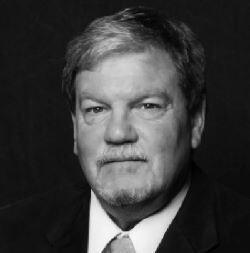
Bill Conley, CFM, SFP, FMP, LEED AP, IFMA Fellow, is a facility manager at Yamaha Motor Corp. in Cypress, California, USA. He previously served as owner and chief sustainability officer of CFM2, a facility management company. Conley has more than 40 years of experience in the facility management profession and has been a proponent of sustainable operations for more than 20 years. Conley has served on the IFMA board of directors, is a recipient of IFMA’s Distinguished Member of the Year award and has received the association’s Distinguished Author award three times. He has been a regular contributor to FMJ for almost 30 years and has authored more than 100 FMJ articles.
References
Images via Getty Images.
Read more on Workplace and Leadership & Strategy or related topics Workplace Utilization and Strategy
Explore All FMJ Topics