
 Membership
 Network
 Regional Sites & Affiliates


 Events
 Participate
 Resources

 Training
 Credentials
 Government


 Content Channels
 Tools
Tools


 Business Overview





Leading the Way
FM should take charge in sustainability standards
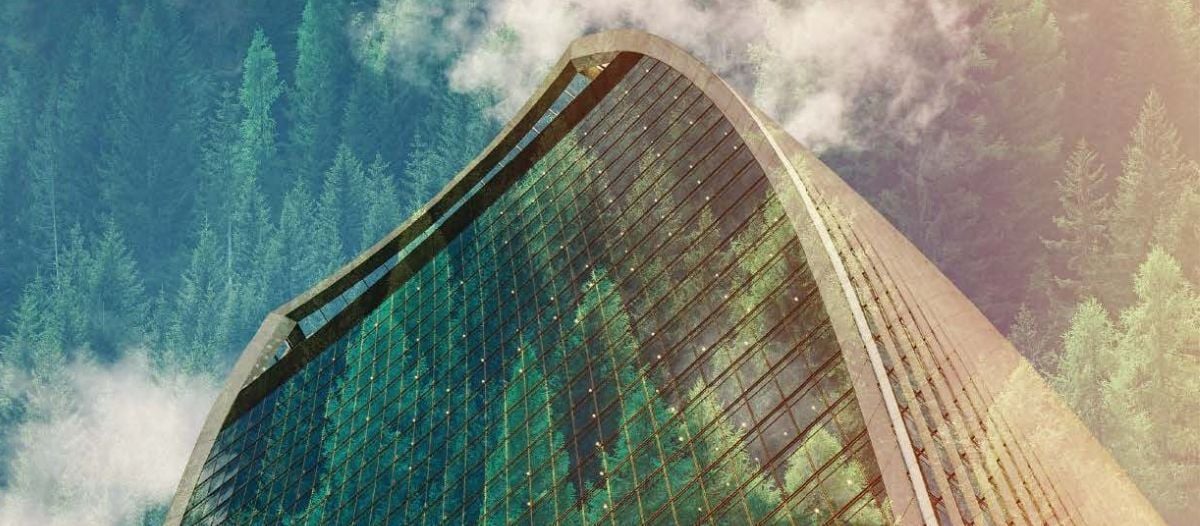
The Earth’s climate has steadily changed throughout history alongside natural phenomena that has caused fluctuations in weather, temperature and climatic conditions. However, in just the last 650,000 years, Earth has seen an abnormal seven cycles of glacial advance and retreat, with the rate of Antarctica ice mass tripling within the last decade.
The modern climatic era commenced with the sudden end of the most recent ice age, and a contemporary era of human civilization commenced with it. Within this era, the climate has been intensely affected by the rising industrial activity and technological advances of modern human lifestyles, with dramatic widespread responses being seen in the environment.
In Greenland, ice is melting at an astonishing seven times faster than it was in the 1990s, less than three decades ago. This is due to the rapid global warming experienced in the Artic region which has seen a 0.75 C temperate rise in the past decade. If these rates continue, we could see a sea-level rise of 7 cm before the end of the century, merely from Greenland alone, resulting in severe consequences that will be experienced by everyone, all around the world.
The Intergovernmental Panel on Climate Change’s most recent report stated that carbon dioxide emissions must peak by 2020 in order to ensure the planet’s temperature remains below 1.5. Following this, recent reports have suggested that the political actions taken in upcoming months. If warming temperatures exceed 1.5 C, strong storms, rising sea levels, mass extinction and water scarcity are just several environmental reactions to be expected. These detrimental changes are mostly irreversible and will impact everyone.
The Climate Change Act of 2008 made the UK the first country to be legally bound into a long-term plan to cut carbon emissions, committing the Government to reducing emissions by 80 percent before 2050 through carbon budgeting, trading schemes and targeted carbon limits. Legislation like this is both essential for climate and motivating for the population, causing reason to monitor emissions at all scales. In order to prevent widespread disaster, efforts must be made to reduce greenhouse gas emissions globally. Whilst changes to government policy will be crucial in helping to tackle the climate crisis, there are plenty of easy ways to make sustainable changes at a local level to solve these challenges. These emission cuts will not happen overnight and will therefore require stable strategy alongside a widespread shift to more long-term mentalities.
The built environment: Impact & impacted
In a report on long-term corporate health, the BBC emphasized that “the economic cost of [environmental] inaction is simply too great.” The negative consequences of environmental damage are increasingly falling on companies, who are often struggling to protect or replace the natural resources and materials that they depend on for business. It is known that business sustainability is a key factor in the long-term success of a company. Therefore, corporate social responsibility, and more specifically sustainability, is becoming increasingly crucial in directing the future of global business strategy.
The built environment contributes around 42 percent of total carbon footprint in the UK, presenting an influential element in the development of climate issues around the world. Half of this contribution is created from everyday home activities such as using electricity and cooking, as well as infrastructure, involving roads and railways. Incorporating sustainability into building regulations is a crucial step in reaching improvements within the built environment, where building owners and users must reconsider their policies to address corporate social responsibility.
Not only is the built environment a significant contributor to climatic issues, it is an area of human civilization that will experience the consequences of these issues most severely. In England, one in six properties are at risk of flooding, putting more than 5.2 million properties in danger; a figure that will continue to grow alongside rising sea levels, caused by global warming. Recent flooding in Venice saw more than 80 percent of the city completely under water as a result of abnormally high tides. Last year, Australia’s bushfires arrived much earlier than usual, with detrimental impacts on the built environment. This was largely a consequence of prolonged dry periods and stronger winds which intensified fires and enabled them to spread quickly; effects encouraged by climate change. Construction both has a significant impact on climate, and experiences many of its negative responses.
From the early stages of planning to the final stages of construction, buildings have traditionally been mainly orientated around design and form, with the intention of leaving the processes of operation and function to facility managers and building engineering staff. Government policies targeted towards improving the efficiency of existing buildings have been reduced, and rates of insulation installation have halted. However, 80 percent of the buildings that will be constructed by 2050 have already been built, suggesting that more focus should be applied to decarbonizing older, existing stock, which is lagging behind its contemporary counterparts in sustainable development.
Greening facility performance
As this centralization around new buildings regarding sustainability starts to shift, the responsibility for upgrading current building stock falls into the hands of FMs, whose authority allows them to manage costs and control functions within the built environment. The traditional FM role remains, but more recent duties have extended to incorporate a new environmental focus, narrowing the relationships between design, operation and maintenance in light of contemporary environmental demands. Alongside their internal duties, FMs now face a new set of responsibilities, associated with the wider environment and society. High facility performance and green practice are now closely related, where FM should have sustainability as a key strategic objective. Improving a building to reach smooth and sustainable operation is a long process, requiring a well-crafted policy of maintenance and refurbishment. Some FFMs may inherit dated building systems that are expensive and tricky to maintain, demanding additional attention and work towards achieving sustainable quality.
There are two main types of measures that can be used to reduce harmful effects of climate change; those targeted towards reducing harmful effects, and those that treat the effects at their source. Although the latter is often the preferred method, both include an integrated life cycle approach, reducing energy consumption and improving the quality of products and service. Although change is not always smoothly accepted, as business as usual can be difficult to disrupt, making small transformations are necessary and can be introduced gradually. Sustainable FM has developed into a role that is involved in a wider organizational culture, where innovation, proactivity and leadership are all effective elements in considering ways to improve sustainability throughout all areas of building operation process. There are beneficial results in owning and operating high-performance, green facilities, both financially, operationally and sustainably.
Inspiring potential solutions
The key change in approach to sustainable FM involves a shift to longer-term thinking, where decisions made today should incorporate questions over their effects on the future of the building, and the wider environment in which it exists.
Buildings are significant aspects of climate change adaptation, especially with recent increases in weather conditions. Millions of properties remain in flood-risk areas, with 10 percent of paving sales in 2013 being permeable, and only 15 percent of planning applications for flood risk areas mentioning ‘sustainable drainage’ in 2015. Contemporary FM should be proactive in securing properties from the possible impacts of weather damage, involving adaptation methods such as sustainable drainage systems and flood risk alleviation. Not only will this ensure the safety of the individuals and belongings of those within the building but will also contribute towards the long-term sustainability of the building itself.
Newly constructed buildings are more energy efficient, meaning that FMs must incorporate plans to decarbonize existing builds. 67 percent of total electricity supply in the UK in 2016 was used in the built environment, with rising emissions from fuel-use proving to be one of the largest tests ahead. Electricity and heating, combined, are responsible for 25 percent of global greenhouse gas emissions, created by the burning of coal, natural gas and oil. Furthermore, 31 percent of energy demand comes from residential and commercial sectors in the U.S., through heating, ventilation, air conditioning, lighting and other related appliances. Replacing local heating systems with improved, higher performance heating processes will improve building efficiency. Furthermore, insulation can easily be incorporated into a maintenance plan, maximizing resource efficiency and therefore reducing long-term costs.
The life span of appliances, building components and everyday products is essential in determining their sustainability. It is therefore important for FM to seek long-lasting, durable products that will have a minimal impact in contrast to their short-lived alternatives that require continues replacements, both environmentally and financially. Sustainable FM involves the reduction of any unnecessary maintenance, requiring investment into more efficient, long-lasting components, from large systems to smaller appliances and everyday products. This involves improving the sustainability of building components rather than merely upkeeping old or traditional performance, adjusting values, behaviors and processes to both avoid risks and embrace environmental opportunities. Identifying issues in the building operation early is crucial in establishing a secure and sustainable estate, and therefore a successful business in the long-term.
There is an important role to reverse the negative effects of anthropogenic climate change. FMs should strive to recognize areas where improvements are possible, from upgrading drainage systems, to improving energy efficiency and even creating green areas or planting trees. Not only will sustainability save unnecessary costs in the long term, it will lengthen property potential and enhance smooth operation. For example, the initial costs for installing insulation is relatively low in comparison to the combined costs of adding insulation or cover during a component’s life span or paying for the additional heating costs.
What is effective FM?
Due to the built environments’ significant contribution towards the UK’s carbon footprint, and the requirement to improve the efficiency of existing buildings as well as new, facility managers are well-placed to implement environmental progress. Not only will incorporating sustainability into building function smooth its everyday operation, save financially and improve the long-term potential of the facility, it will positively counteract the impact of the built environment on the climate, which is currently severe. Effective FM is, involving all aspects of property supervision, from environmental education to energy-use. FMs who operate their spaces with environmentally conscious approaches have healthier and more productive environments, both attracting talented workers and retaining them. The UKGBC highlights that a sustainable built environment is one that mitigates and adapts to Climate Change whilst eliminating waste and maximizing resource efficiency.

Aidan Bell is the co-founder of sustainable building materials company Envirobuild. Bell’s mission is to use recycled plastic materials to design sustainable cladding, decking and furniture to help mitigate the built environment’s contribution to climate change.
References
www.jpl.nasa.gov/news/news.php?feature=7159
www.bbc.co.uk/news/science-environment-48387030
report.ipcc.ch/sr15/pdf/sr15_spm_final.pdf
www.bbc.co.uk/news/science-environment-48964736
http://www.legislation.gov.uk/ukpga/2008/27/part/1/crossheading/the-target-for-2050
www.bbc.co.uk/news/business-35430228
www.ge.com/reports/post/96692402429/why-it-pays-for-businesses-to-boost-sustainability/
www.bbc.co.uk/news/science-environment-50407508
https:/www.ukgbc.org/climate-change/
www.irbnet.de/daten/iconda/CIB8543.pdf
www.epa.gov/ghgemissions/global-greenhouse-gas-emissions-data
Read more on Sustainability and Leadership & Strategy or related topics Sustainable Facility , Team Management and Strategy
Explore All FMJ TopicsRelated articles
-
Smart Building Control Systems
The foundation for a grid-interactive buildingBy Andre Marino09.25.2024 -

Smart Building Innovation
Cutting costs & carbon footprints without compromiseBy Andrew Butterworth09.12.2024 -
Chart the Path
Building sustainable cities & a sustainable futureBy Izzat Ali Khan & Aykean Forde12.16.2024