 Membership
 Network
 Regional Sites & Affiliates


 Events
 Participate
 Resources

 Training
 Credentials
 Government


 Content Channels
 Tools
Tools


 Business Overview




Making it Work
Using employee behavior to create effective space
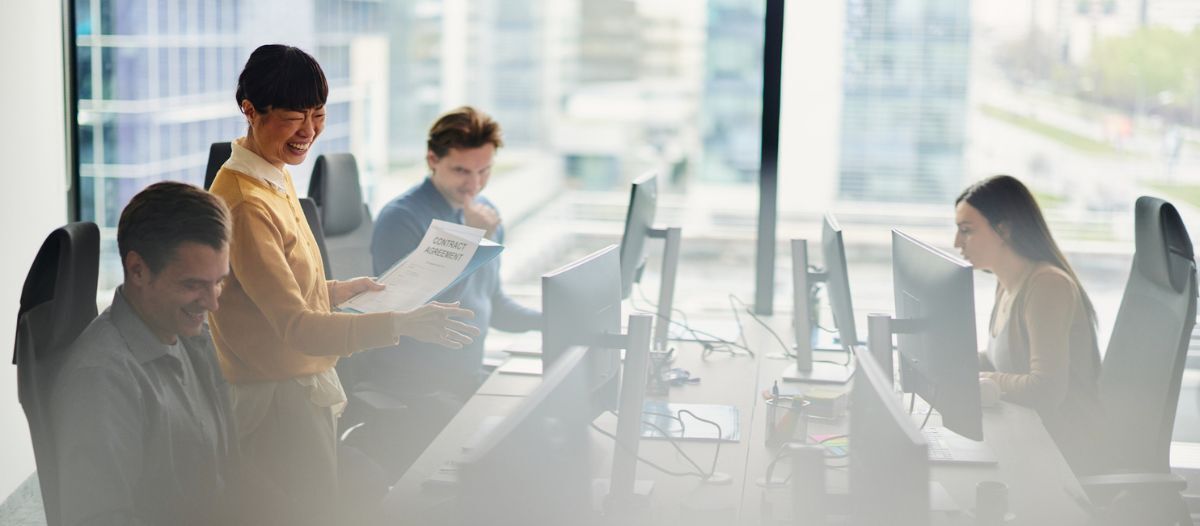
Employees have lost their workplace that physically connected them together in their organization. The online way-of-working caused them to miss out on small-talk, gossip, chemistry and empathy which are essential to sustain the social bond between colleagues.
Nevertheless, recent surveys have shown that employees and managers are quite positive about the effectiveness of remote working. BCG reported a 15-40 percent increase in productivity, another poll showed 65 percent of employees believed remote working was more effective. However, there are also many signs of employees struggling with their well-being.
Their (improvised) home offices have led to many distractions and complaints with ergonomics. Remote workers feel unable to unplug from work because the borders between work and life have become blurred. Many employees experience difficulties dividing their attention between family and their work. Meanwhile, single employees experience a sense of loneliness and a general lack of purpose.
Going back to the office
It seems that based on these remote experiences, several employees want, and/or their managers want their employees, to return to the office. They miss effectively collaborating and being connected to their employees, even though individual remote work seemed to be quite effective. Nevertheless, several organizations have touted remote working is here to stay. A survey across business leaders found 82 percent plan to maintain a partial work-from-home structure even after COVID-19 is no longer a threat. Employees won’t go back to the office full time, but the question remains what will the division be between office- and remote working? It is likely that employees will come to the office to connect and collaborate with their colleagues while doing most of their individual work from home. The number of days employees will spend at the office will have a huge effect on the occupancy of space while the activities on these days will have a huge impact on the need for specific spaces. Effectively managing the space in size and function, can improve productivity through addressing the needs of employees and save money through closing spaces when possible.
Activities at the office
Because employees desire to be at the office to collaborate, the number of days they will come to the office depends on the number of meetings they have. Measuremen’s research data using real-time experience sampling (with 4,661 samples) showed employees only spend 15 percent of the time on collaboration work (10 percent planned and 5 percent non-planned) and 5 percent on break at the office. This means that if all the meetings will effectively planned, employees will only need to spend one day at the office (20 percent of their time) to cover all their meetings. However, the number of meetings differs largely between organizations, ranging from 16 to 31 percent between employees.
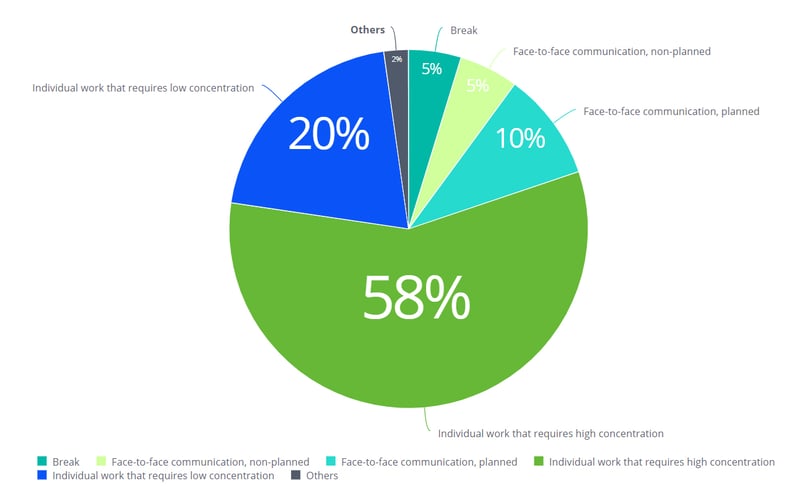
Figure 1. Activity distribution of employees at the office
It’s difficult and undesirable if each employee comes to the office on one particular day of the week, and fully spends this day in meetings. Scheduling-and effort-wise, meetings will be spread out across the week to some extent. Although employees might want to spend their time in meetings while at the office, they will have sometime between appointments. Some employees might want to spend this time to catch-up with other coworkers and a cup of coffee, and others might want to use a desk and do some individual work. However, even when employees have re-entered, online meetings are still possible and may be desirable in many cases. With the reduced capacity in meeting spaces it might be useful that with larger groups, some employees remotely attend.
The remote-period also showed many cases of employees who disliked remote working including younger employees who had no proper workspace at home, or parents who were constantly distracted by their children and spouses in their home environment. Measuremen’s Habital Remote data with 1499 real-time samples showed that distractions (25 percent) and ergonomics (19 percent) were the most occurring problems with low-performance during remote working.
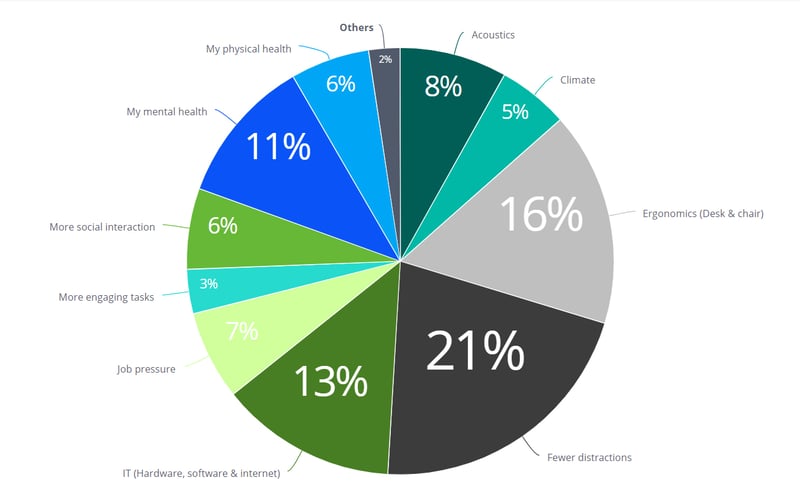
Figure 2. The distribution of “factors that could be improved” when performing low while working remotely.
Adding value to the office
Offices have proper desks and equipment that offer proper ergonomics while the spaces are often designed to limit distractions and propel the work mindset. For these reasons, it is likely that several employees and managers want to return to the office mainly for individual work as well. There might also be a small percentage of employees who prefer their home environment over their office and will still try to have every meeting online. The Morning Consult surveyed 1,066 employees found that 32 percent wanted to remain working every day from home even when COVID-19 was under control. Not seeing non-team co-workers, not lunching together, and missing micro-communication is a general loss of connection between colleagues threatening the company culture. Therefore, offices should be add extra value to employees. Facilities should facilitate collaboration, connection and fun while providing good ergonomics and space for focused, individual work.
Large rooms that foster teamwork and boost creativity through appealing design will tempt teams to host them offline, although proper IT facilities might allow coworkers to remotely join if necessary. Bars, break- and relax rooms offer opportunities to connect with each other and meet co-workers from other teams to better connect employees with each other and company culture. Places for individual work should clearly outperform the remote offices with proper chairs and areas to work comfortably with limited distractions.
With 20 percent of meetings, 7 percent of break time, and some individual work spread across the days, this might lead employees to spend 2-4 days at the office on average. The better the facilities, the better the experiences, and the more days employees will spend at the office. This number might dramatically differ between organizations, departments and employees.
Having employees voluntarily come to the office because it offers them social or work benefits, increases productivity and company culture. Forcing employees back to the office while they are enjoying remote working might be detrimental for their spirit. Many employees love the lack of commute and some actually perceive to work better from home.
If employees spend 2-4 days at the office, the amount of needed space can be reduced by 20 to 60 percent. However, this calculation assumes that there are no regulations that limit capacity. Considering the dynamics of COVID-19, it is likely that these regulations will last at least until the summer of 2021. Therefore, selling or sub-renting a part of an office space directly might be a risk.
Managing the occupation of meeting spaces
Regarding office configurations, space can be adapted to facilitate more collaborative work and connections. At the office, employees will spend more time on meetings, increasing the demands of meeting spaces. Using Measuremen’s Workplace Occupancy Studies-Benchmark that contained 246 projects in 2019, the data showed that 71.4 percent of meeting spaces were unoccupied during the day. Examining occupancy percentages across the day, this can explain low numbers of occupancy. Namely, there are peaks in occupancy rates between 11 a.m. - noon and 3 - 4 p.m., but very low occupancy rates from noon - 2 p.m. before 10 a.m. and after 4 p.m.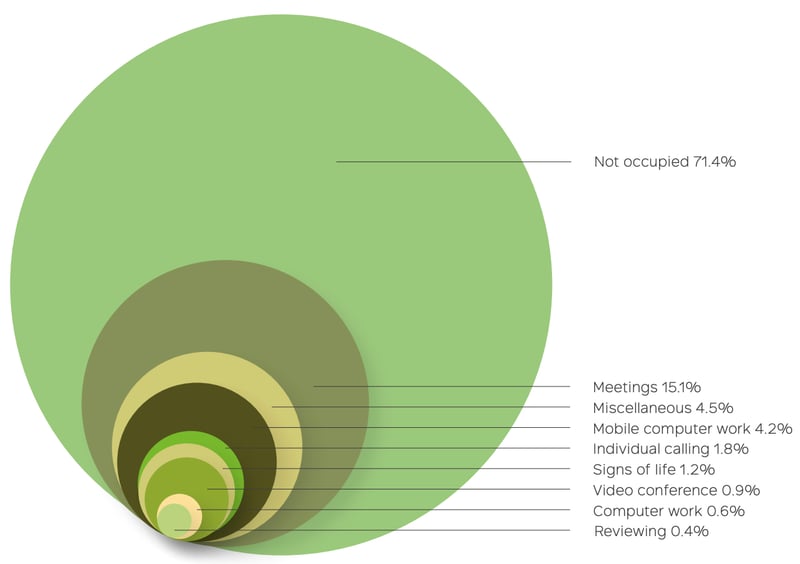
Figure 3. The occupancy and activities of/in meeting spaces.
This shows that for most organizations, meeting spaces can be more effectively occupied .. The graph shows employees tend to do other activities than have meetings in meeting spaces, like mobile computer work or individual calling. Stricter regulations for meeting spaces can optimize their use.
Making meeting spaces more attractive
Where the same benchmark is split across different types of meeting spaces, there is a clear difference between their popularity. When splitting the types of meeting spaces on their occurrence, meeting rooms, break-out areas, and consulting tables are the most common types of meeting spaces across organizations. Nevertheless, the occupancy rate of meeting areas in open space (18.1 percent) and consulting tables (14 percent) are quite low. However, the occupancy is much higher for conference rooms (36.5 percent) and meeting rooms (42.7 percent). This indicates that for meetings, employees don’t like to sit in the open and prefer enclosed spaces. A lack of privacy and tools might be reasons for these differences in occupancy. Non-formal meetings might fit better with these open meeting spaces but were in low-demand in 2019. However, one might argue that when returning to the office in 2021, these spaces might become more popular because employees miss non-formal times with their colleagues as well. However, non-formal meetings might often also warrant some sense of privacy when gossiping or talking about private struggles. Therefore, installing dividers around these spaces might serve double purposes; accommodate privacy, and limit the potential spread of COVID-19.
Conclusions
Space can be efficiently used to save money and improve the well-being of employees. It seems office spaces have become not just a space to collaborate and connect with each other. But when considering employee activity patterns, employees spend about one day per week in meetings. Together, this will probably lead to an average of about two to four days at the office if the spaces benefit employees, which can lead to higher engagement and company culture.
This has the potential to cut down the use of space, but considering the dynamic physical distancing regulations, it might be early for many organizations to sell- or subrent spaces. When it comes to office configuration, there is a lot of potential to be gained in improving the occupancy of meeting spaces through effective scheduling across the weeks and by making open meeting spaces more attractive to occupy. However, activity patterns and needs differ widely between organizations and departments. Therefore, it is important for facility managers to investigate the activity patterns and needs of the employees before making big decisions.

References
fastcompany.com/90560763/4-ways-to-recapture-whats-lost-in-the-office-less-age-of-work
bcg.com/publications/2020/remote-work-works-so-where-do-we-go-from-here
linkedin.com/pulse/working-from-home-here-stay-ilana-raz
sciencedirect.com/science/article/pii/S0148296320303301
techrepublic.com/article/remote-work-is-here-to-stay-gartner-finds
morningconsult.com/form/pandemic-remote-work-preferences
measuremen.io/blogs/the-science-of-remote-working-what-can-we-expect-in-the-future
Read more on Occupancy & Human Factors and Real Estate or related topics Occupant Services and Team Management
Explore All FMJ Topics