
 Membership
 Network
 Regional Sites & Affiliates


 Events
 Participate
 Resources

 Training
 Credentials
 Government


 Content Channels
 Tools
Tools


 Business Overview





Mentorship
The hidden engine behind organizational growth

Organizations operate in an environment defined by rapid change, technological advancement and increasing competition. While businesses invest heavily in technology, infrastructure and operational improvements, one of the most effective drivers of long-term success often receives far less attention: mentorship.
The ability to develop people, transfer knowledge and cultivate future leaders can determine whether an organization merely survives or truly thrives.
More than a partnership
Mentorship has long been recognized as a valuable tool for professional development, but its impact extends far beyond individual growth. It creates stronger teams, improves organizational performance and fosters a culture in which learning and collaboration become part of everyday operations.
 Employees possess significant technical skills but often lack practical guidance on applying those skills effectively in real-world situations. Formal training programs can provide knowledge, but they cannot always deliver the insights gained through years of experience. Mentorship bridges this gap by offering personalized support, practical advice and valuable perspectives that help employees develop confidence and capability.
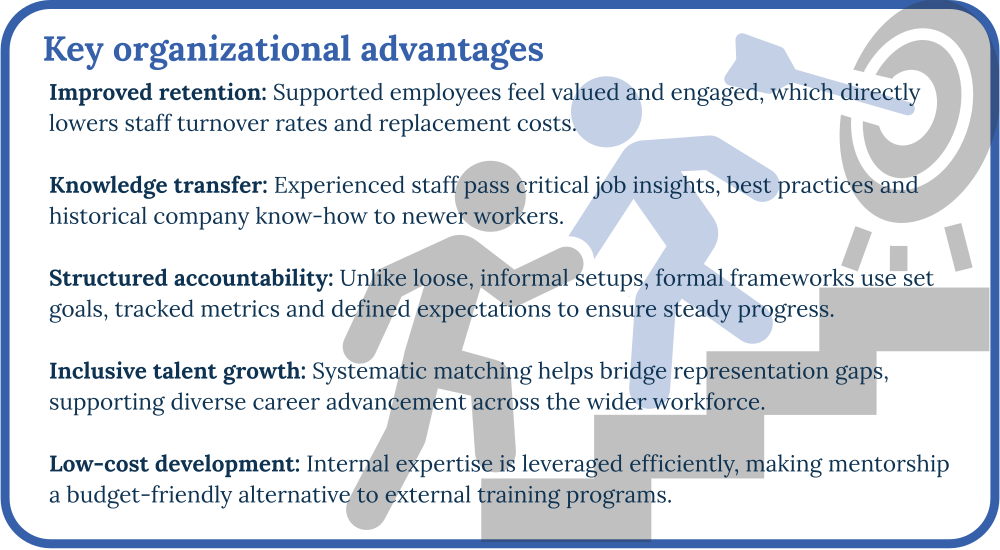
One of the most immediate benefits of mentorship is the acceleration of employee development. New employees frequently face challenges when adapting to organizational culture, understanding workplace expectations and learning operational processes. A mentor can help shorten this adjustment period by sharing knowledge, answering questions and providing direction. As a result, employees become productive more quickly, reducing onboarding time and improving overall efficiency.
Long-term value
The value of mentorship becomes even more apparent when organizations consider the challenge of knowledge retention. Every organization relies on experienced professionals who possess critical institutional knowledge, technical expertise and practical insights developed over many years. When these individuals retire or leave the organization, there is a significant risk that valuable institutional knowledge will disappear with them. Mentorship creates a structured pathway for transferring this expertise to the next generation of professionals, ensuring continuity and reducing operational risk.
Beyond knowledge transfer, mentorship plays a crucial role in leadership development. Organizations often invest substantial resources in recruiting leaders from outside, yet some of the most effective leaders emerge from within. Through mentoring relationships, employees gain exposure to leadership principles, strategic thinking, decision-making processes and stakeholder management. They learn not only what leaders do but also how they think and approach complex challenges. Over time, these experiences help create a strong pipeline of future leaders capable of guiding the organization forward.
Employee engagement is another area for which mentorship delivers significant value. People are more likely to remain committed to an organization when they feel supported and valued. Mentorship demonstrates that an organization is invested in the growth and success of its employees. This sense of support strengthens morale, increases motivation and contributes to a more positive workplace experience. Employees who participate in mentoring programs often report higher levels of job satisfaction and stronger connections to organizational goals.
Retention has become a major concern across industries as organizations compete for skilled talent. High turnover not only increases recruitment and training costs but can also disrupt operations and affect team performance. Mentorship helps address this challenge by creating stronger relationships within the workplace and providing employees with opportunities for growth and development.

 Tapping into a diverse workplace
Mentorship encourages collaboration and innovation. By bringing together individuals with different experiences, backgrounds and perspectives, organizations create opportunities for new ideas and creative problem-solving. Mentors and mentees often exchange insights that challenge conventional thinking and lead to improvements in processes, services and organizational practices. These interactions help break down silos, strengthen communication and promote a culture of continuous learning.
The benefits of mentorship are particularly valuable in industries where expertise, operational knowledge and leadership capability directly influence performance outcomes. Whether in facilities management, engineering, health care, construction or corporate environments, mentoring relationships help employees navigate challenges, build competence and contribute more effectively to organizational objectives.
 Organizations that successfully integrate mentorship into their culture often experience improvements in productivity, employee engagement, leadership readiness and overall performance. More importantly, they create environments where people are encouraged to learn, share knowledge and support one another's success. Such cultures are better equipped to adapt to change, manage uncertainty and sustain growth over the long term.
The true strength of mentorship lies in its ability to transform individual development into organizational success. Every conversation, lesson learned and piece of shared guidance contributes to building a stronger workforce. As employees grow, organizations benefit from increased capability, improved performance and enhanced resilience. What begins as a relationship between two individuals ultimately creates positive impacts that extend across teams, departments and the organization as a whole.
In an era when businesses continuously seek competitive advantages, mentorship remains one of the most effective and sustainable investments an organization can make. By developing talent, preserving knowledge, strengthening leadership and fostering collaboration, mentorship creates a foundation for growth that technology alone cannot provide. Organizations that embrace mentorship are not simply preparing employees for their next role; they are preparing their entire organization for future success.

Izzat Ali Khan, SFP, FMP, is the general manager at EFSiM Facilities Services. A seasoned FM professional, he is passionate about creating a positive impact in business through sustainability. He focuses on integrating sustainability and innovation in businesses to build the FM industry and make the world a better place to live.
References
Images via Getty Images.
Read more on Leadership & Strategy or related topics Succession Planning and Networking
Explore All FMJ TopicsRelated articles
-

Artificial Intelligence in FM
The stakeholder’s perspectiveBy Dr. Jake Smithwick & Dr. Kenneth Sullivan & Nneka Ubi05.01.2024 -

Mastering Change in Hybrid Environments
Insights from global operational leadersBy Meg Swanson09.02.2024 -

Plugged In
Solving the data disconnect in real estate and FMBy Amanda Muzzarelli & James Waddell07.01.2024