 Membership
 Network
 Regional Sites & Affiliates


 Events
 Participate
 Resources

 Training
 Credentials
 Government


 Content Channels
 Tools
Tools


 Business Overview





More than an Amenity
Using outdoor structures to shape a facility’s culture
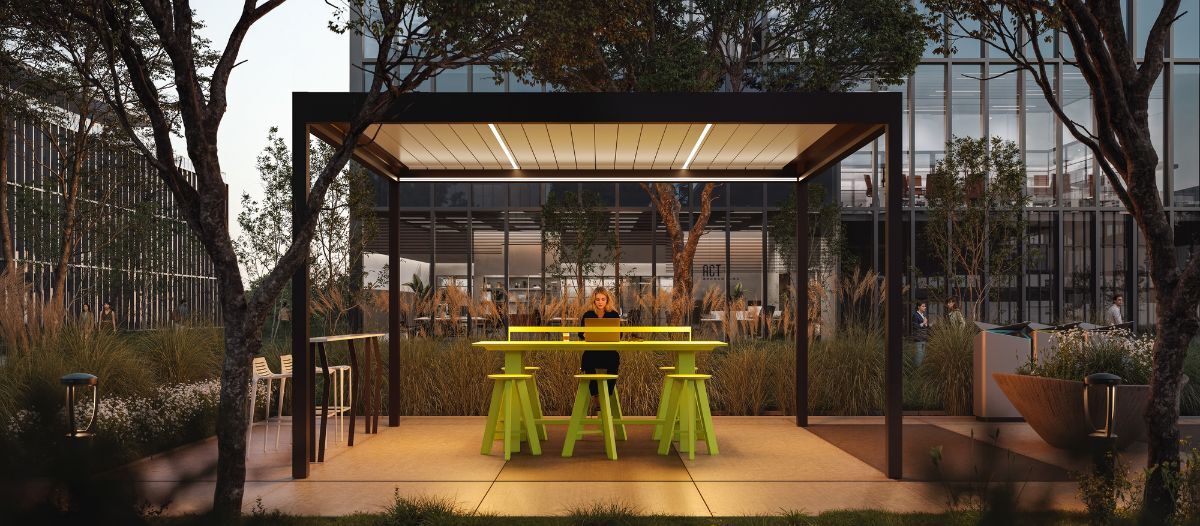
Across workplaces, campuses and mixed-use environments worldwide, the role of outdoor space is evolving. Once viewed primarily as an amenity or visual relief, the outdoors is increasingly understood as a powerful extension of the facility itself — a setting where culture is expressed, relationships are formed and community takes shape.
Structured outdoor environments are central to this shift. When thoughtfully designed and well-integrated, outdoor structures create places where people naturally gather, linger and connect. They support focused work and informal collaboration, accommodate programmed events and spontaneous encounters, and offer the simple but profound benefits of daylight, fresh air and connection to nature. In doing so, they expand not just a facility’s active footprint, but its capacity to foster participation, belonging and shared experience.
For facility managers, these environments represent an opportunity to shape and express organizational culture through space — creating outdoor destinations that feel welcoming, inclusive and integral to daily life rather than peripheral or occasional.
The growing importance of community-centered outdoor space
Community is built through everyday interactions: brief conversations, shared routines and moments of connection that occur outside formal meetings and schedules. The physical environment plays a decisive role in enabling (or unfortunately, discouraging) these interactions.
Outdoor structures offer a unique platform for community-building because they occupy a middle ground between fully enclosed interiors and open landscape. They provide enough definition to feel purposeful, protected and grounded, while remaining visually open and socially inviting. People can see activity unfolding, choose their level of engagement, and move easily between working alone and joining others.
Research in environmental psychology and workplace design consistently shows that access to nature, daylight, fresh air and thoughtfully designed outdoor environments is associated with improved mood, reduced stress and stronger social bonds. When outdoor spaces are comfortable and reliable, they become places people return to regularly — not just when conditions outside are perfect, but as part of everyday rhythms.
In workplaces and campuses navigating hybrid schedules, generational change and evolving expectations around well-being, these shared outdoor environments help anchor culture. They provide visible, accessible places where participation feels natural rather than prescribed.
From amenity to cultural infrastructure
A key shift in recent years has been the movement away from treating outdoor shelters and pavilions as add-ons or isolated features. Instead, modern outdoor structures are increasingly planned as intentional cultural infrastructure — spaces that actively support and inform how people work, gather, learn, dine and connect.
This evolution brings several important considerations to the forefront:
-
Everyday usefulness: Successful outdoor spaces support real activities, from laptop work and small meetings to meals, workshops, celebrations and team building exercises.
-
Social & functional flexibility: Rather than being designed for a single purpose, structures perform best when they allow multiple modes of use throughout the day.
-
Design continuity: Outdoor environments should feel like a natural extension of a facility’s architectural and landscape language, reinforcing identity and sense of place.
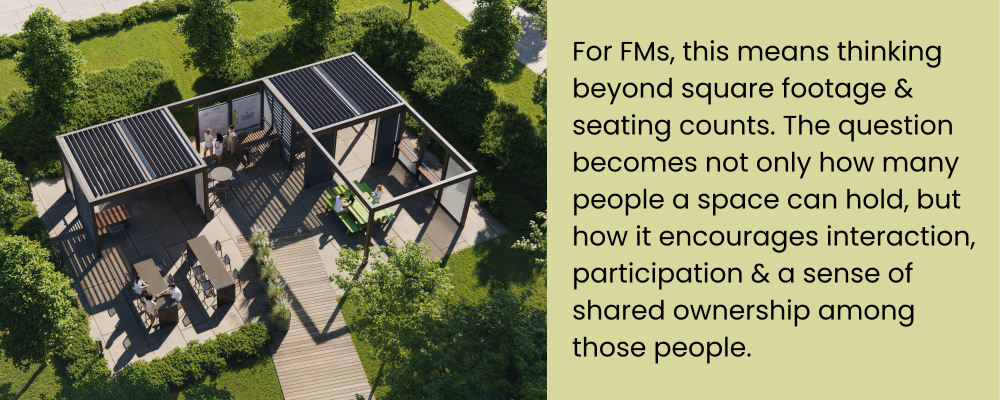 This evolution also underscores the importance of early collaboration with design and operations teams. Outdoor structure performs best when considered alongside circulation, programming, maintenance and long-term adaptability — not added as an afterthought.
Programming as a catalyst for community
Physical space alone does not create community. It is participation that brings it to life. Outdoor structures are most successful when they are supported by flexible programming that invites people to use them regularly and with intention. This may take the form of informal gatherings, outdoor meetings, shared meals, learning sessions or seasonal events that naturally extend daily activity beyond interior walls.
Importantly, effective programming does not require constant scheduling or large-scale events. Consistency, visibility and ease of participation matter far more than complexity. When people see colleagues gathering outdoors as part of everyday routines, those spaces quickly become familiar, trusted and socially reinforced. For FMs, aligning outdoor environments with organizational rhythms — rather than treating them as special-occasion spaces — helps ensure they remain active, inclusive and deeply woven into the culture of the facility.
Designing for participation & belonging
Outdoor environments that successfully foster community tend to share a set of design principles that are as much social as they are technical.
Accessibility & inclusivity: True community spaces are welcoming to everyone. Outdoor structures should be universally accessible, offering step-free entry, appropriate clearances, and a variety of seating and standing options that support different bodies, abilities, postures and preferences.
Comfort plays an equally important role. Shade, protection from wind or rain, and thoughtfully managed light levels help ensure that outdoor spaces are usable by a broad range of people, across seasons and times of day. When comfort is consistent, participation increases — and outdoor space becomes part of daily life rather than an occasional destination.
Human scale & openness: Community thrives in environments that feel neither too exposed nor too enclosed. Outdoor structures that are scaled to the human body, offer varying degrees of partial enclosure and maintain visual connection to their surroundings strike this balance well.
Clear sightlines encourage a sense of safety and awareness, while a nuanced approached to space definition creates multifaceted settings that are relevant to people’s unique needs and where people feel comfortable staying. These qualities are especially important in environments where different user groups — employees, students, visitors — share space.
Support for informal interaction: Some of the most valuable interactions in workplaces happen outside formal settings. Outdoor structures that include surfaces for working or dining, power access and flexible site furnishings make it easy for people to stop, connect and collaborate without planning ahead.
Equally important is the ability to reconfigure space. Movable elements and adaptable layouts allow users to shape their environment in real time, reinforcing a sense of agency and shared stewardship.
Flexibility as a foundation for community
One of the defining characteristics of contemporary outdoor structures is their adaptability over time. Rather than being fixed and prescriptive, many are designed as frameworks that can evolve alongside organizational needs.
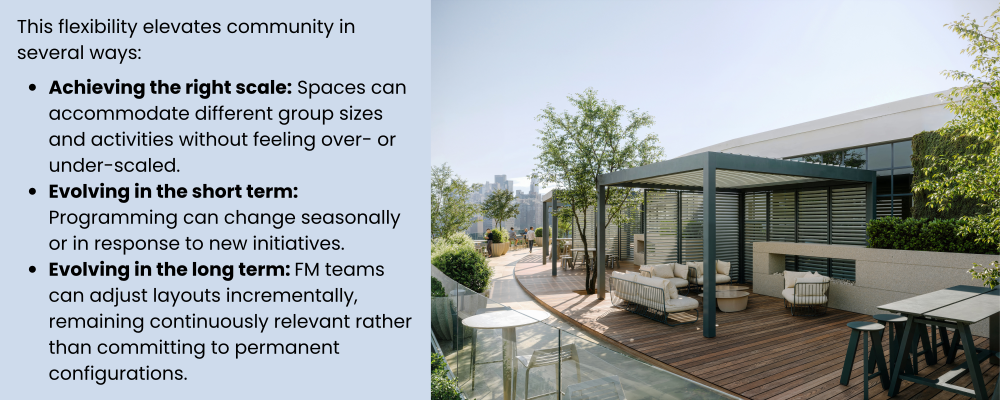 For organizations experiencing growth, change or fluctuating occupancy, this adaptability reduces risk while supporting a culture that values experimentation, creativity and participation.
Responding thoughtfully to climate & context
For outdoor spaces to support community consistently, they must respond intelligently to local climate and site conditions. Structures designed with adjustable shading, automated weather management and integrated lighting extend usability and create confidence that the space will perform as intended.
Context matters, too. Outdoor structures should reinforce their setting — whether a dense urban courtyard, a sprawling suburban campus, a private rooftop terrace or a public-facing facility — by framing views, aligning with circulation and complementing surrounding features. When outdoor environments feel grounded in place, they strengthen identity and help users form deeper emotional connections with the landscape around them.
Streamlined solutions & highly adaptable systems
 Outdoor structure solutions typically fall along a spectrum. On one end are streamlined, standardized structures that prioritize clarity, speed of implementation and ease of use. These are well suited to projects where simplicity, consistency and efficiency are paramount.
On the other end are highly adaptable, modular systems that offer a broad range of configuration options. These structures function as open-ended frameworks, supporting more unique site-specific programming and evolving uses over time.
From an FM perspective, the most effective choice aligns the structure’s level of flexibility with the organization’s cultural goals and operational capacity. Both approaches can successfully foster community when applied thoughtfully and with clear intent.
Sustainability through longevity & care
Sustainability in outdoor environments is not only a matter of materials or certifications. It is also about creating places that endure — socially as well as physically.
Durable construction, high-quality fit and finish, thoughtful detailing and materials chosen for long-term performance reduce the need for replacement and repair. Just as importantly, spaces that are well loved and well used are more likely to be maintained, protected and invested in over time.
Outdoor structures that invite people to gather, return and participate contribute to a culture of care — supporting social sustainability by strengthening relationships between people, place and one another.
A lasting role for outdoor structure
As organizations adapt their facilities to changing patterns of work and use, outdoor structures are becoming central to how organizations express their values and support their communities. They offer spaces where collaboration feels natural, participation is visible and culture is lived rather than stated.
When designed with intention and integrated into the broader fabric of a site, these environments do more than provide shelter or shade. They create meaningful places — places where people connect with one another, engage with their surroundings and feel part of something shared.
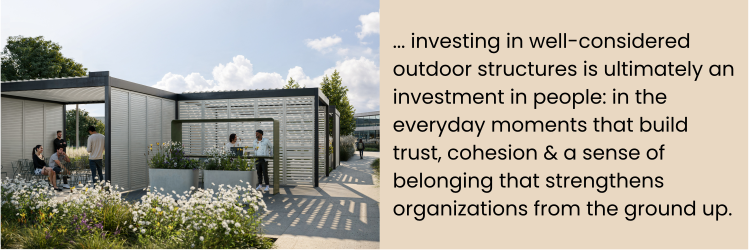
For FMs, investing in well-considered outdoor structures is ultimately an investment in people: in the everyday moments that build trust, cohesion and a sense of belonging that strengthens organizations from the ground up.

Robb Smalldon is the President of Landscape Forms’ Structure business segment, responsible for rapid growth in the landscape architecture and commercial designed exterior space industry. He joined Landscape Forms in 1998 as an intern and full time as a Manufacturing Engineer in 2001. He joined the management team in 2013 and executive team in 2017. Smalldon was developed as a future leader within Landscape Forms, throughout periods of design industry change, company growth and exposure to all aspects of the business.
References
Images provided by Landscape Forms.
Read more on Workplace and Occupancy & Human Factors or related topics Space design and planning and Wellness and Well-being
Explore All FMJ Topics